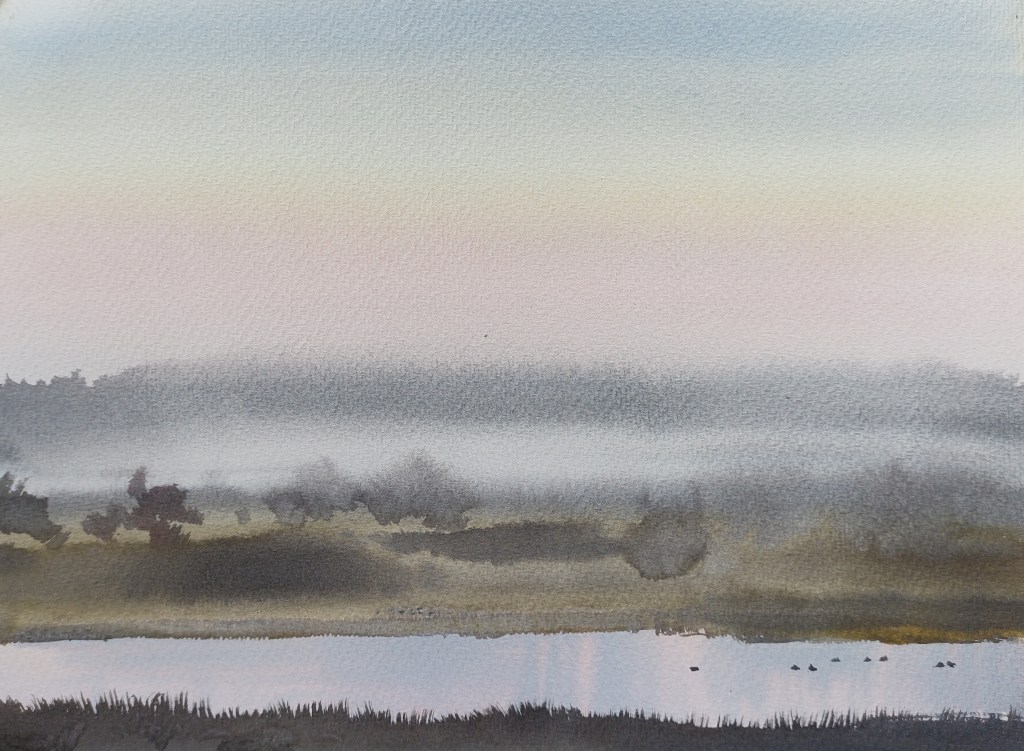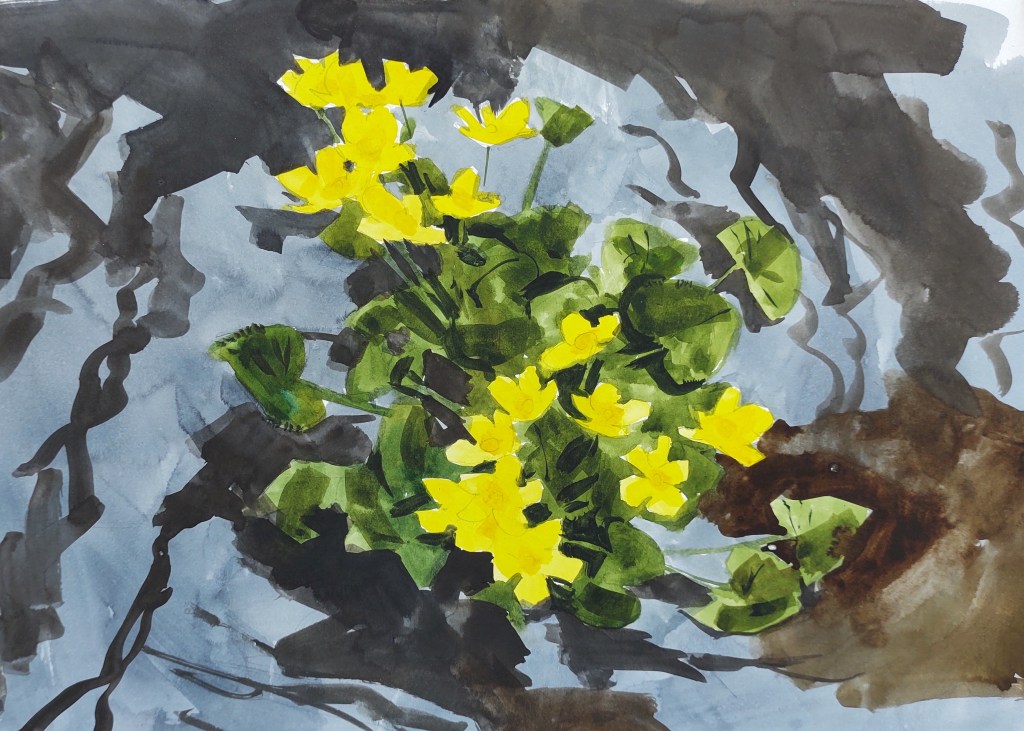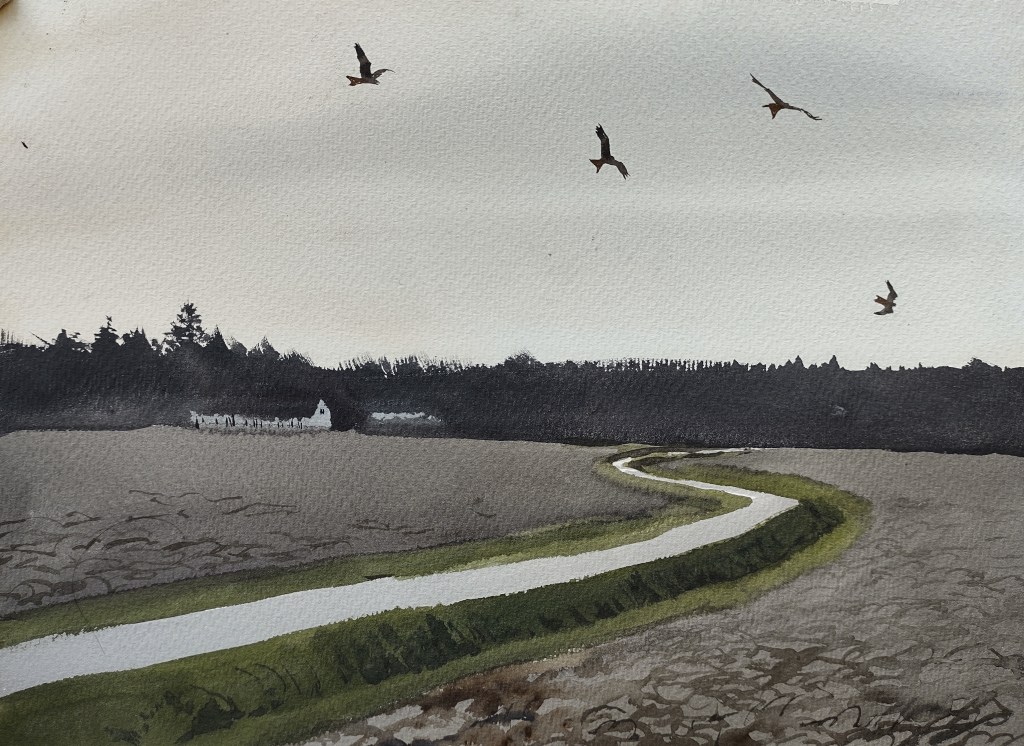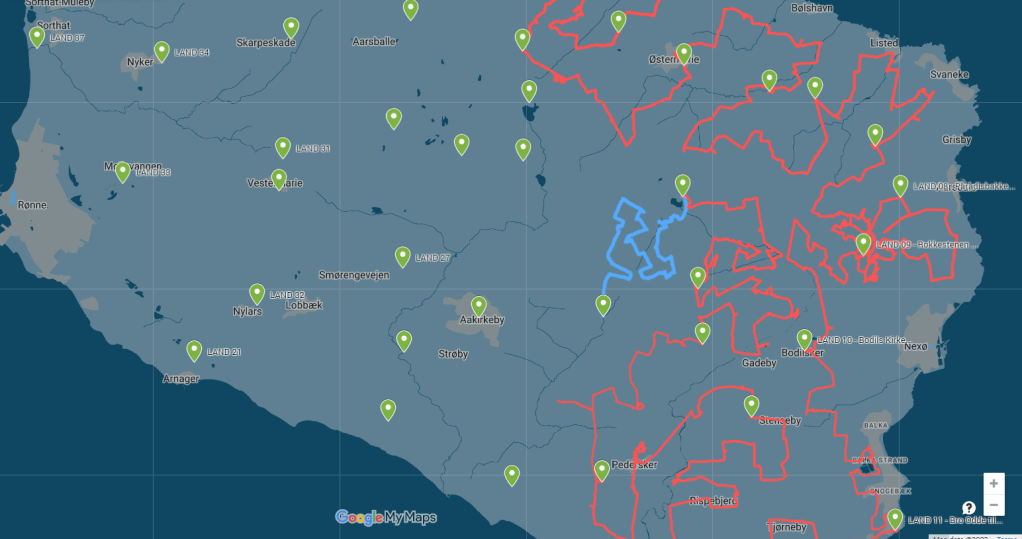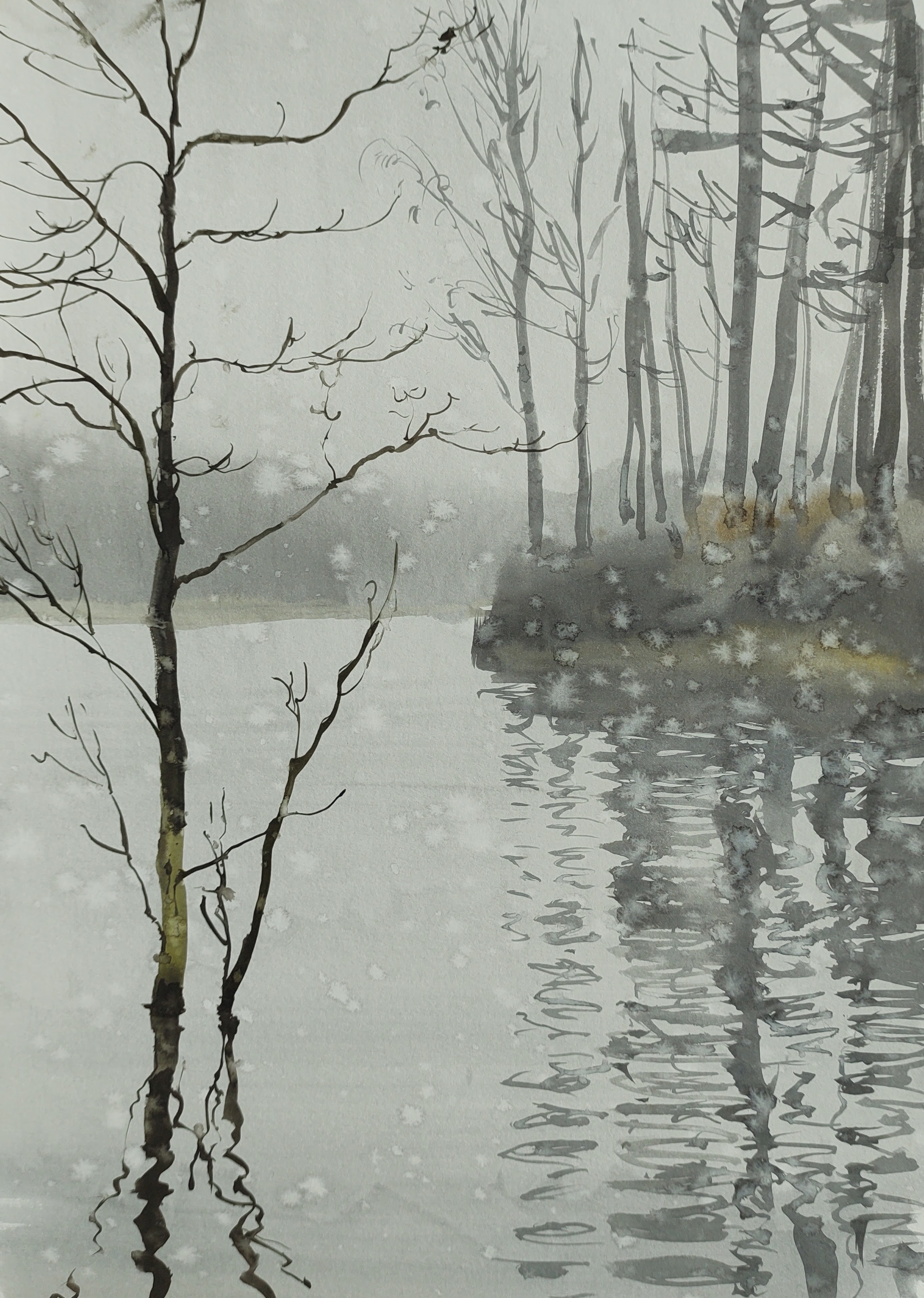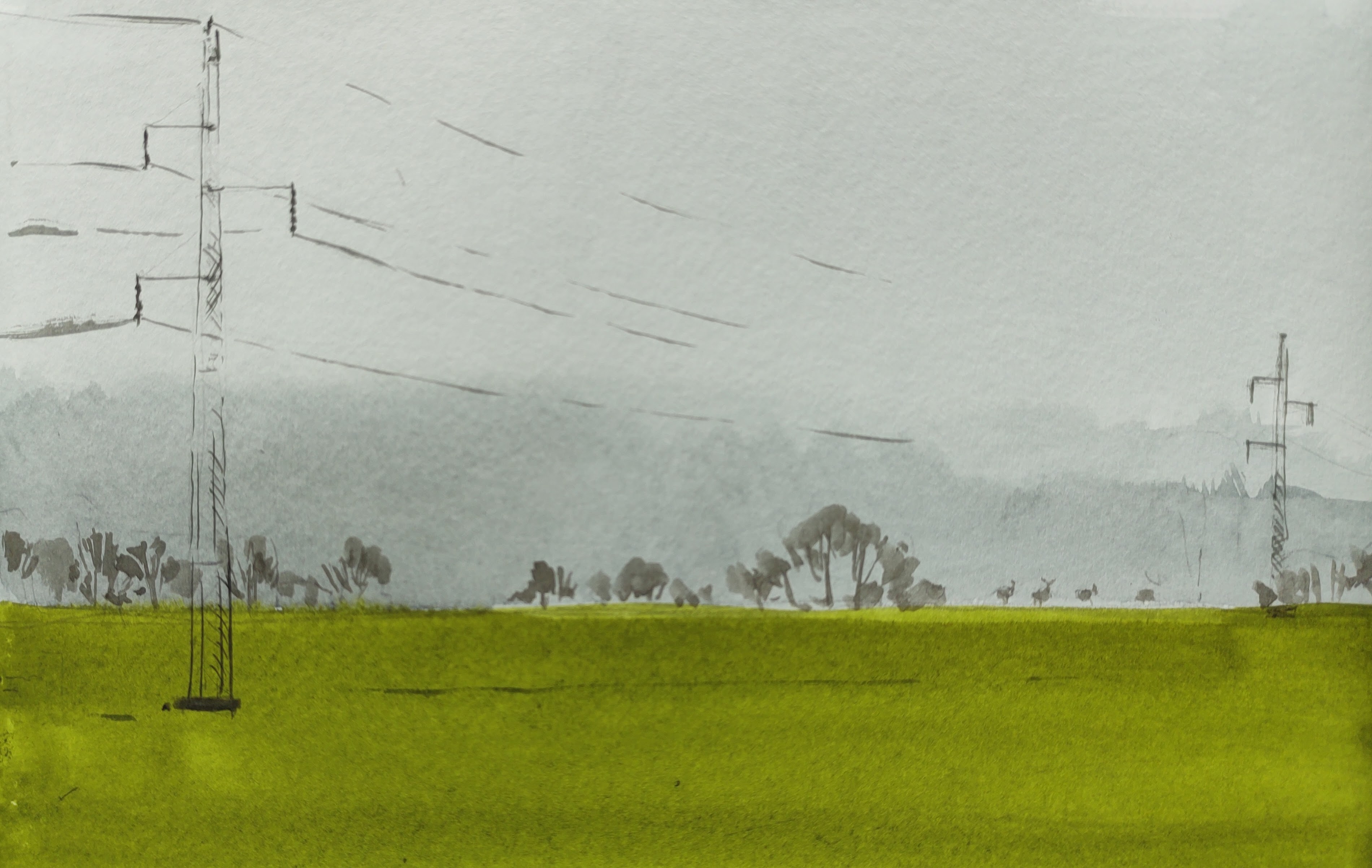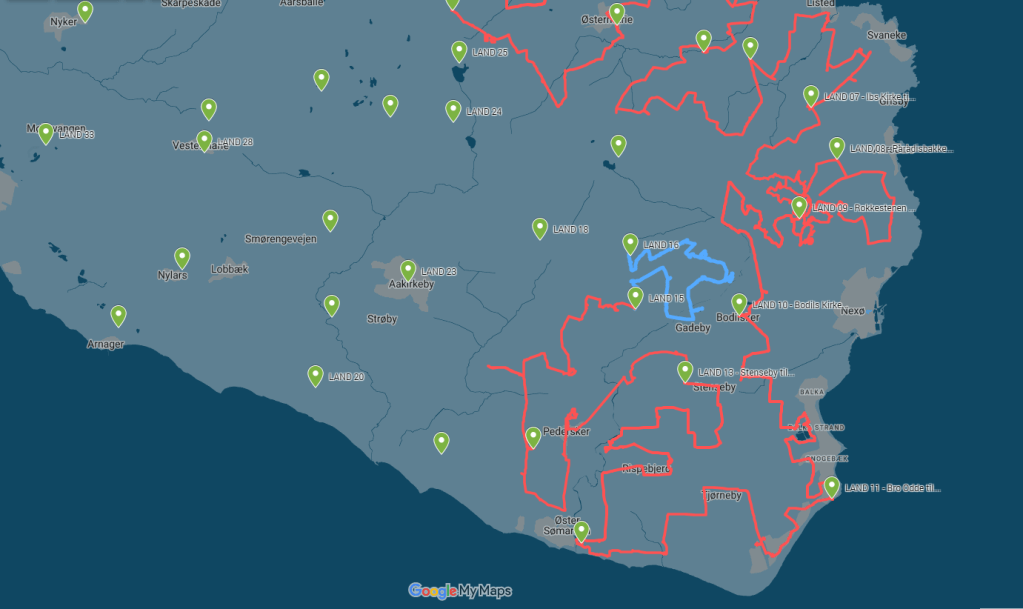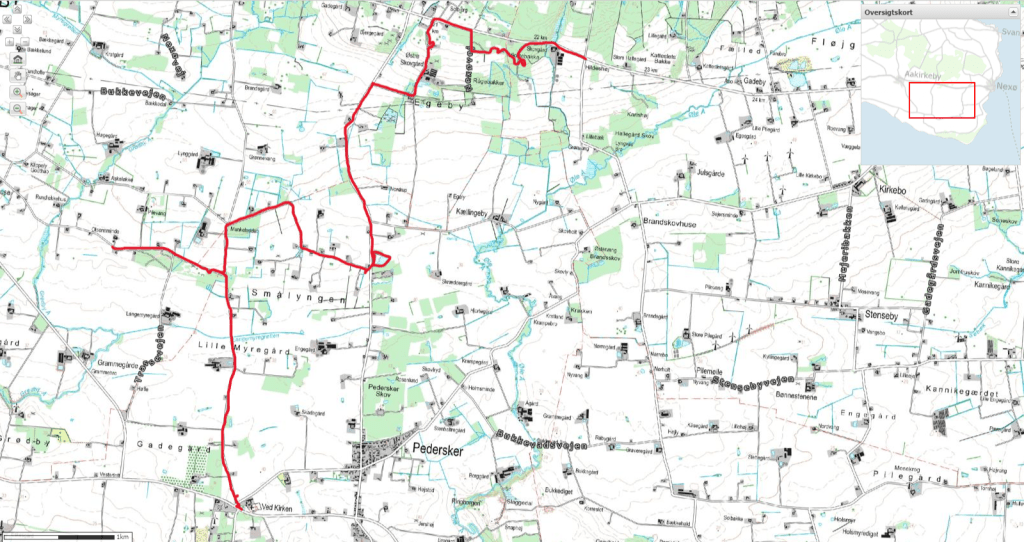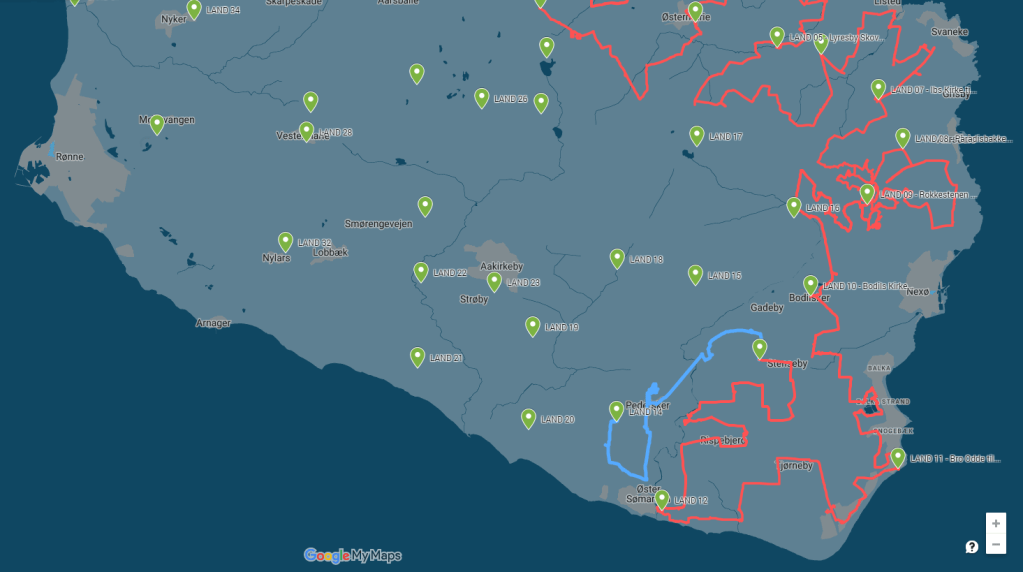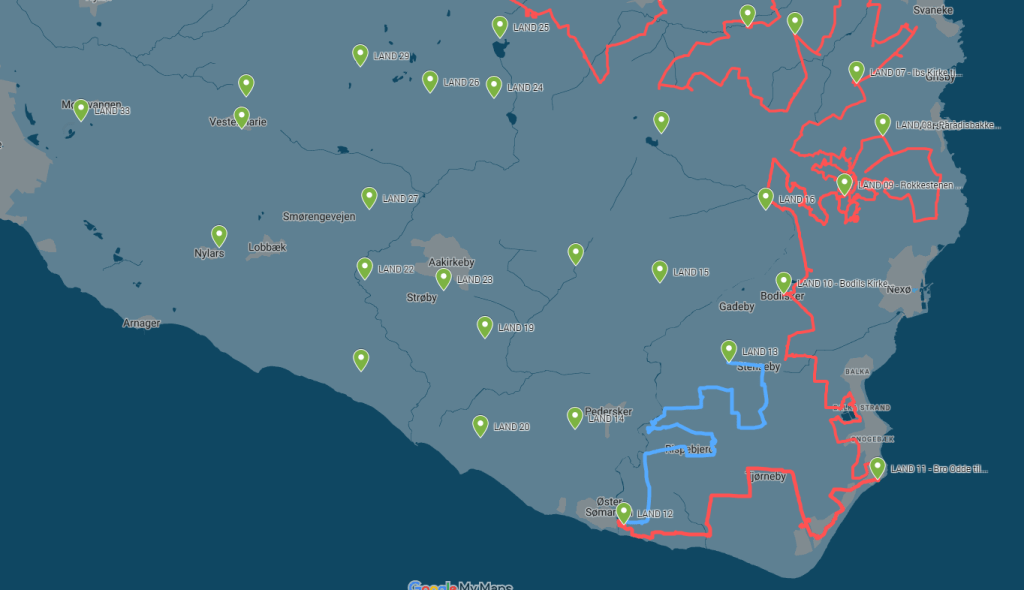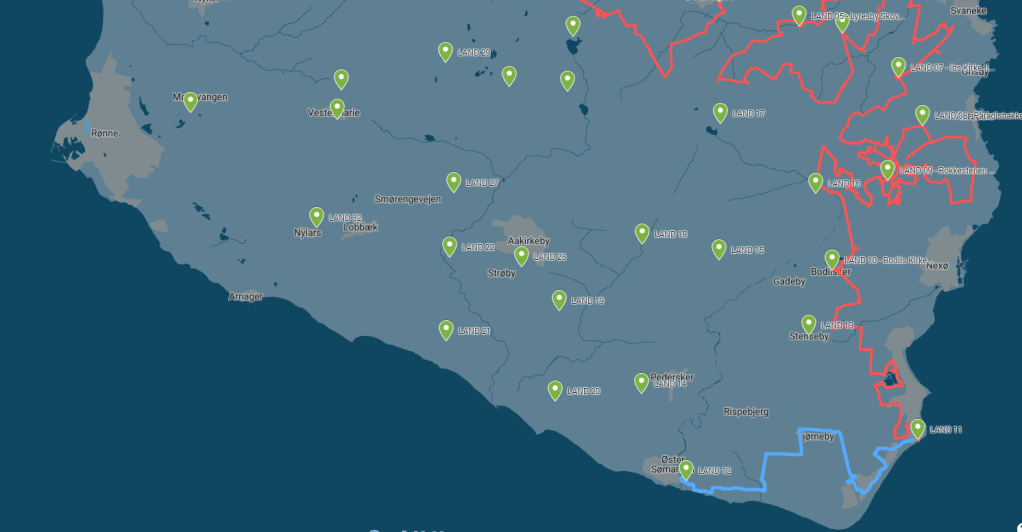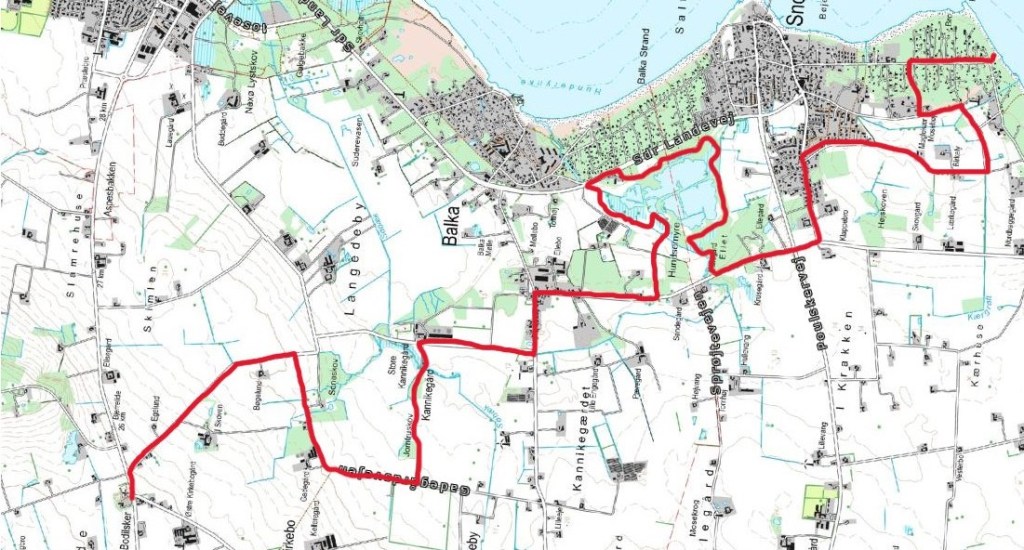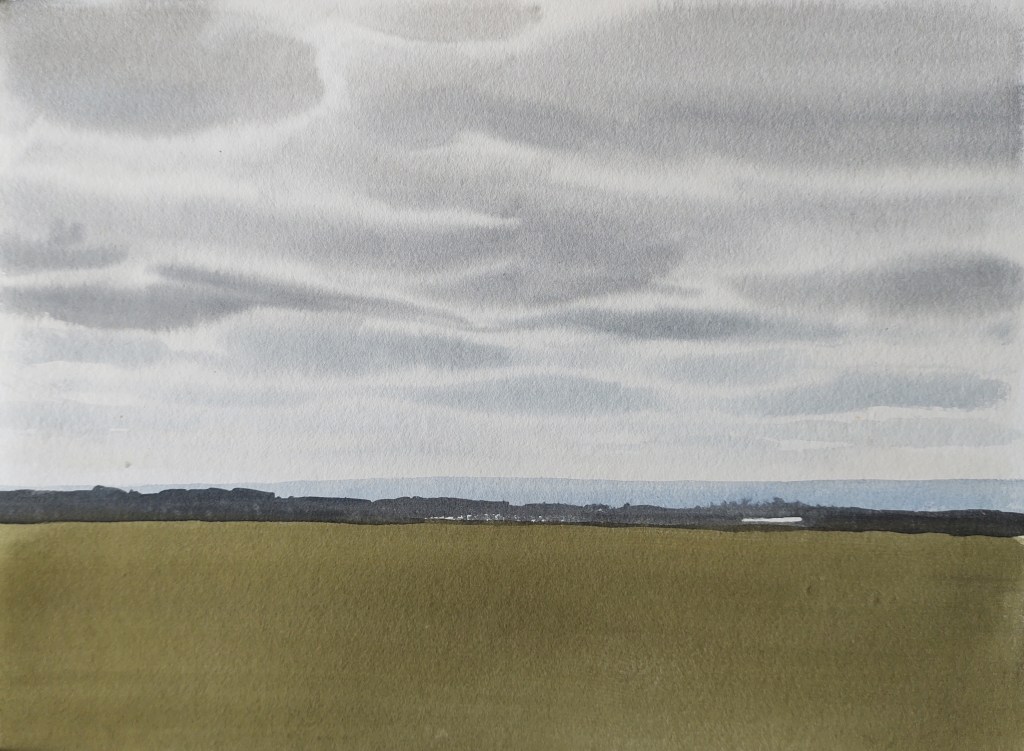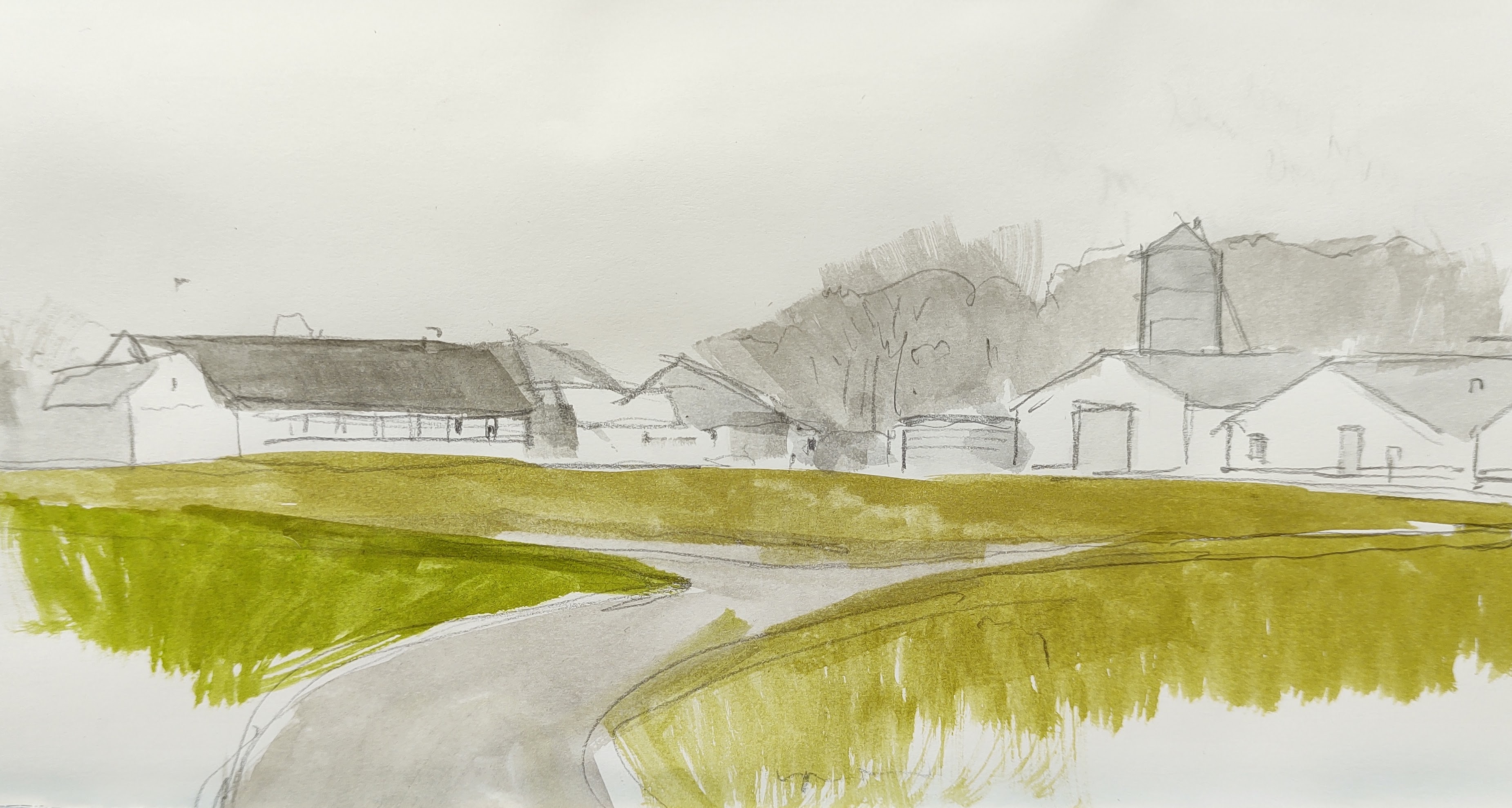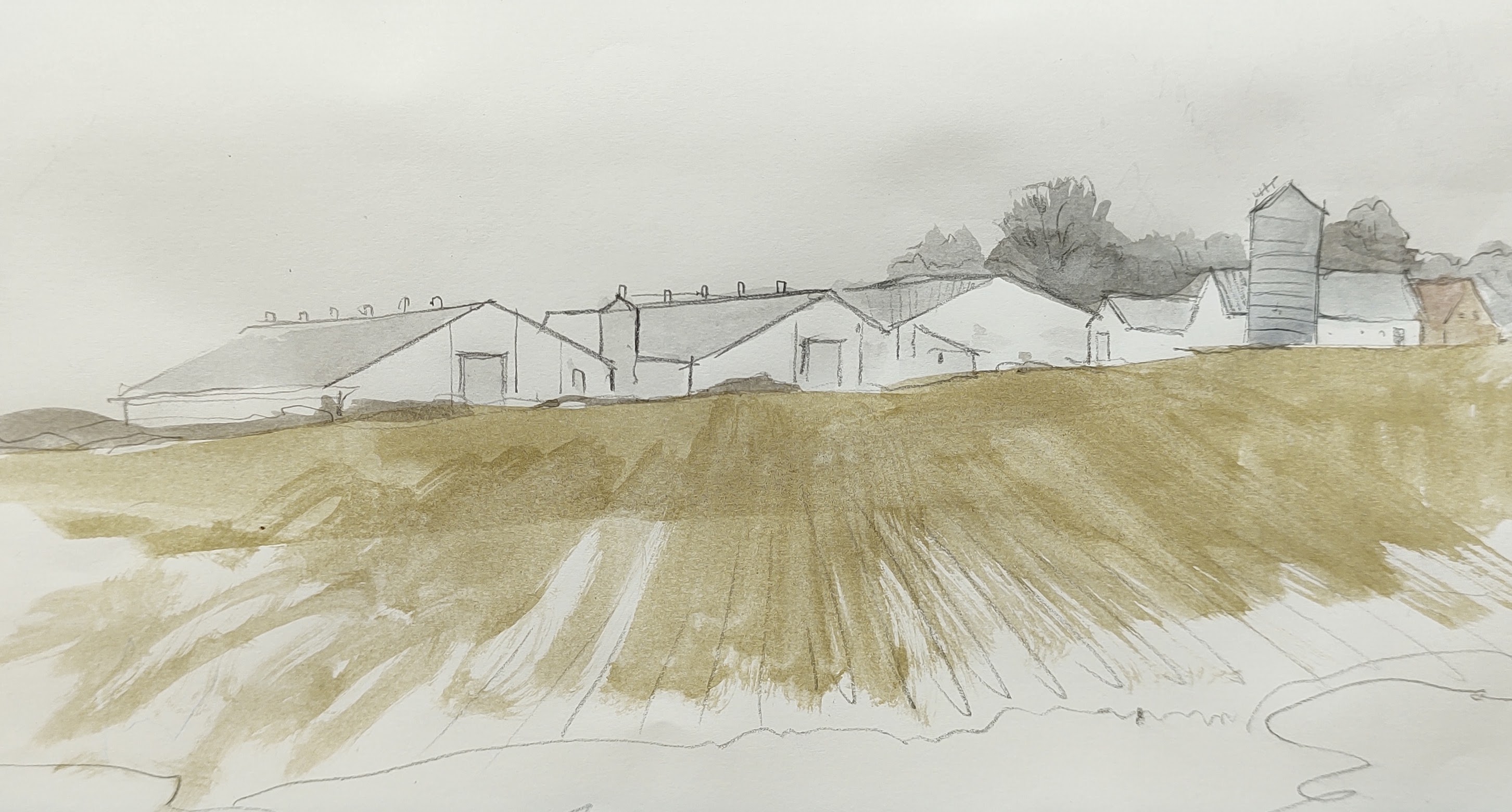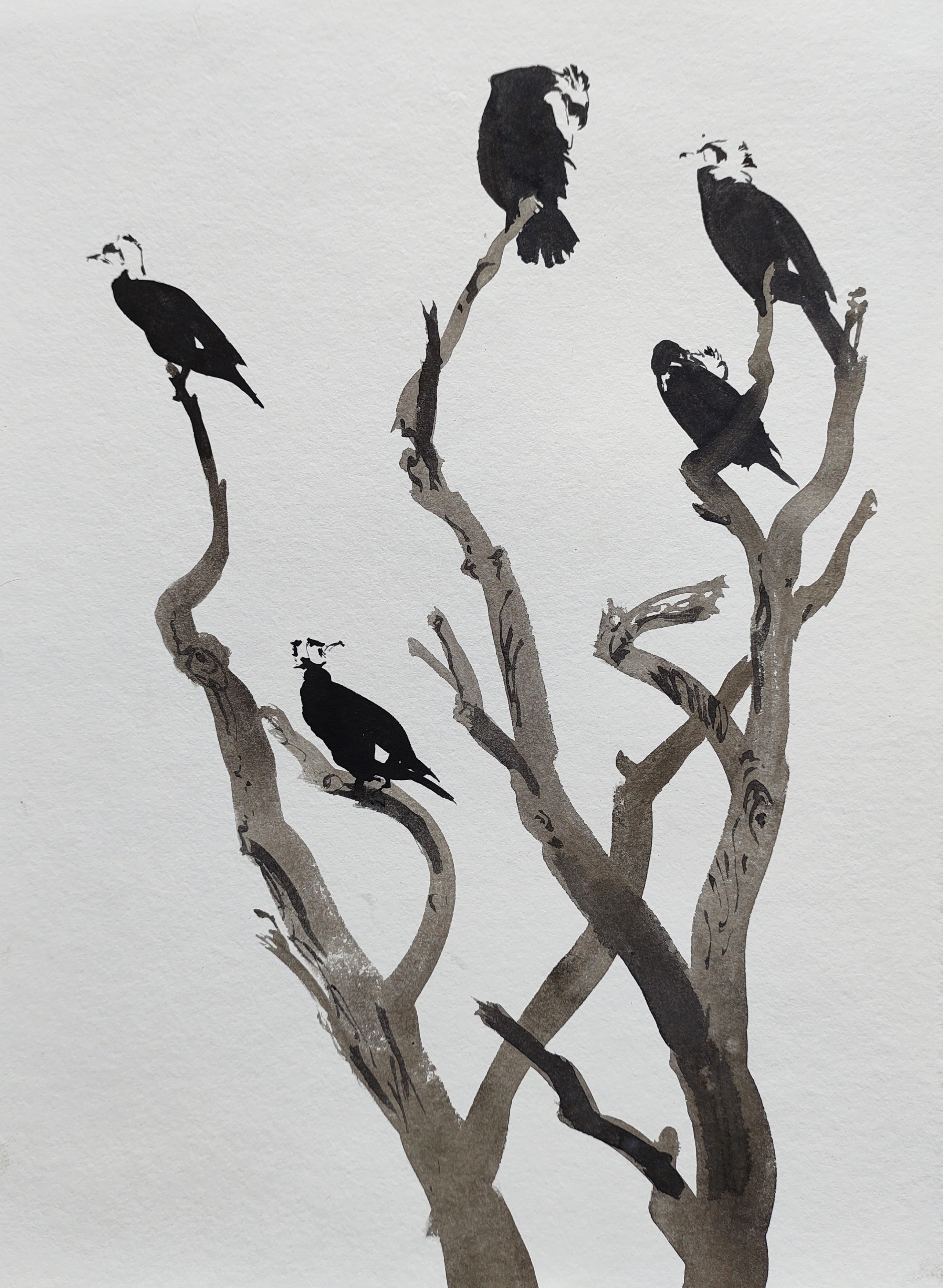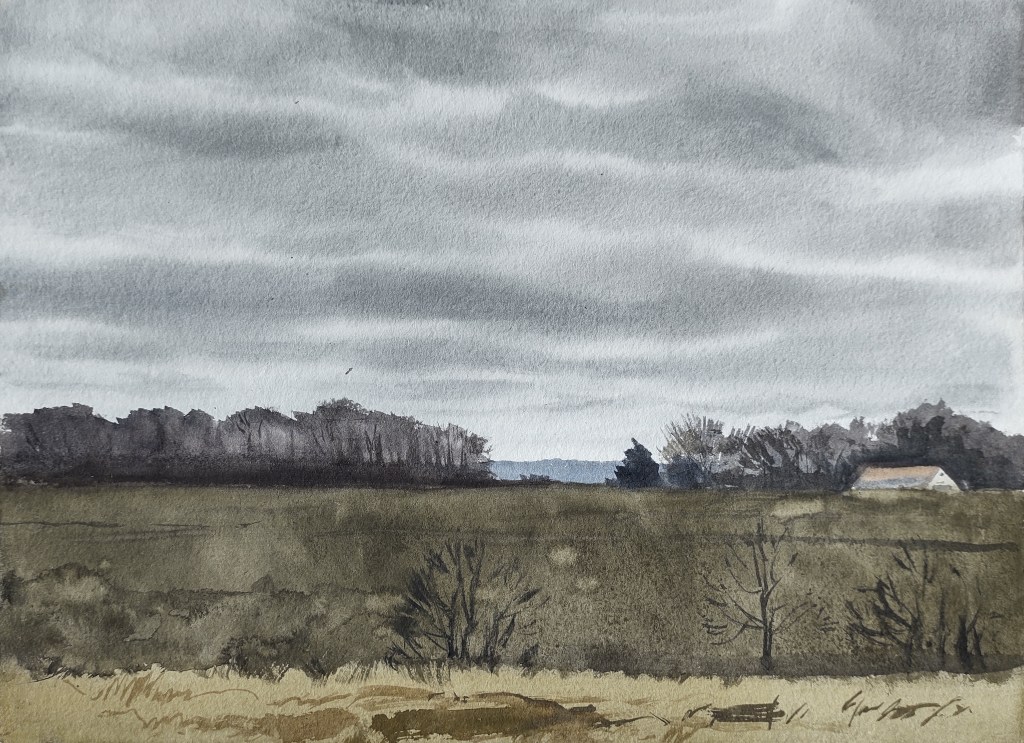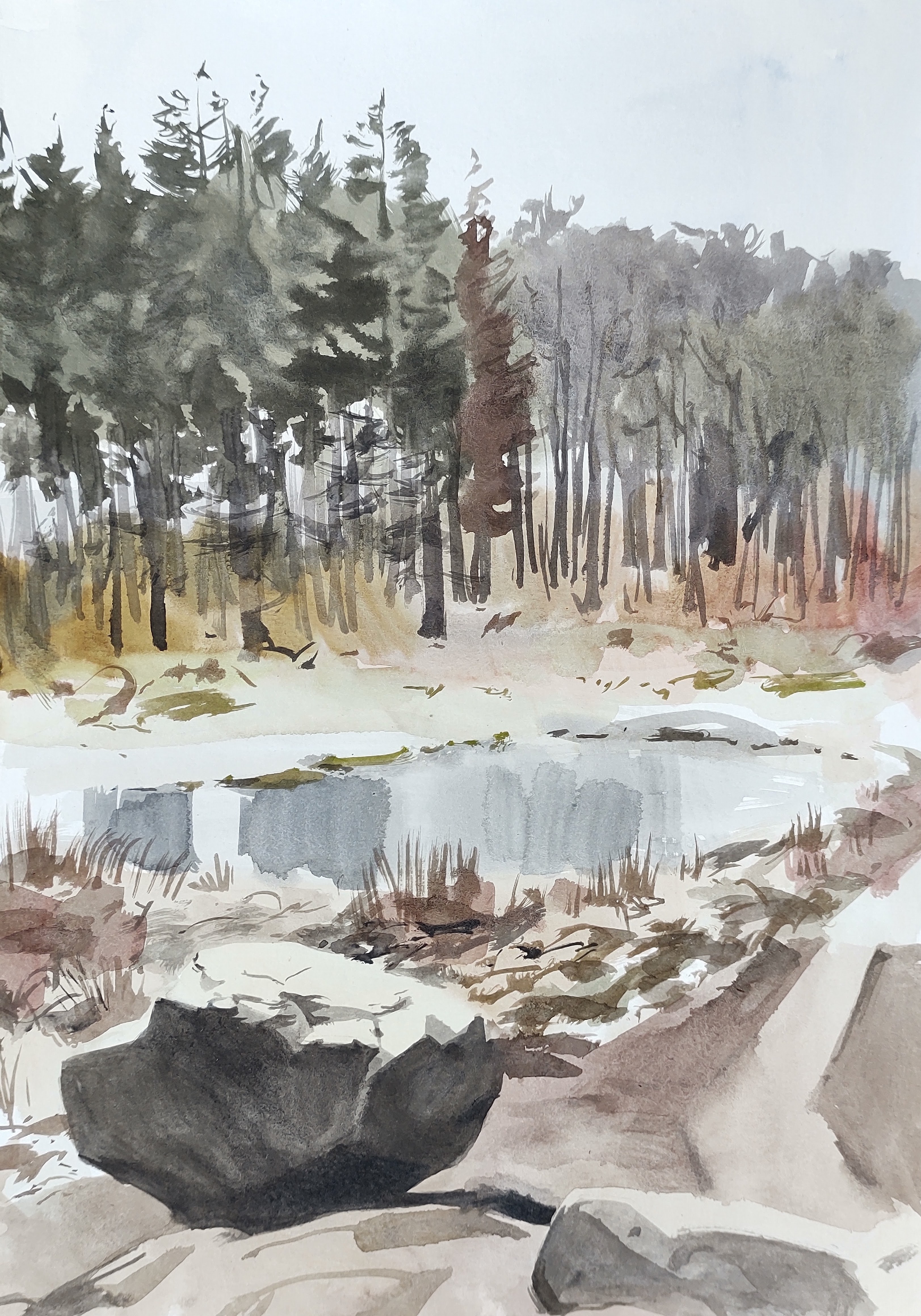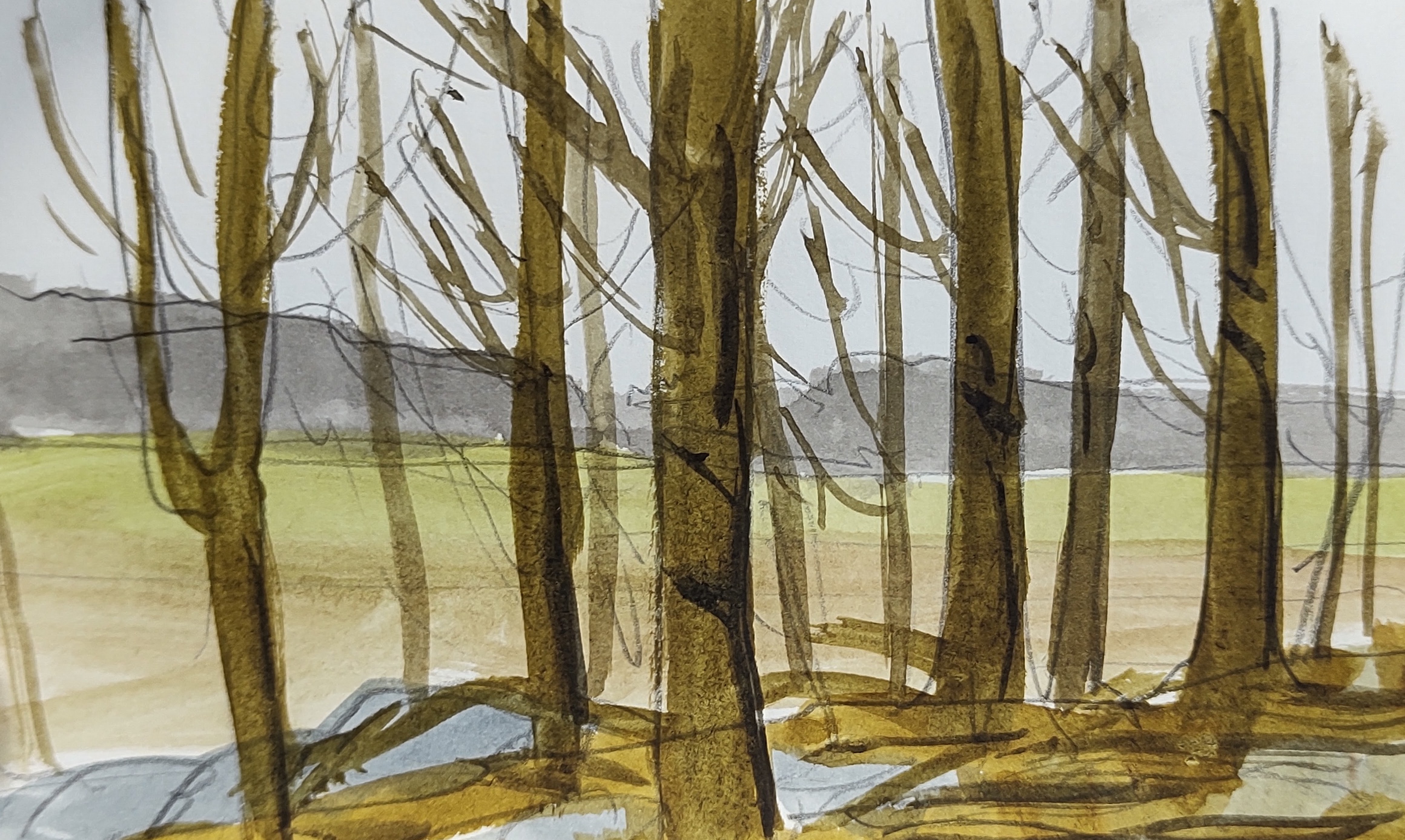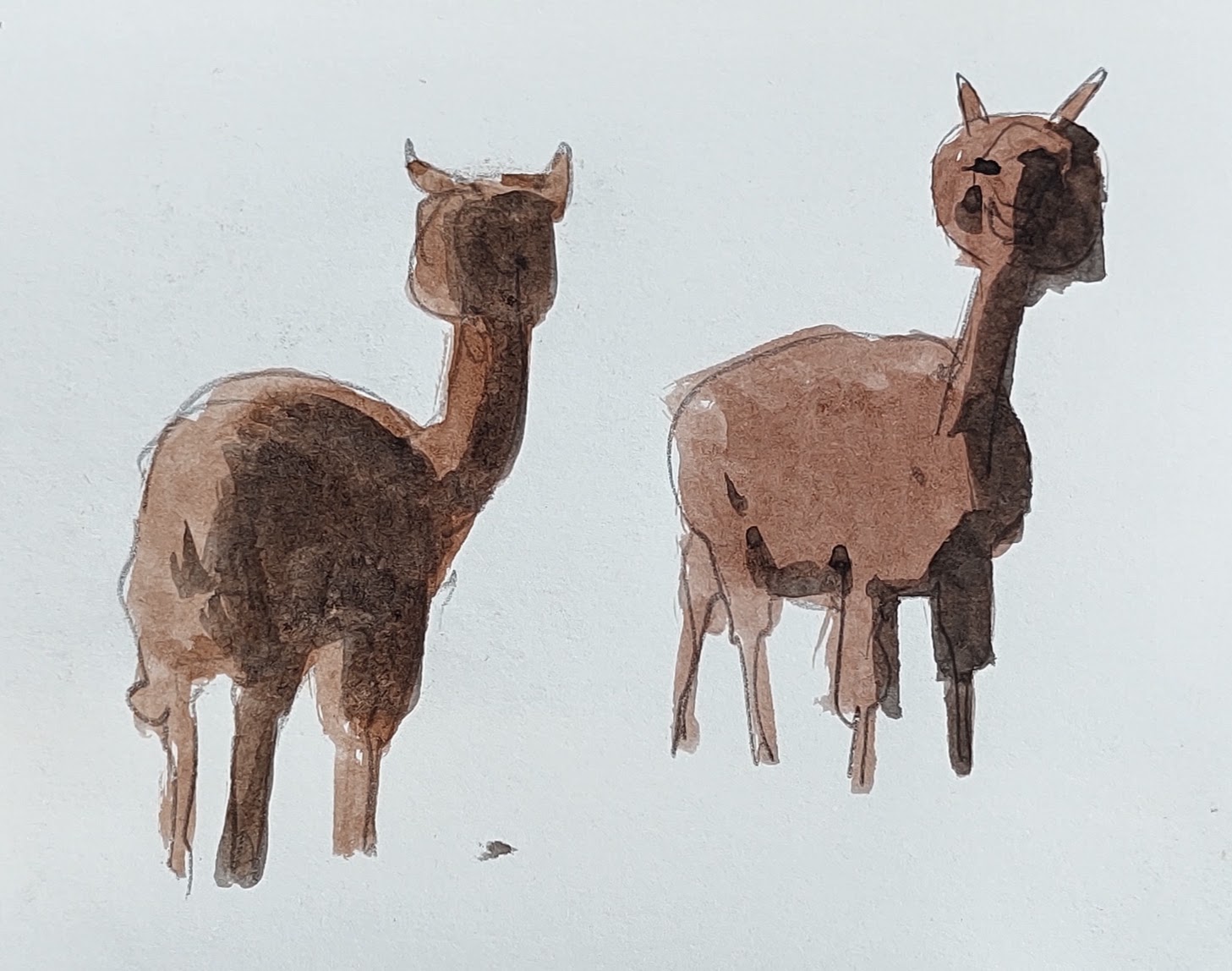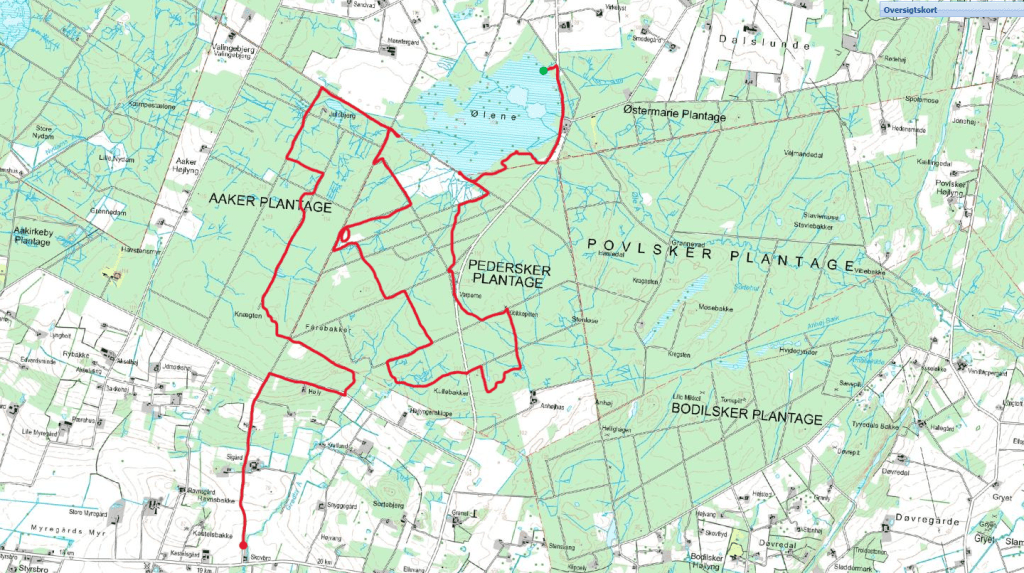
LAND 16 – Hellig Hågen to Ølene, 21.04.23

Denne blog på dansk her

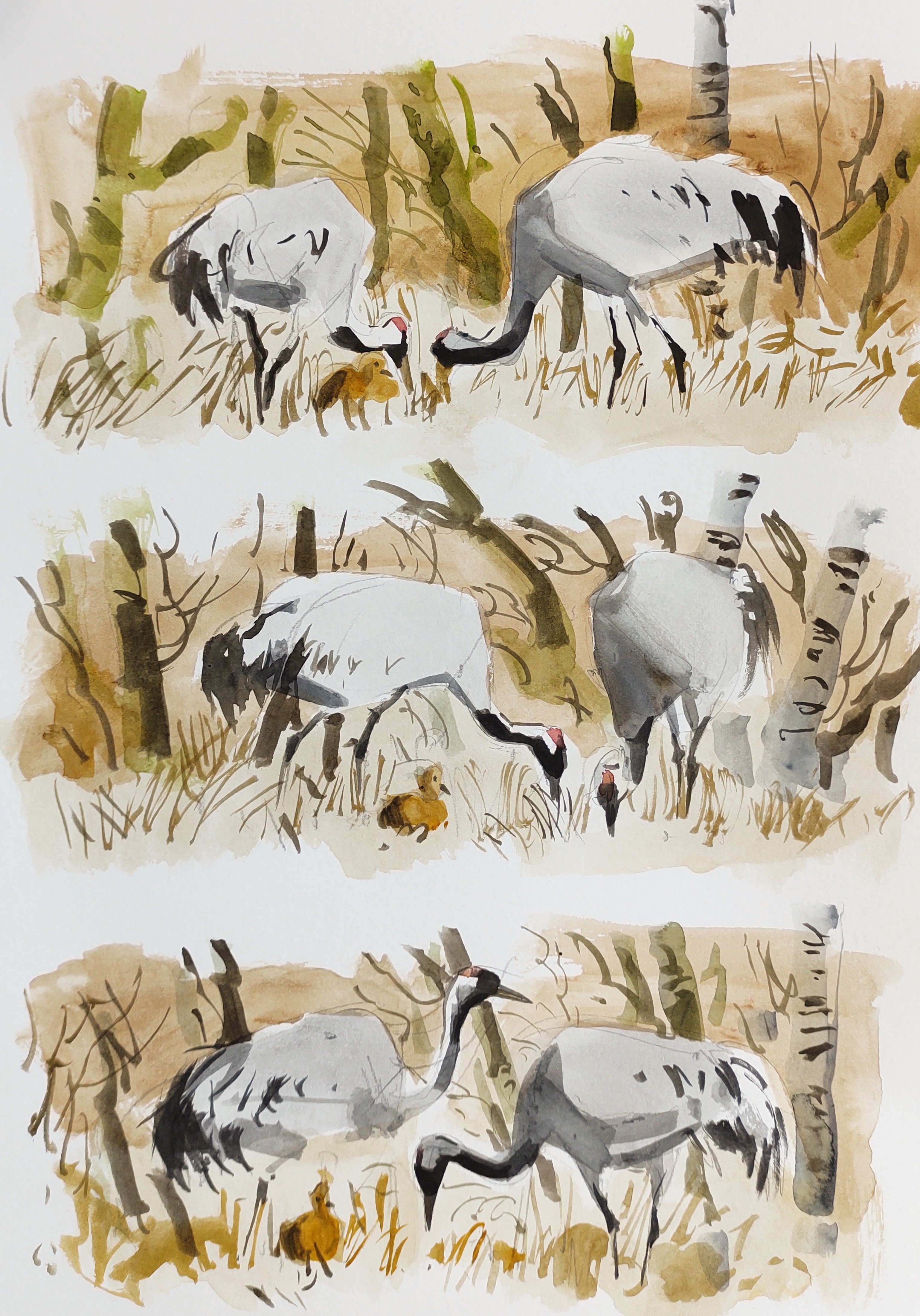
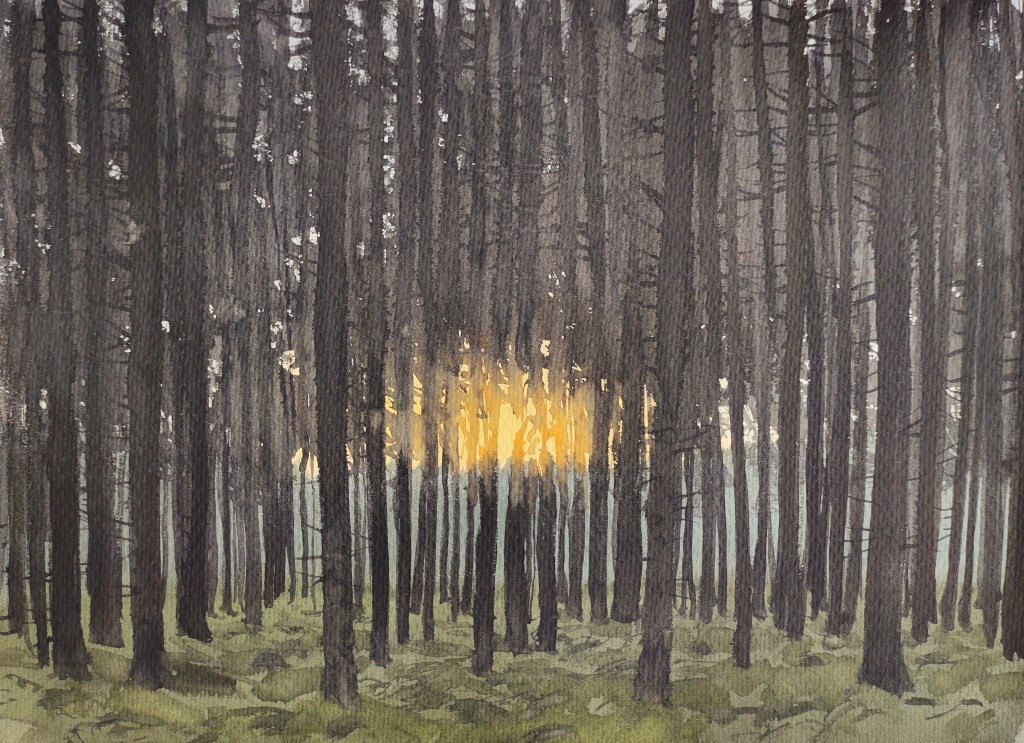
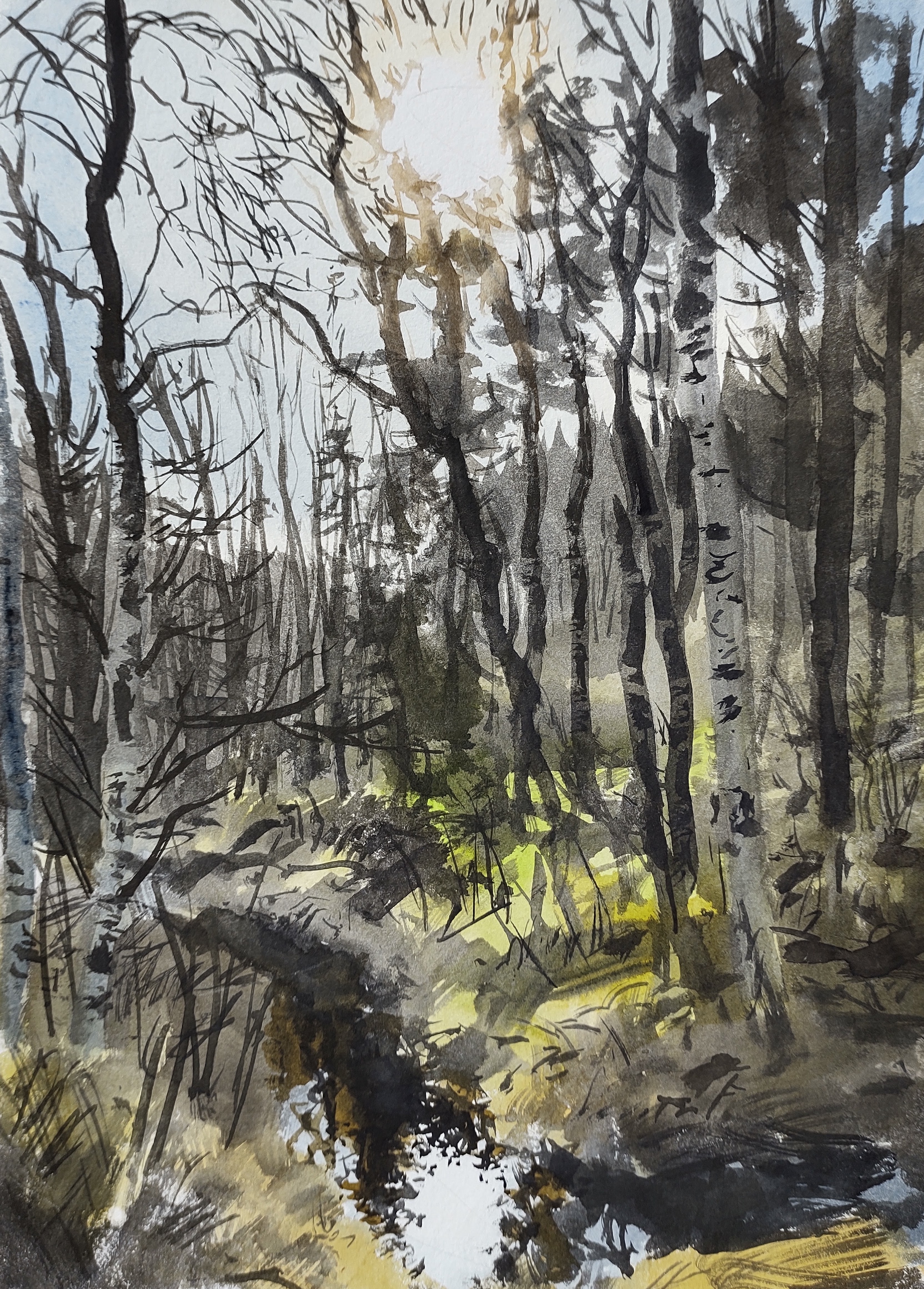
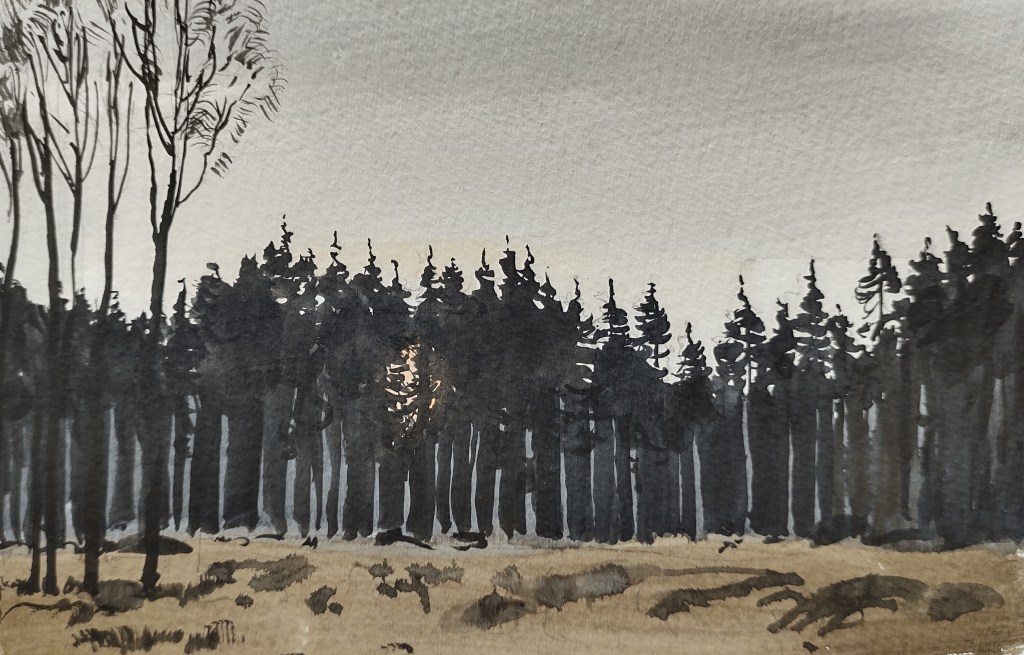
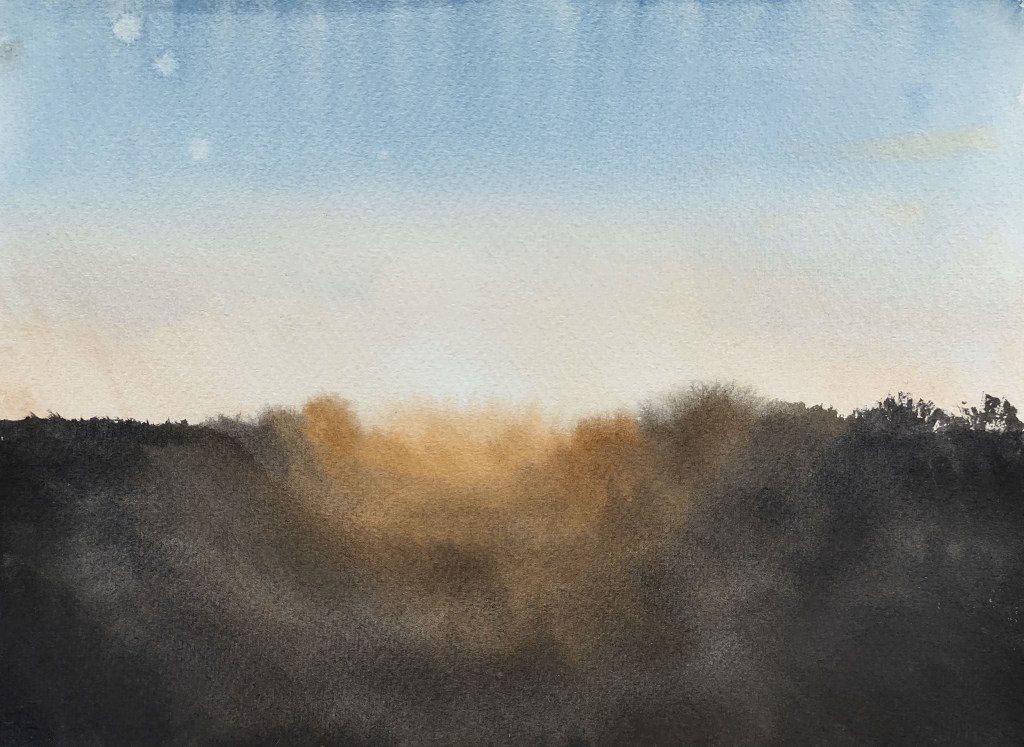
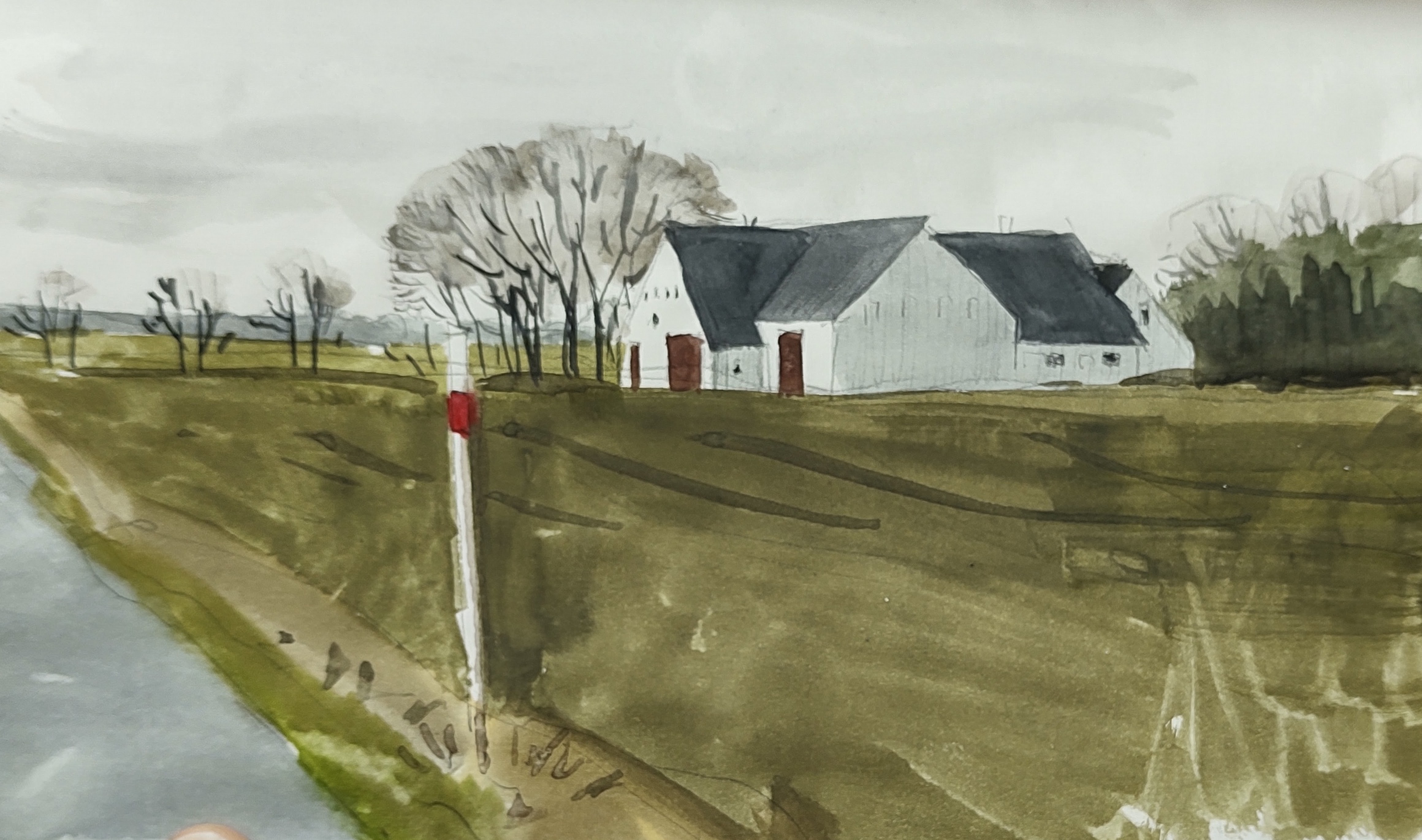
LAND 16 Dawn found me rearing to go – well slept for a change, and excited to see what the day would bring. The day’s forecast was fantastic, and the forest echoed with birdsong and promise. I painted the sun rising behind the fir trees and a nearby crane suddenly erupted into song, its unbelievably loud trumpeting calls reverberating through the cold and still morning air.

Sunrise, Anhoj plantation

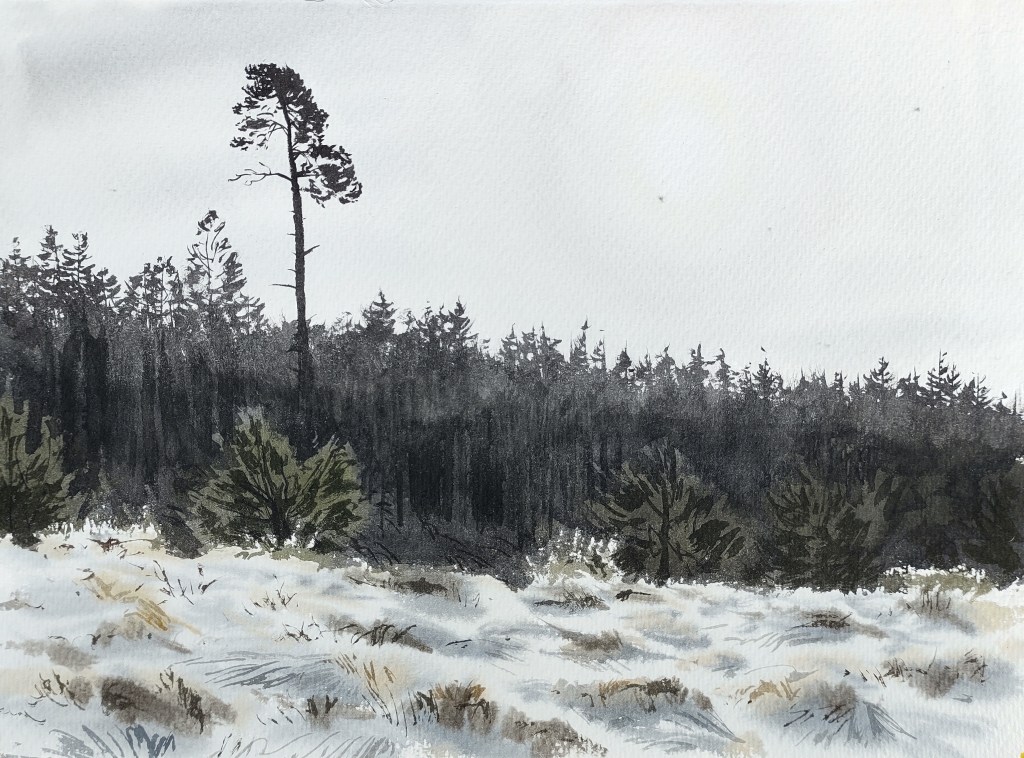
I headed north through the forest, arriving soon at Dynnedalmose, where a rather forlorn observation tower overlooked the swamp. Sections of the plantation had been felled, grazed and rewilded, and for the rest of the day I would pass between silent and dark fir plantation monoculture, and rewilded areas full of light, birdsong and insect life.

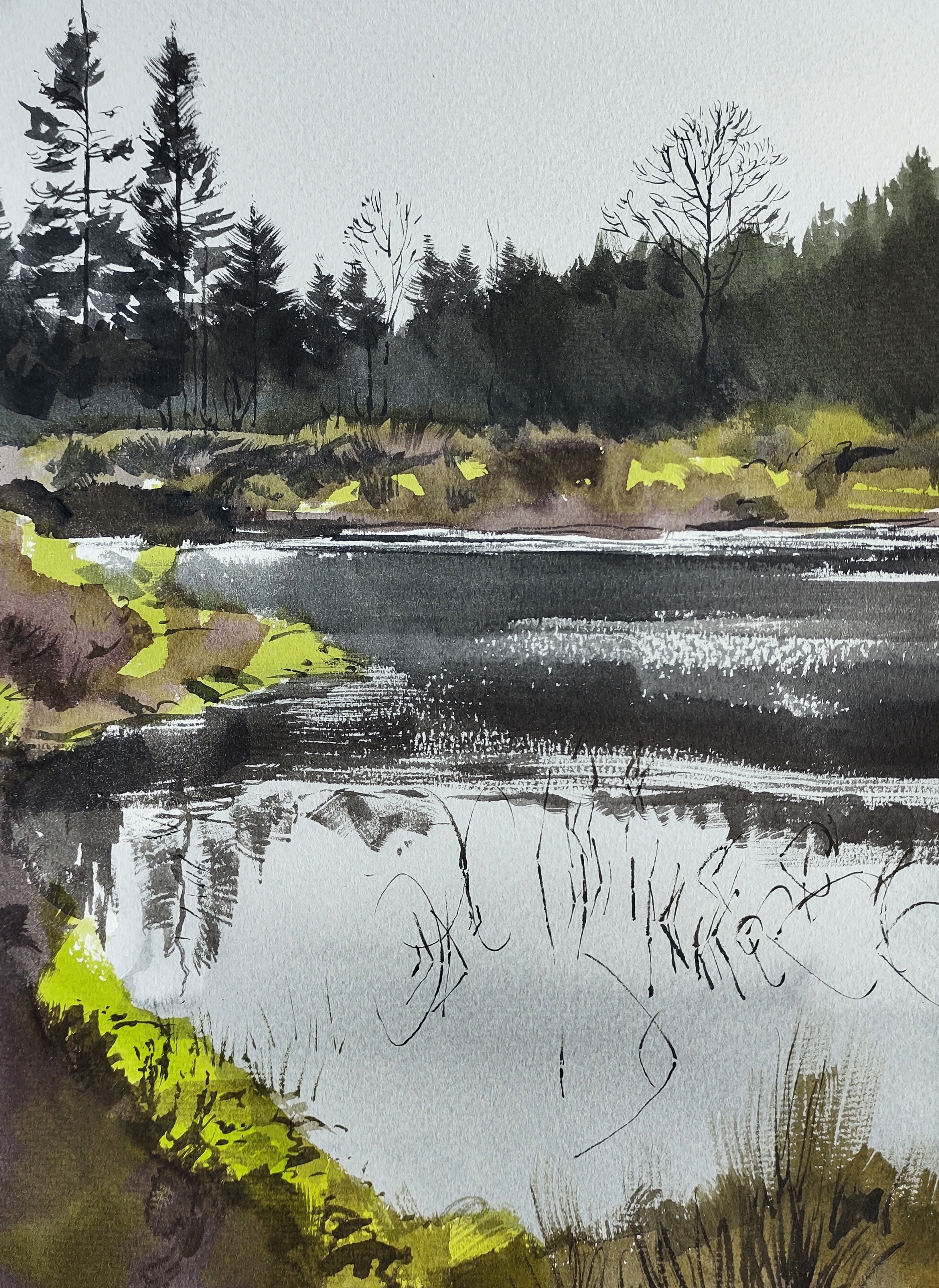
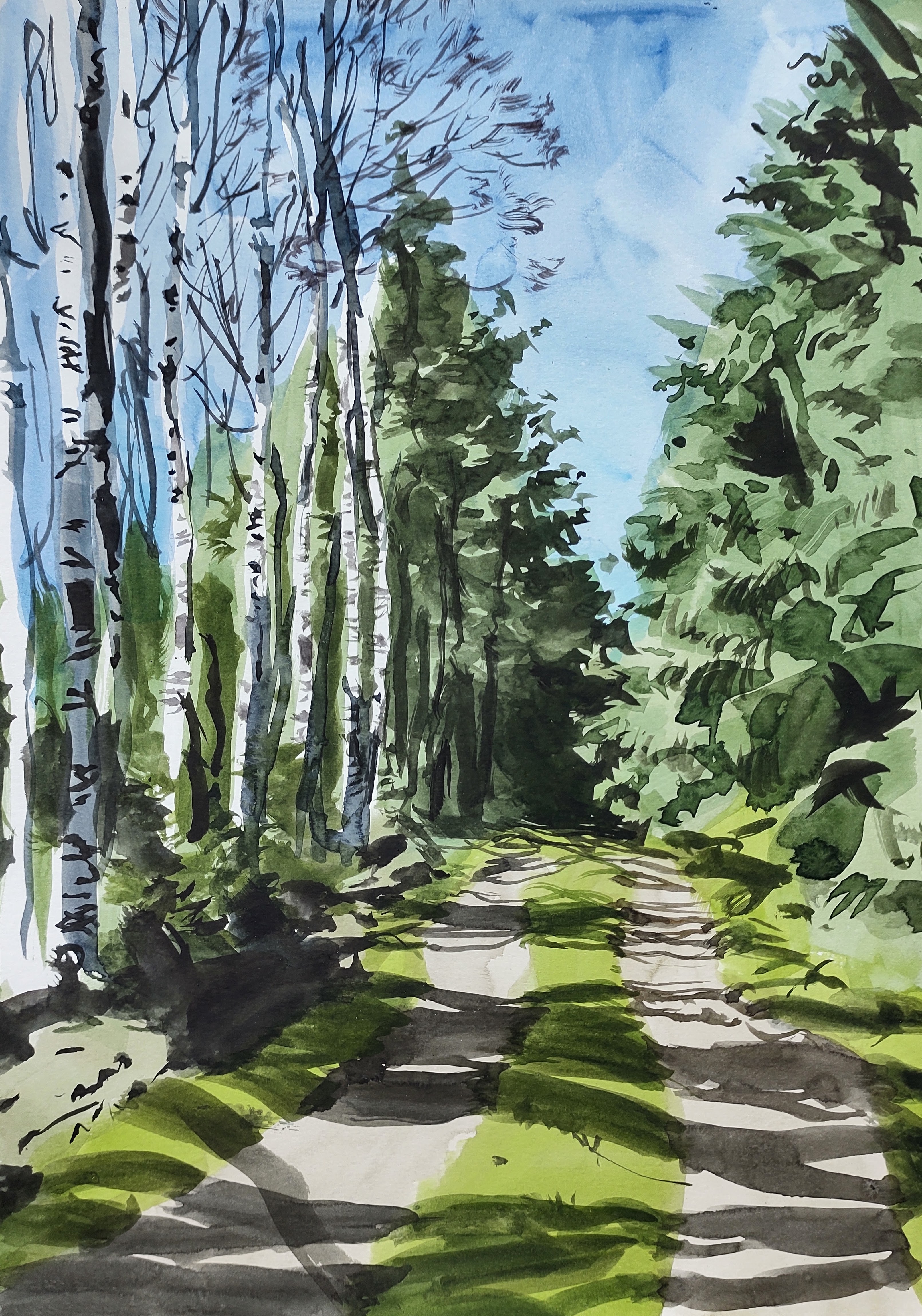
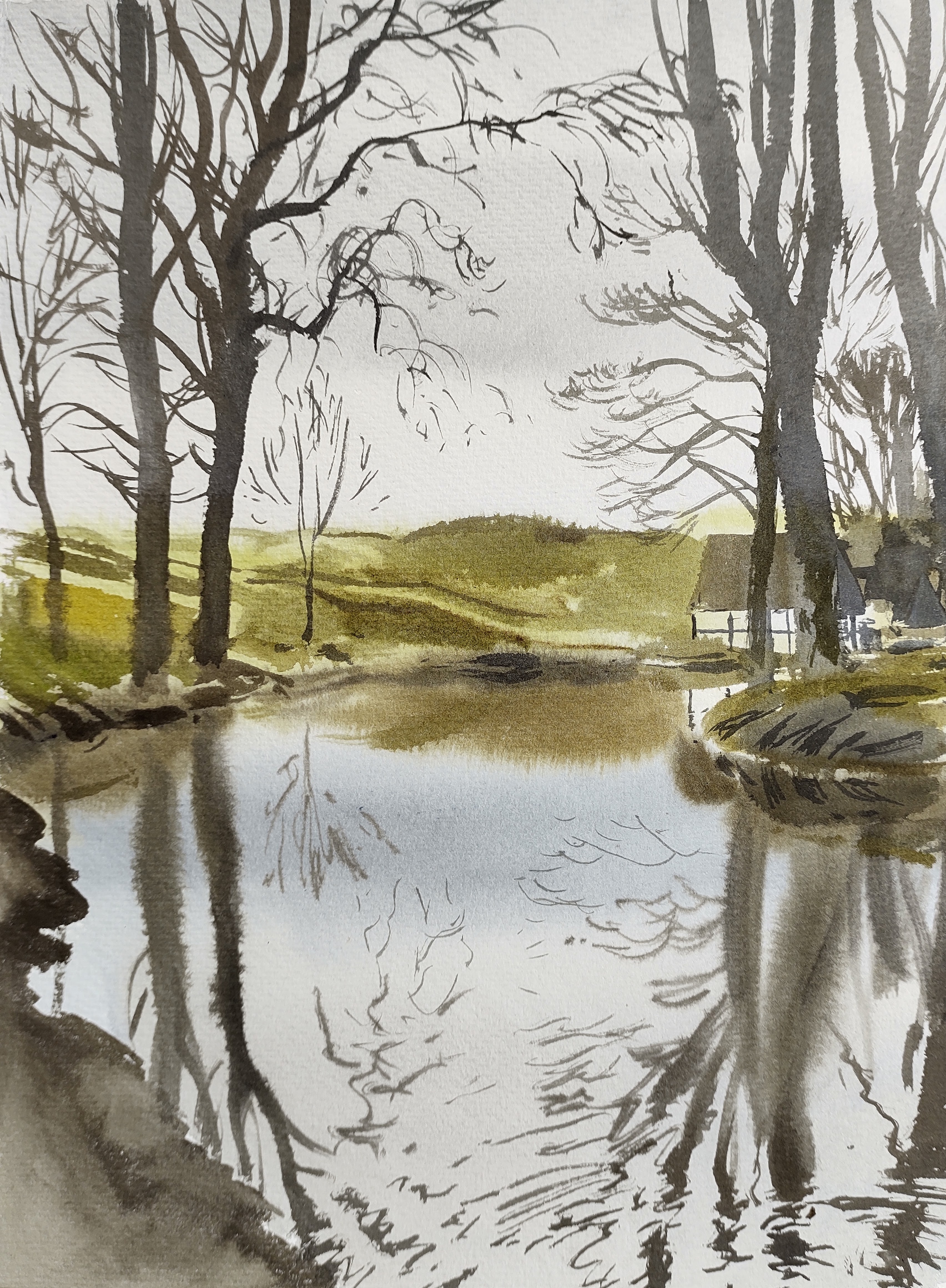
I followed a path along the Øle Stream, amazed that I had never visited this wonderful site before, despite so many years on the island. Several times green sandpiper shot out from the swampy margins bordering the stream, my presence shattering their peace.

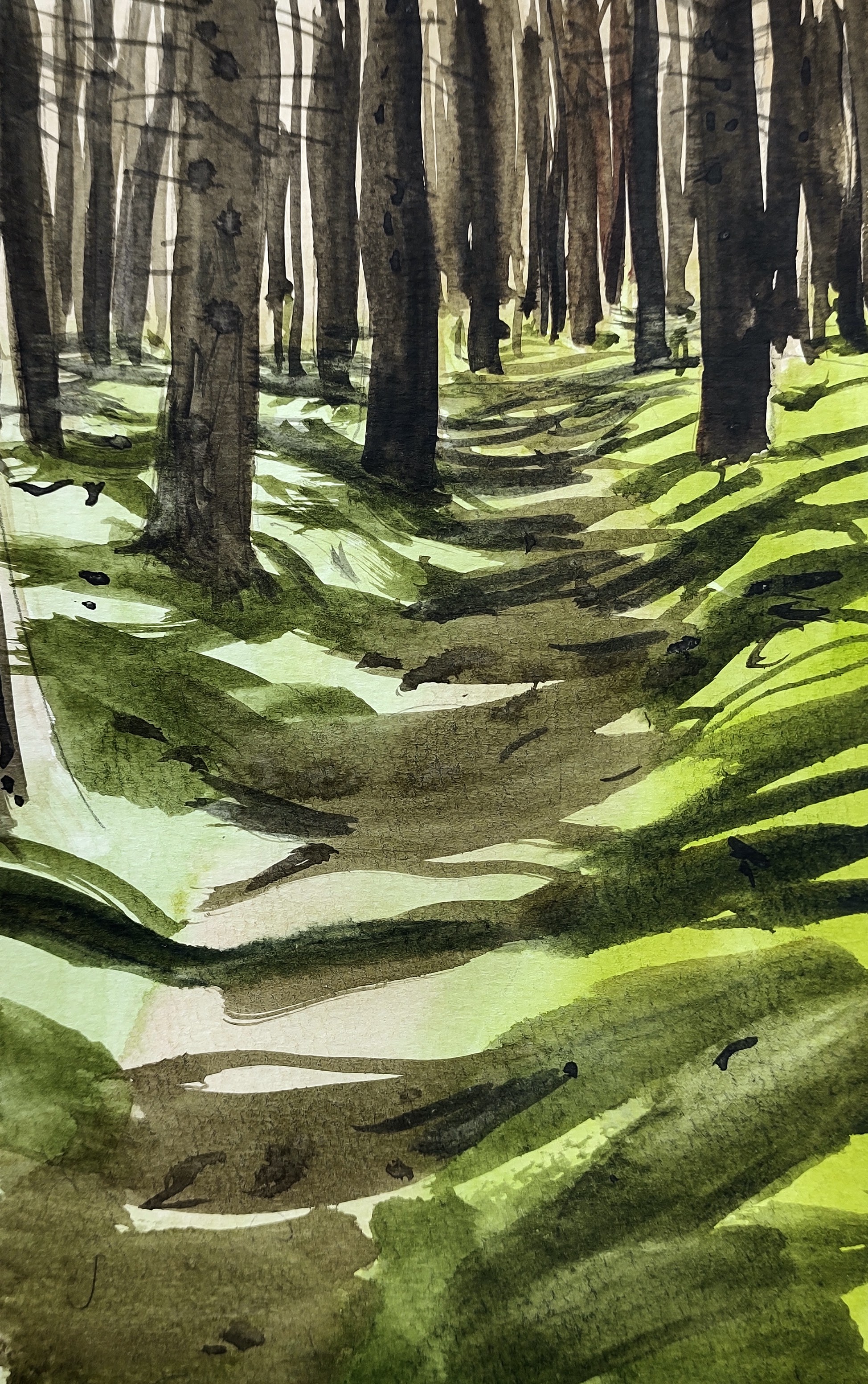
Øleåsti, Poulsker plantage

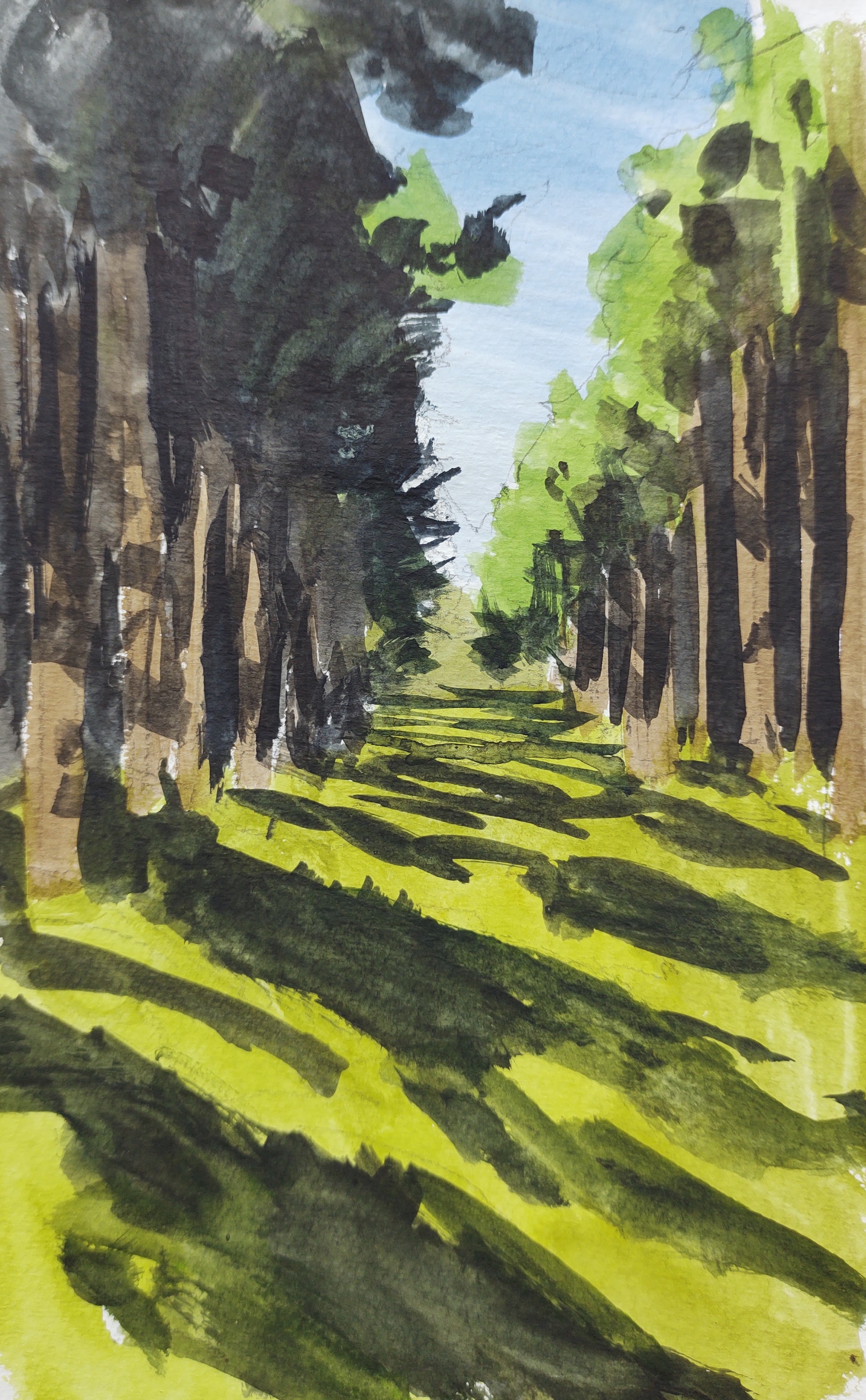
The day heated up, and for the first time on the LAND tour, I took off my woolly hat and gloves and jacket. I doubled back into the plantation and tried to capture the sunlight through the trees.

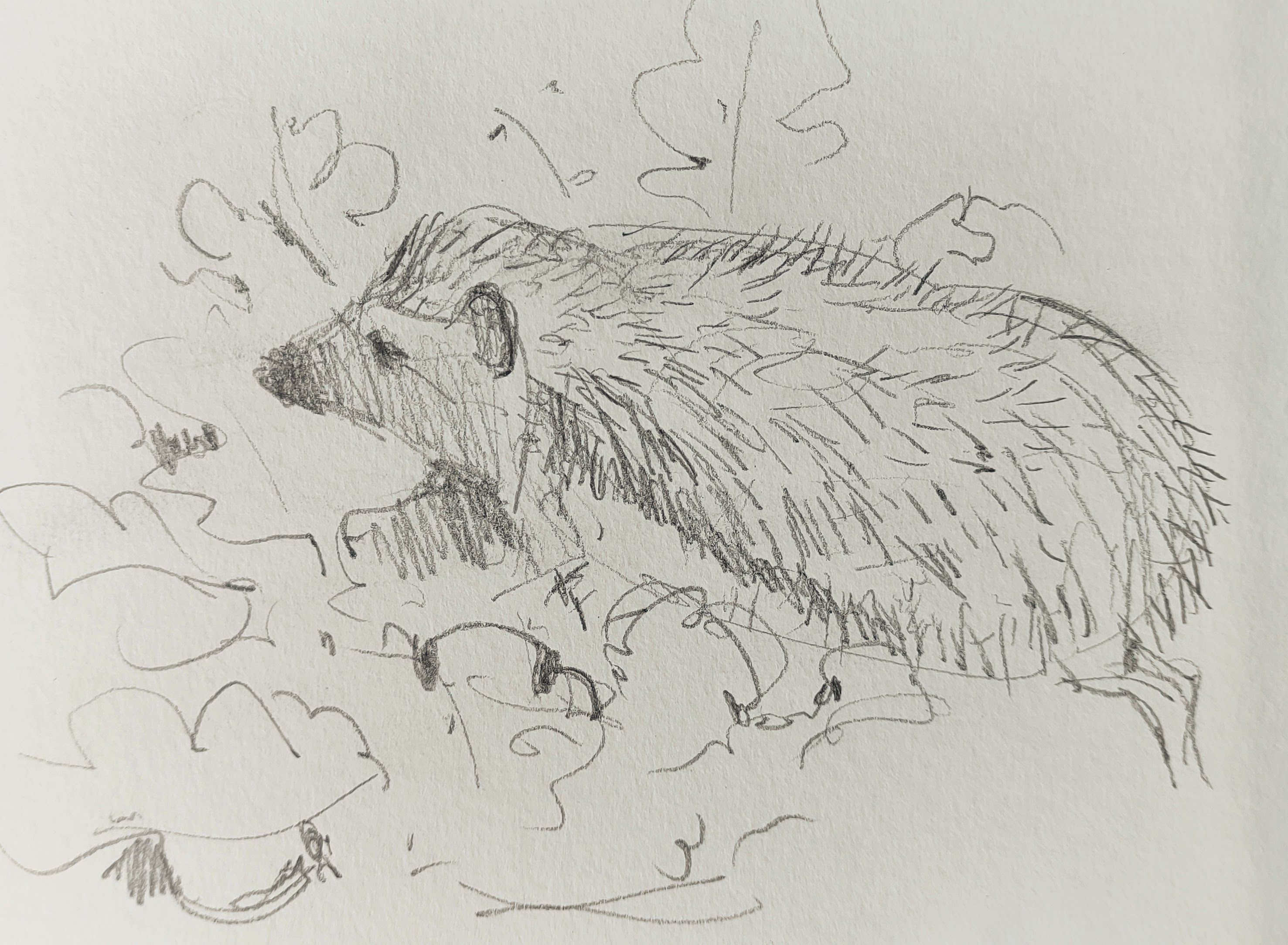
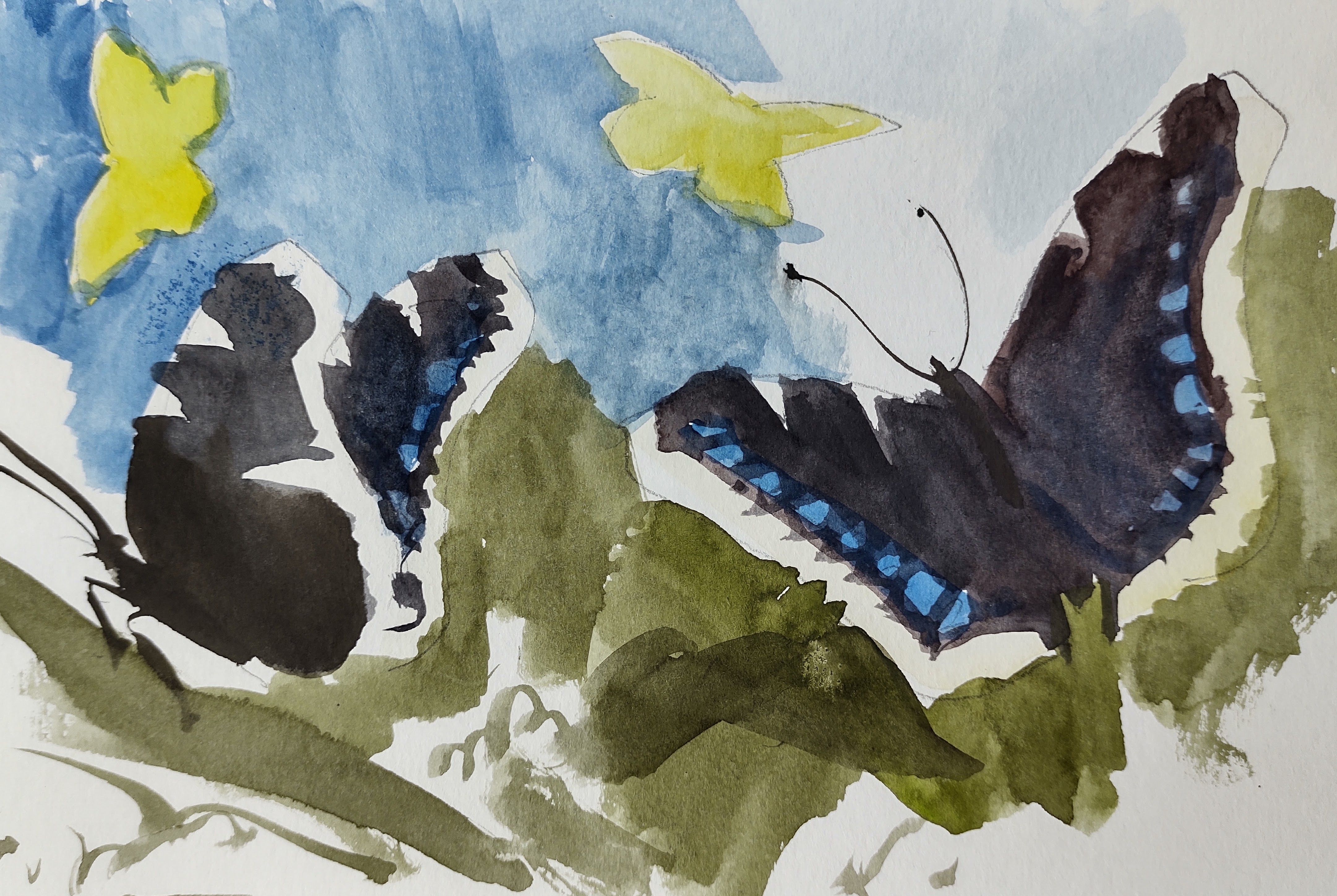
I headed south and then east through the woods. Not a soul was about. Not for the first time I was struck by the dissimilarity between paths, roads, and trails on the map – and their reality. At times I found myself with nothing to follow but ancient rutted tyre tracks. Common brimstone and mourning cloak butterflies, and even a jay, paused long enough for me to do some quick sketches.

I had a rendezvous arranged with Wilhelm from TV2 Bornholm, the local TV company, and we spent a couple of hours filming. By the time we had finished, the sun was lowering and I still had a way to go. I sped up and marched along empty trails and forest paths.

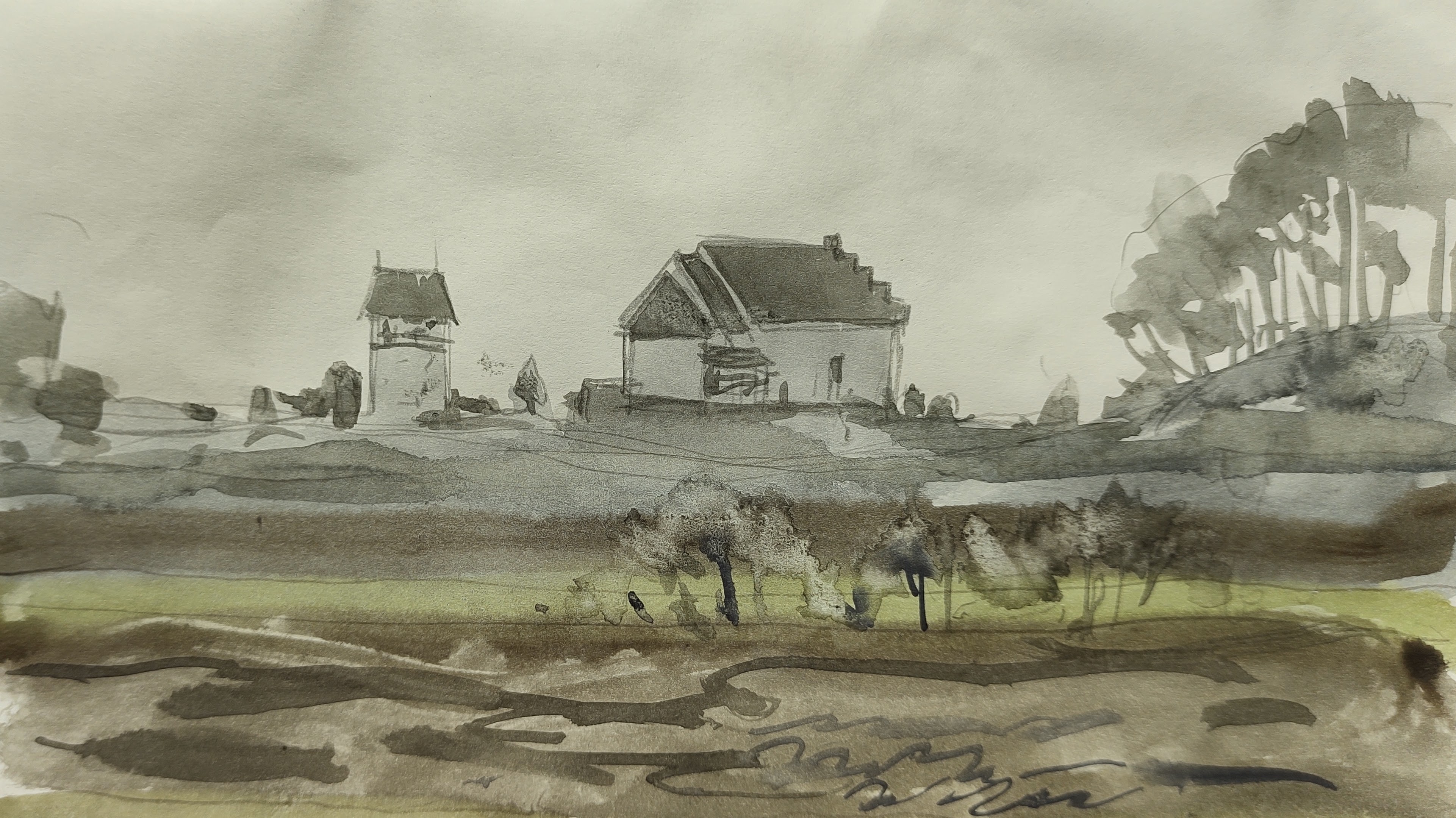
Mod Vibebakke

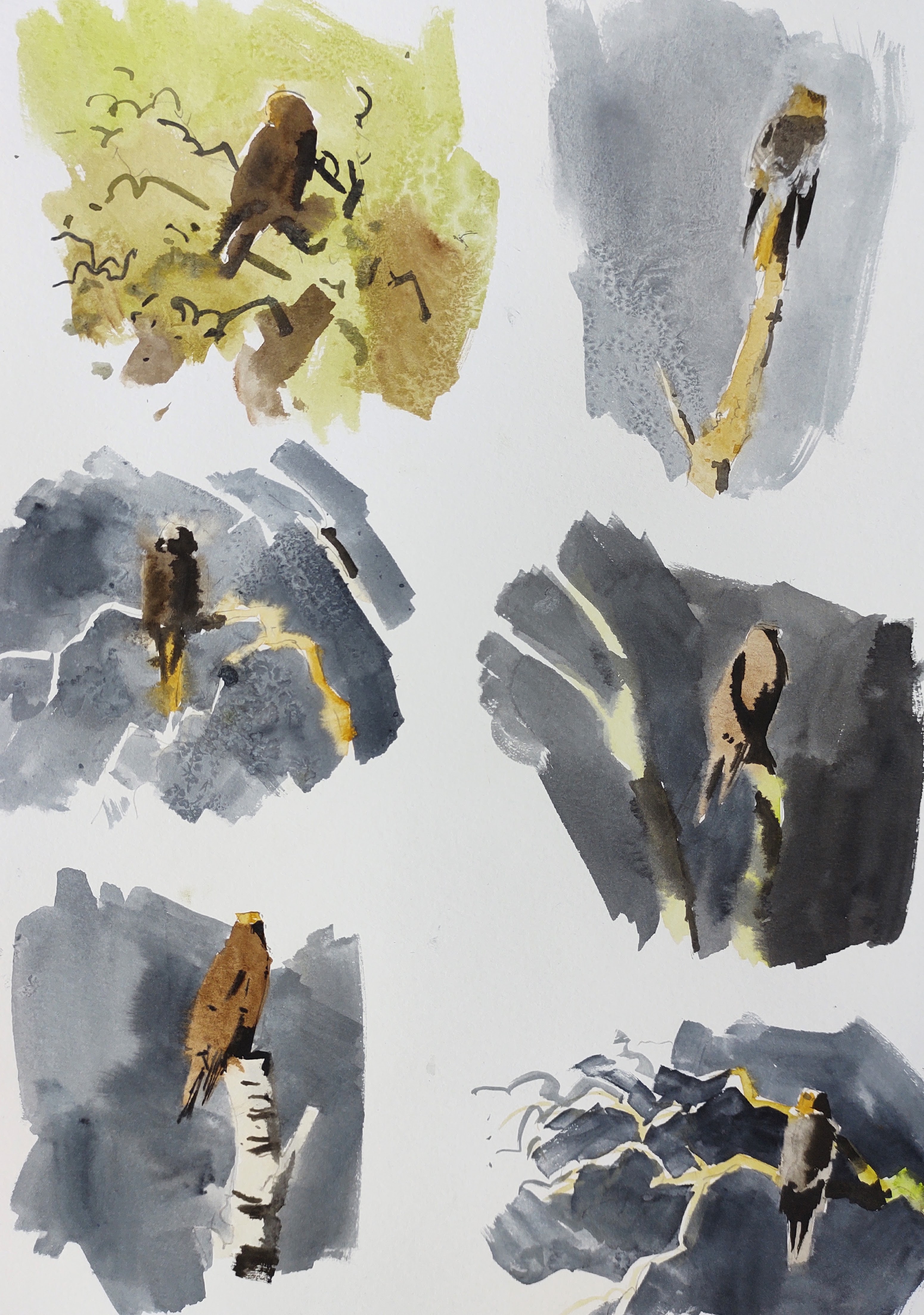
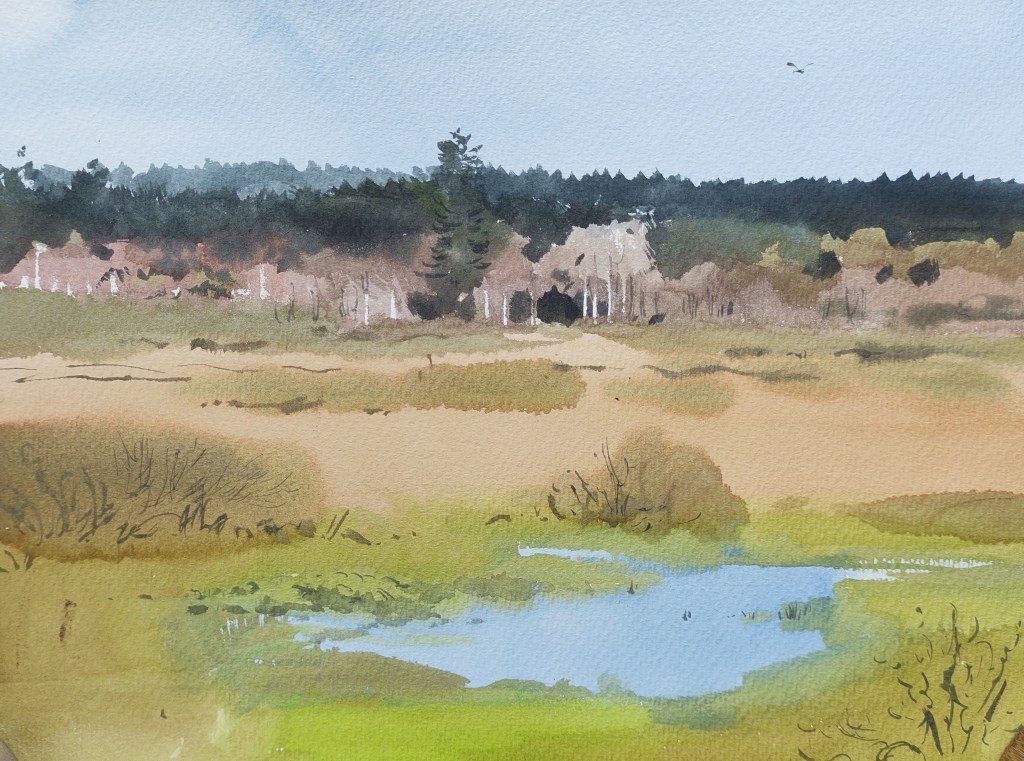
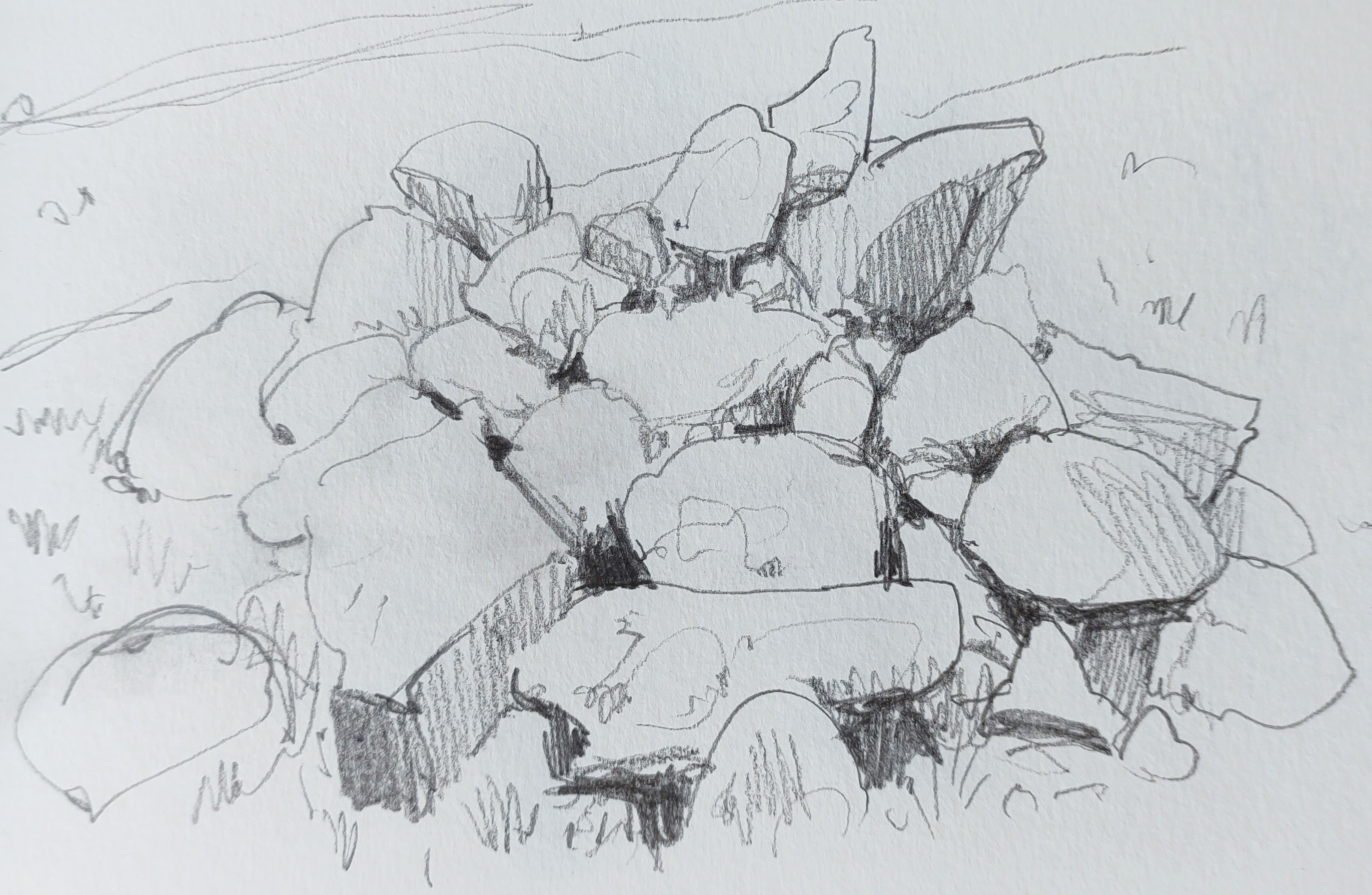
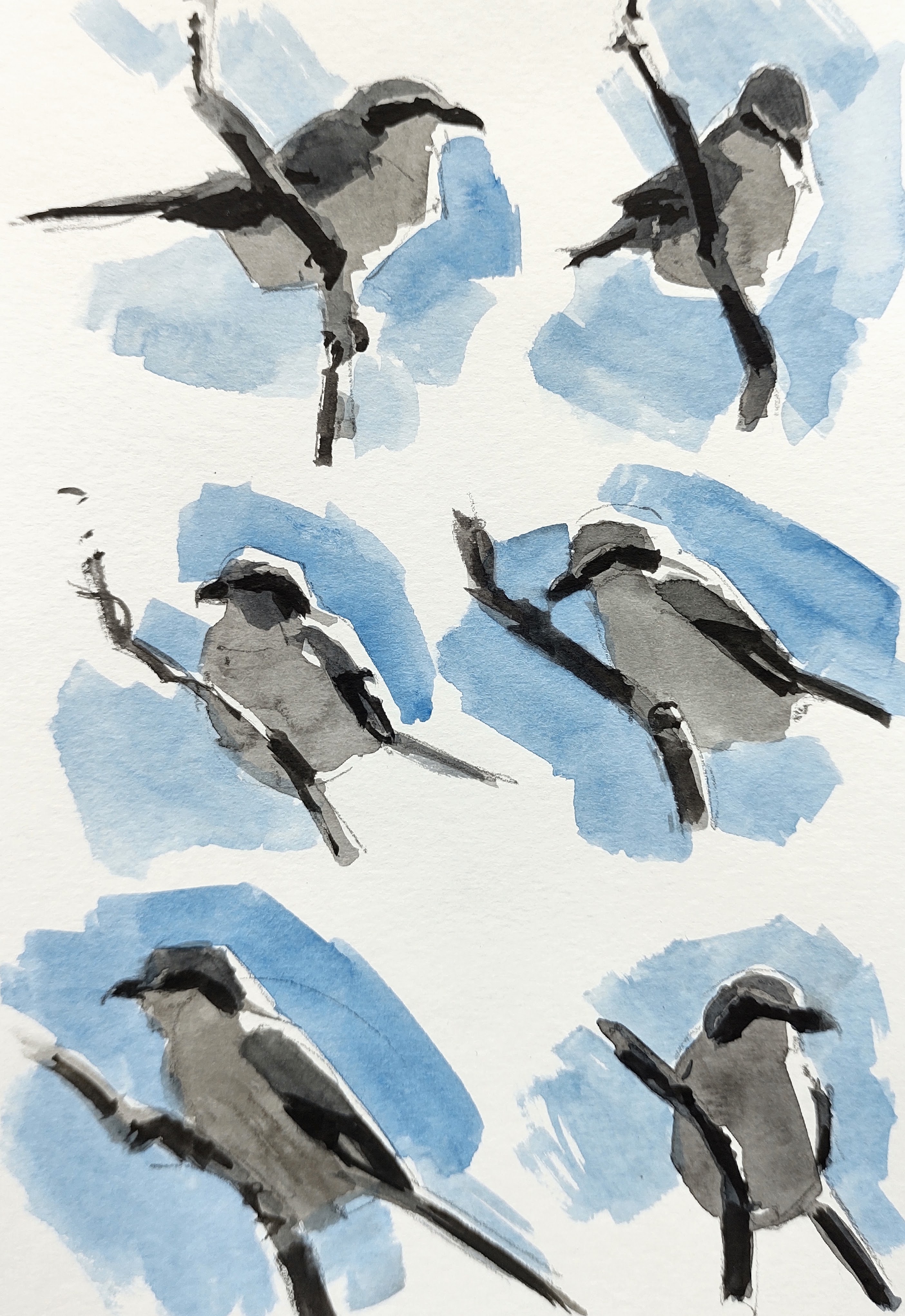
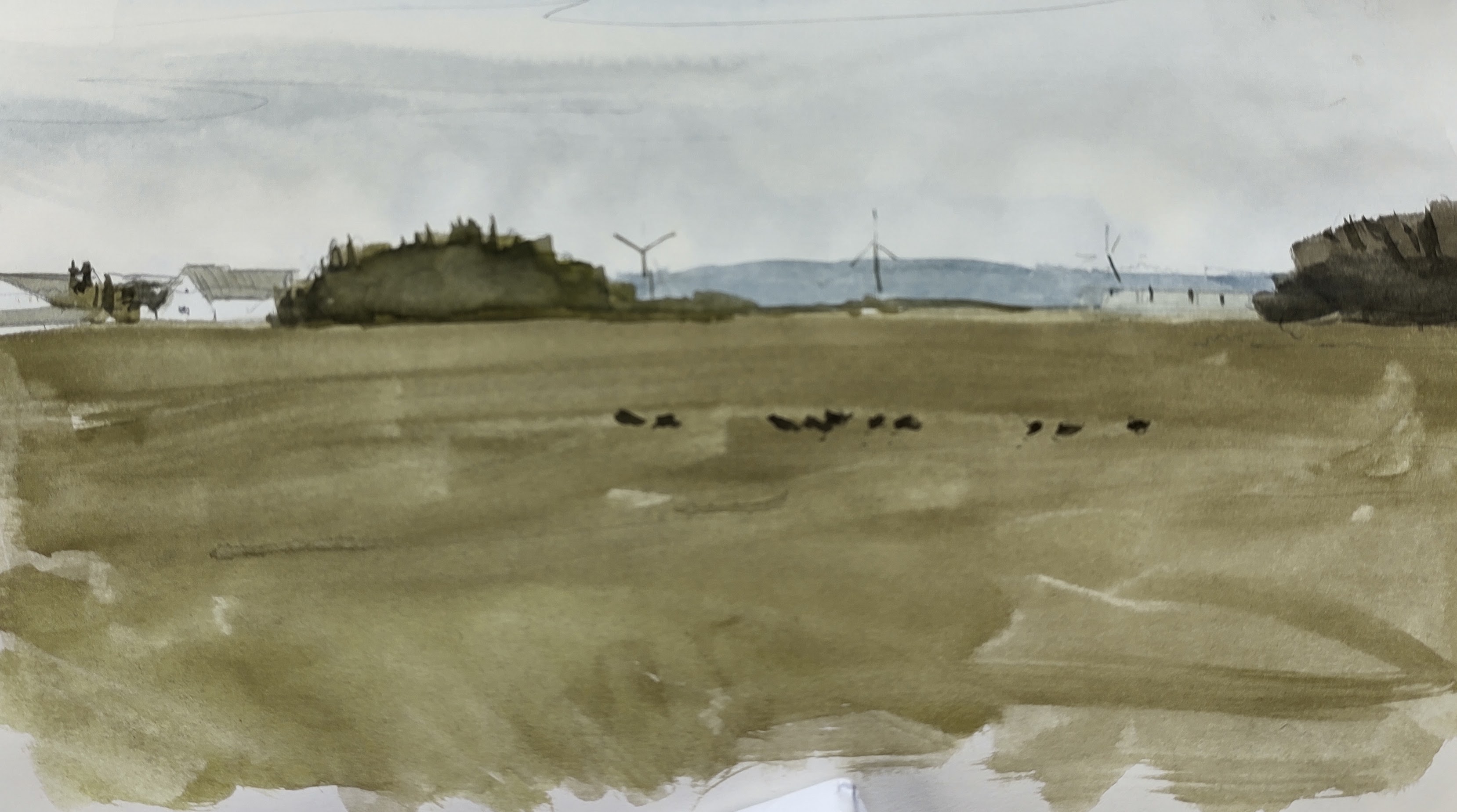
Eventually I arrived at the day’s destination – the bird tower at Ølene, Bornholm’s largest marsh and a mecca for breeding birds. An unusually late Great Grey shrike showed very well.

Great grey shrike

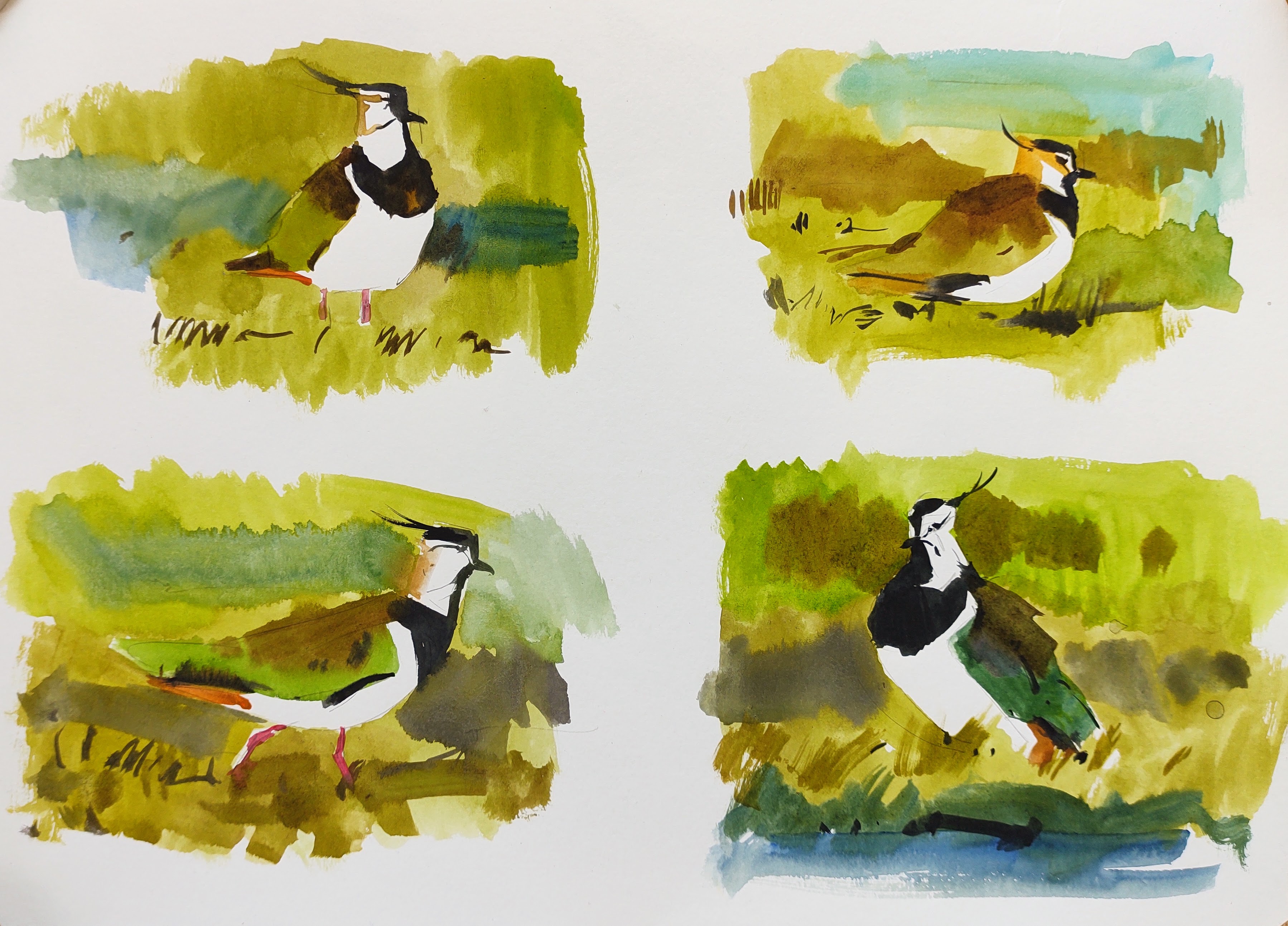
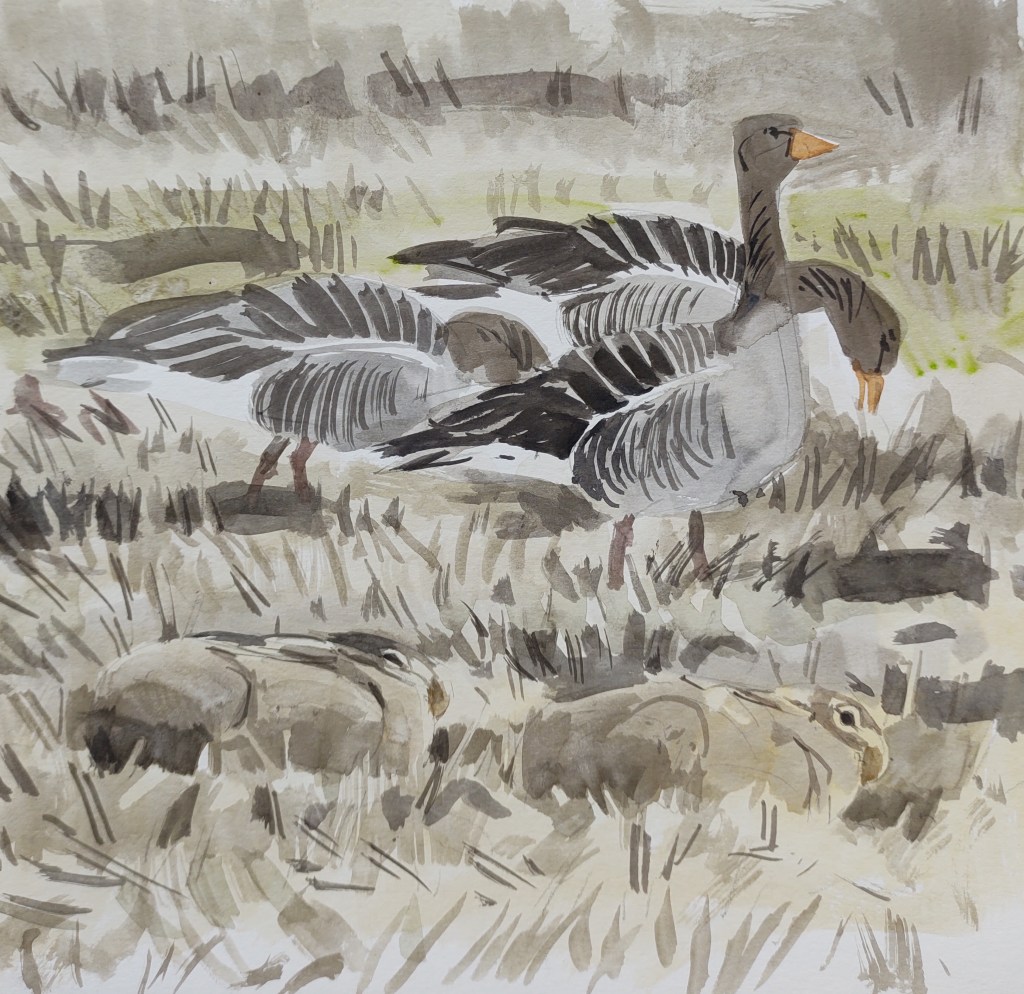
Periodically the peace was broken by enraged lapwing acrobatically confronting ravens or marsh harriers as they passed overhead.  Below the tower, groups of grazing greylag geese were followed by their newly hatched goslings. Waders milled about linnets and starlings gathered to roost.

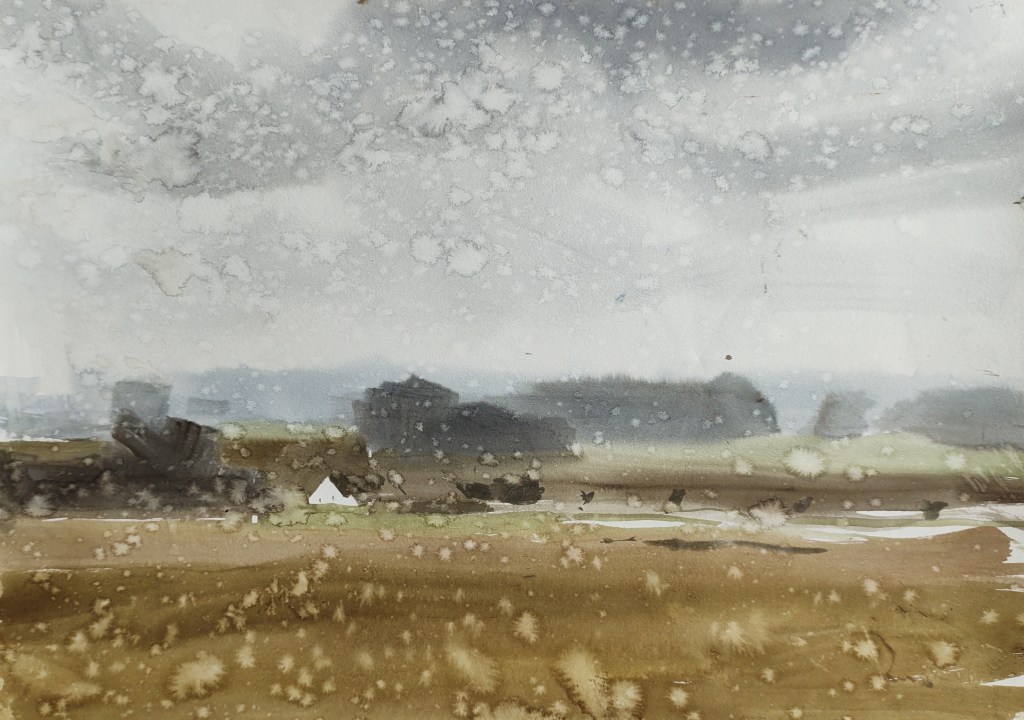
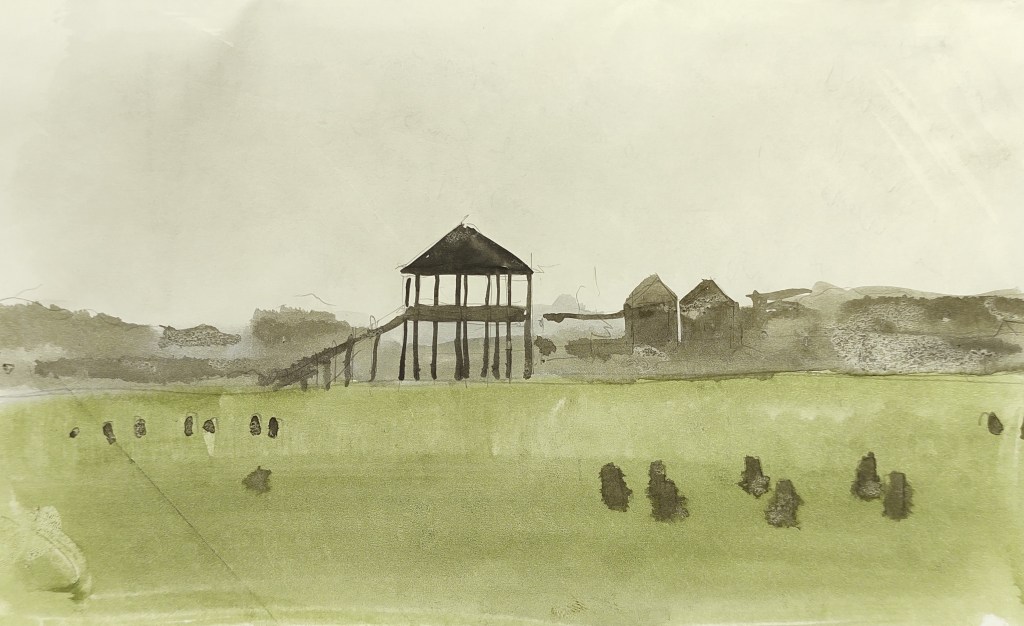
View from the bird tower, low sun.

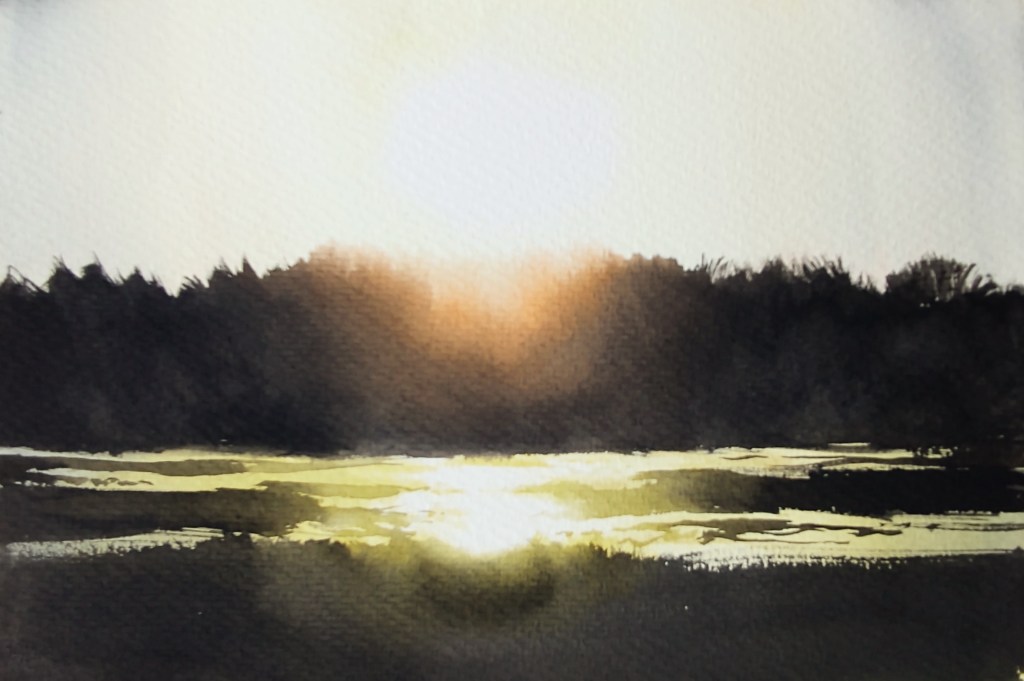
I gazed out over the marsh, as the sun slowly set behind the trees. It was another long day filled with innumerable encounters and experiences. I was completely and simultaneously exhausted and elated.

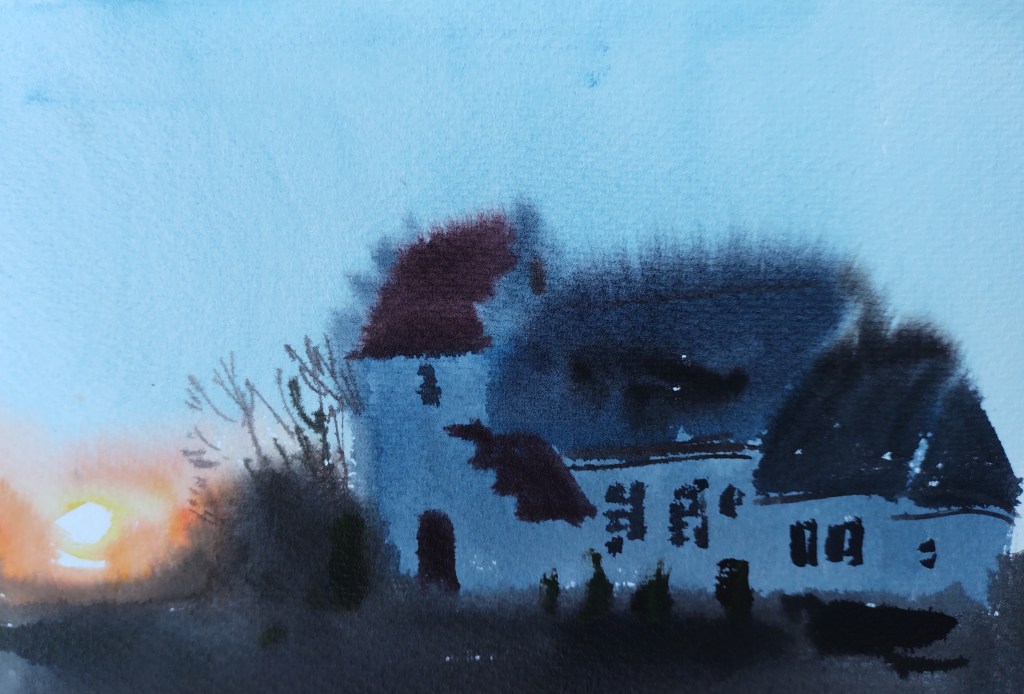
Sunset, Ølene

LAND 16

WEATHER REPORT – Sunny all day. Temperature 6 – 16 degrees. Wind 5 m/s from the east. Hours of precipitation: 0 hours. Hours of sunshine: 14.5 hours.

STOPS with the BIVVY – 0

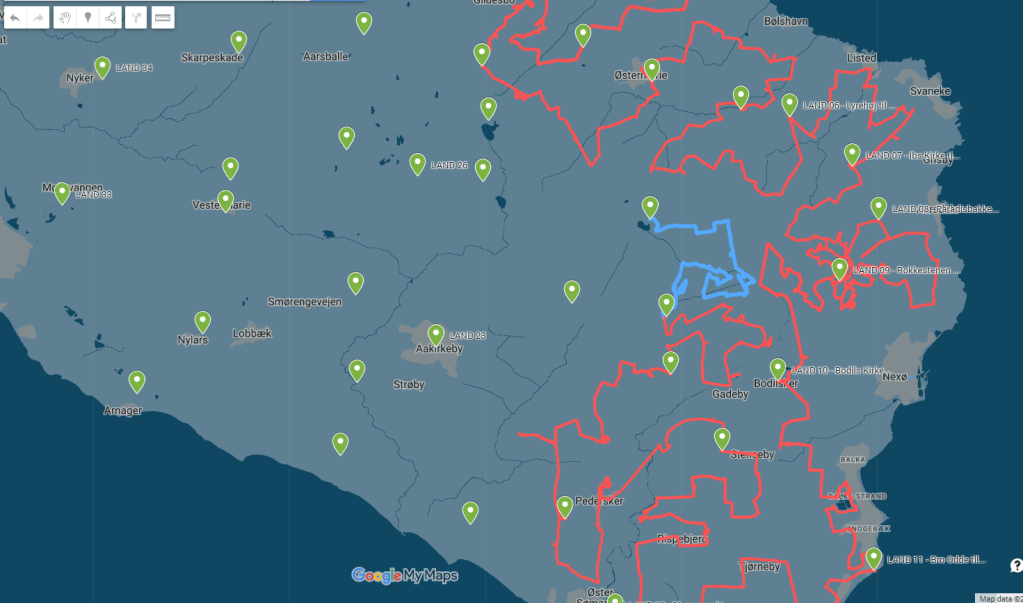
KILOMETRES WALKED – 16.88 km

DAY LASTED – 14h and 33 m

PEOPLE TALKED TO – 1

BIRDS SEEN and HEARD – 49 species: 8 new (shoveler, greenshank, green sandpiper, wood sandpiper, swallow, great grey shrike, dunnock, mistle thrush, running total = 82 species)

LESSONS LEARNED – In the morning, when it was cold, I thought I had made a mistake by not having all my warm clothing on. Later however, I ended up overheating – so not sure what I learned there.

IN MY HEAD – My newly dug pond. Hearts and health.

LAND 15 – Hjortebakken to Hellig Hågen, 14.04.23

Denne blog på dansk her

LAND 15 Friday again. A cold gunmetal dawn, with Bornholm hunkering under a thick layer of clouds. Nevertheless, for a fleeting moment, I saw the glowing ember of the rising sun through a stand of pines, fleetingly colouring the sky.

From Lyngvejen

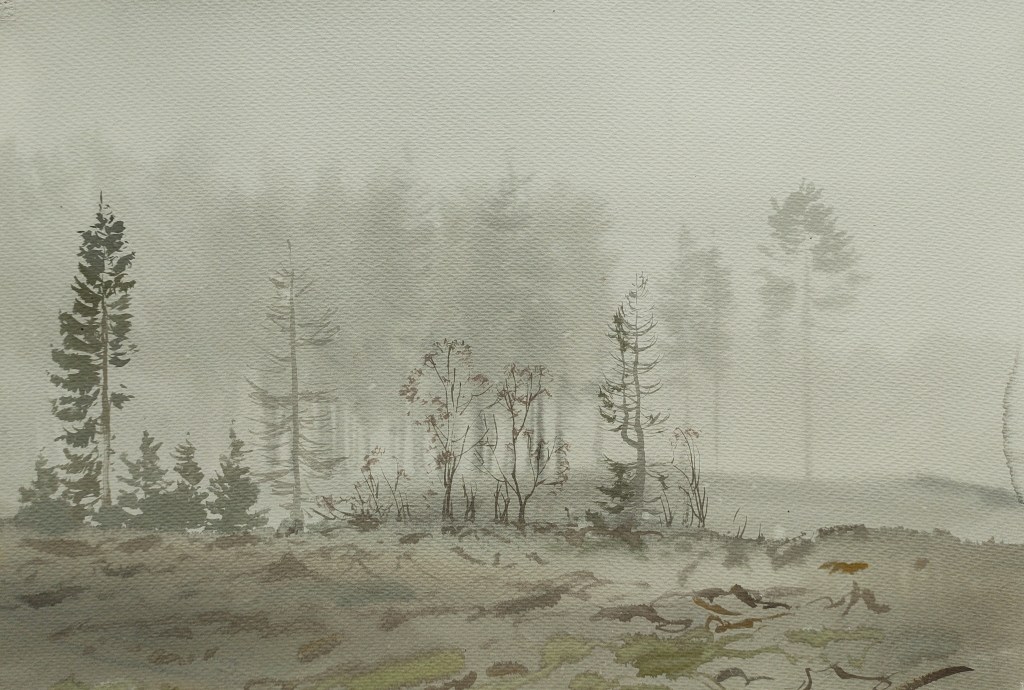
I headed north, towards the Bodilsker plantation, stopping by the side of a silent and still lake. A heavy mist descended, then a light rain.

View of the lake at the Stenbrudssø, Dalevejen

My route meandered up and down – crossing the escarpment that divides the Pre-Cambrian granite highlands of the centre and north, and the Cambrian sandstone and shale lowlands of the south. At the bottom of the gentle slope lies Bornholm’s last working sandstone quarry. I explored the site, marveling at the mysterious belts, pulleys, and machinery, and admiring the exquisite lilac and ochre sandstone. A pair of lesser ringed plover, that ubiquitous resident of flooded quarries, flew noisily overhead annoyed at my intrusion.  I chatted to one of the two people still working the quarry. Extraction industries used to employ thousands on Bornholm, and It was fascinating to meet someone still working in this field.

Stenbrud

Heading northeast, my route took me towards Døvredal, through farms and fields. A thick mist now reduced visibility. A small herd of fallow deer stag walked across a field, seemingly oblivious to my presence.

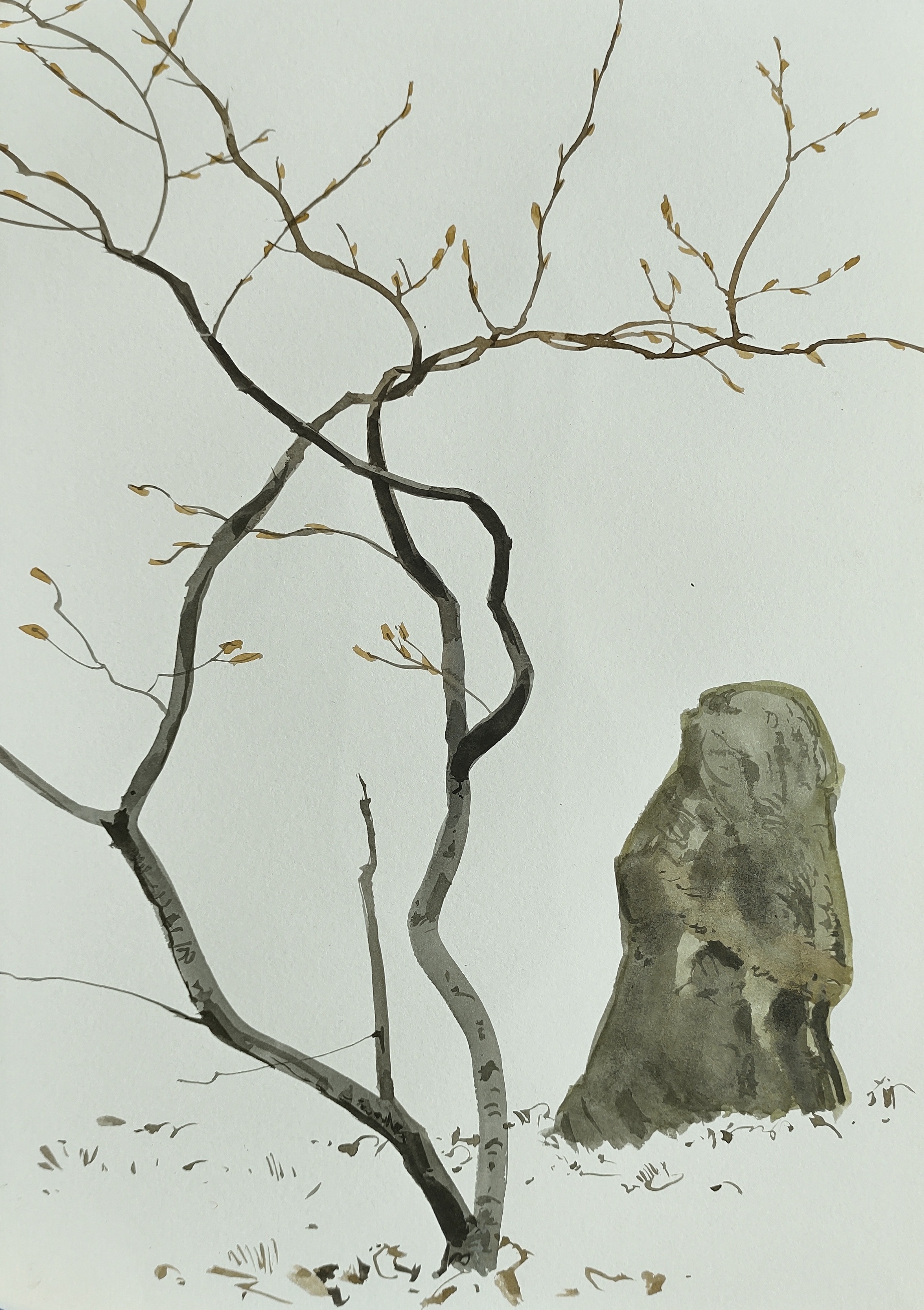
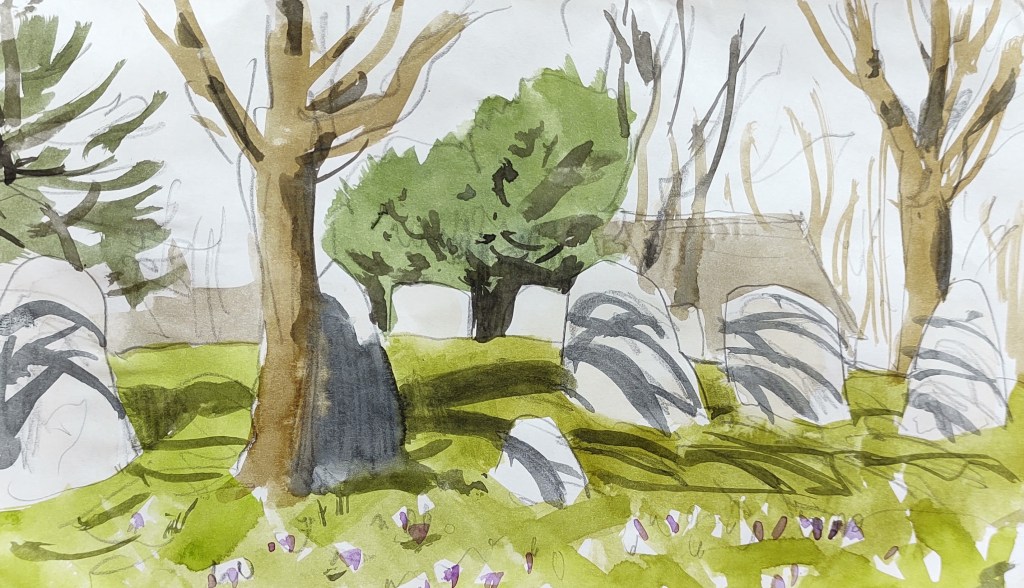
I stopped for lunch at Gryet, where no less than 67 menhirs erected as memorials to the dead by iron-age Bornholmers stand in a beech and oak wood.

Beech sapling and menhir

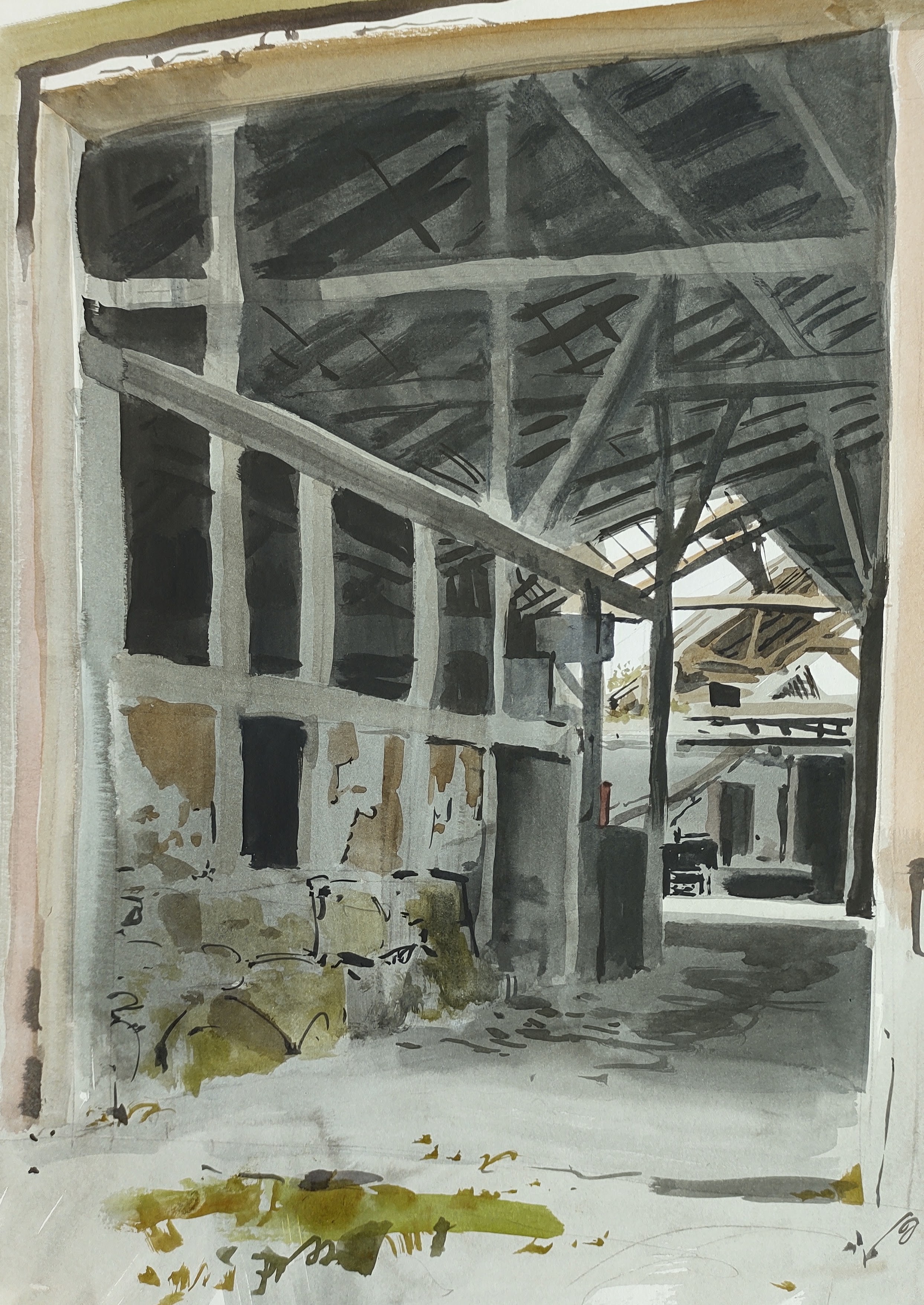
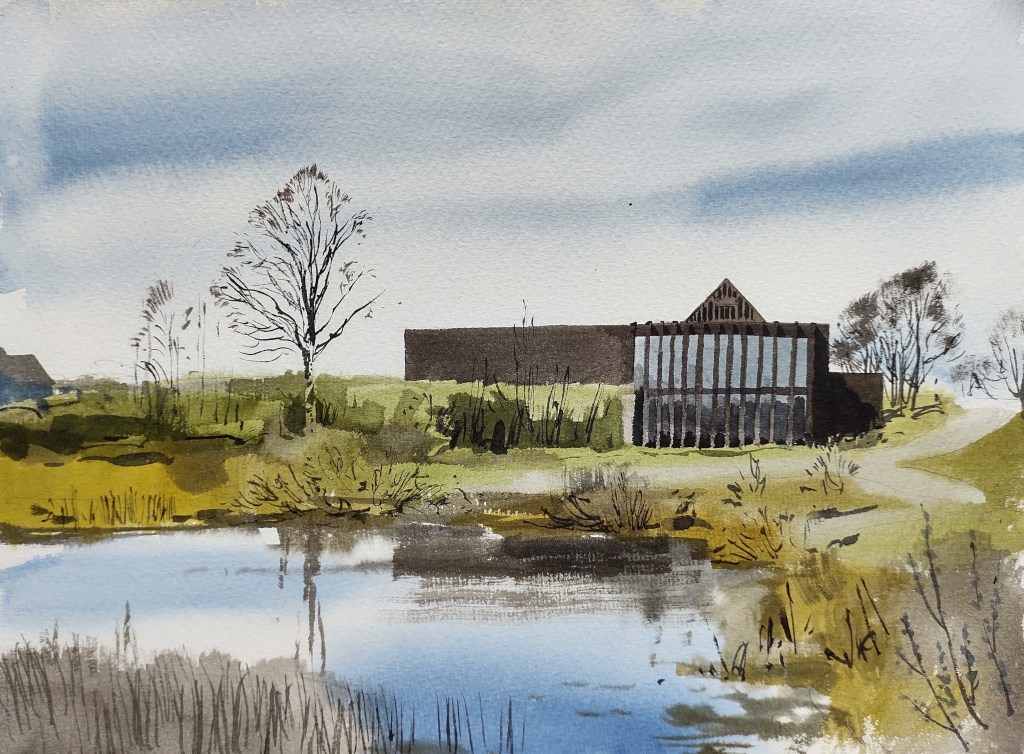
I cheekily took a turn up a path towards an abandoned farm, which I had seen on Google Maps when scoping out the area. Within minutes a farmer, the landowner, drove up in his tractor and warned me off. We chatted for a while, and he began to tell me the story of the farm and how it had been occupied since the 17th century, and at one time had hosted tens of farm workers. The huge barn, with an intricate cantilevered roof construction of thick oak beams, was built in the early 20th century on the site of an earlier structure and reused huge granite blocks from this. Again, I felt connected to Bornholm’s past and present.

View into the old barn, Døvredal 11S

The farmer gave me permission to continue through the farm, down into the wild and picturesque Døvre valley, and up again to the plantation on the other side.

Bodilsker plantation

I walked through the forest, sometimes following the path, sometimes cutting into the forest and following old logging tracks. The plantation was silent, the atmosphere stifling.

Bodilsker plantation

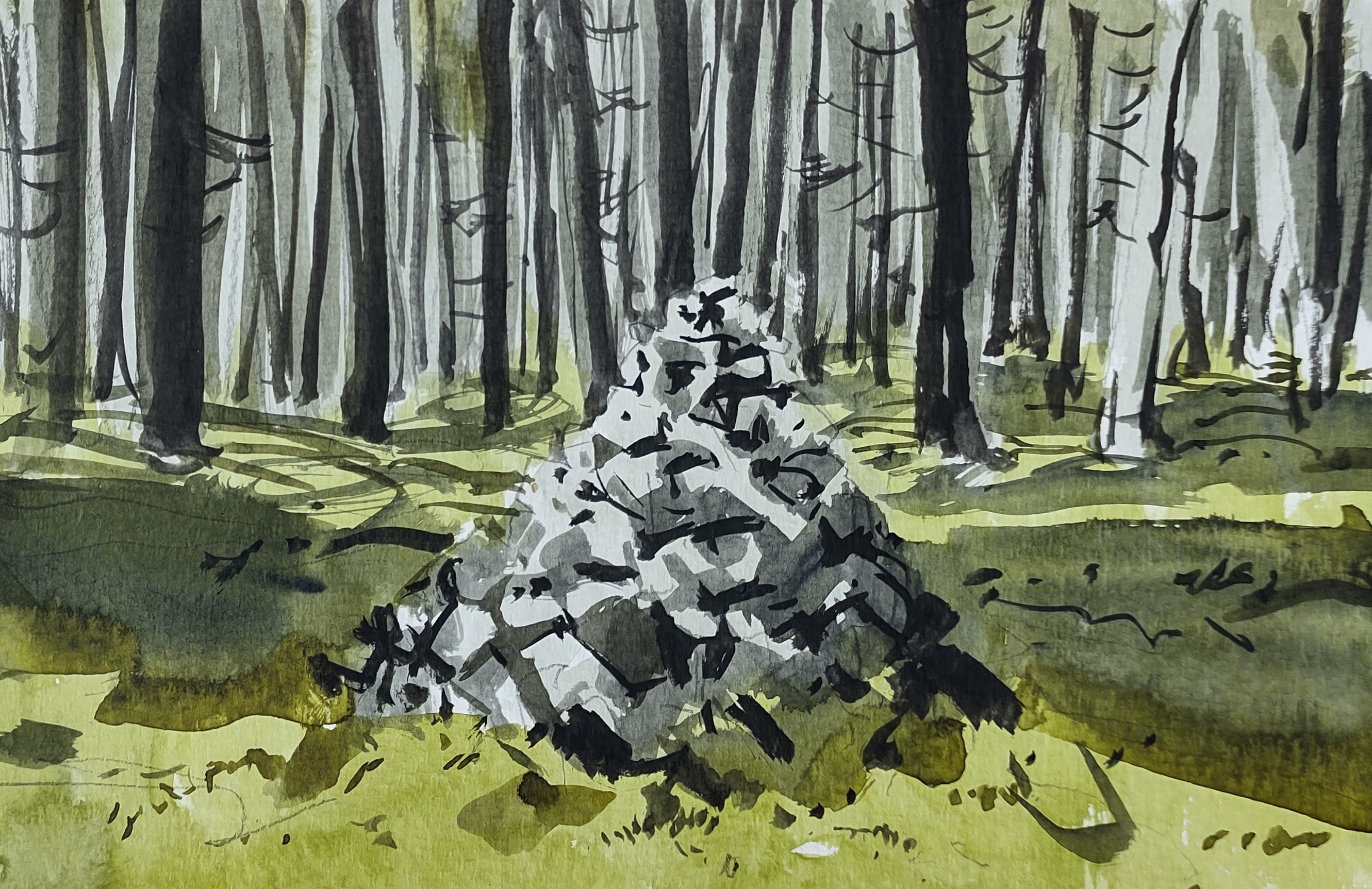
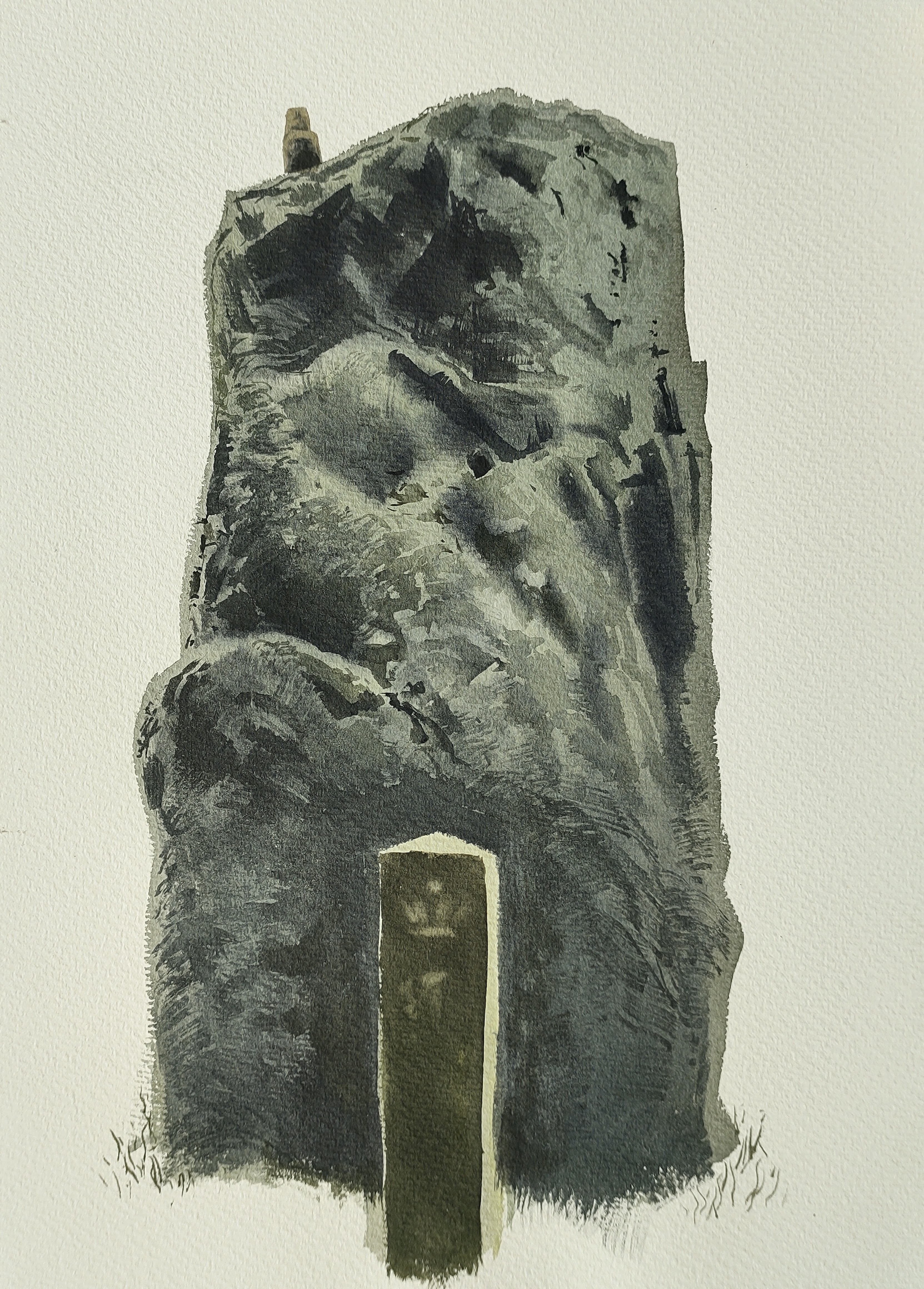
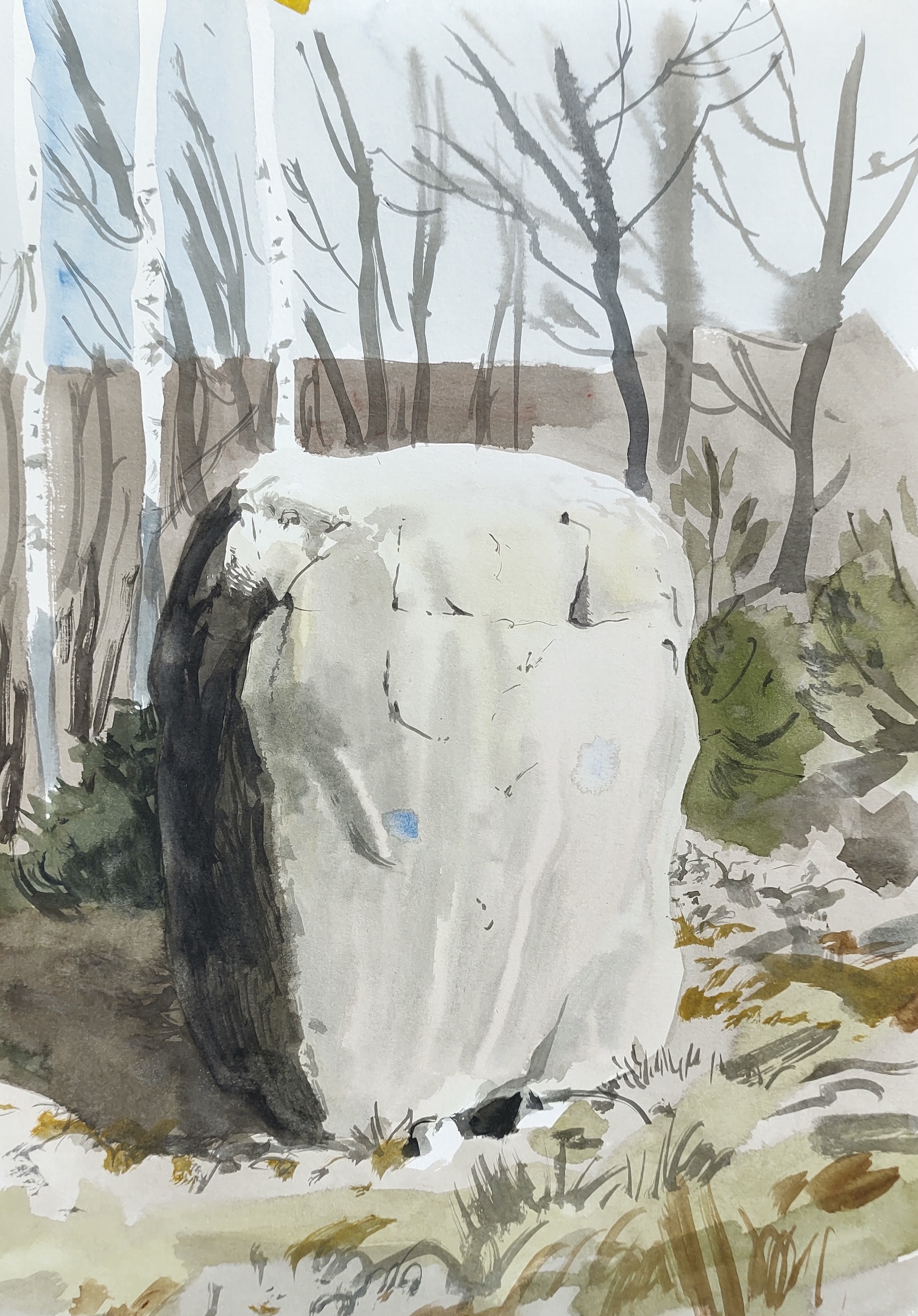
Eventually I arrived at Hellig Hågen, a large menhir standing alone, deep in a fir plantation. According to local custom, one should greet the stone if passing – ‘Good day to you, Hellig Hågen’ – a failure to do so may result in bad luck. Whether it was my extreme tiredness after a long day, or the oppressive silence of the forest, but the stone seemed completely animated and the site positively enchanted. As the sun finally set behind the clouds, I thanked Hellig Hågen for the day, and walked off to find my lift.

Hellig Hågen

LAND 15

WEATHER REPORT – Overcast and misty all day. Temperature 4 – 7 degrees. Wind 3 – 5 m/s from the east. Hours of precipitation: 0.5 hours. Hours of sunshine: 0 hours.
STOPS with the BIVVY – 0

KILOMETRES WALKED – 15.95 km

DAY LASTED – 14h and 1m

PEOPLE TALKED TO – 2

BIRDS SEEN and HEARD – 41 species: 1 new (lesser ringed plover, running total = 74 species)

LESSONS LEARNED – It’s great to talk.

IN MY HEAD – Succession (HBO), ‘Bits and Pieces’ by Superbandet.

LAND 14 – Peders Church to Hjortebakken, 10.04.23

Denne blog på dansk her

LAND 14 Delayed three days because of illness, I somehow cheated the weather Gods and was rewarded with a crystal-clear start to the day. I sat in a field close to Peders Church and looked straight towards the sun rising over the fields.

Sunrise seen from Hegnedevejen

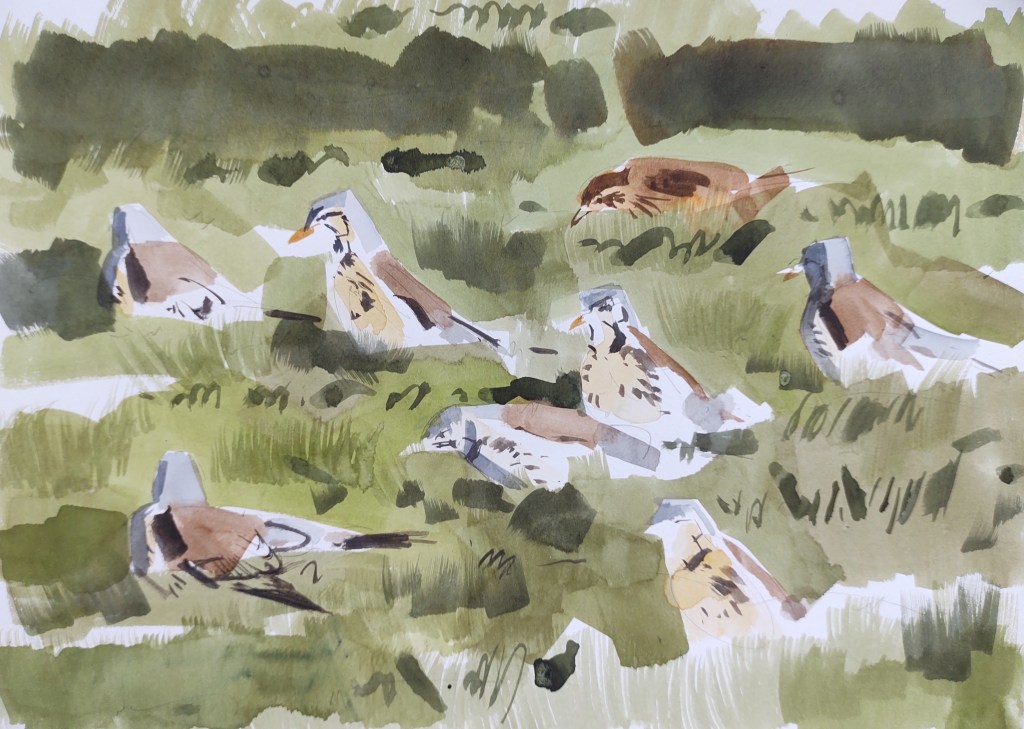
I headed north, making my way steadily along the narrow country roads. I passed by woods echoing with the song of chaffinch and song thrush. Cawing rooks flapped lazily overhead. In the open fields, skylark song rained down over the recently turned soil, where hares galloped amongst squadrons of feeding starling, fieldfare, and redwing. It was a wonderful sunny early spring morning.

Fieldfare and redwing feeding on the field

The area I walked through, Smålyngen, was historically heathland and rough pasture, with the soil rather thin on sandstone bedrock. Since the 1800s, however, the area begun to be drained and cultivated. Today it is a gentle agricultural landscape of fields, farms and small woods, crisscrossed by bicycle paths.

I arrived at the Smålyng Sandstone Quarry, which had once provided employment for the inhabitants of a nearby poor house. Closed in the 70s, the flooded quarry is now the site of the municipal waterworks and a biodiversity hotspot. I enjoyed the modernist lines of the waterworks and dozed to the soporific sound of croaking frogs and drumming woodpeckers.

Smalyngsvandværket

Continuing north the land rose gently ahead, towards Bornholm’s granite centre. I looked back towards the south and the distant sea.

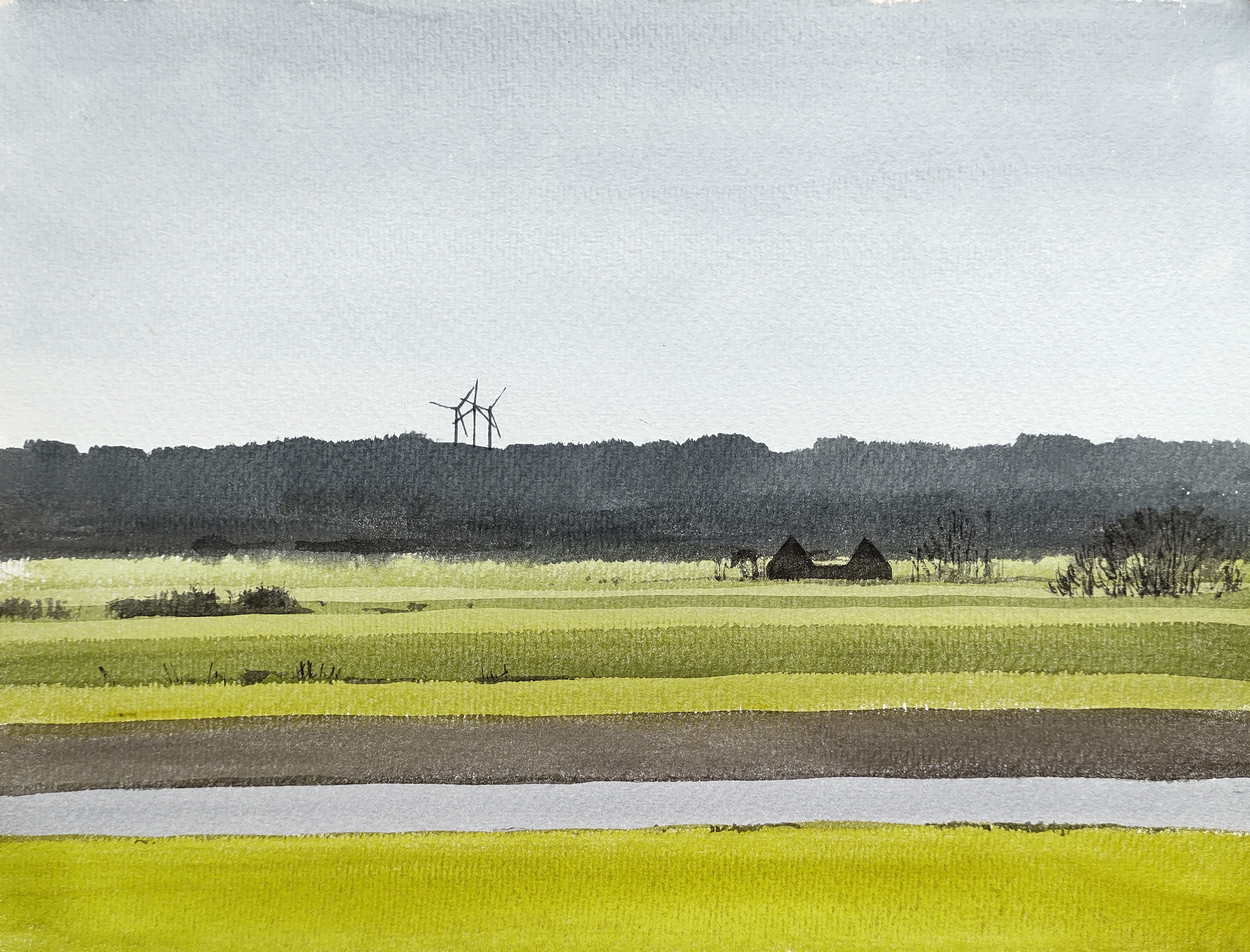
View of Ølenevej and beyond, from Egeby

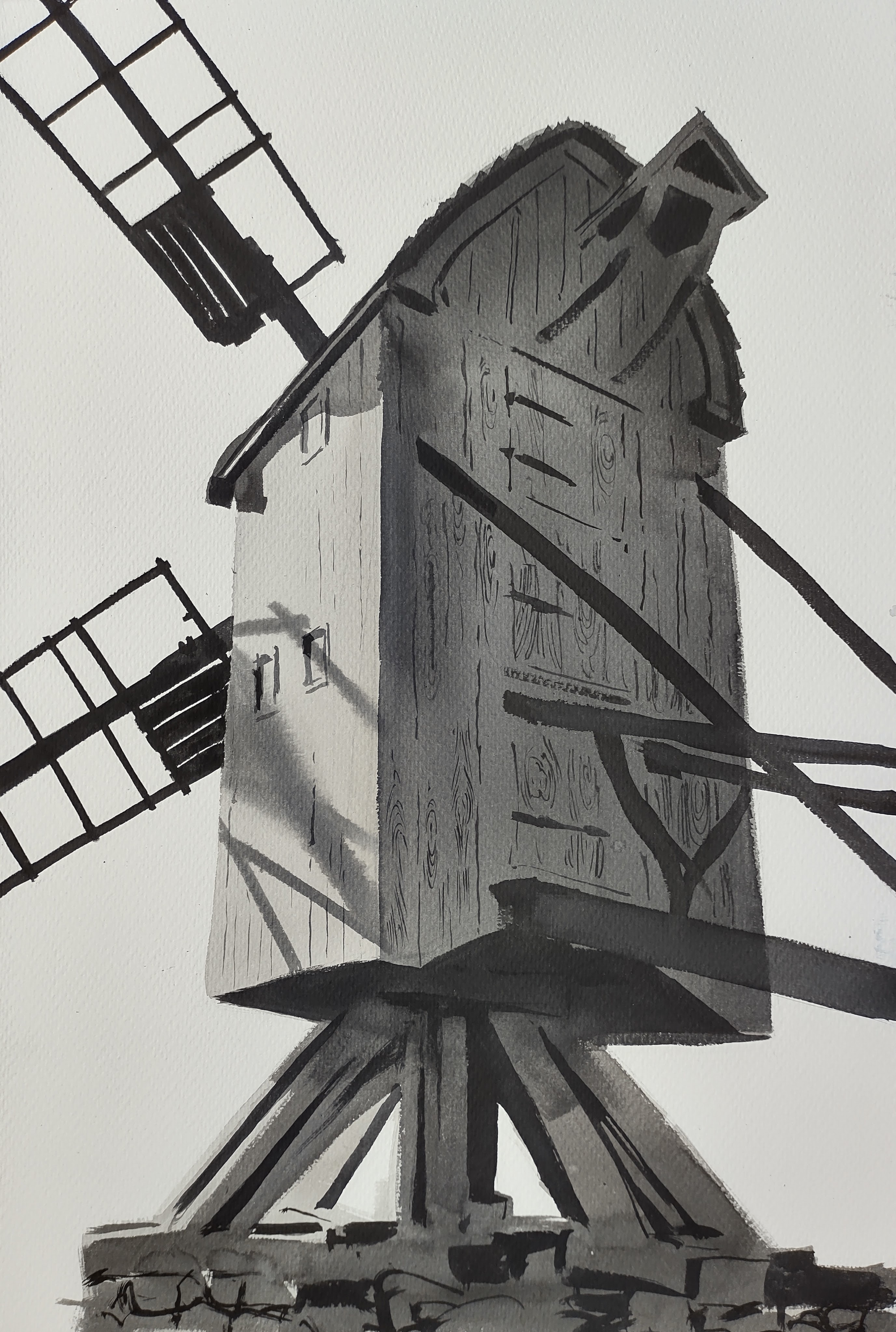
I paused for a while by Egeby Stubmølle, a small post mill built at the end of the 18th century and still in use in the 1920s. In the sun, out of the chilly breeze, it was deliciously warm.

Egeby Mølle

I walked on, in and out of the woods, and ended my day by Hjortebakken – a ring of standing stones in a small clearing deep in the forest. In the centre of the ring stood a twisted oak tree. It felt like an enchanted site, a little unsettling. I was glad to make it back to the main road where I was thankfully picked up just as the sun set. Against all expectations, I had lasted the day.

LAND 14

WEATHER REPORT – Sunny all day. Windy. Temperature 1 – 11 degrees. Wind 3 – 5 m/s from the east. Hours of precipitation: 0 hours. Hours of sunshine: 13.5 hours.

STOPS with the BIVVY – 0

KILOMETRES WALKED – 14.28 km

DAY LASTED – 13h and 42m

PEOPLE TALKED TO – 0

BIRDS SEEN and HEARD – 45 species: 3 new (white wagtail, chiffchaff, common snipe, running total = 73 species)

LESSONS LEARNED – If I am tired enough, I can fall asleep on sandstone

IN MY HEAD – Succession (HBO), my health/tiredness, but mostly just enjoying the sun

LAND 13 – Stenseby to Peders Church, 01.04.23

Denne blog på dansk her

LAND 13 Overcast, with a bitterly cold wind. Tired and underslept, and definitely not ‘feeling it’, I trudged off into the Bornholmian landscape.

From Fredenlundsvej, looking East

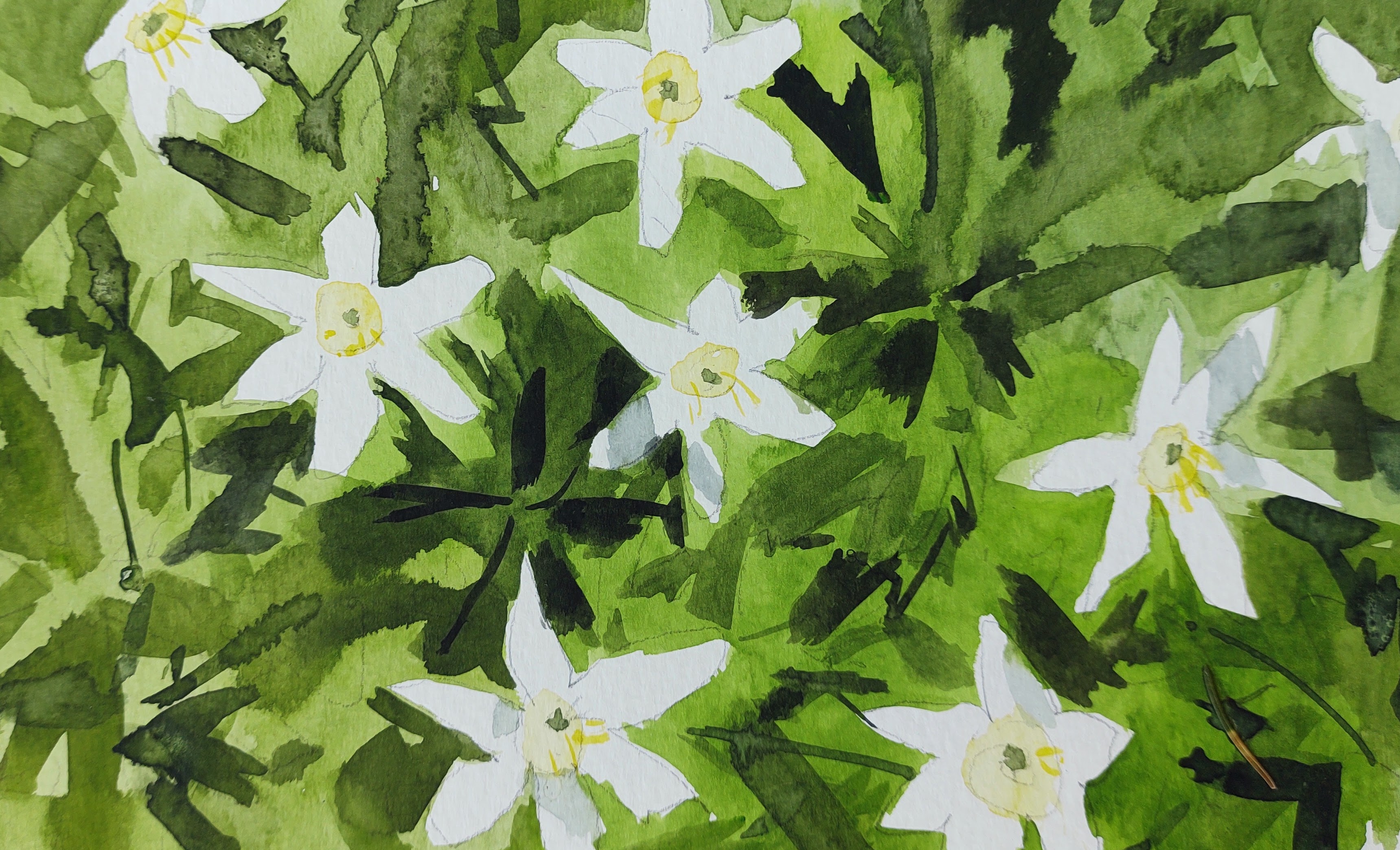
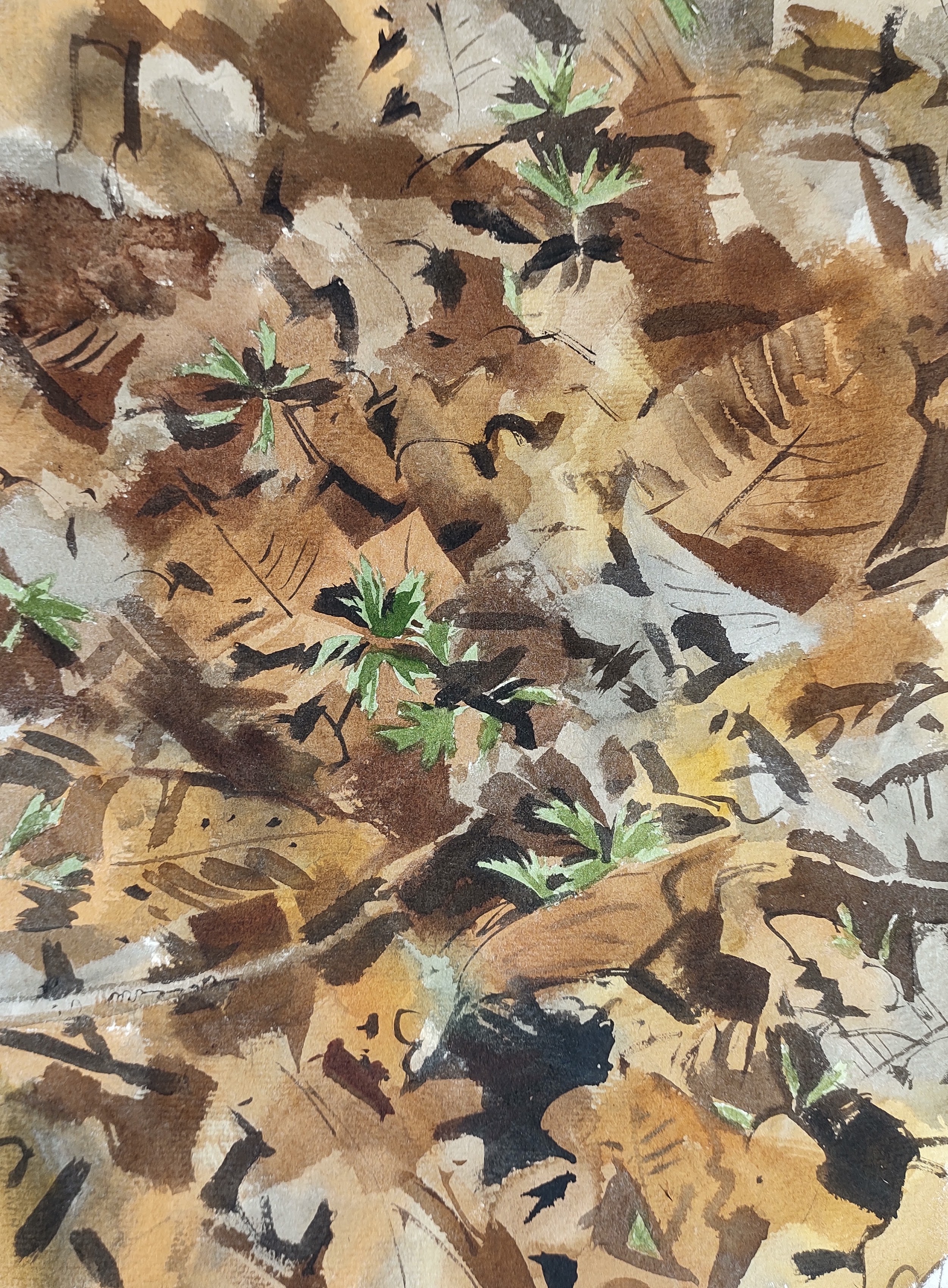
Just being outside, however, soon worked its magic and my mood lightened. I walked into a small beechwood for a breakfast stop and was cheered by the sight of the small shoots of anemone leaves breaking through the leaf litter.

Anemone shoots

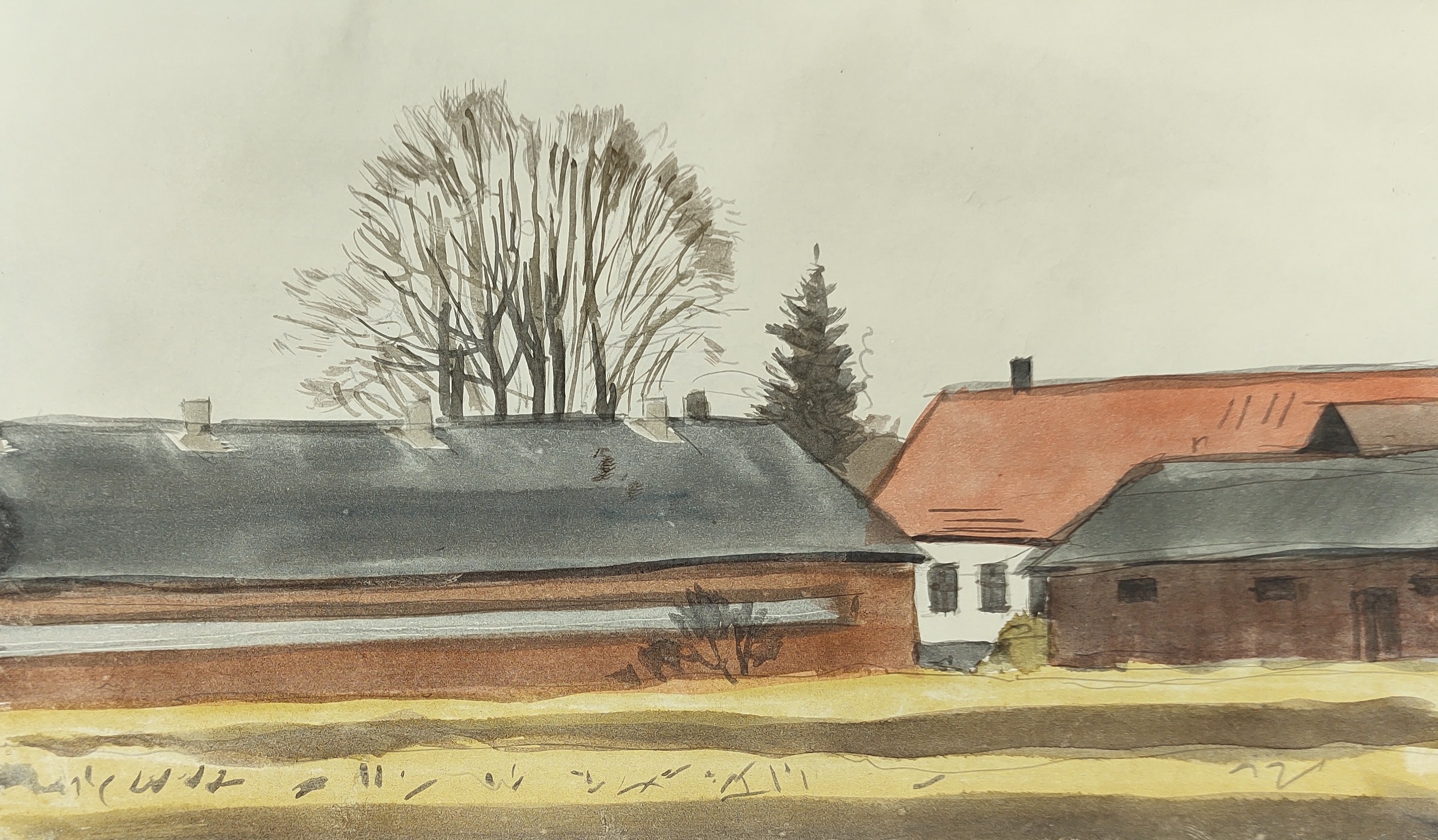
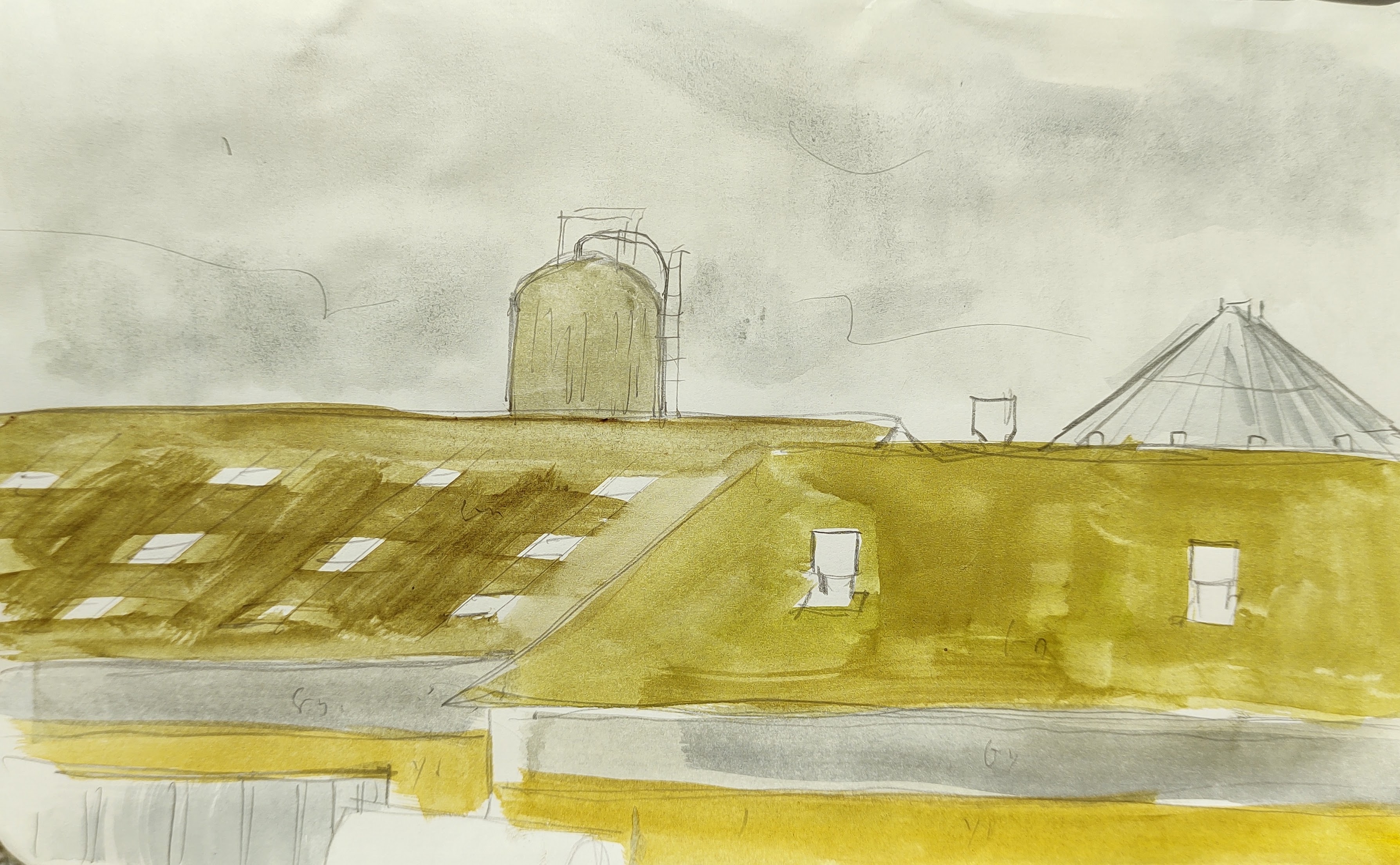
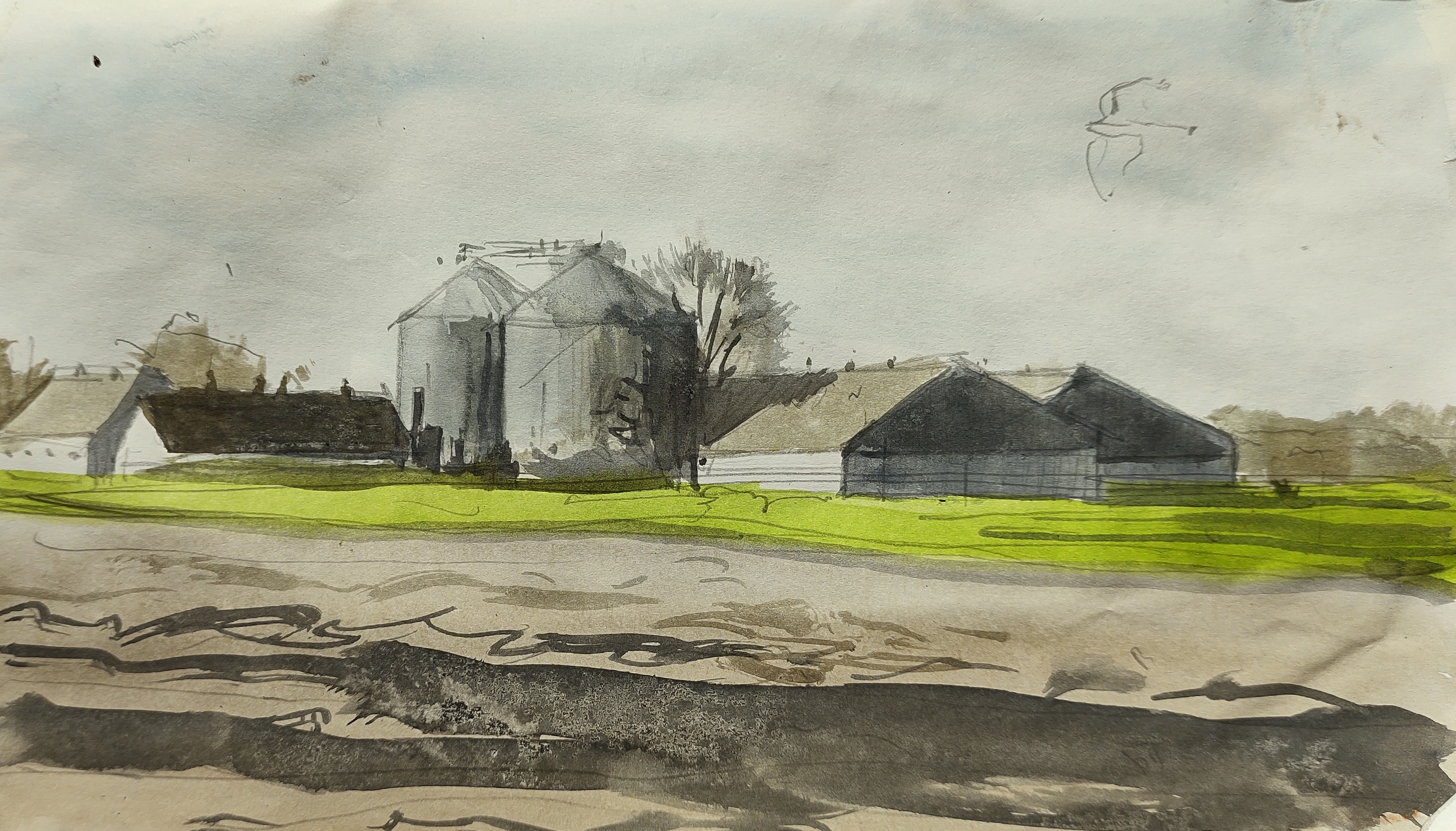
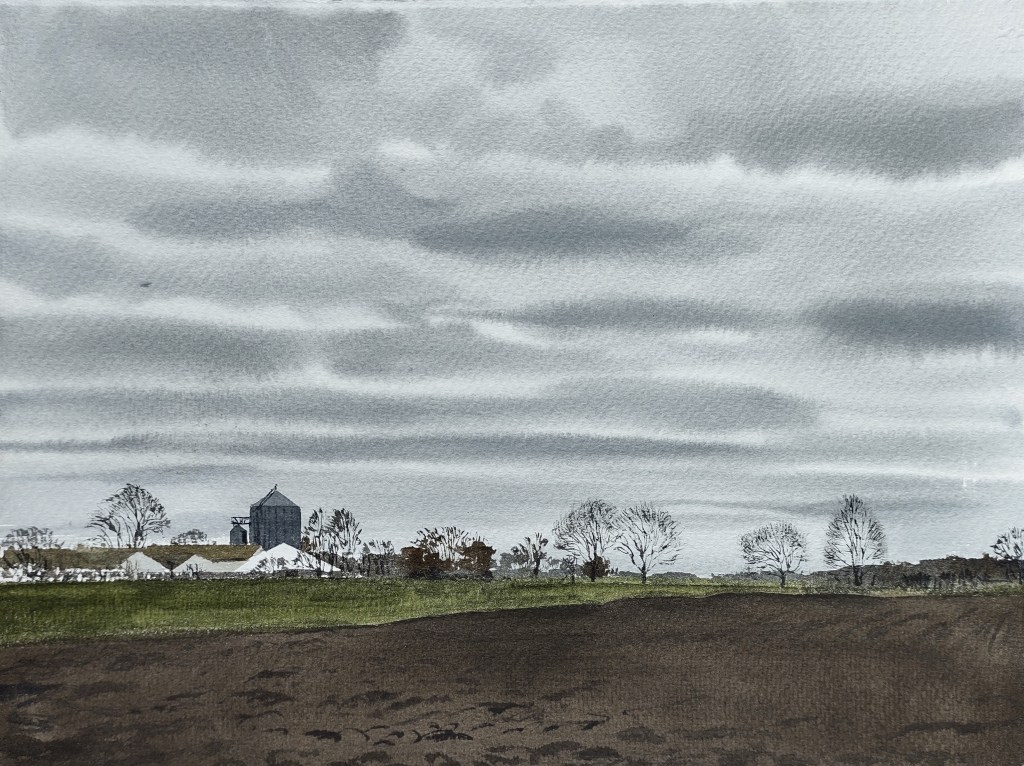
I walked onwards on a narrow winding road through a part of Bornholm I had never visited before. Again, I took shelter in the lee of a wood and again I painted the leaden sky, the heavy soil, the bare trees, the farms and silos.

Nørregaard, seen from Brandskov

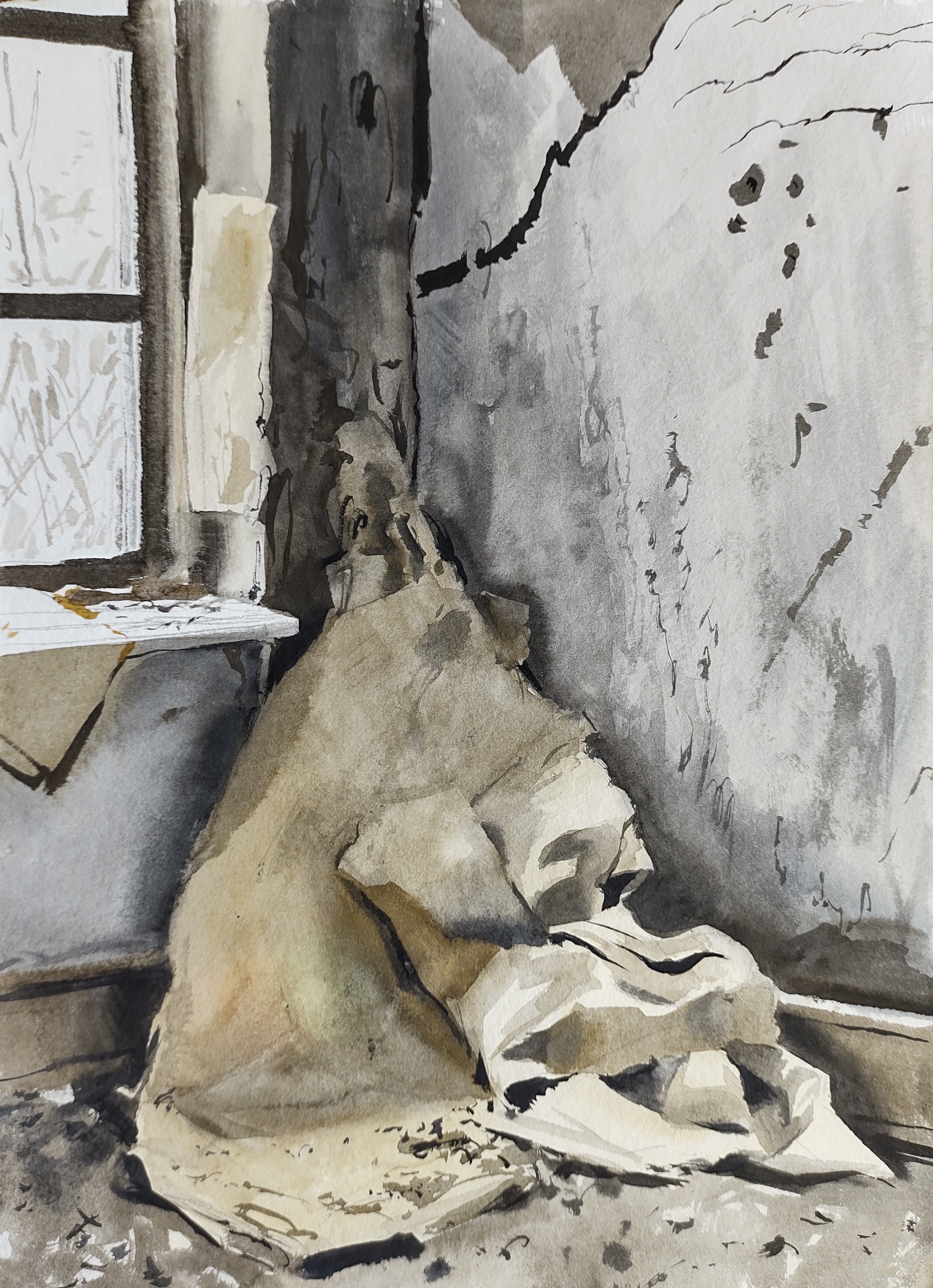
I stumbled on, buffeted by the gusting wind on my back, and saw what looked to be a small abandoned farm along an unkempt track. Inside the dilapidated and crumbling farmhouse, a blackbird nest lay on a shelf in the old kitchen. Glad to be out of the wind I set up camp and spent a while trying to capture the rather flamboyant heap of folded wallpaper in the corner of the old living room.

Stuen, Åvang

I continued and passed through the small village of Pedersker, where some of the houses sit quite grandly along the main street. Not so long ago there would have been several local shops, a dairy, train station and a largely self-sufficient rural economy.

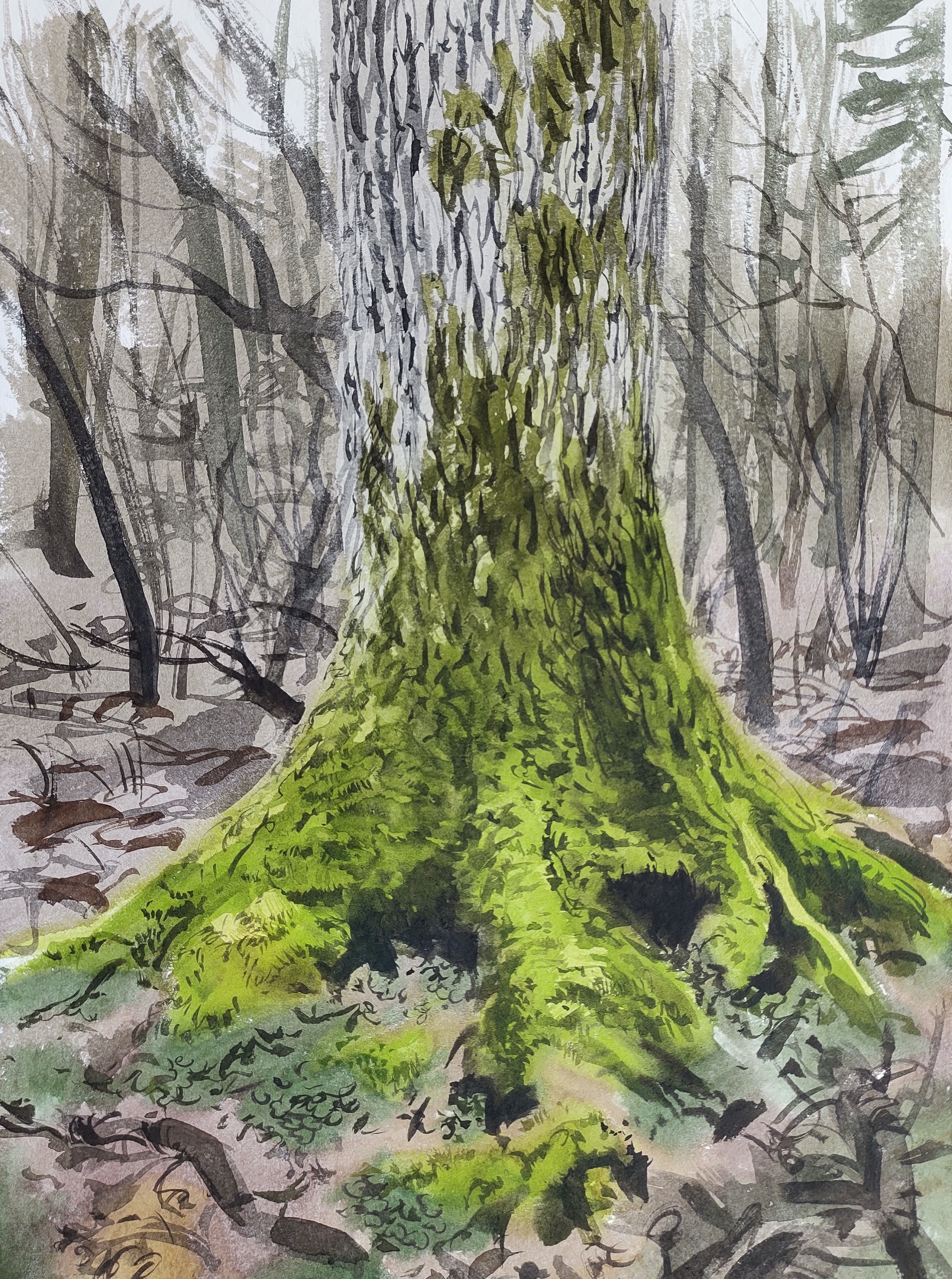
Glowing moss from Pedersker Skov

Heading south again I paused by the archaeological site of Stenebjerg, a charmingly unspectacular dolmen dating from over five thousand years ago.

Stenebjerg

By the mid-afternoon, the sun finally broke through. Sheltered from the wind with the sun on my face I actually felt rather…warm.

Lille Loftsgaard, seen from Østre Sømarksvej

The last leg of the journey took me down closer to the sea again. An area by Strandmarksvejen had been left fallow or rewilded, and it was brimming with wildlife. Cranes fed alongside roe deer and hares, to a chorus of energetic skylark song. My first marsh harrier of the year, recently arrived from warmer climes, flapped overhead.

View east from edge of Baunevej

Eventually I made it to Peders Kirke and another wonderful Bornholmian church, sitting exposed in the flat landscape. Frozen by the frigid wind I struggled to capture the last rays of the setting sun. It had been a good day.

Peders Church, sunset.

LAND 13

WEATHER REPORT – Overcast in the morning, sunny in the afternoon. Windy. Temperature 3 degrees. Wind 10 m/s from the northeast. Hours of precipitation: 0 hours. Hours of sunshine: 3.5 hours.

STOPS with the BIVVY – 1

KILOMETRES WALKED – 14.99 km

DAY LASTED – 11h and 50m

PEOPLE TALKED TO – 0

BIRDS SEEN and HEARD – 41 species: 2 new (brambling and marsh harrier , running total = 71 species)

LESSONS LEARNED – I found a new way to put up my tarp

IN MY HEAD – thankfully I managed to leave biogas behind and enjoy the day. I looked forward to an evening of wingers with my family.

LAND 12 – Slusegård to Stenseby, 24.03.23

Denne blog på dansk her

LAND 12 The day started badly: I arrived at Slusegård just before sunrise without my rucksack and had to drive home again to fetch it. I was nearly an hour late by the time I finally started walking. It was raining and I quickly found a sheltered spot by the side of the road and set up my tarp. On a field opposite a pair of distant shelduck walked across the dull and sodden field.

Shelduck pair. Looking north from Strandvejen, near Slusegård

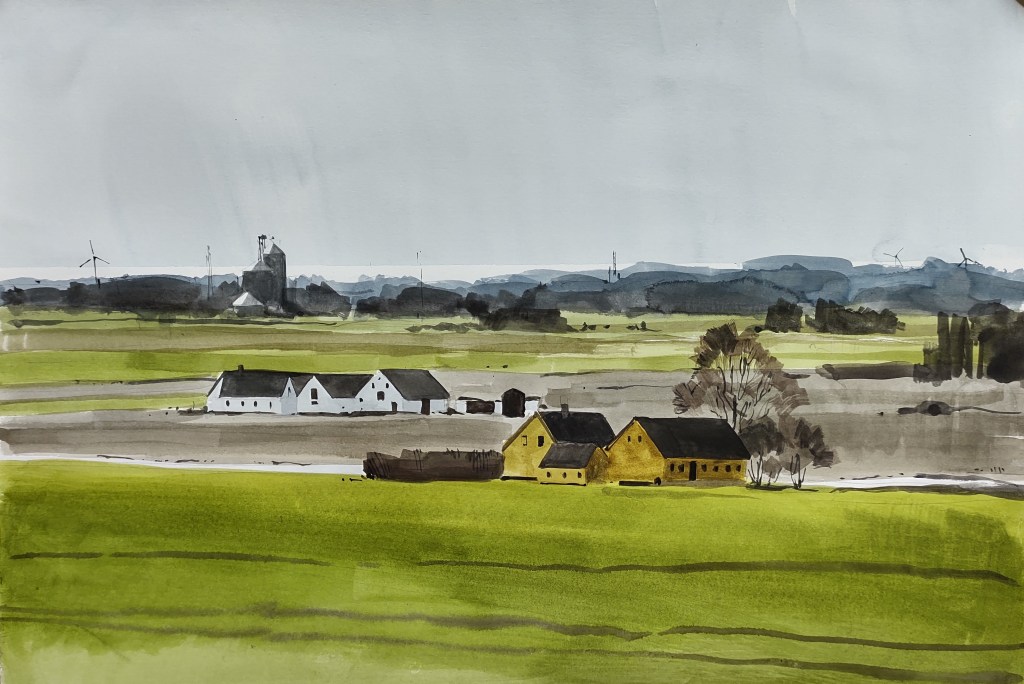
I headed north on the narrow road towards the hill of ‘Rispebjerg’ through an open agricultural landscape, a seldom visited part of Bornholm. Repeatedly my eyes were drawn to the farms, large and small, that dotted the landscape.

Bjerregård

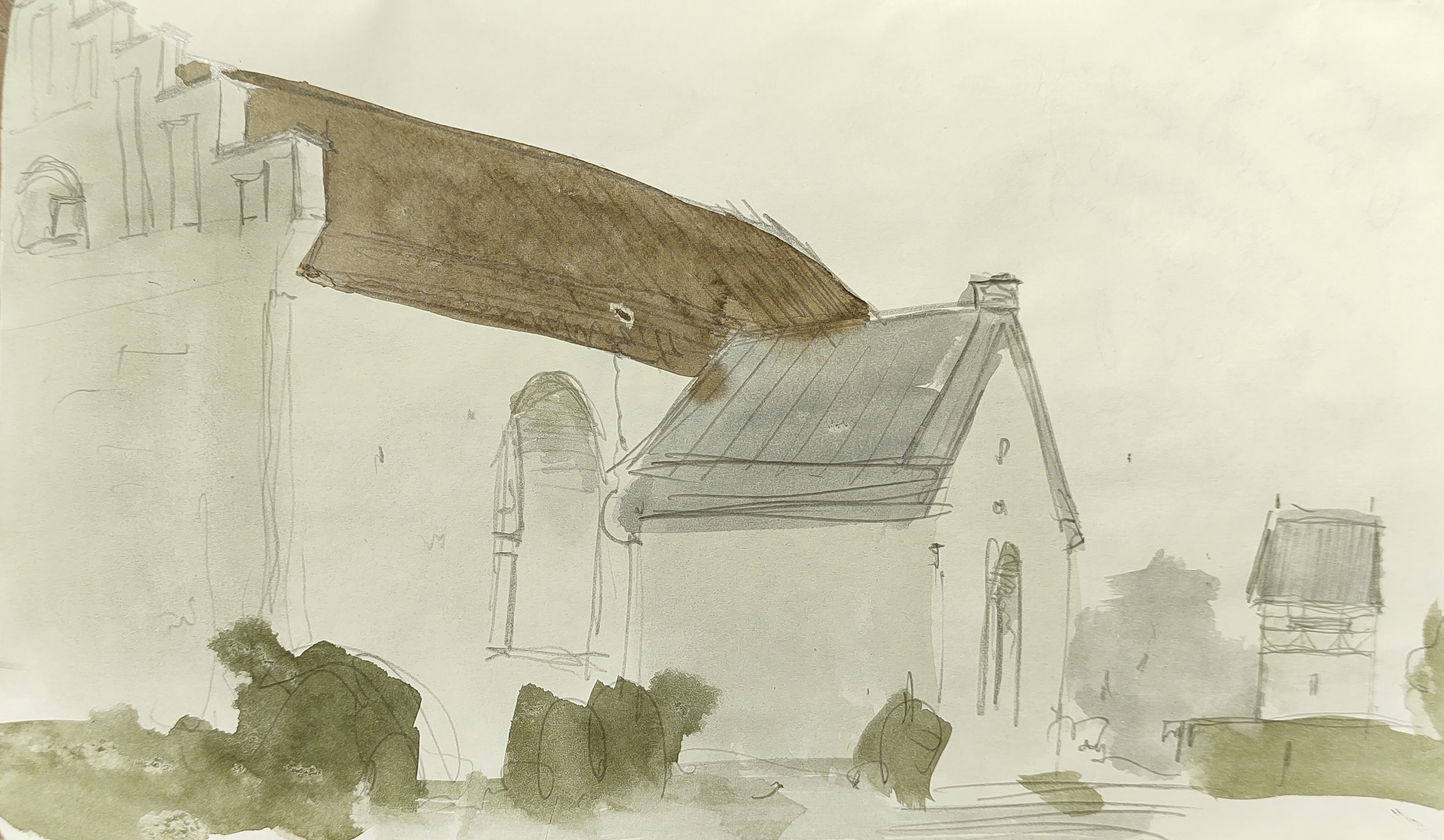
Sometimes I walked on the main road, but often I kept to narrow country lanes. Eventually I arrived, completely soaked through, at Sct. Povls kirke, a wonderfully pretty and well-maintained church, which sits beacon-like in the landscape. In the lee of its thick whitewashed walls, I sheltered from the wind and the rain.

View from Pouls Church, looking north

I continued west and arrived at Ringeborgen, a fascinating archaeological site that over five thousand years ago had been the site of a sun cult, with temples, woodhenges, and palisades. More recently still, it had been Bornholm’s largest iron age fortification with ramparts, dry moats and earthworks. One of the sun temples has been recreated, and from here it is possible to appreciate the defensive position of the site with commanding views of the surrounding area, now dominated (at least in my present state of mind) by industrial pig farms and silos.

Ringeborgen, with Bjerregård in the distance

The rain was finally blown away and replaced by a bright sun and blue sky, the wind even stronger now. The sky was suddenly filled with the incessant trilling of skylarks. Something (a peregrine, surely?) put up mixed flocks of gulls, crows, starling, and lapwing – a conveyor belt of confetti panic that exploded from the fields and wheeled and soared around, buffeted by the wind.

Looking north from Stensebyvejen

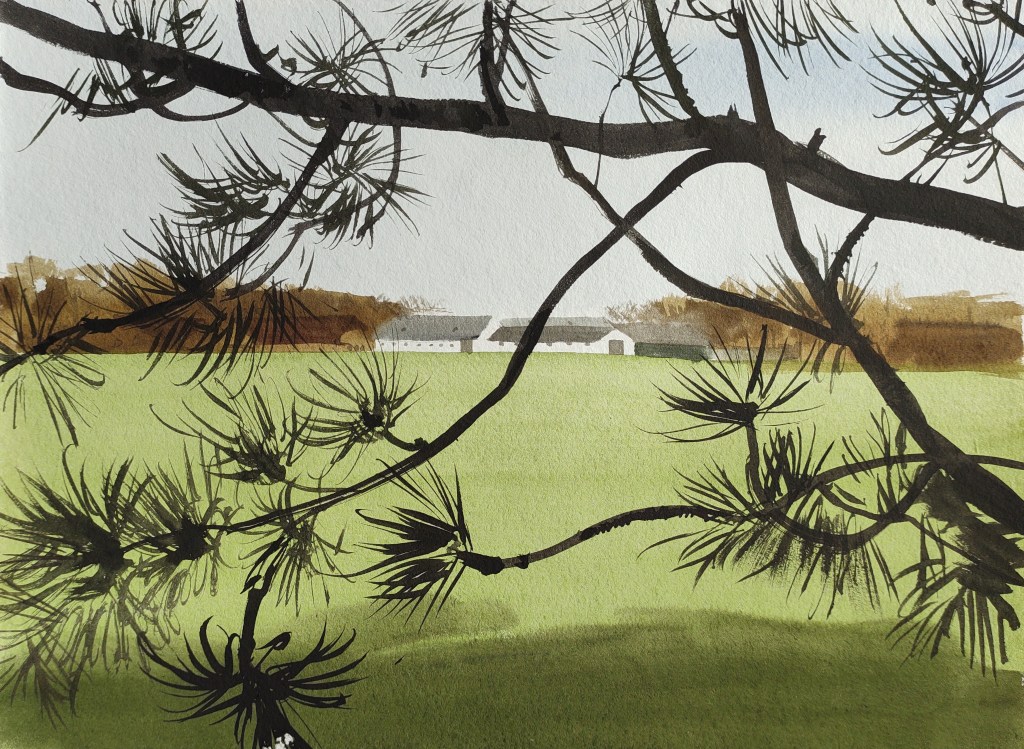
I sheltered a while on the edge of a small pine plantation.

Bønnestenene, seen from the pines

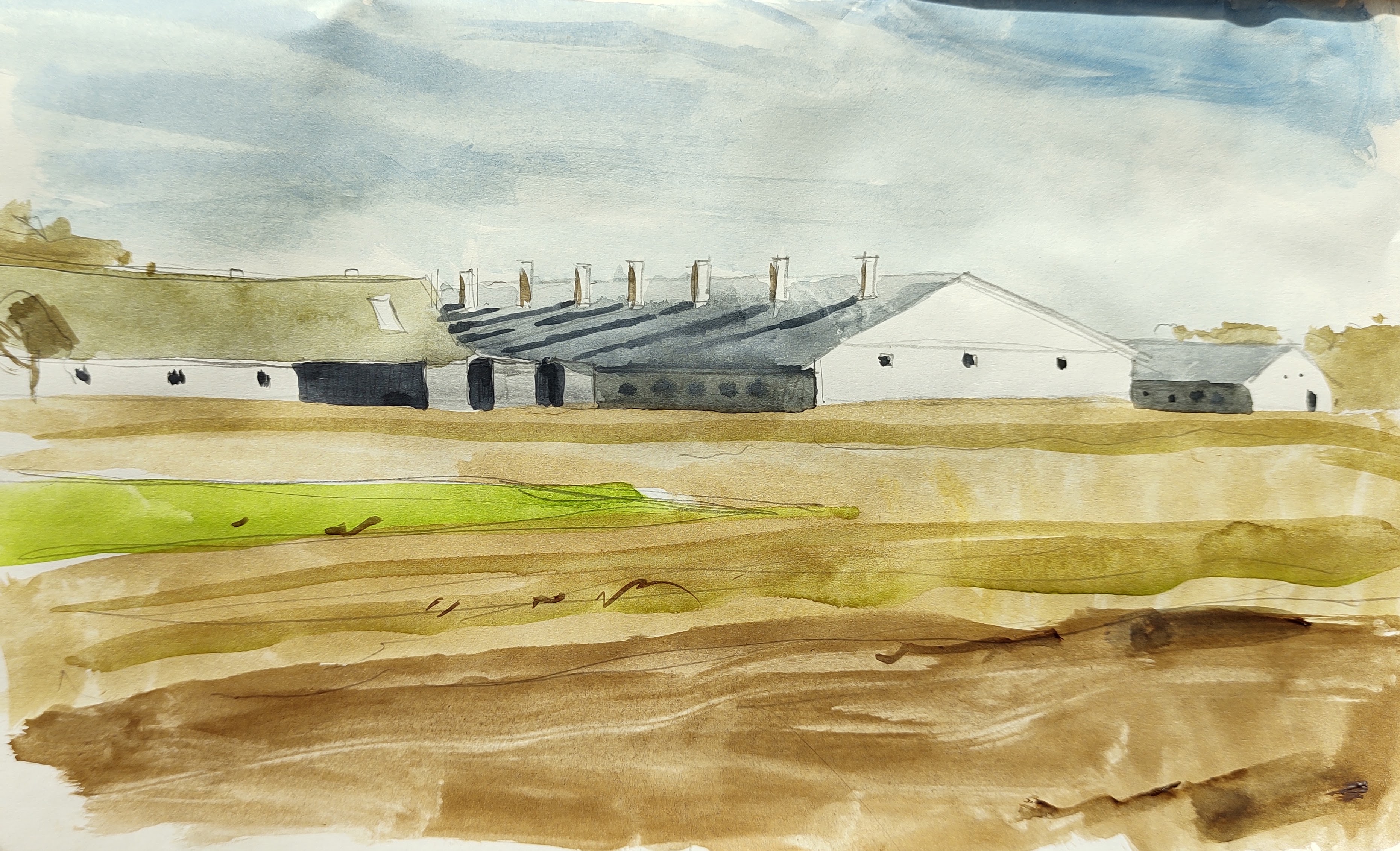
Along country roads, my eyes were repeatedly drawn to the geometric shapes of the huge pig farms.

As the sun neared the horizon, I walked through the tiny hamlet of Stenseby. Recently the locals had banded together to buy and demolish a derelict building, which they had replaced with an outdoor centre for the community to gather in – ‘Downtown Stenseby’ declared the proud sign.

I walked a little further a made one last sketch before, thankfully, being collected and driven back to my waiting car.

LAND 12

WEATHER REPORT – Rain in the morning, sunny in the afternoon. Windy. Temperature 8 degrees. Wind 6 – 10 m/s from the south and west. Hours of precipitation: 5 hours. Hours of sunshine: 4 hours.

STOPS with the BIVVY – 1

KILOMETRES WALKED – 17.57 km

DAY LASTED – 11h and 50m

PEOPLE TALKED TO – 2

BIRDS SEEN and HEARD – 37 species: 3 new (linnet, song thrush and golden plover, running total = 68 species)

LESSONS LEARNED – Always, always bring a spare pencil.

IN MY HEAD – again, the planned biogas expansion, and all the things I should have said in the various meetings, interviews and debates I have attended. I recorded observations and arguments on my phone, which seemed to help a little. But I wish I could drop it when I’m out working.

LAND 11 – Bro Odde to Slusegård, 17.03.23

Denne blog på dansk her

LAND 11 The LAND project demands more ever from me physically as the sun rises earlier and the days lengthen but is a much-welcomed respite – the fulcrum upon which the rhythm of the week rests.

This week I started at the beach at Bro Odde and was reminded of both the similarities and the differences to my KYST project around Bornholm’s coastline five years ago. The strong southern wind threw the waves onto the shore, and I embraced the invigorating wildness of the coast.

View from the bench at Bro Odde

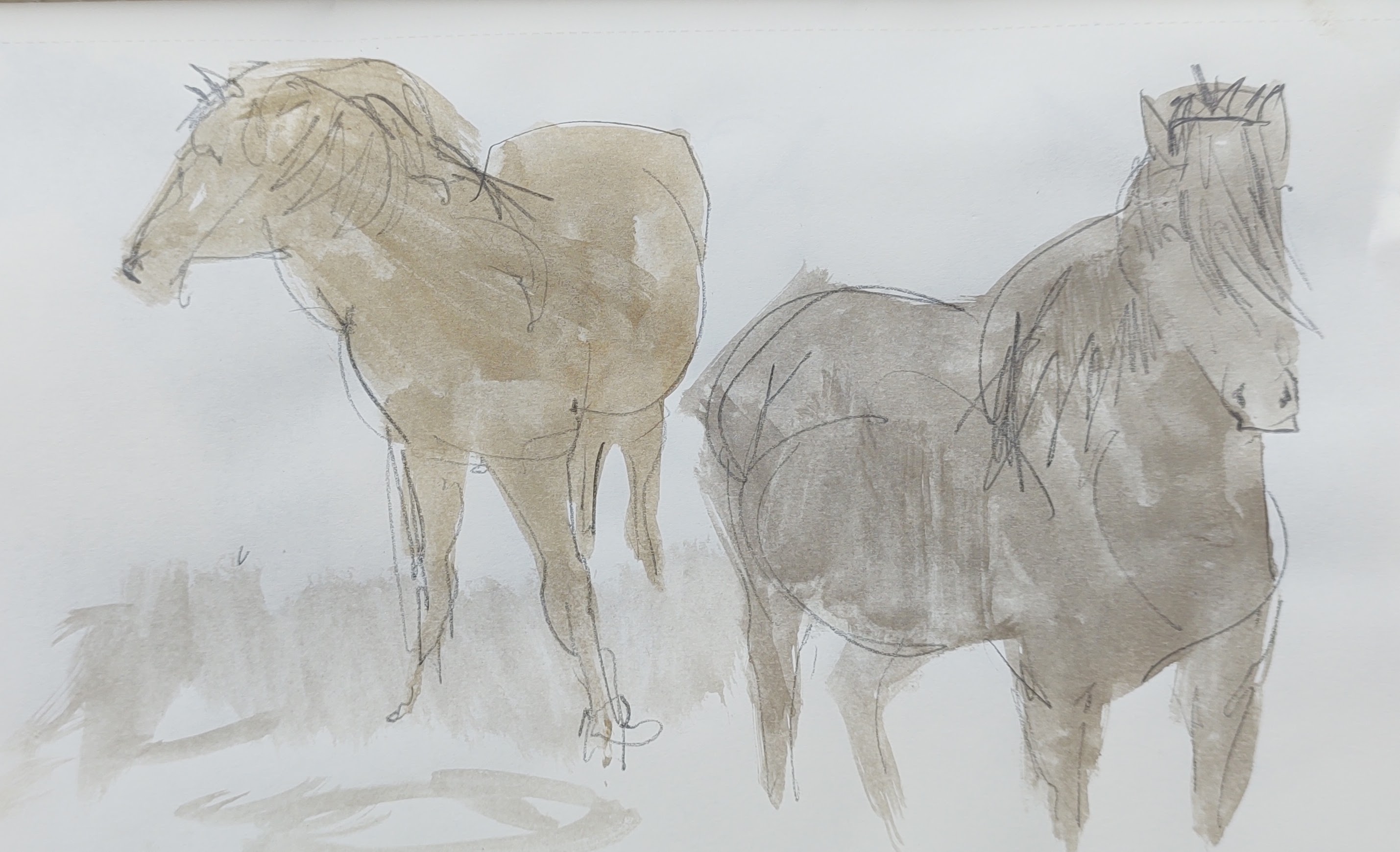
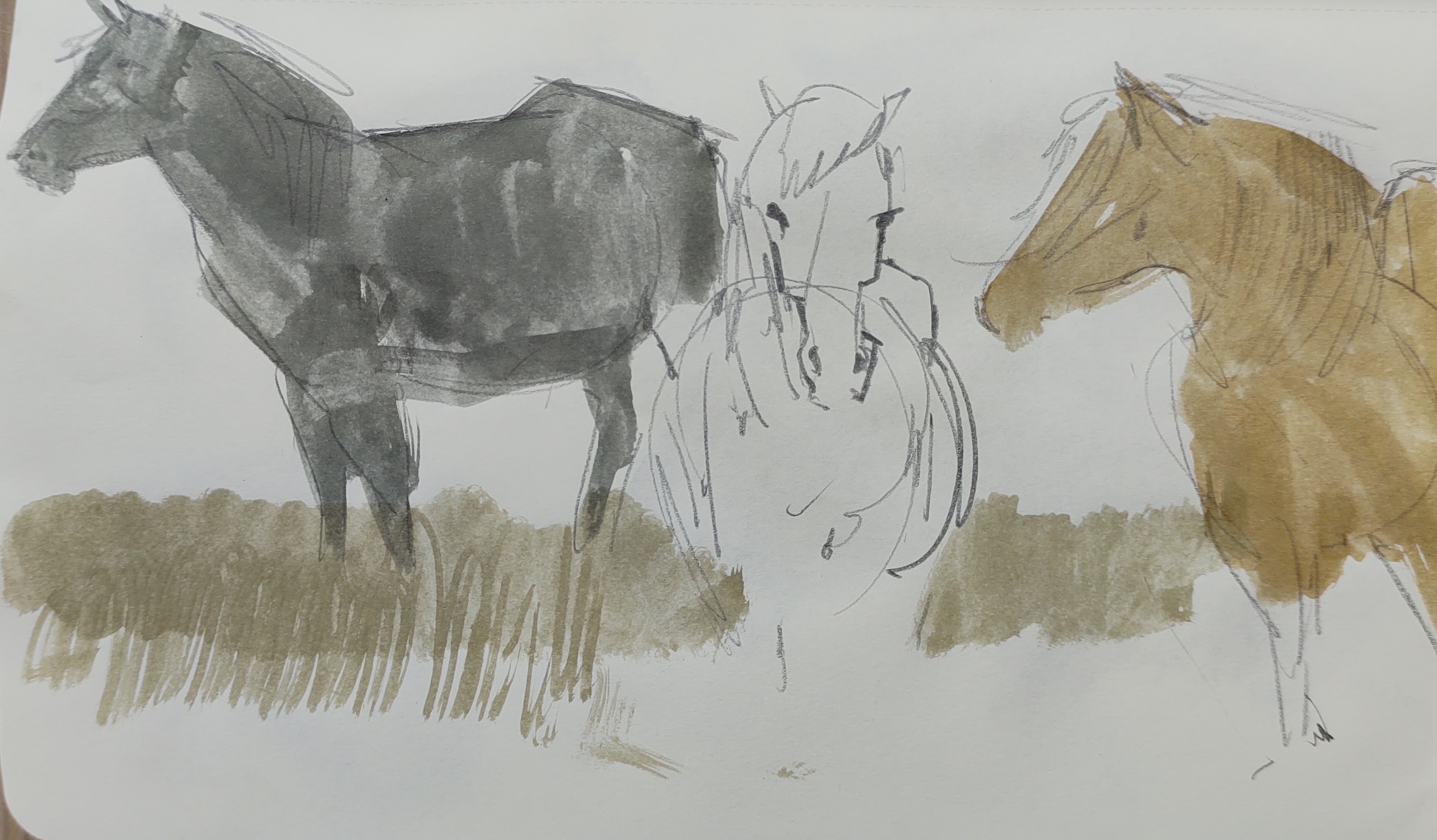
Soon, however it was time to move on, and I headed inland. I walked past a farm with some curious and rather skittish horses, surprised to see a passer-by so early in the morning.

I entered the forested summerhouse area that stretches along the southern coast. Originally, this had been an area of ever-shifting sand dunes, but it had been planted with pine trees in the mid-1800s. Later still, the whole area had been given over to summerhouses, and hundreds of them lie hidden between the pines.

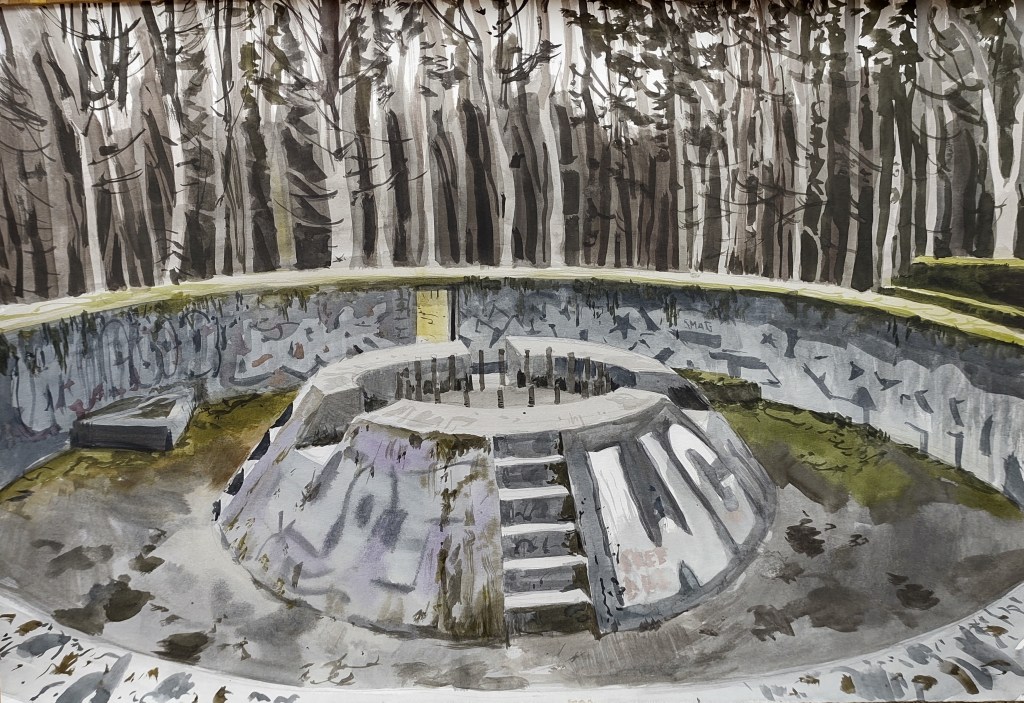
Deep in the forest I explored the two huge gun emplacements, built by the German occupying troops during the Second World War. Originally planned to house two 38 cm cannons weighing 110 tons each, the artillery units were intended to obstruct Soviet forces from sailing through the Baltic Sea. They were, however, never completed, and now lie crumbling and almost hidden by the trees.

Gun emplacement G4

Moss and fern cover the graffiti-covered concrete walls, while roots choked the foundations. I thought about long-forgotten temples being reclaimed by the rainforest in Southeast Asia, and the concentric circles of the gun emplacement reminded me particularly of Borobudur temple in Java, Indonesia. This was, however, a temple to violence, at its centre not a seated Buddha, but instead giant steel screws to house the death-bringing cannon. The site was a reminder of man’s cruelty, but also of nature’s ability to eventually reclaim and heal all of our wounds.

Gun emplacement G3

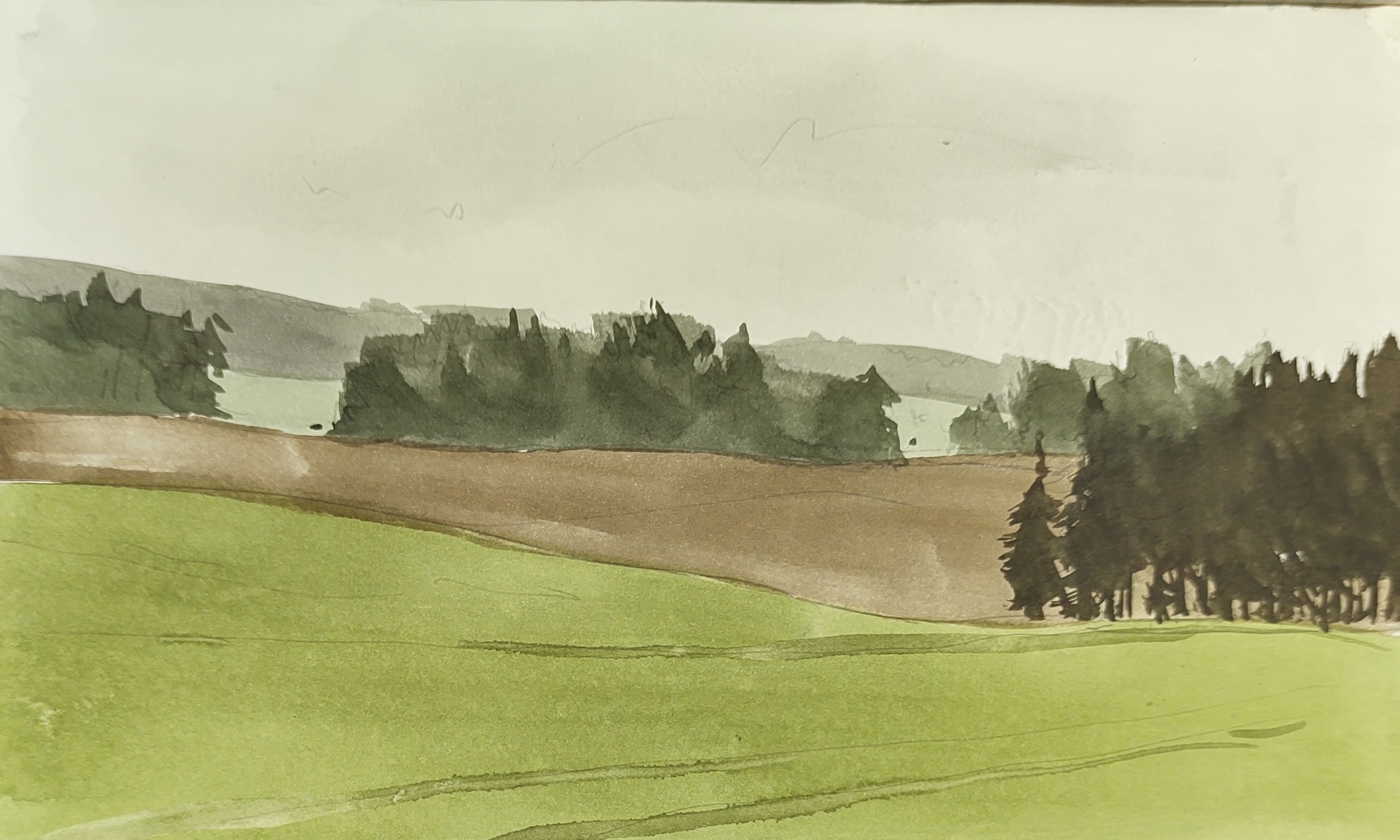
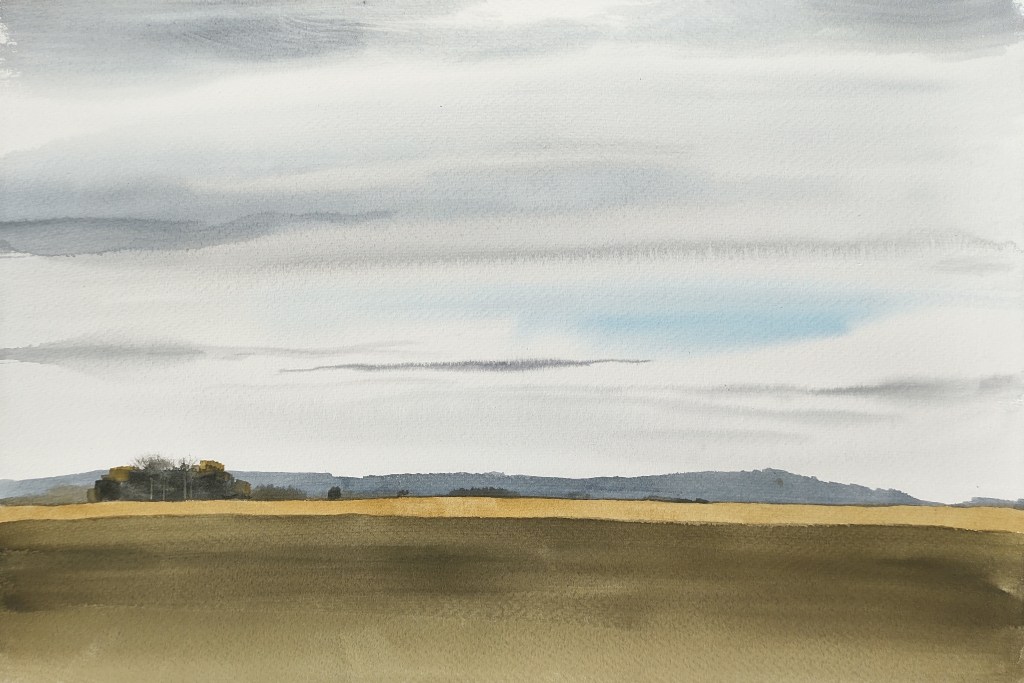
I moved on, back into the fields. It felt good to be out in the open again moving through the landscape under an expansive sky. In the distance, the blue remembered hills of Paradisbakkerne.

View to Paradisbakkerne from Tjørnebyvejen

Eventually, I walked back into the pine forest and summerhouse area. I tried to capture the colours of the birch and pine forest, the heather and the sand, but I was tired, and I struggled to concentrate on the job at hand.

Coastal path by Sandvejen

I finished the day in Slusegaard, where the stone cottage housing a water wheel was reflected in the calm waters of the Mill Pond.

Mill Pond at Slusegård

LAND 11

WEATHER REPORT – overcast most of the day. Temperature 3 – 8 degrees. Wind 5 – 8 m/s from the south. Hours of precipitation: 0 hours. Hours of sunshine: 1 hours.

STOPS with the BIVVY – 0

KILOMETRES WALKED – 15.68 km

DAY LASTED – 11h and 59m

PEOPLE TALKED TO – 0

BIRDS SEEN and HEARD – 36 species: 2 new (coot and black-headed gull, running total = 66 species)

LESSONS LEARNED – Nothing springs to mind

IN MY HEAD – For much of the day, I found it very hard to stop thinking about the planned Biogas expansion, the radio and TV interviews, the meetings and the forthcoming debates.

LAND 10 – Bodils Church to Bro Odde, 10.03.23

Denne blog på dansk her

LAND 10 Dawn at Bodil’s Church. Ahead, the flatlands of southern Bornholm stretched off into the distance. The sky grey and dark, my mood darker still.

Dawn. View from Hønselundsvejen

I headed south, the frigid east wind blowing across the frozen fields. The landscape felt imperceptibly different. The fields were large, dull and flat, the narrow country roads straight.

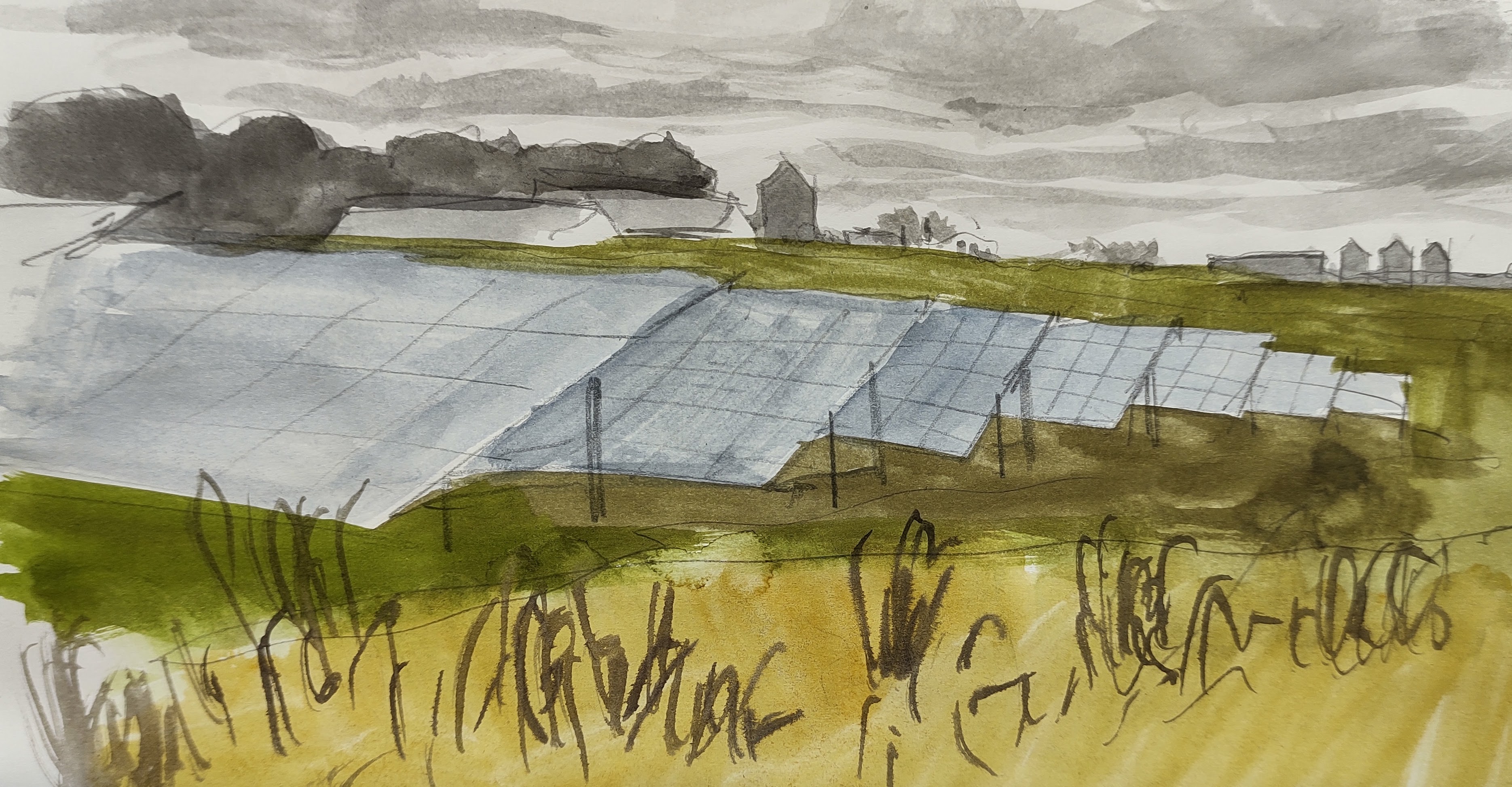
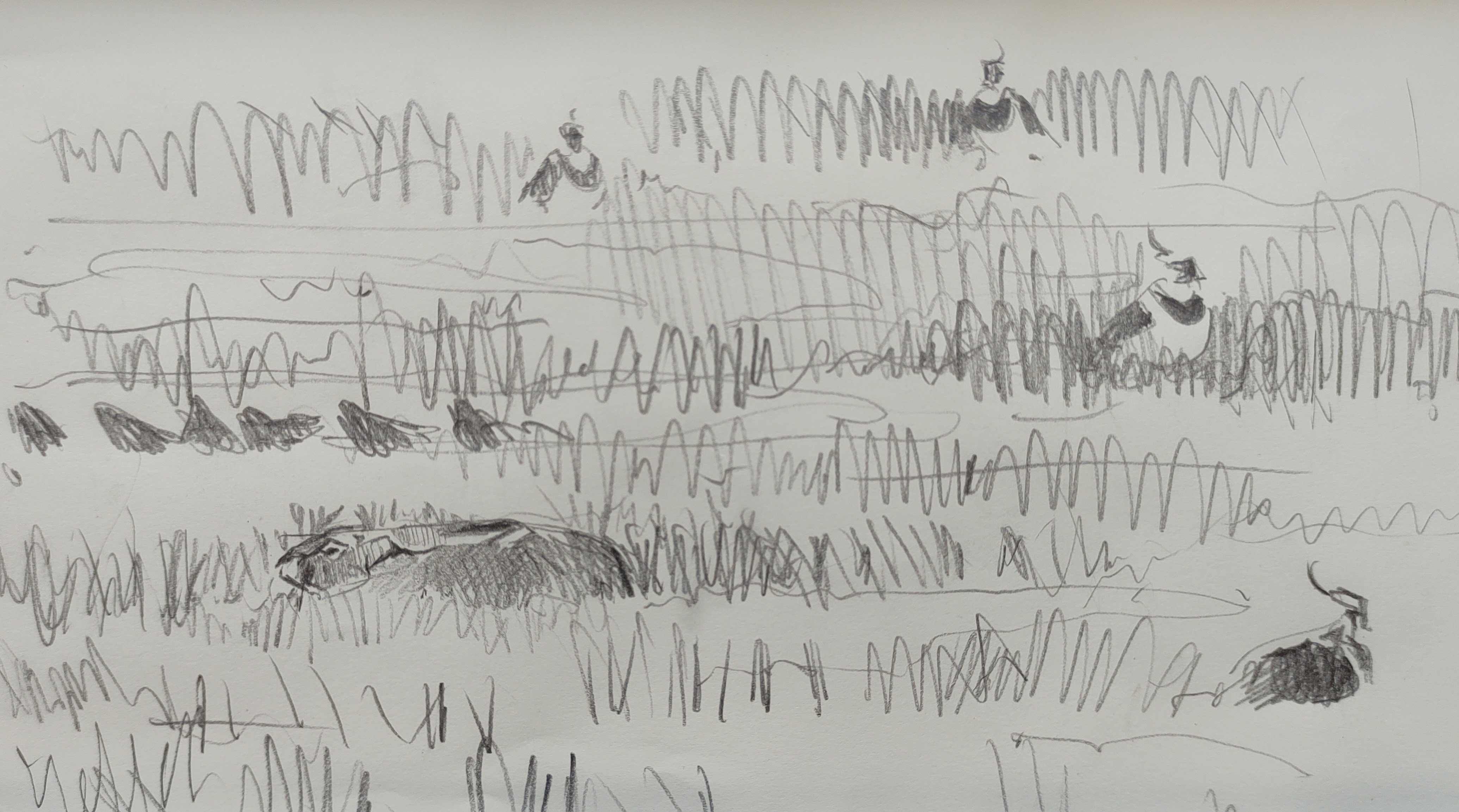
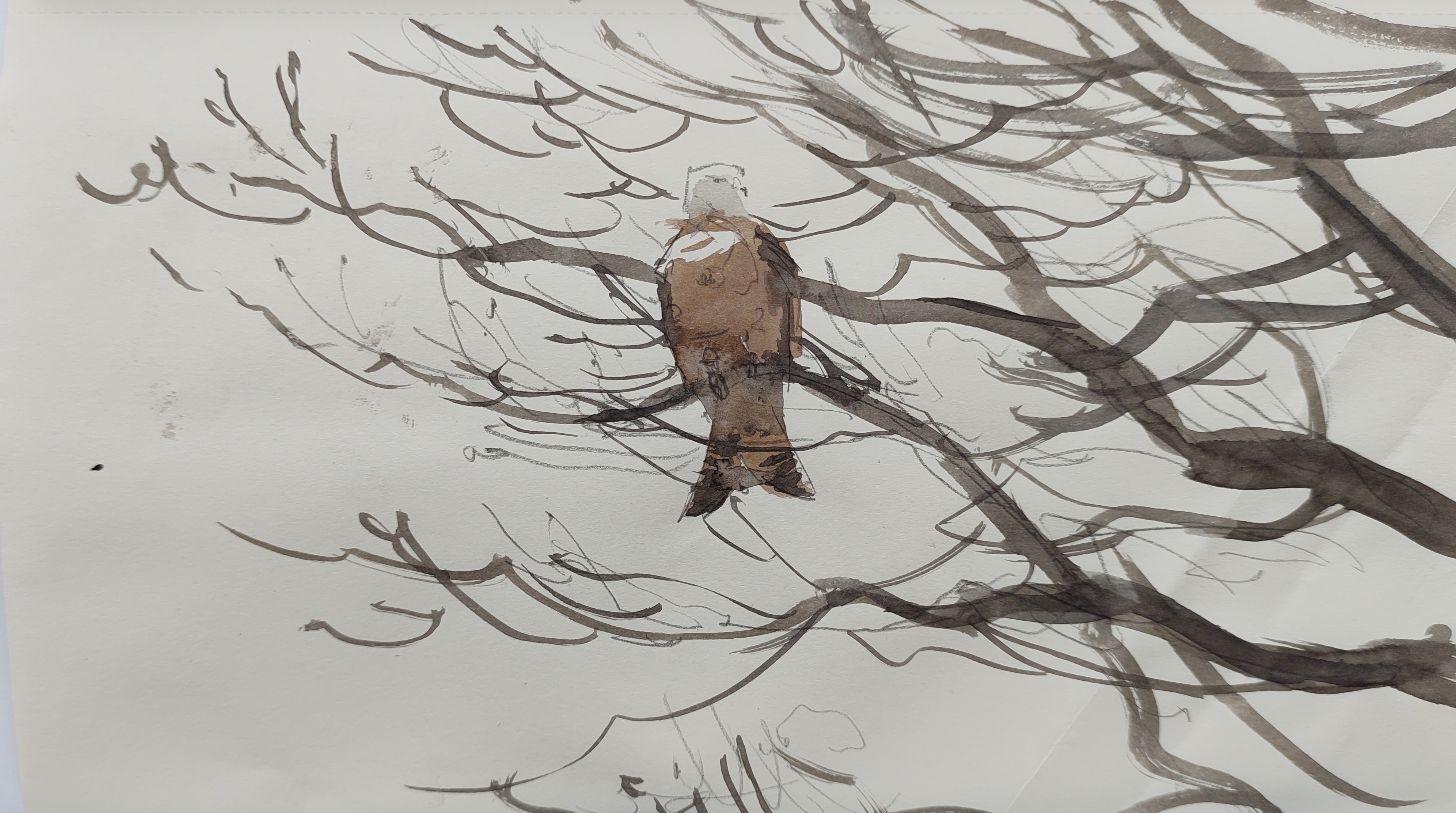
I stopped at the side of the road in the shelter of a small brick building – the old waterworks. Here, sandwiched between two huge industrial farms and a large solar panel farm, is a small uncultivated area – all that remains of a much larger meadow and wetland that once dominated this area. Drained and intensively cultivated, this small field was left fallow in the 90s, and was now brimming with life. Roe deer and hare grazed together with geese; stock doves, starlings, and lapwings milled around, while a rough-legged buzzard and a red kite circled above hunting for rodents, before settling in a nearby tree.

I walked on, continuing south. The solar farm looked like a strange geometric lake in the distance.

View from Graanakkevej mod vest.

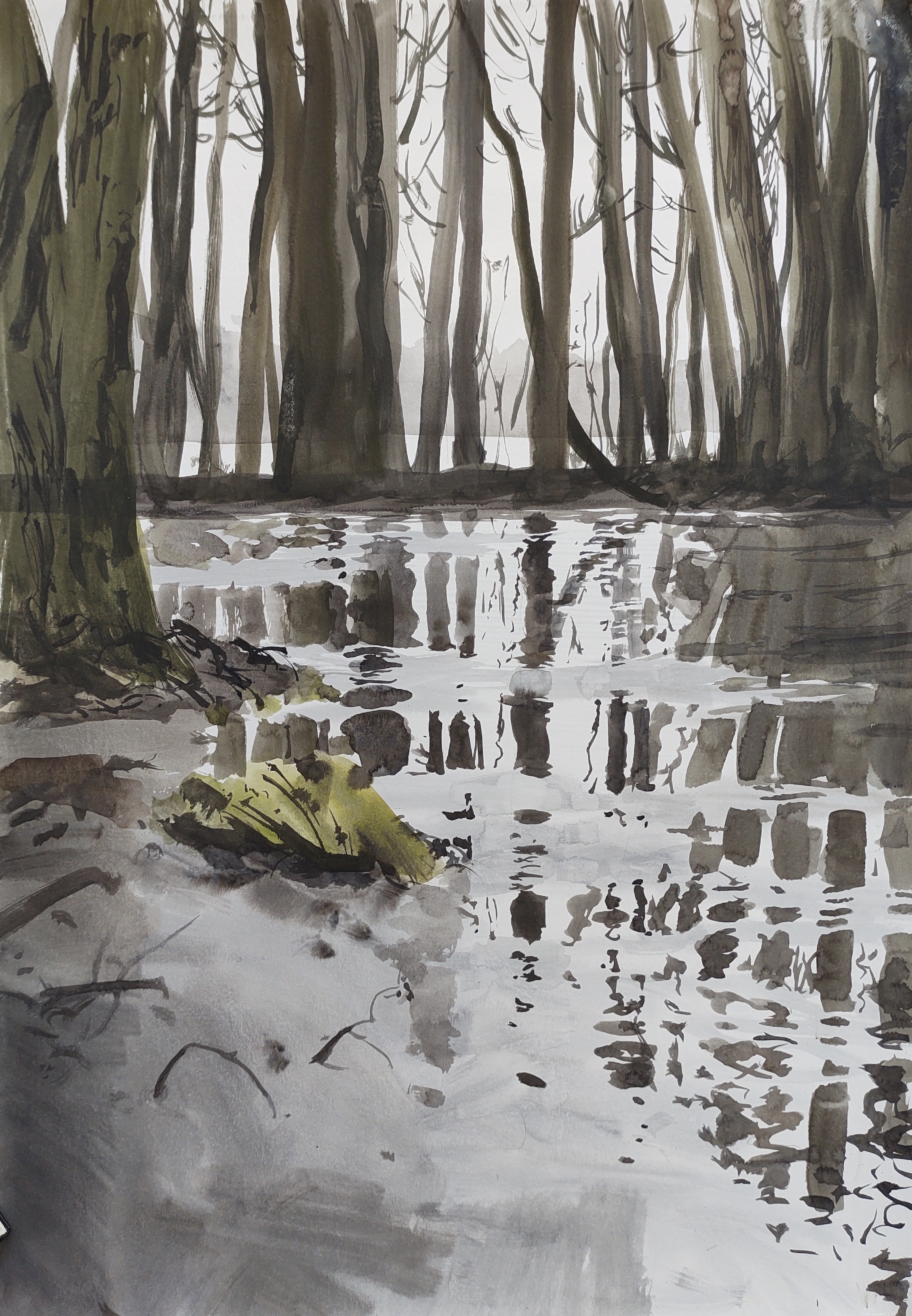
Eventually I arrived on the edge of Hundsemyre, one of Bornholm’s wildest areas – over 50 acres of lake, swamp, forest, and scrub. As I entered, honking greylag geese scattered, their wingtips zipping up the air. In just a few days the reserve closes for the breeding season, and I felt like an intruder. Much of the path was waterlogged, but the mud and water were frozen, making it easier for me to navigate. Alder, willow, and birch dominated, and the dark swamp felt wonderfully neglected.

Melting ice and alder trees

Cormorants and various ducks sheltered from the wind or prepared to nest. I was overjoyed to get great views of a lesser spotted woodpecker, my first good sighting on Bornholm for over 10 years. My mood lifted somewhat.

The lesser spotted woodpecker (very cute)
Cormorants in the dead trees overlooking the lake
More cormorant studies

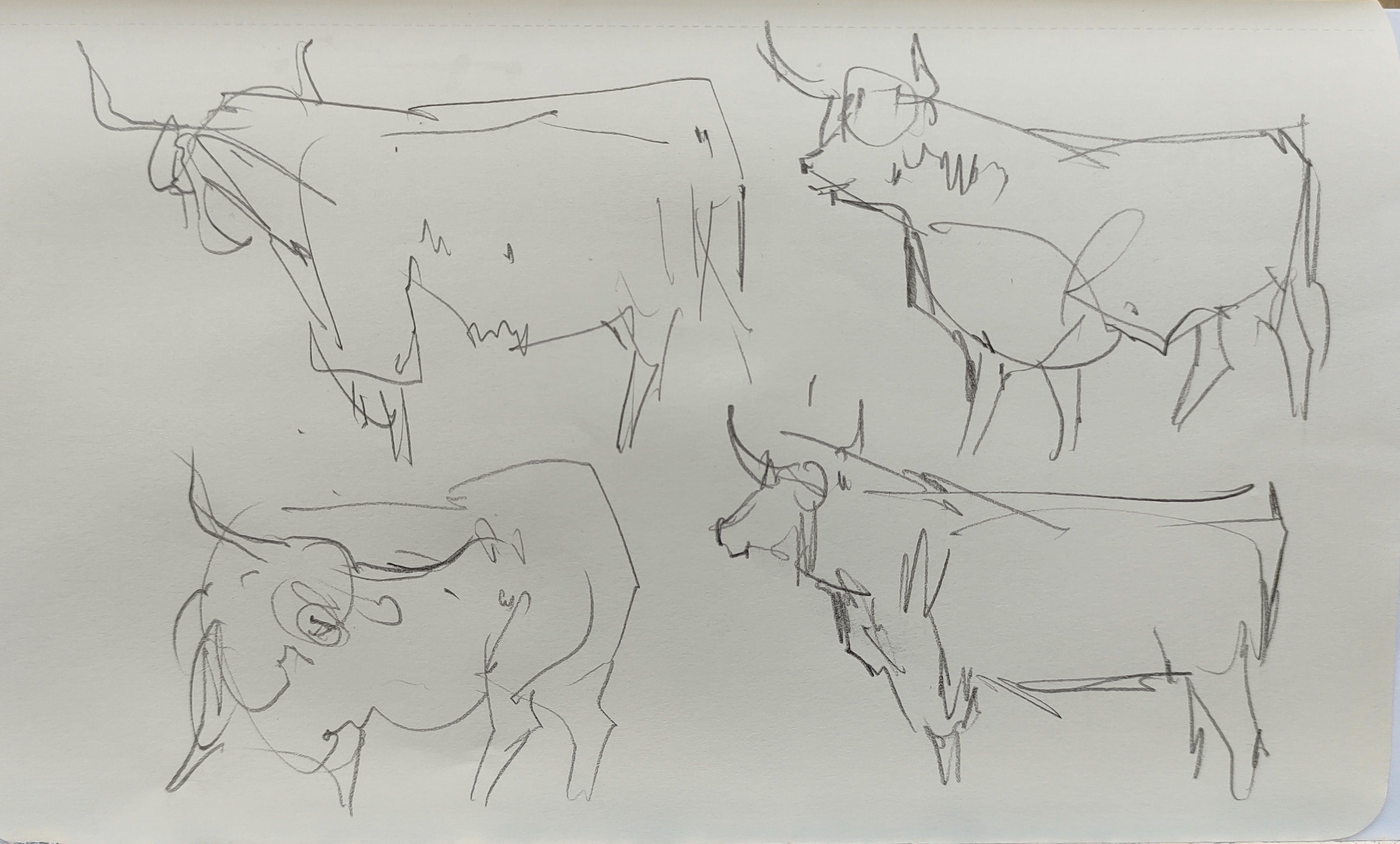
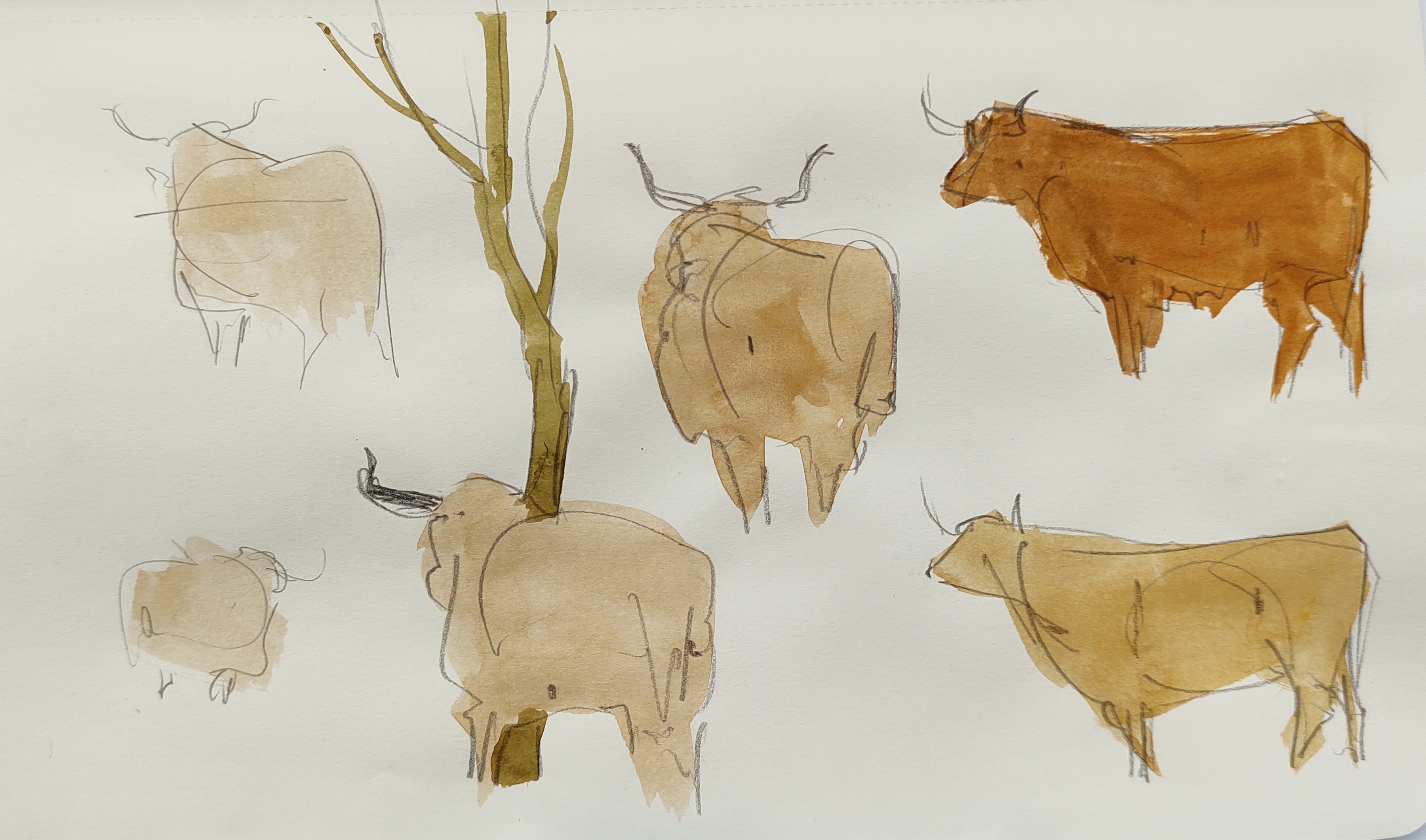
Leaving the reserve, I passed a charismatic herd of highland cattle.

I walked on, unable now to stop for long because of the cold. I walked through the outskirts of the village of Snogebæk, and continued, zigzagging across the fields and small roads, trying to keep warm. I could hear the roar of the sea.

Hares and geese, Smedvejen

As the sky darkened imperceptibly, I made one more painting, before walking through a summer house area and arriving at Bro Odde, the coast, where the foaming sea tumbled onto to the beach.

Dusk, from the bench, Søndre Mosevej

LAND 09

WEATHER REPORT – overcast all day. Temperature 0 – 2 degrees. Wind 3 – 5 m/s from the east. Hours of precipitation: 0 hours. Hours of sunshine: 0 hours.

STOPS with the BIVVY – 0

KILOMETRES WALKED – 14.08 km

DAY LASTED – 11h and 15m

PEOPLE TALKED TO – 1

BIRDS SEEN and HEARD – 43 species: 11 new (Lesser spotted woodpecker, Stock dove, Great black-backed gull, Rough-legged buzzard, Goosander, Tufted duck, Teal, Shelduck, Barnacle goose, White-fronted goose, Mute swan, running total = 64 species)

LESSONS LEARNED – I should have taken my tarp, even though it was dry, I could have done with the cover.

IN MY HEAD – Biogas, greenwashing, the environment, biodiversity, the land, the LAND

LAND 09 – Rokkestenen to Bodils Church, 03.03.23

Denne blog på dansk her

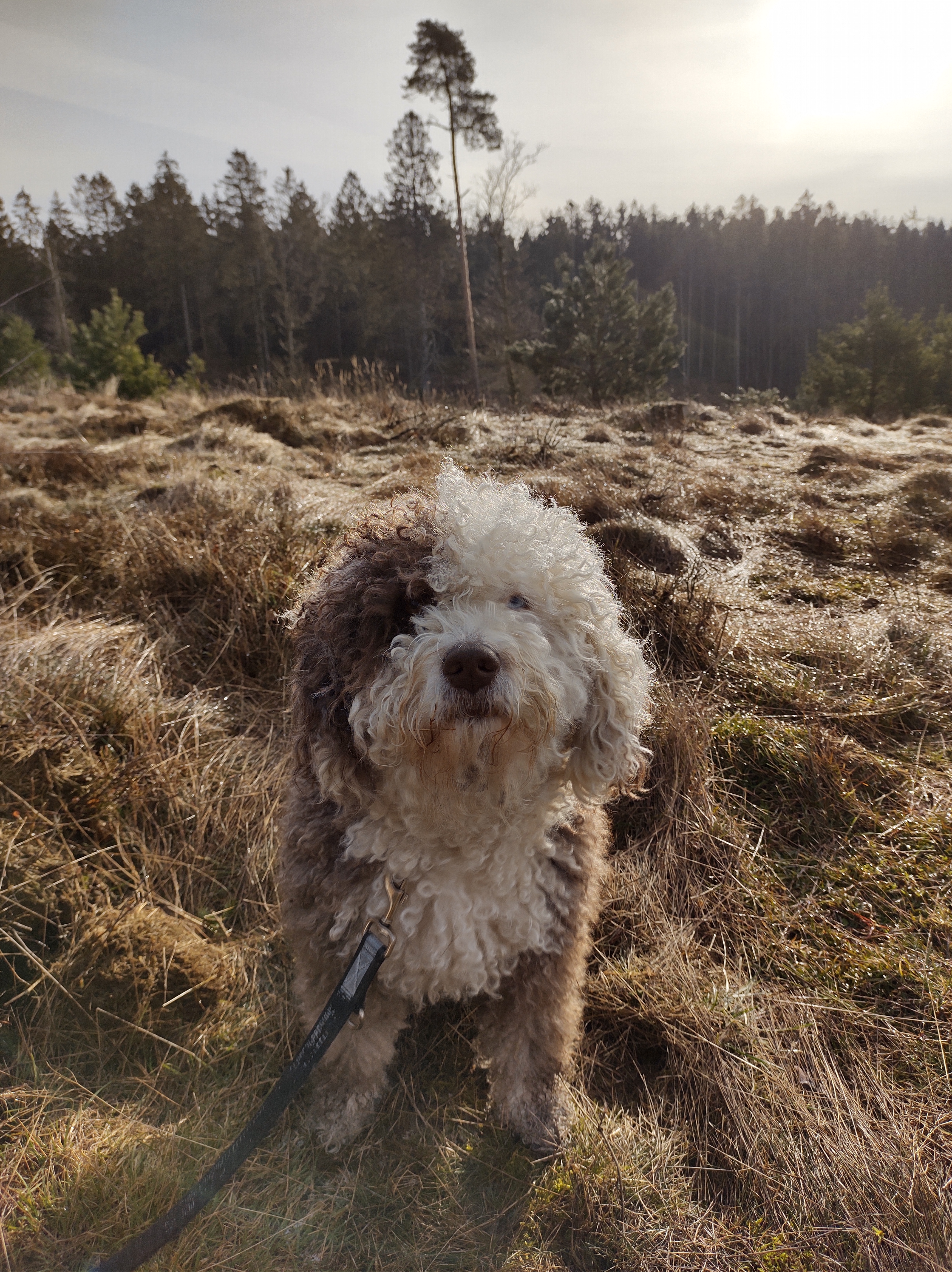
LAND 09 Windstill and frosty at dawn, the tips of the tallest pine trees burned orange with the rising sun. Marley and I walked from the car park through the forest and up to Rokkesten, the day’s start point – Marley being my dog and enthusiastic fellow traveller for the day.

Rokkesten and Shoemakers Lake

We continued on the rocky and twisting path, down through muddy dells and over granite outcrops worn smooth thousands of years ago by the retreating glaciers. We eventually arrived at a more open area with an expansive view over the southern part of the island, where the blue frost on the grass was burned off by the sun.

View from Skotteklint

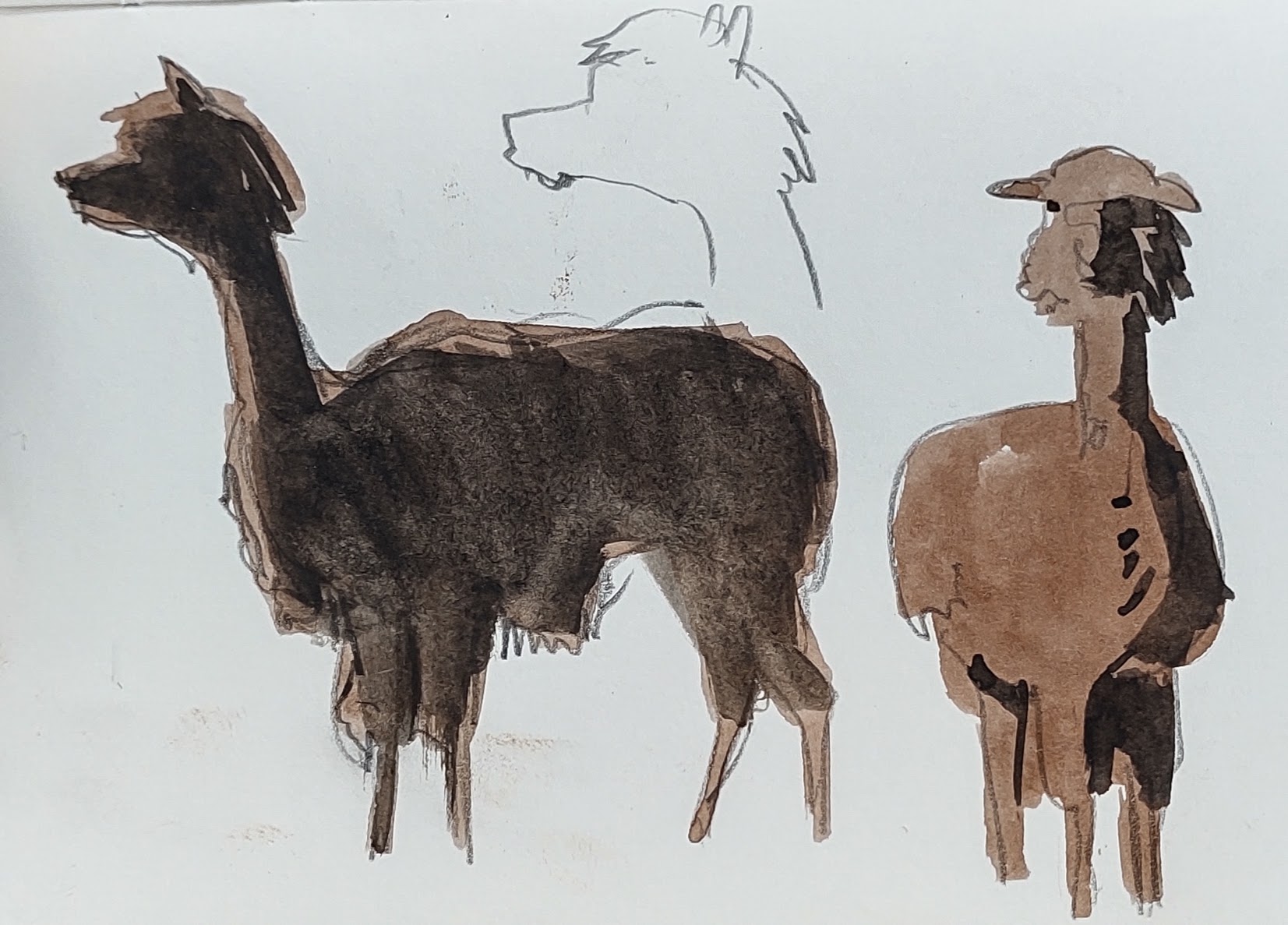
Down further still, to Kaasegaard, an attractively undulating landscape kept mostly open by grazing cows, sheep and…alpaca. In the past, ‘Klippeløkke’ such as this – hilly or rocky areas with thin soil used for pasture – were a significant element in Bornholm’s landscape, but very few remain today. Having never been ploughed or fertilised, they support a rich and diverse plant and animal life.

We carried on, past Slingesten and Linkisten and onwards to Gamleborg. Here I sat with a view over the valley and soaked in the warm sun while a pair of buzzards circled lazily overhead. In the far distance, I could hear cranes calling, mingling with the soporific droning of a chainsaw. Closer still, sporadic and hesitant sounds – the mesmeric song of the yellowhammer, drumming of the woodpecker, and bark of the pheasant – confirmed the sense that the forest was cautiously awakening from a deep sleep.

We marched on – past the Altersten and through a huge fir plantation, recently harvested. Heading south again, with the sun long gone and the wind increasing, we took shelter by the side of the Øle Stream.

Øle å

Both rather tired now, we walked up and over ‘Slamrebjerg’, a small hill with fine views over the flat agricultural landscape towards Nexø. Winter had returned, the sunny and warm morning a distant memory. Walking down the hill again, we crossed the invisible ‘Tornquist zone’ that divides the older granite and gneiss of Northern Bornholm, from the much younger sedimentary rocks of the south – a significant boundary.

View east to Nexø

We arrived cold, windswept and exhausted at Bodils Church, our destination. From there, once I had finished painting and the sun had officially set, it was another hour’s walk through the dusk back to the car.

Bodils church

LAND 09

WEATHER REPORT – Sunny in the morning, overcast in the afternoon. Temperature 1 – 4 degrees. Wind 3 – 8 m/s from the west. Hours of precipitation: 0 hours. Hours of sunshine: 5 hours.

STOPS with the BIVVY – 0

KILOMETRES WALKED – 13.03 km

DAY LASTED – 10h and 49m

PEOPLE TALKED TO – 1

BIRDS SEEN and HEARD – 27 species: one new (lapwing, running total = 53 species)

LESSONS LEARNED – I am a cat person.

IN MY HEAD – the song ‘Southern Cross’ by Nine Black Alps.

LAND 08 – Paradisbakkevejen to Rokkestenen, 24.02.23

Denne blog på dansk her

LAND 08 Dawn felt rather mild with no hint of the rain that was forecast for later in the day. I headed east, down the hill and towards the sea. In a small copse by the roadside a small herd of fallow deer melted away at my approach.

Down in the open landscape again, I followed the road south, parallel to the coast. The sky was ever-darkening. I stopped to paint the distant skyline of Aarsdale and was overjoyed to hear my first skylark of the year break into song just above me. Two or three others quickly responded, and for a brief period I was utterly submerged in their mesmeric chorale.  As the first raindrops fell on my paper they suddenly stopped, and I was not to hear them again.

View from Sdr. Aarsdalevej

I packed up and walked on as the rain and wind intensified, stopping briefly to sketch the triangular gables of the farms stung out along between the fields and the coast.

View from Sdr. Aarsdalevej II

Turning into the wind I headed up towards the woods. I spent a long while trudging over muddy fields trying to find a path, but to no avail. Eventually I arrived at the Hell Hills, the less well-known and explored eastern cousin to the Paradise Hills. Here I wandered for a while, again struggling to find a decent trail. I arrived at a small stone structure, the site of one of Bornholm’s old ‘optical telegraph’ towers, which afforded me some shelter from the rain. I painted a sheet of paper and exposed it to the rain.

Rain painting I – increasing exposure time from left to right

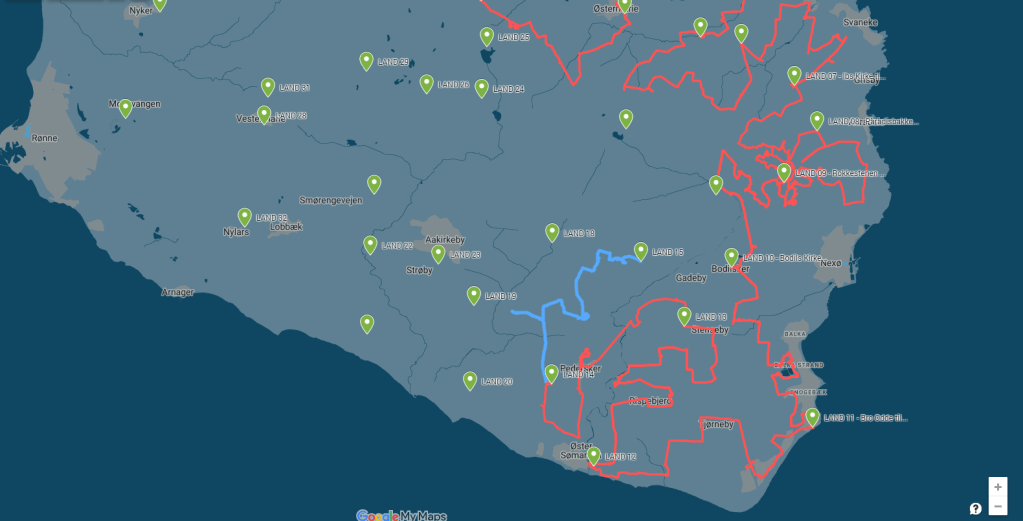
I walked on. The badly maintained and waymarked paths, combined with my appalling sense of direction, resulted in many wet and muddy hours wandering the aptly named Hell Hills. I made more rain paintings but decided to concentrate on the GPS line recording my journey instead, meandering onwards in the mossy and sodden forest before eventually emerging into the more open and visitor-friendly Paradise Hills.

Rain painting II – increasing exposure time from left to right
View in the Hell Hills

By now the rain had ceased and with it my mood lifted. I walked along Kodal – a wonderfully picturesque rift valley with sides of mauve-grey granite bedecked in gold-green moss and burgundy heather.

Kodal

Absolutely exhausted now I trudged on, around the perimeter of two small forest lakes, before arriving at my destination – ‘Rokkesten’, the Rocking Stone – a huge glacial erratic boulder perched on the bedrock. I tried to set it in motion but to no avail. Behind the clouds the sun set, and the day was done.

LAND 08

WEATHER REPORT – overcast, rain for much of the day. Temperature 3 degrees. Wind 8 m/s from the west. Hours of precipitation: 6 hours. Hours of sunshine: 0 hours.

STOPS with the BIVVY – 1

KILOMETRES WALKED – 18.46 km

DAY LASTED – 10h and 20m

PEOPLE TALKED TO – 0

BIRDS SEEN and HEARD – 26 species: two new (skylark, whooper swan, running total = 51 species)

LESSONS LEARNED – My waterproof trousers get heavy when wet. I had to hold them up with one hand as I walked. Also, the path ‘Spor i landskabet’ on the map does not exist in reality.
IN MY HEAD – the song ‘Down so Long’ by the Doors: on repeat, the beat in time with my step.