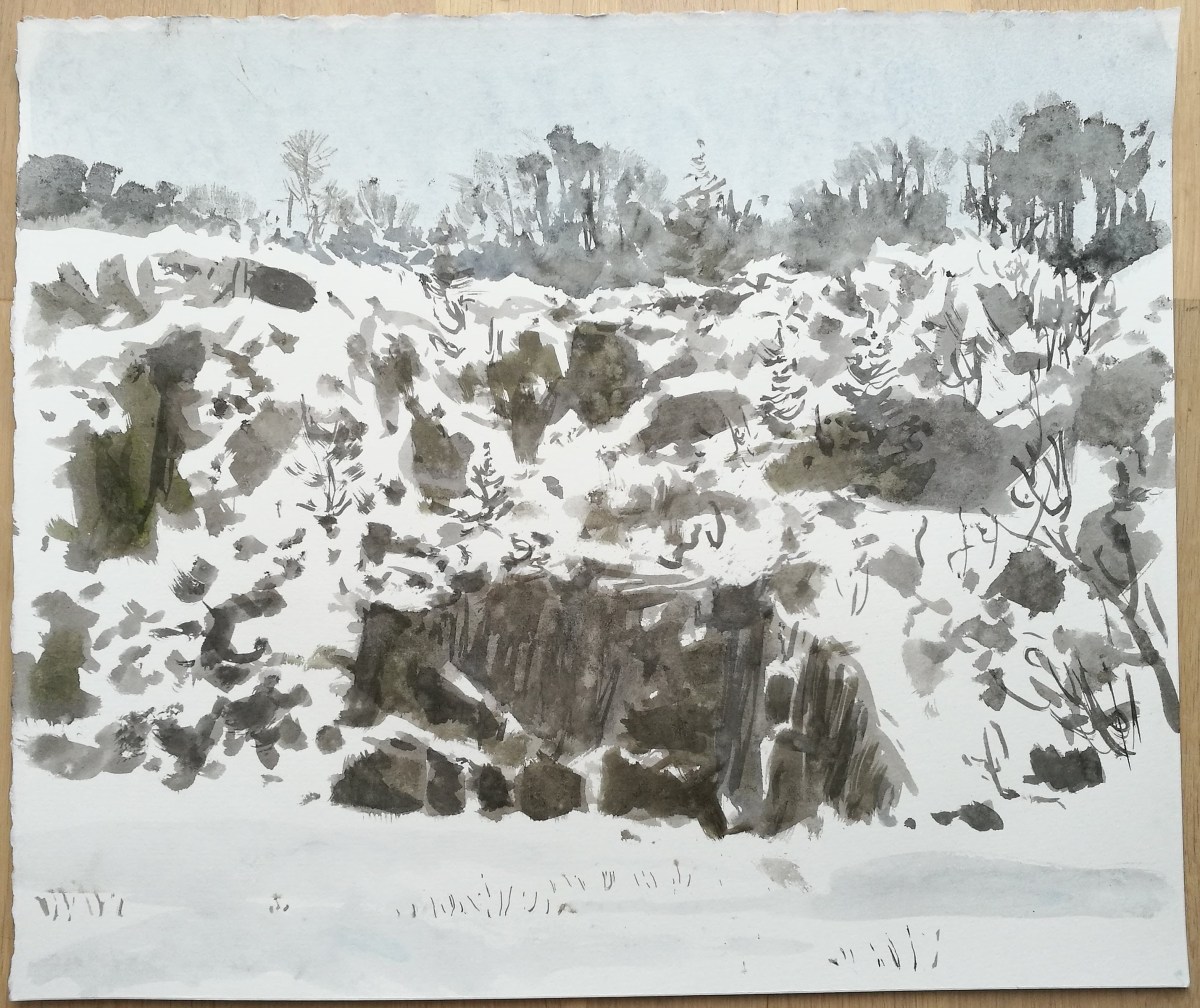
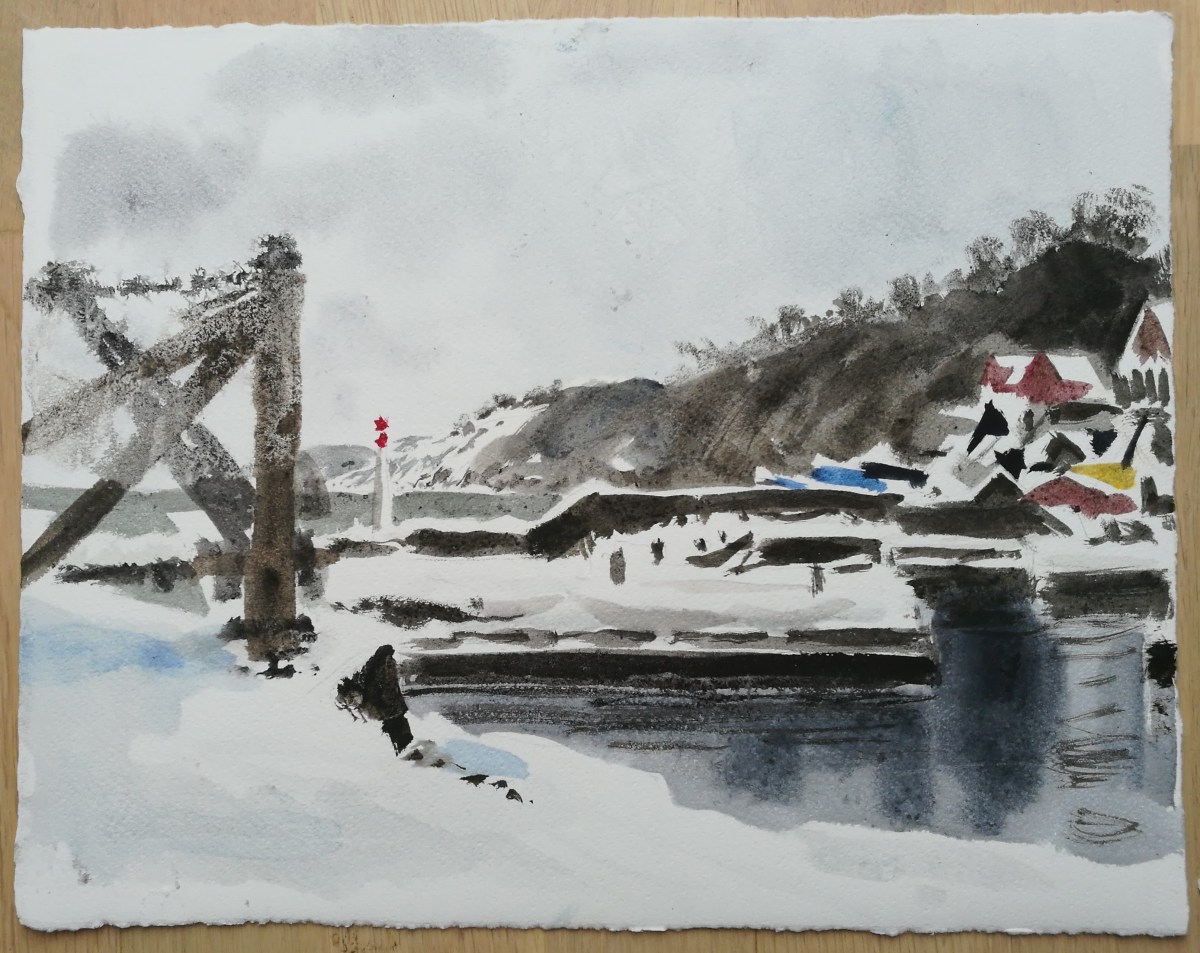
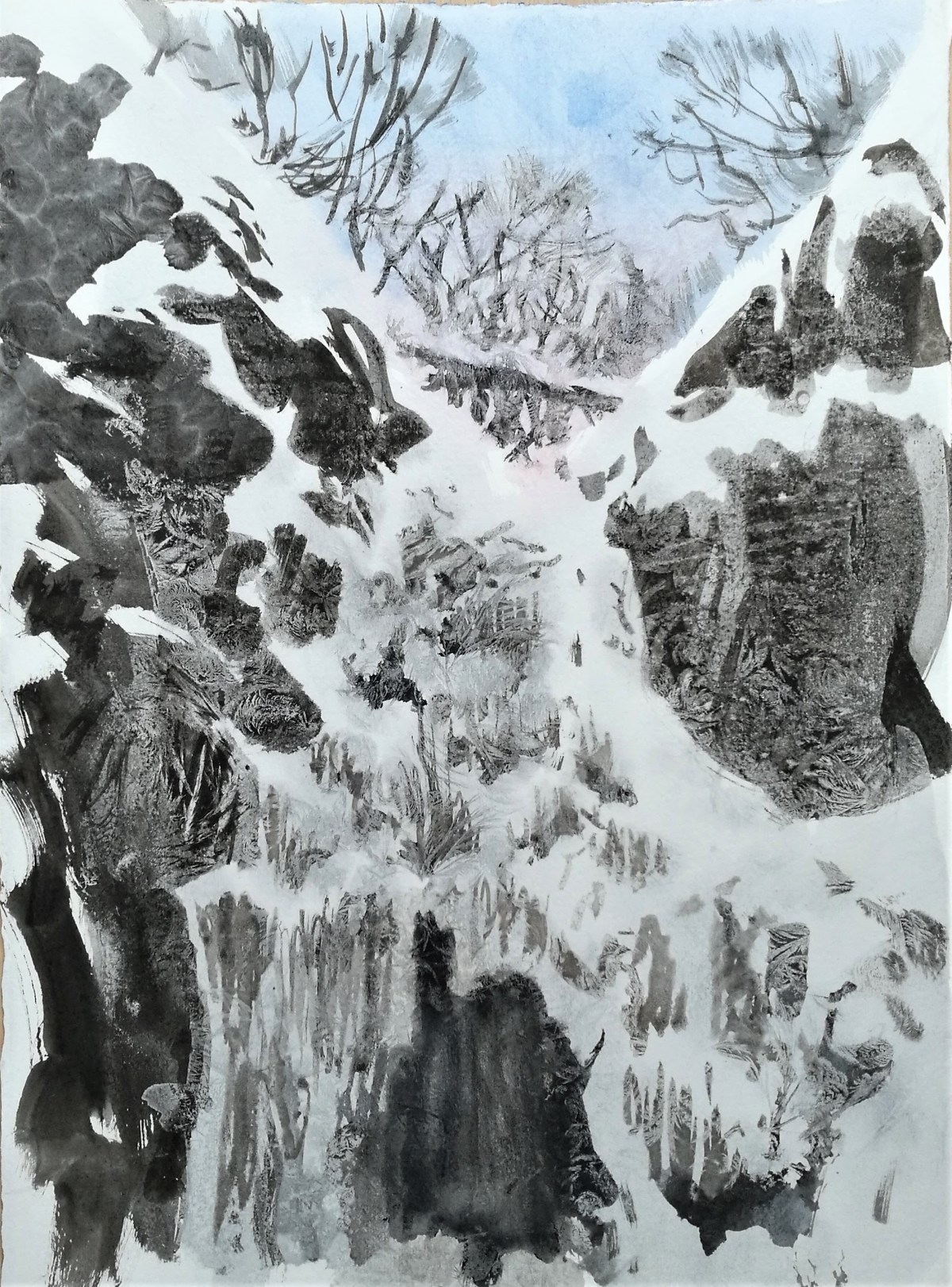
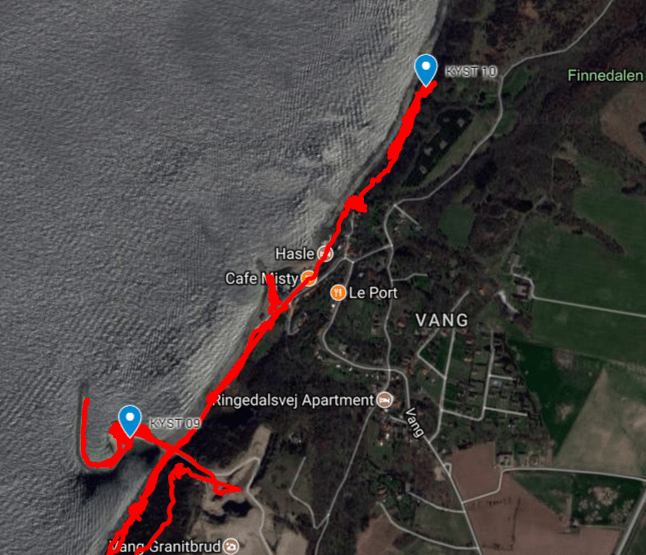
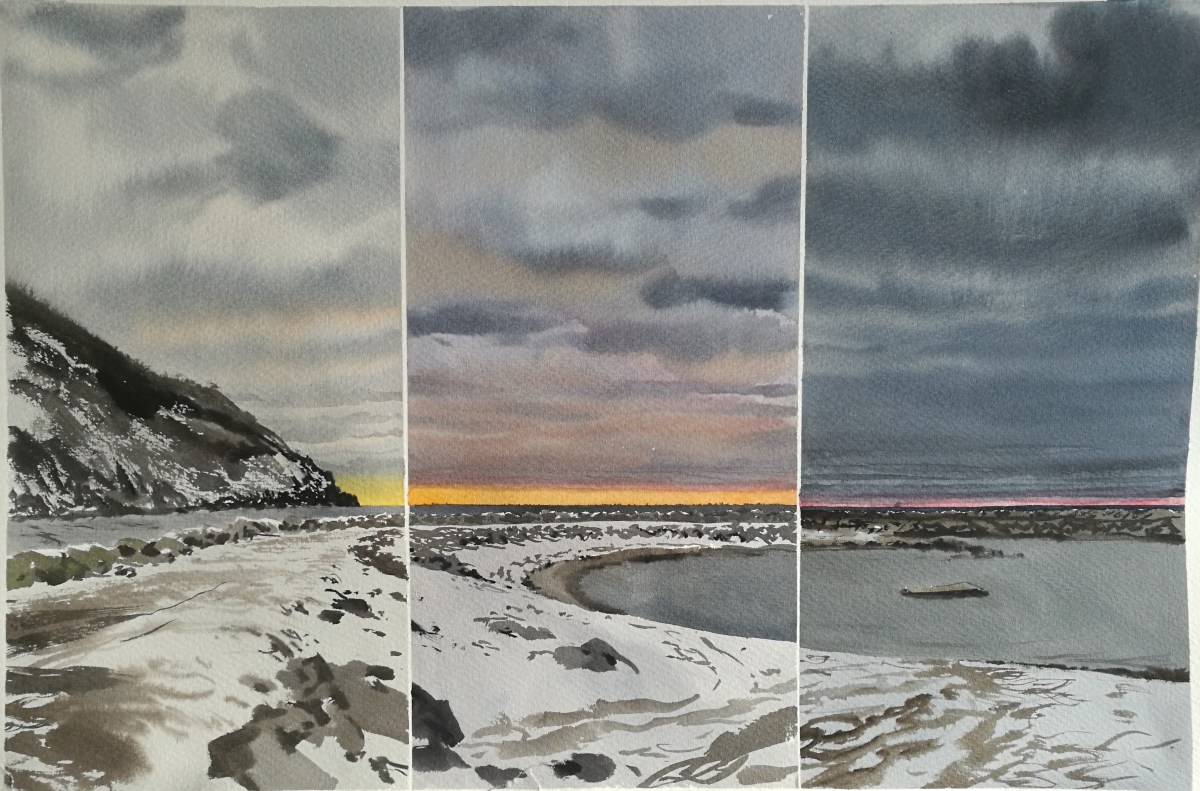
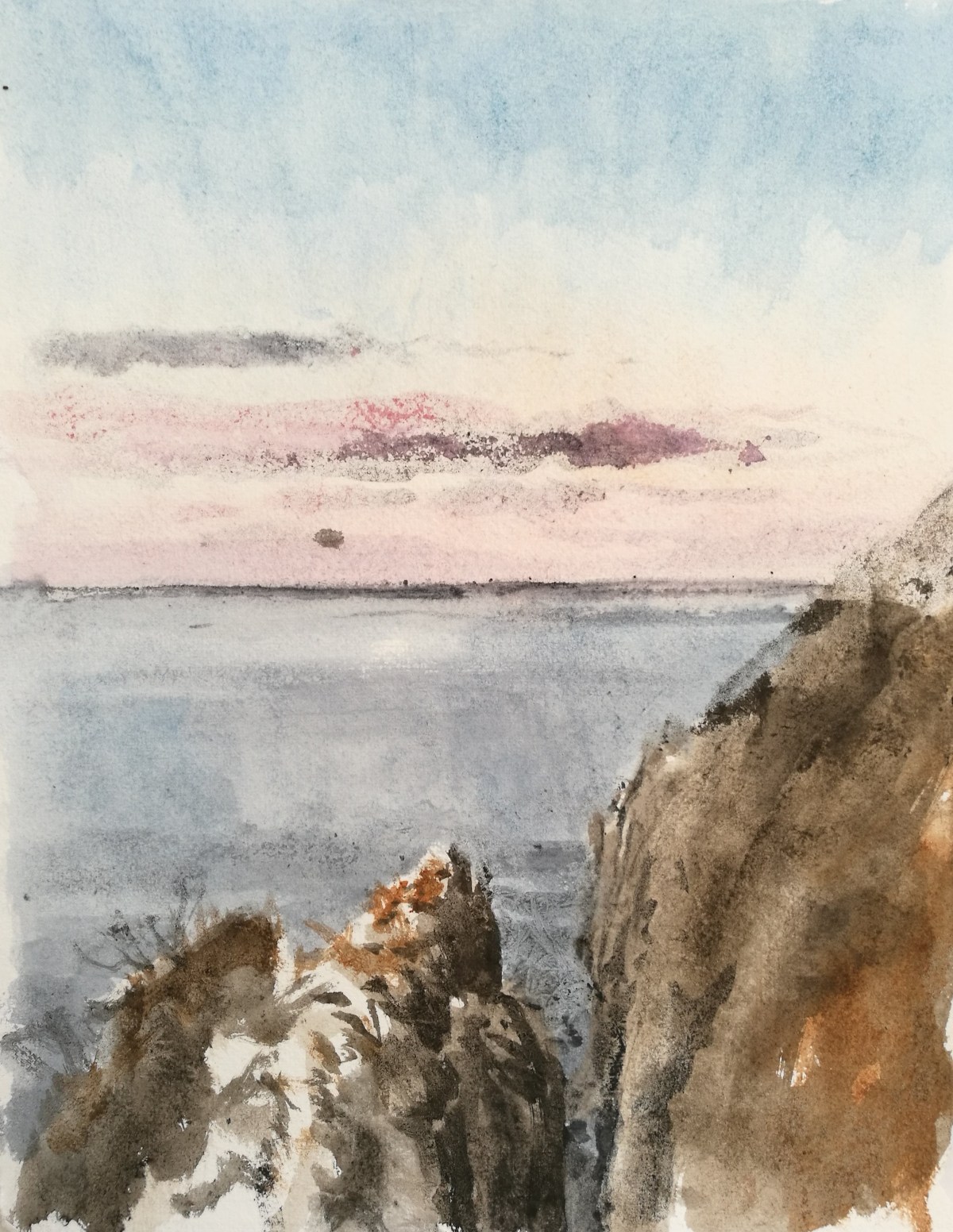
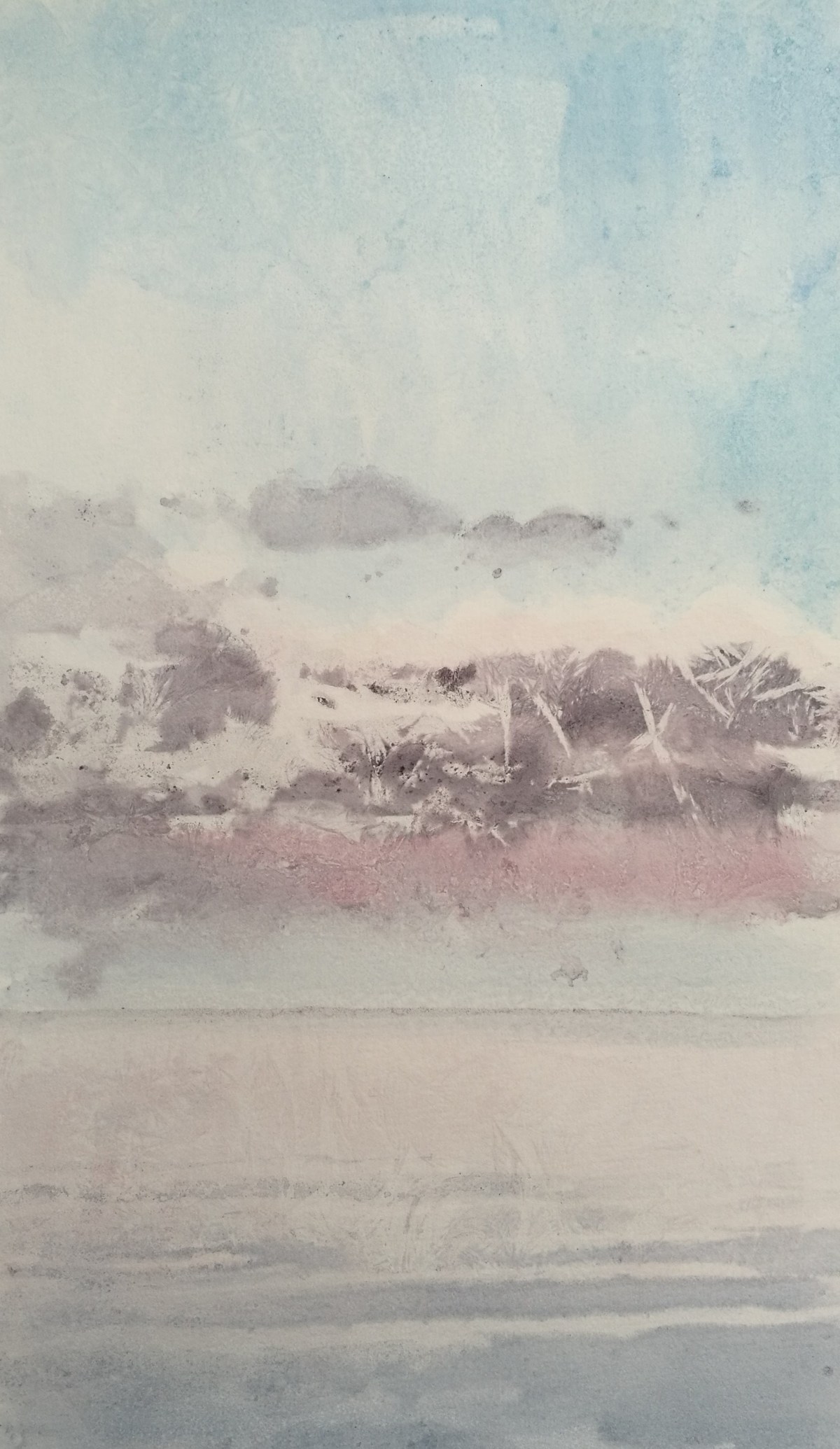
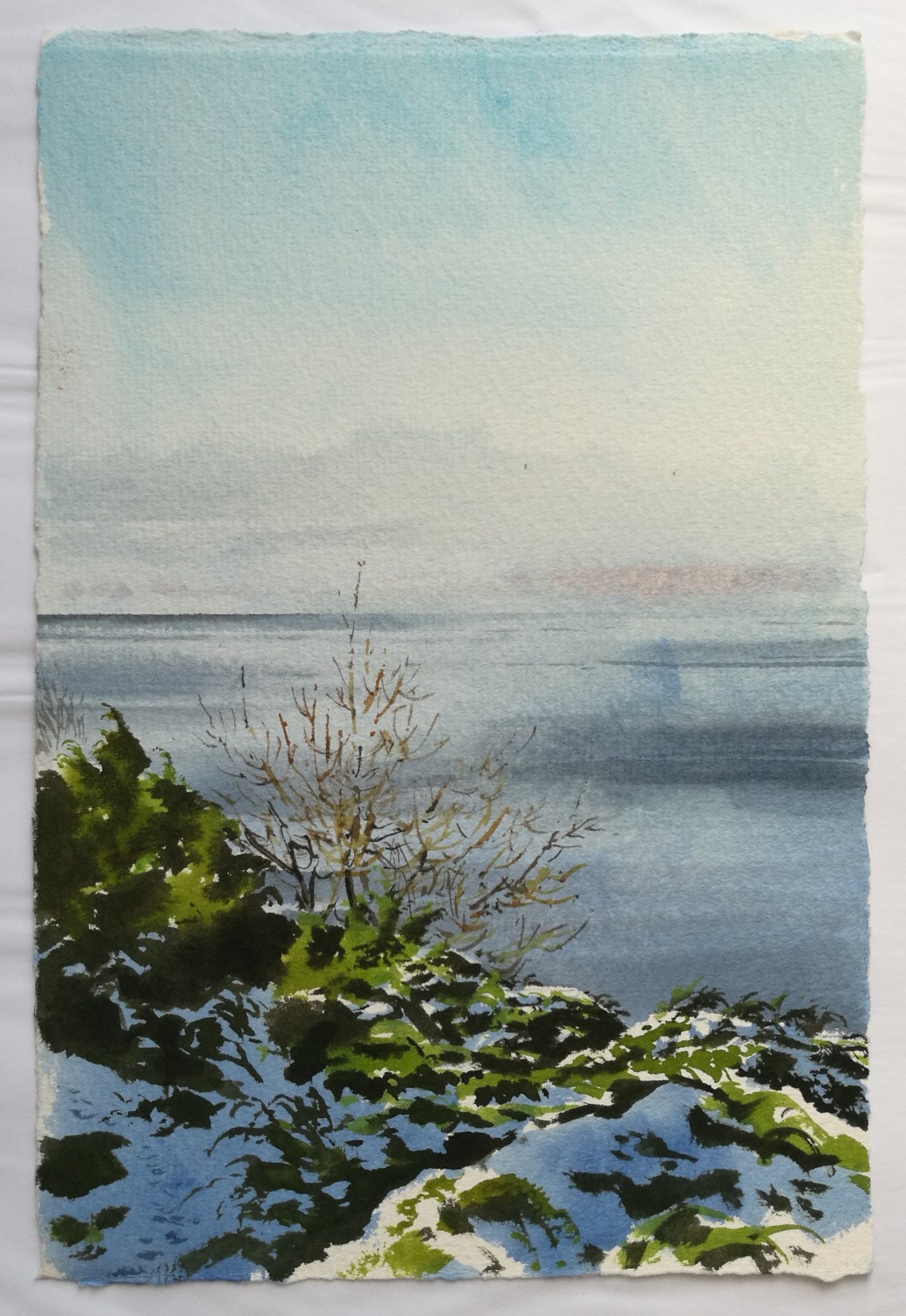
KYST 14 – from Sandvig Strand to Kongeskær, 06/03/18

For at læse denne KYST 14 blog på dansk, se her

cof

See here for an introduction to the KYST project

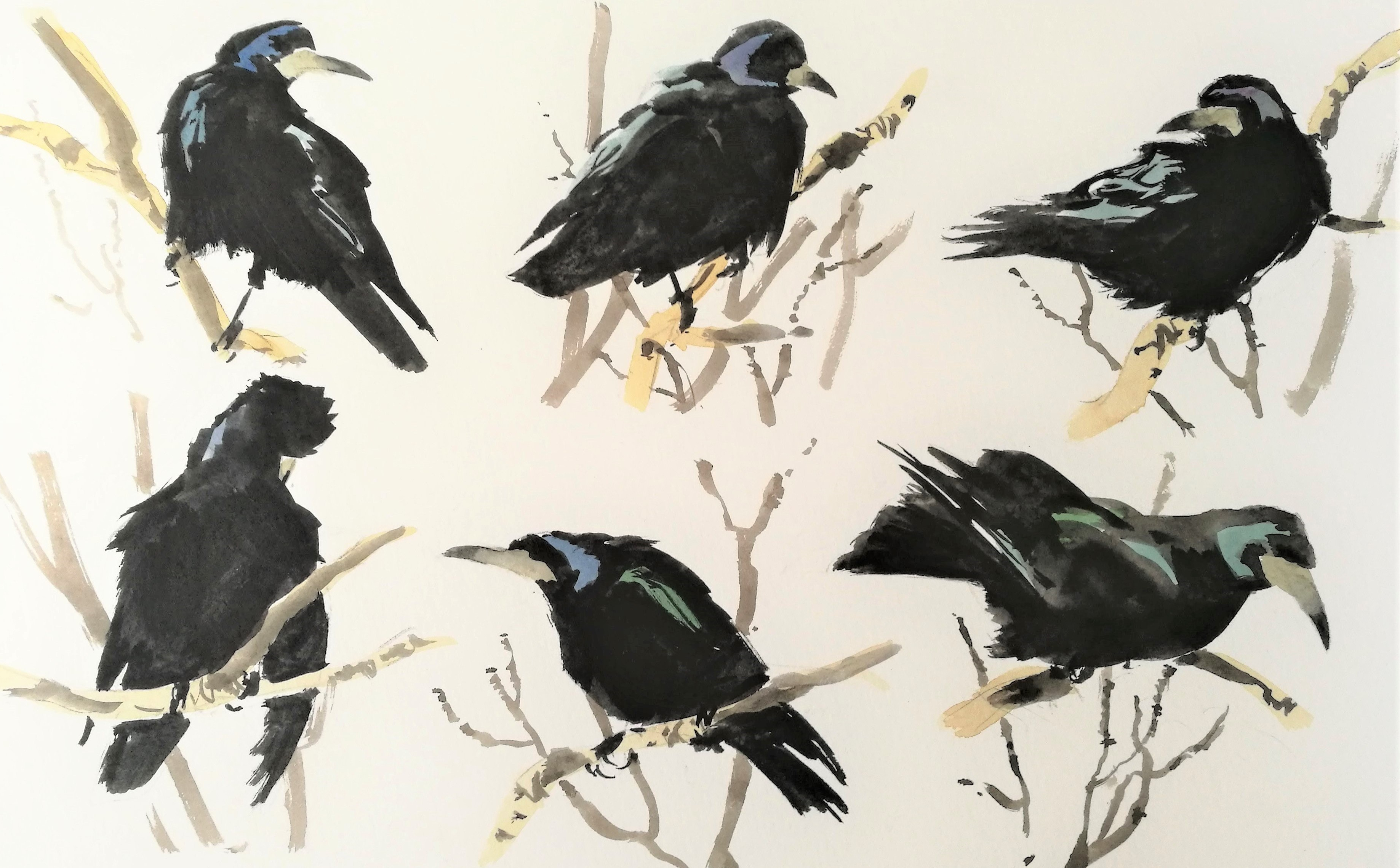
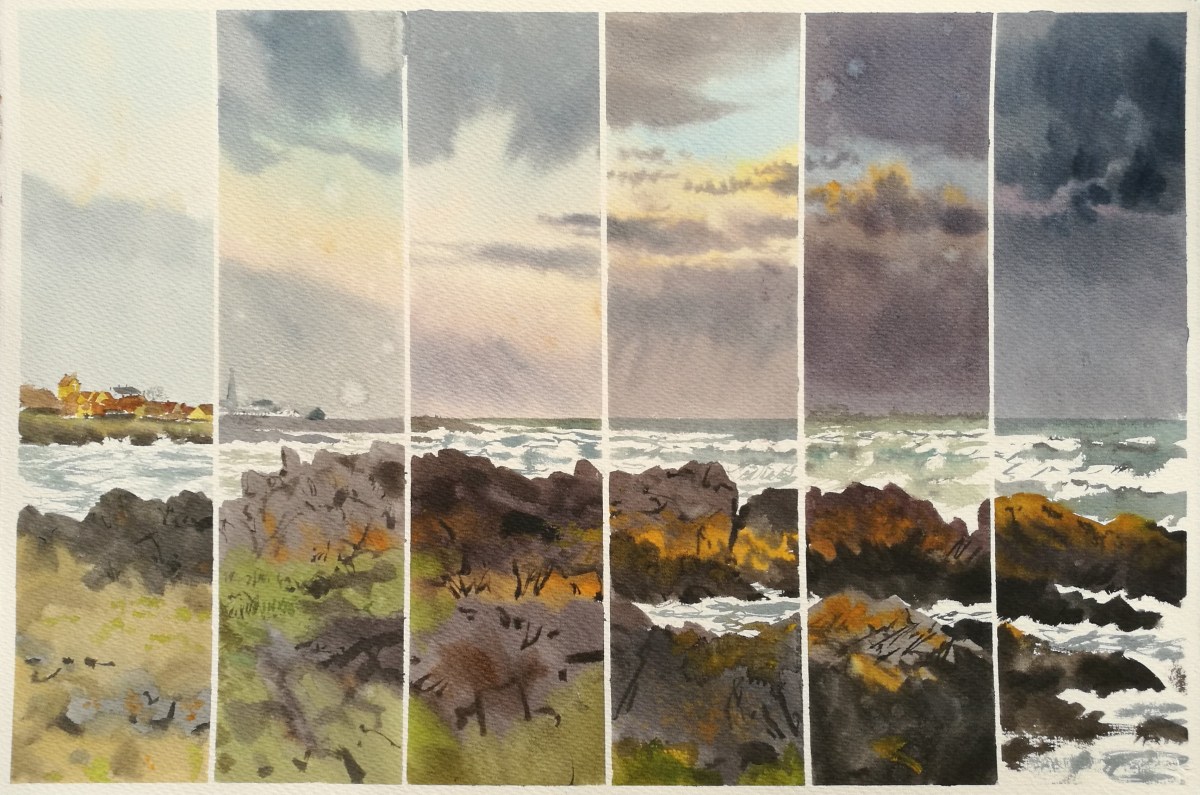
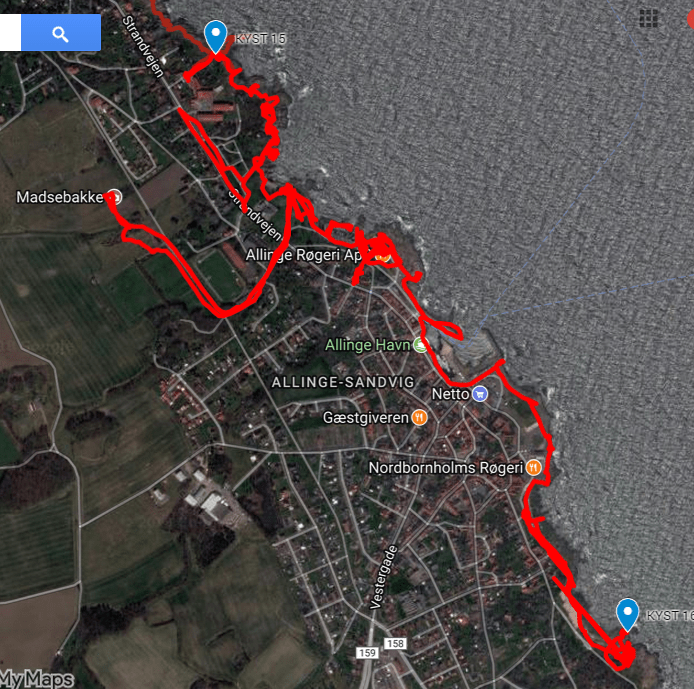
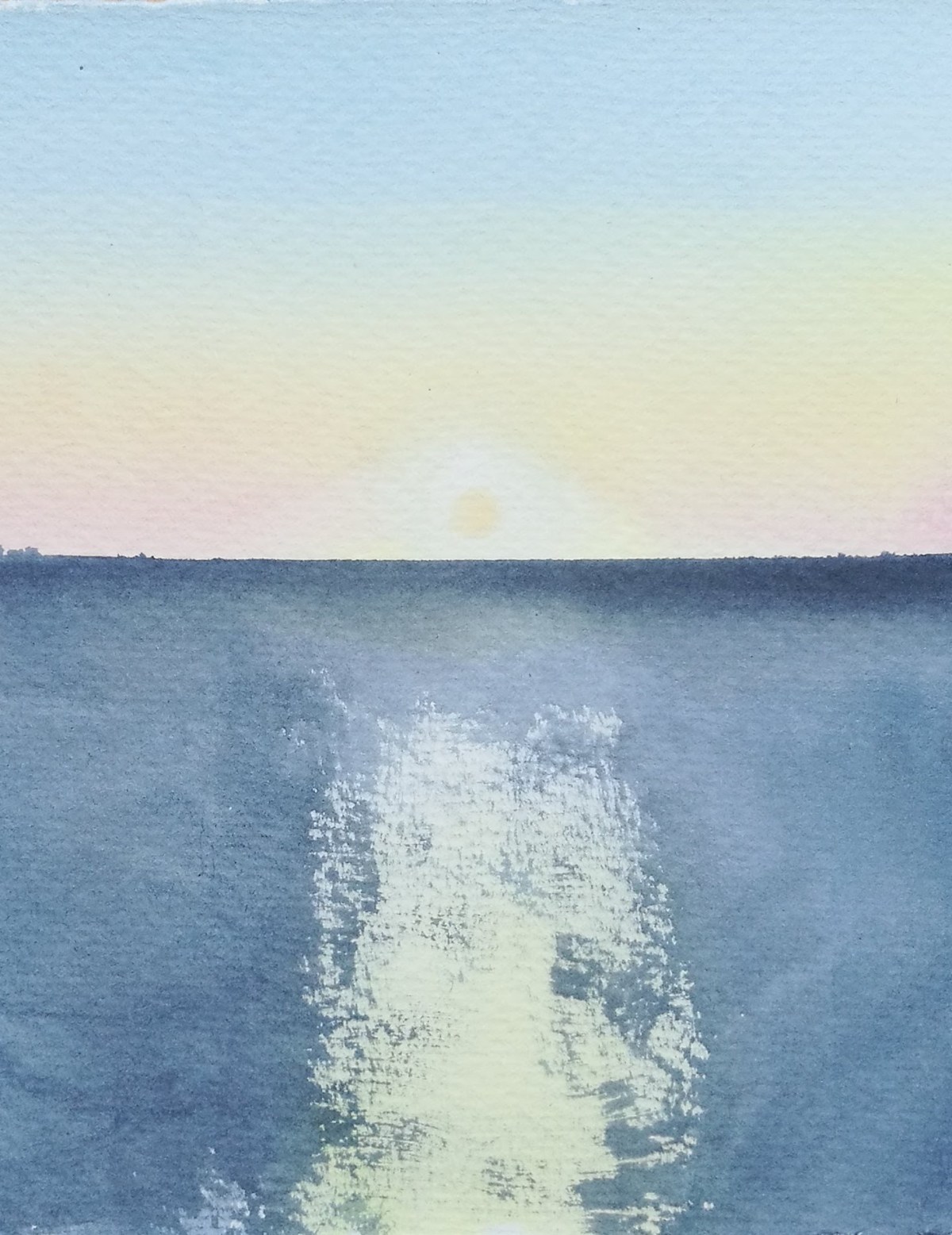
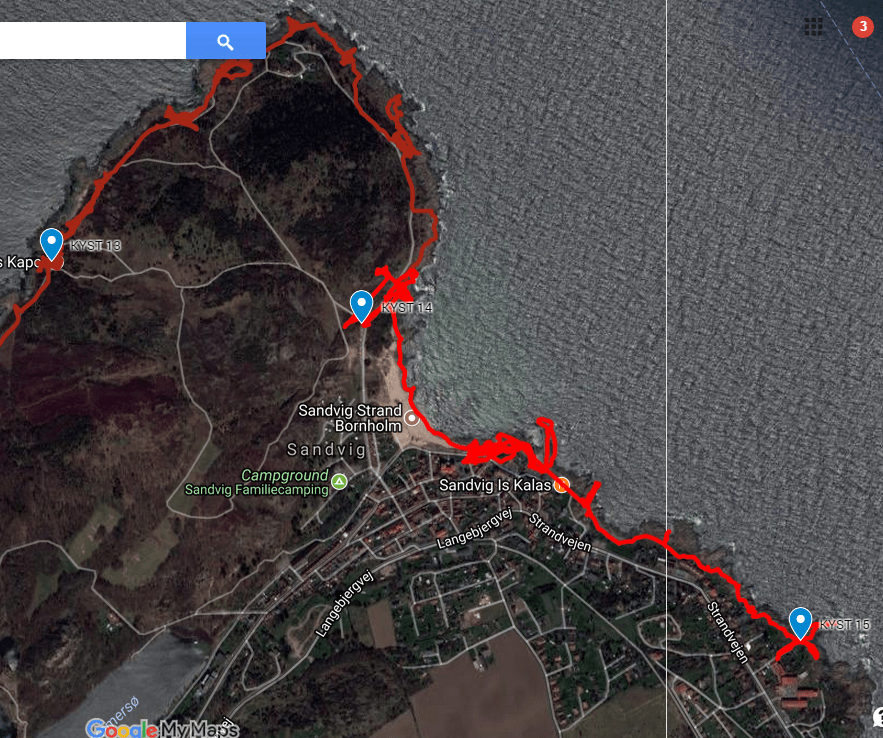
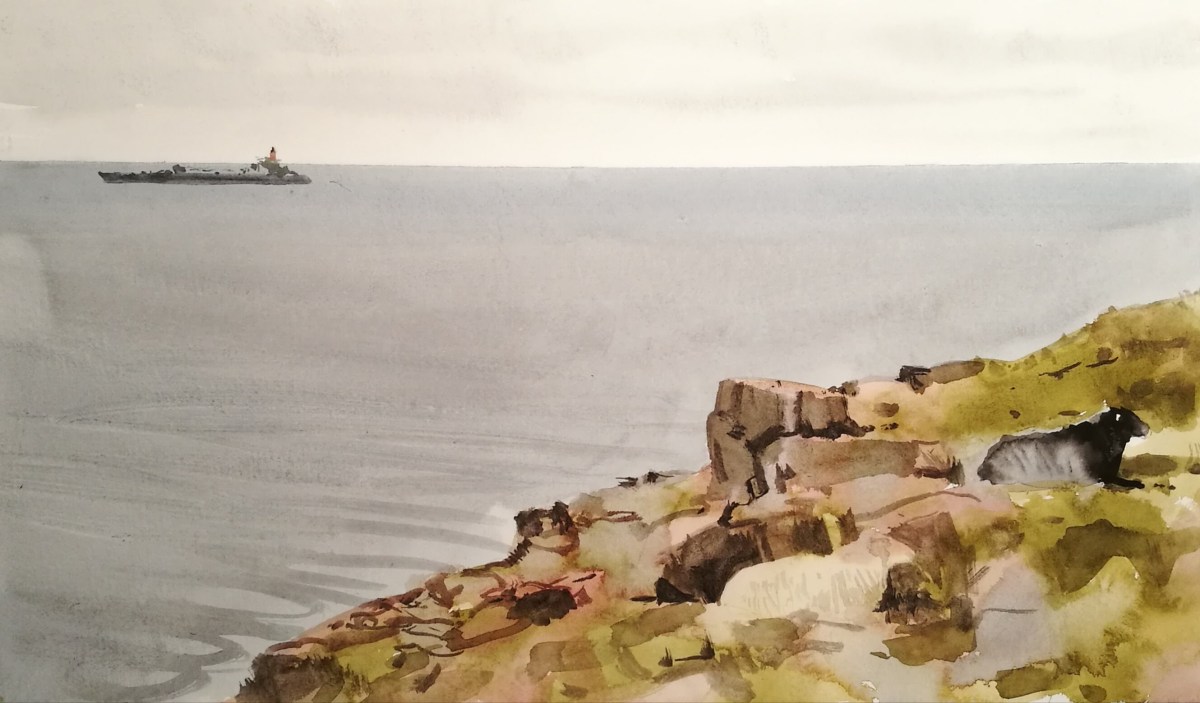
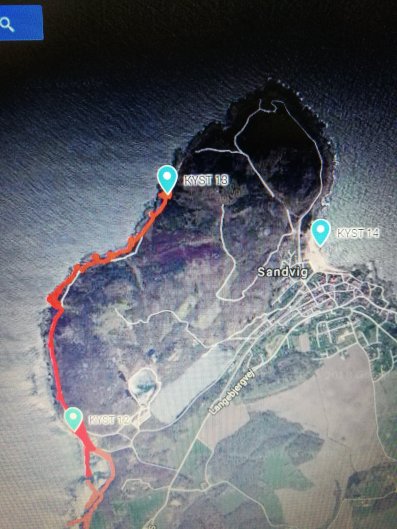
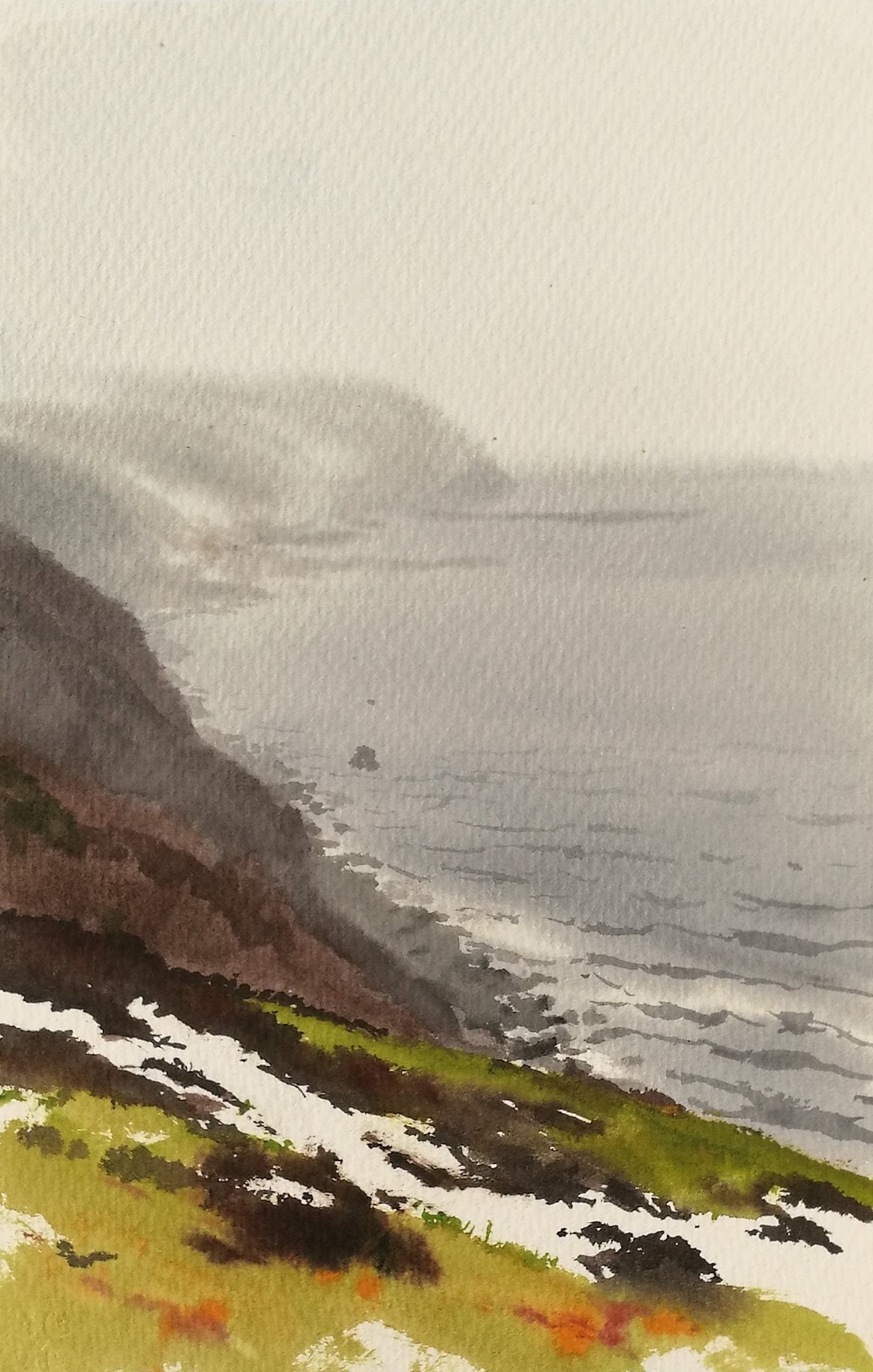
KYST 14 An orange disc perched on the horizon in a clear cobalt sky was the magnificent sight that greeted me as I arrived at Sandvig strand. The icy wind, however, put paid to any notions of an easy day, and I spent a long time trying to find a sheltered spot. Nestled between some boulders with a view of the ocean, I quickly got to work

cof

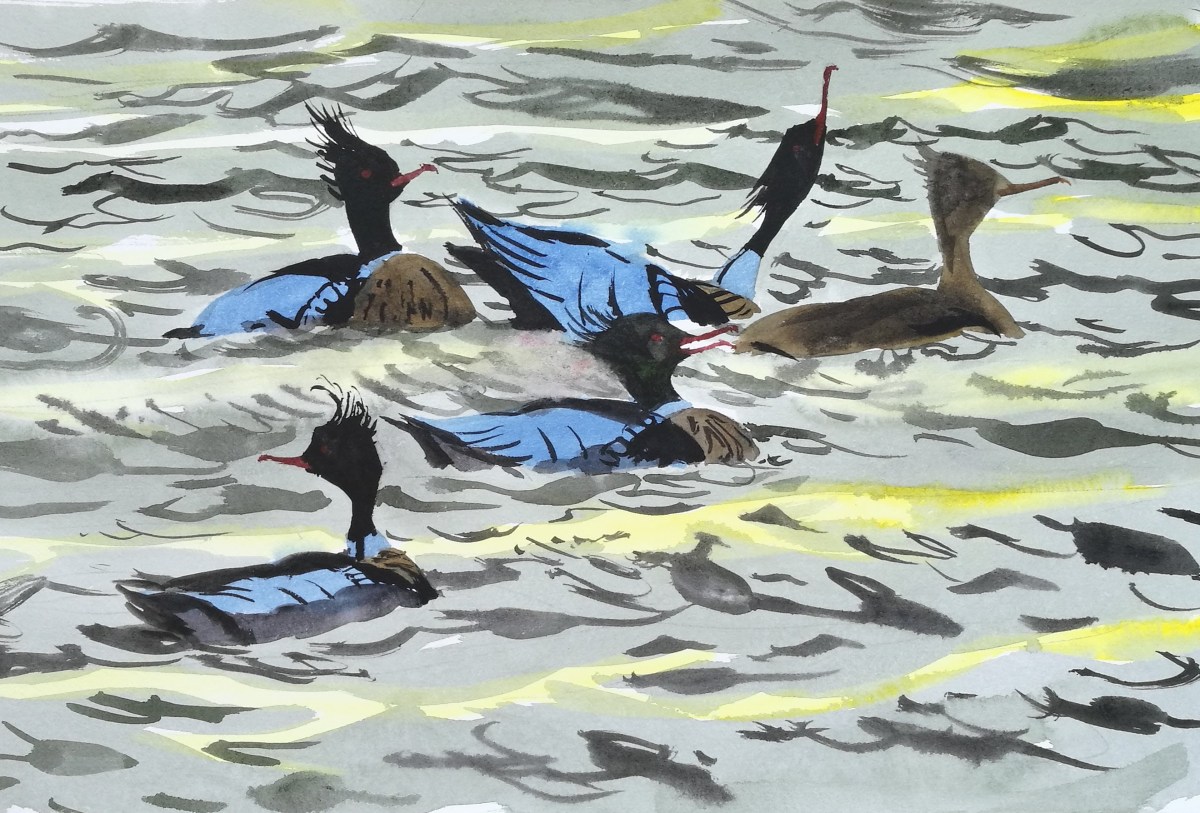
I watched the day unfold. I was hoping for more bird song, but the day felt wintery. Flocks of wood pigeons passed regularly overhead on their way north to Sweden. White wagtails and black redstarts flickered about between the pink granite boulders. Some red breasted mergansers cavorted in the bay, and I studied their strange courtship dance.

cof

Some very friendly highland cattle silently passed by, munching on the tough brown grass between the boulders. On the rocks below I watched a mink patrolling the water’s edge. Despite being an American pest escaped from a fur farm, it seemed utterly at home. The mink’s flat head reminded me somewhat of a fur seal, and at one point, instead of following the rocks it decided to swim across the bay.  I could see its little head powering through the choppy water, unconcerned with the mobbing gulls.

cof

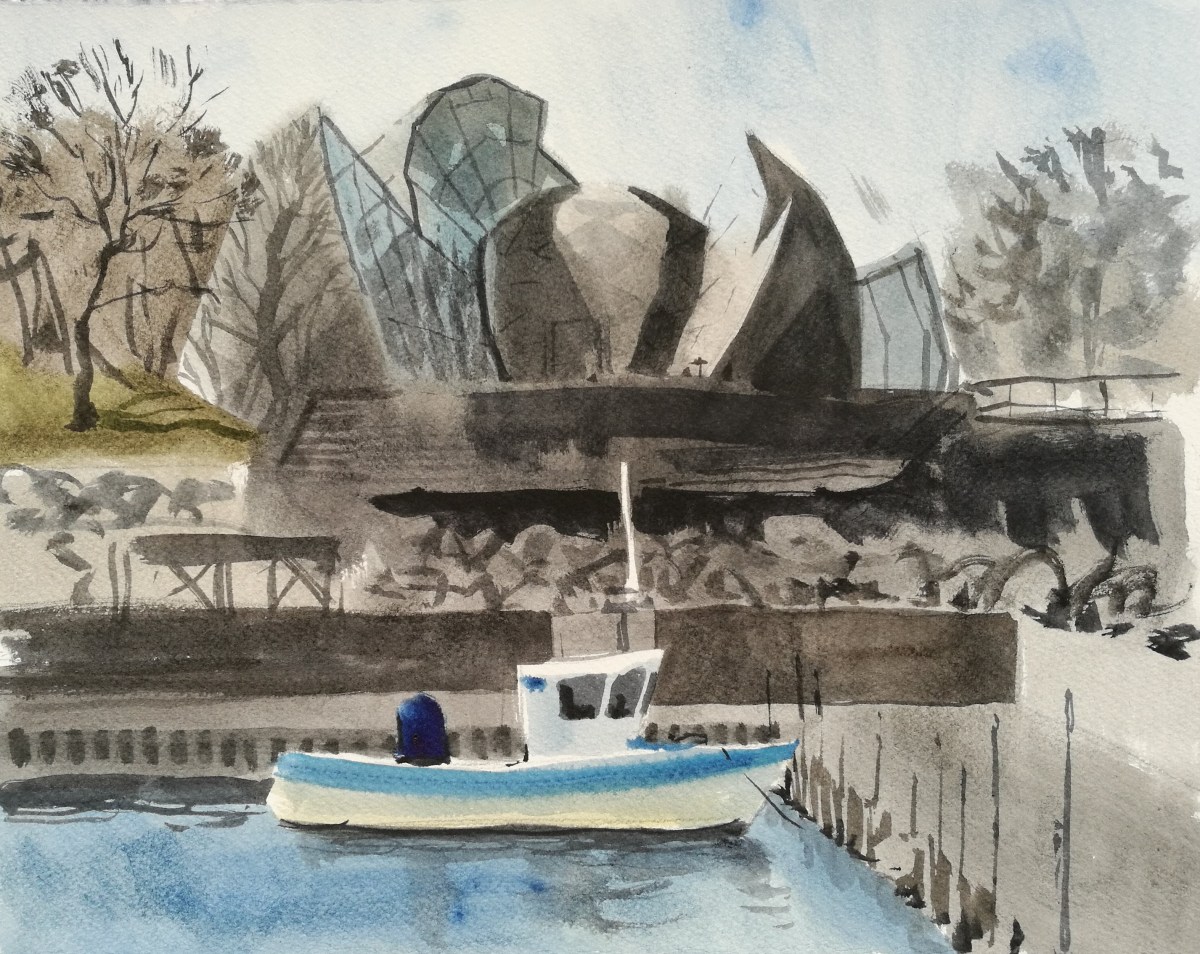
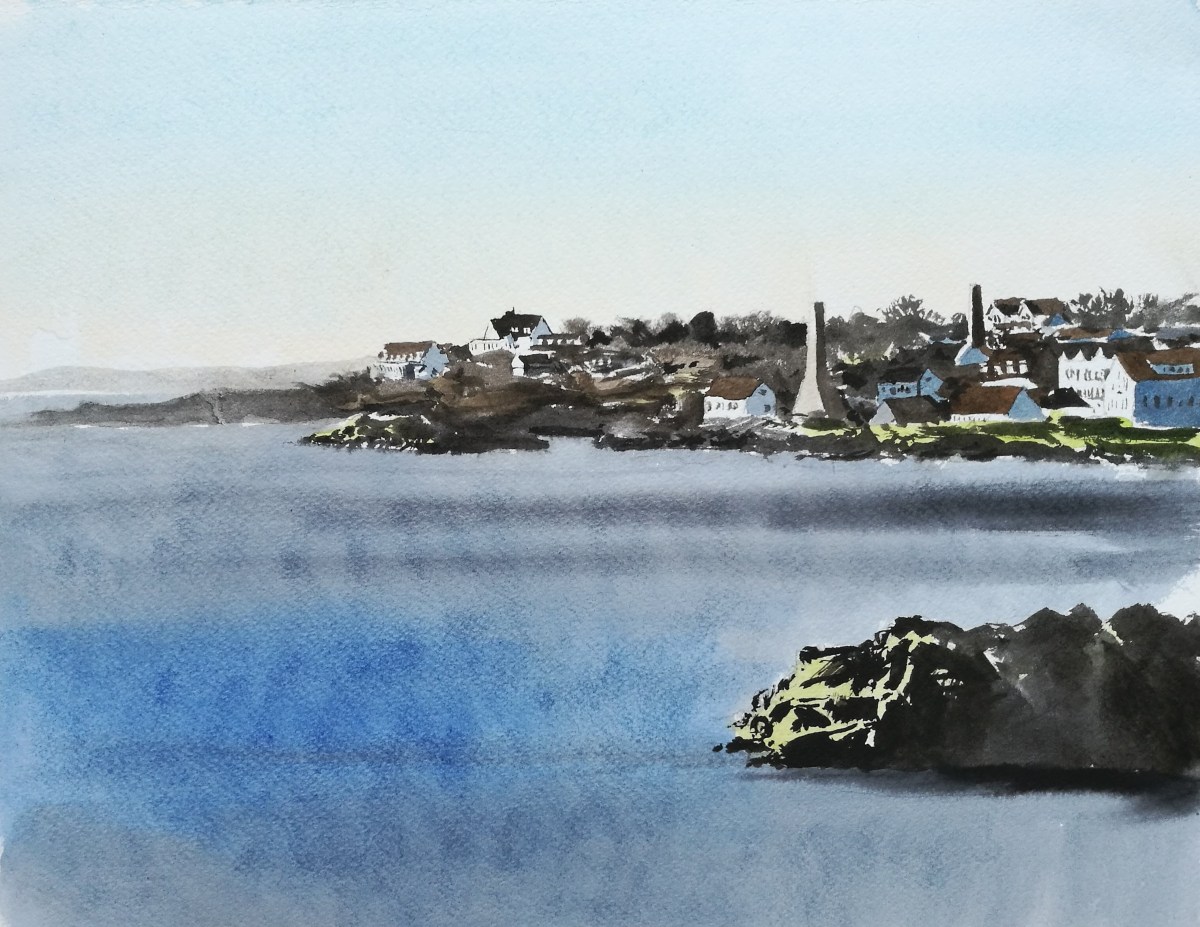
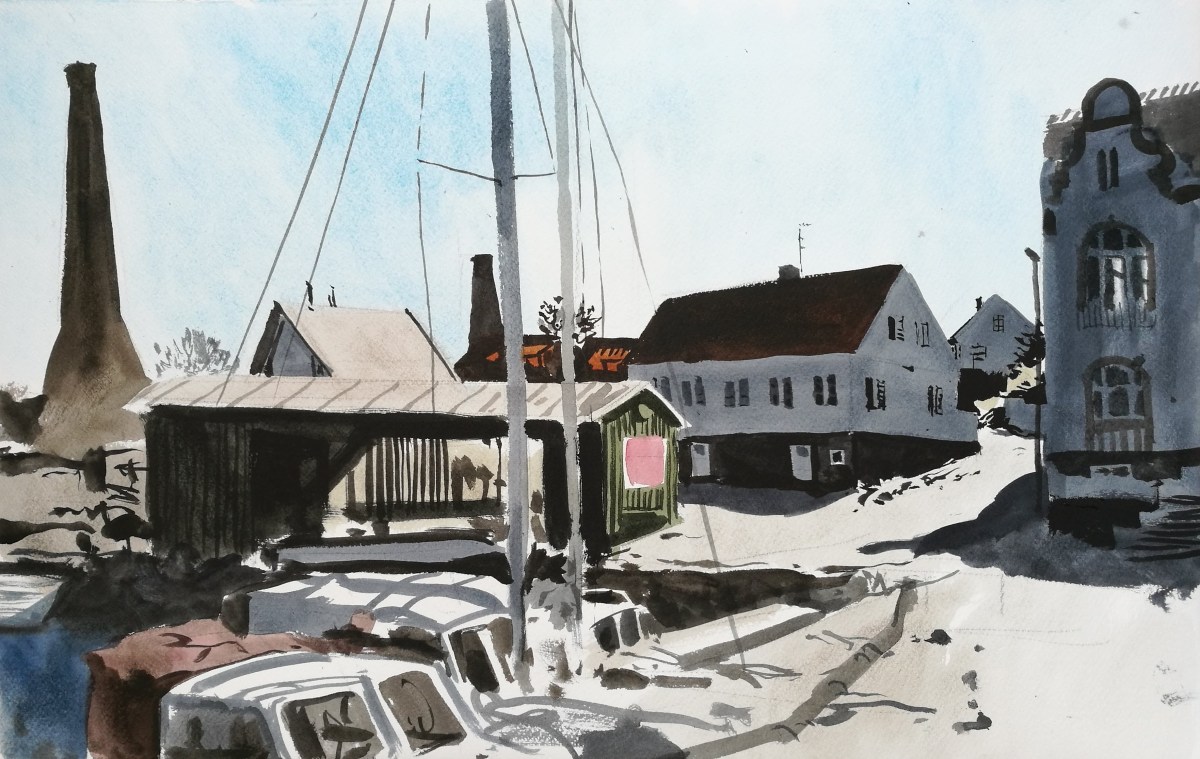
I painted Sandvig town and harbor over the bay, with the sun reflected in the many hotels’ windows.

cof

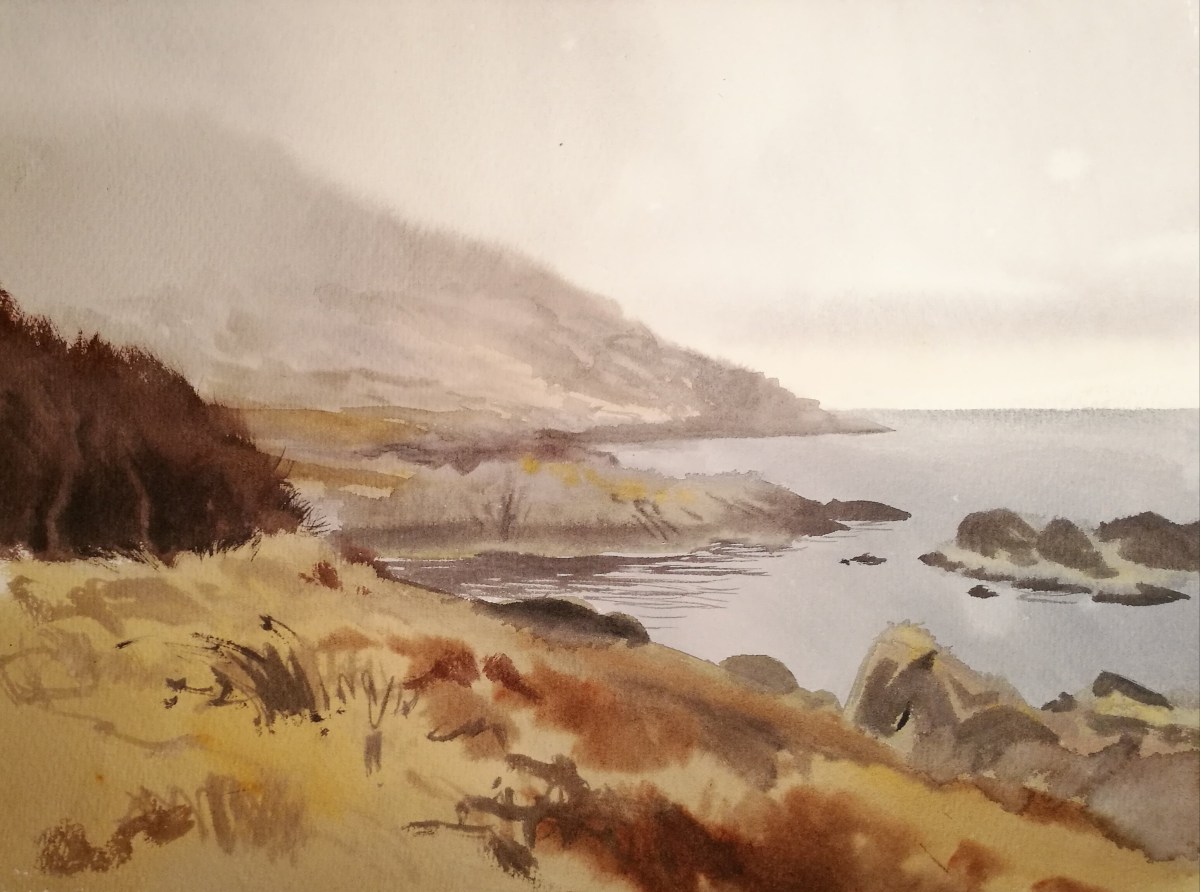
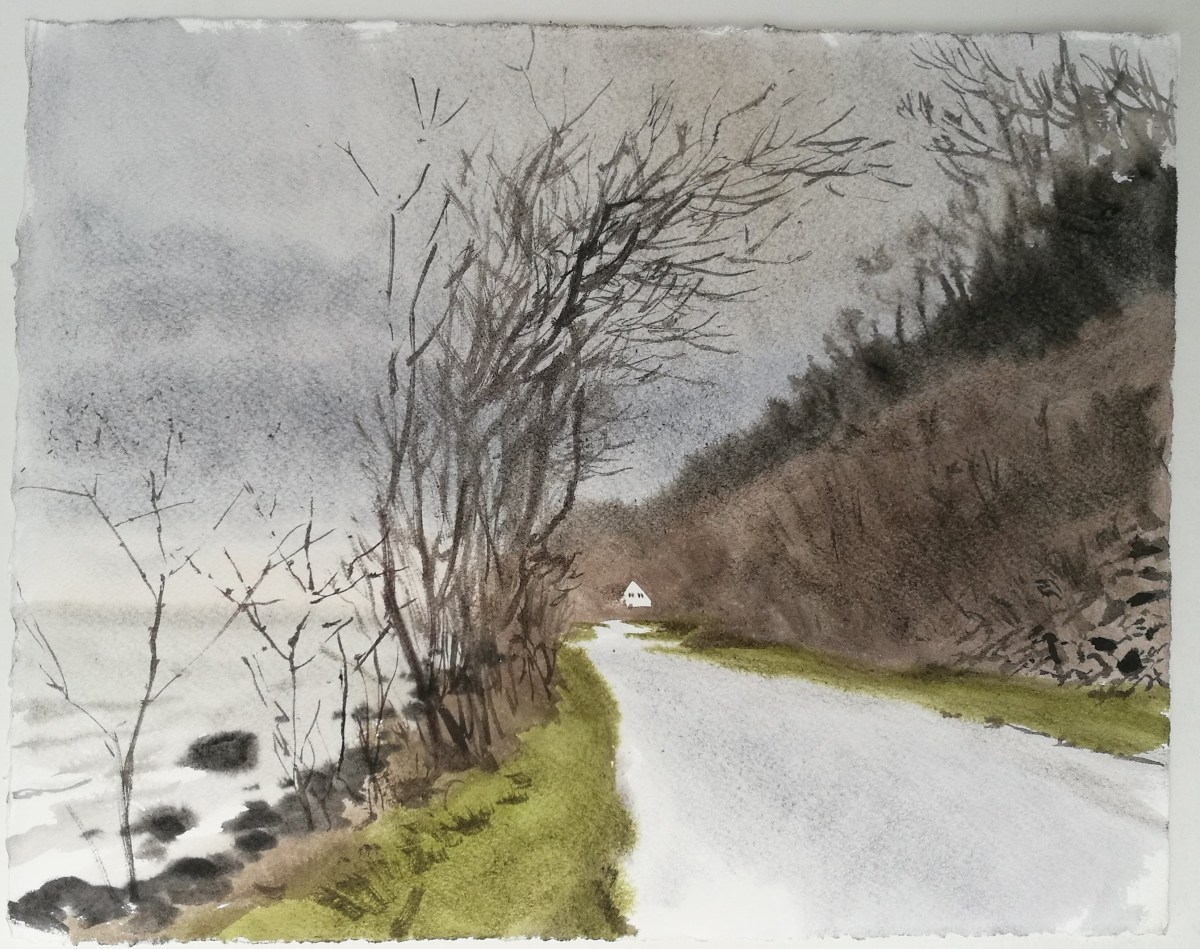
Some clouds spoiled the morning and the day suddenly got much colder. I walked around looking for birds, partly to keep warm. Eventually I packed my things and walked across the bay and under a boardwalk, where I sheltered for a while. The sun returned and I set up my M60 on a rocky shore, looking back across the bay to where I had just been. The tussocks of dead grass had green shoots poking through.

cof

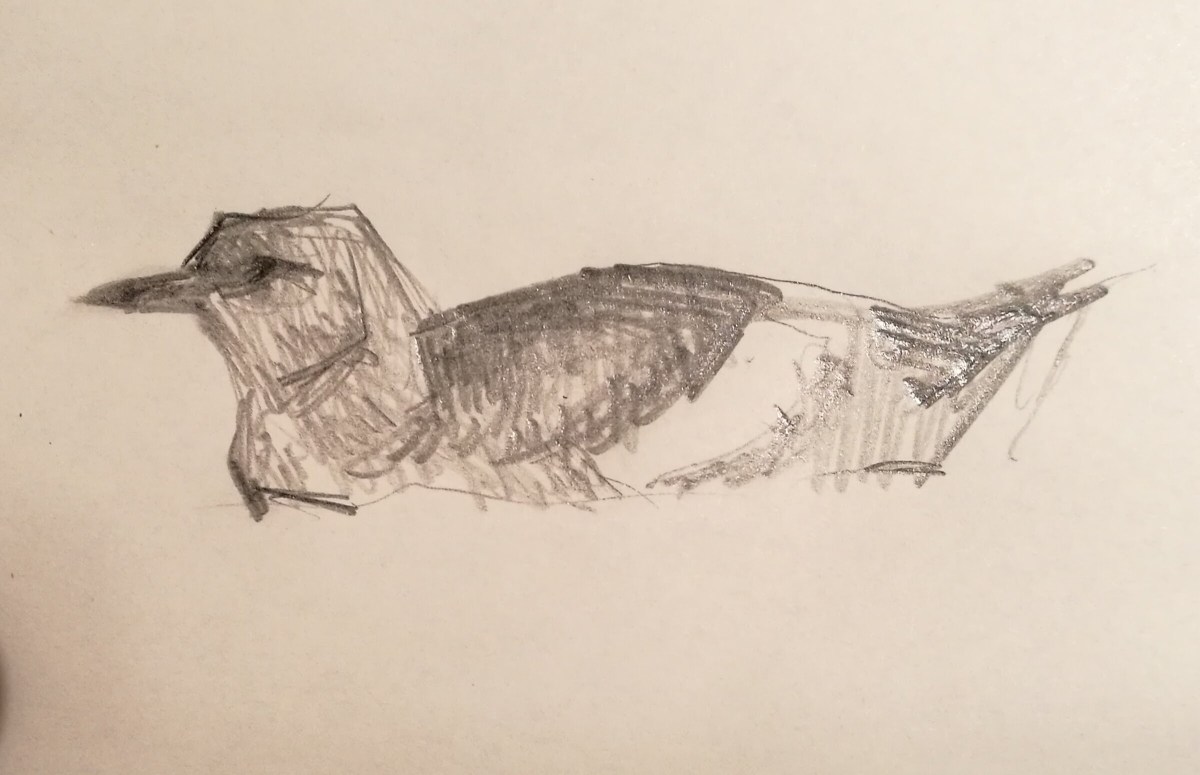
A solitary sandwich tern, shadowed by a freeloading common gull, dove repeatedly after fish. I marveled at its grace and energy as it battled effortlessly with the strong wind and its annoying companion.

cof

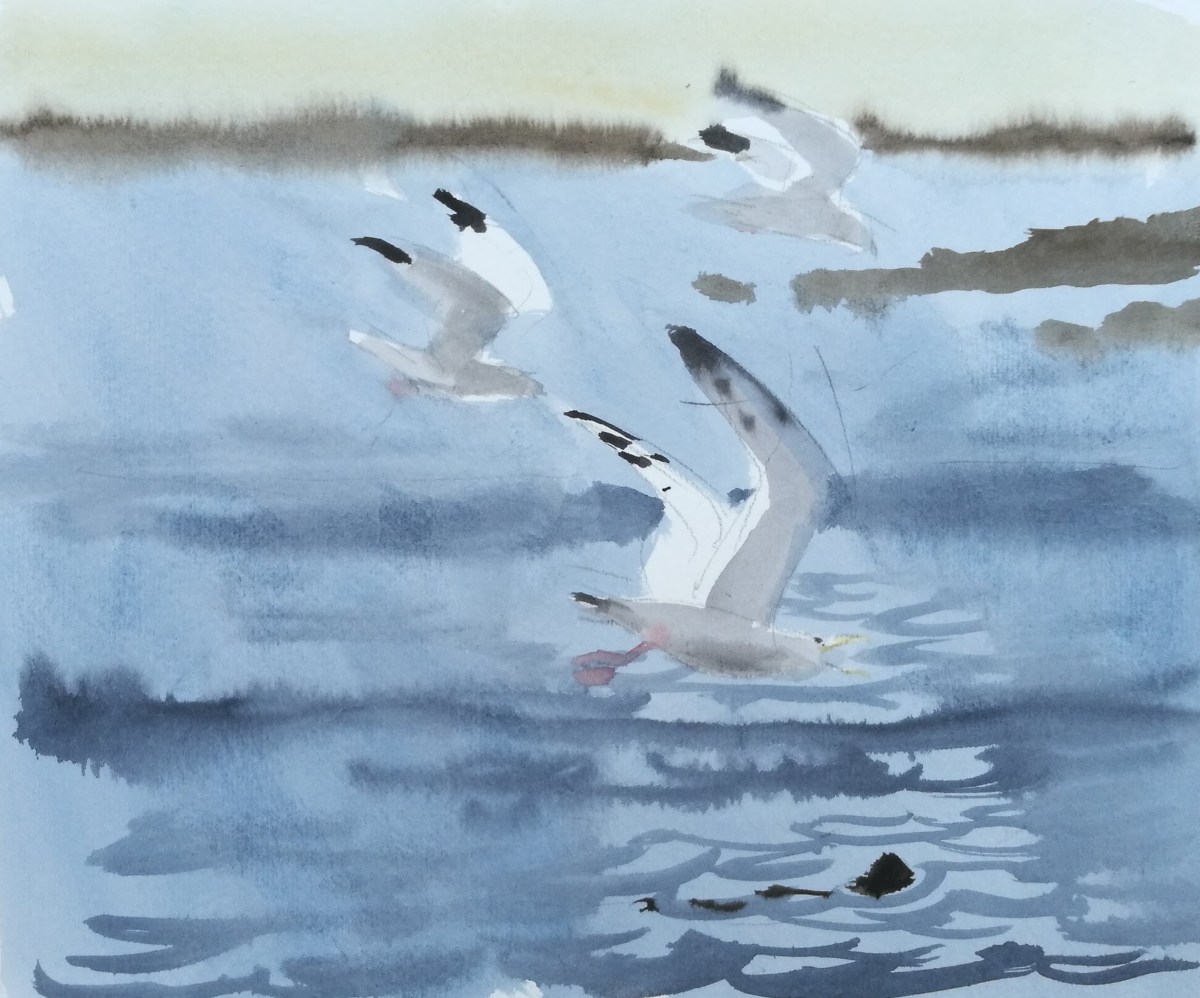
A large flock of cranes flew north, battling against the wind. I tried to sketch their flight formation as it bent and twisted.

cof

I packed up and walked around Sandvig for a while. For centuries a small and insignificant fishing hamlet, Sandvig expanded during the 19th century as granite extraction became increasingly industrialised. At one point the majority of the working men would have been employed in the quarries, many of whom would have been Swedes who migrated to Bornholm. In the last century Sandvig became a popular tourist destination, and today the town is a strange and charming mix of old stone cottages, terraced workers’ houses and hotels and guest houses. I sat in the protective arms of the tiny harbor and felt warm and drowsy in the sun.

cof

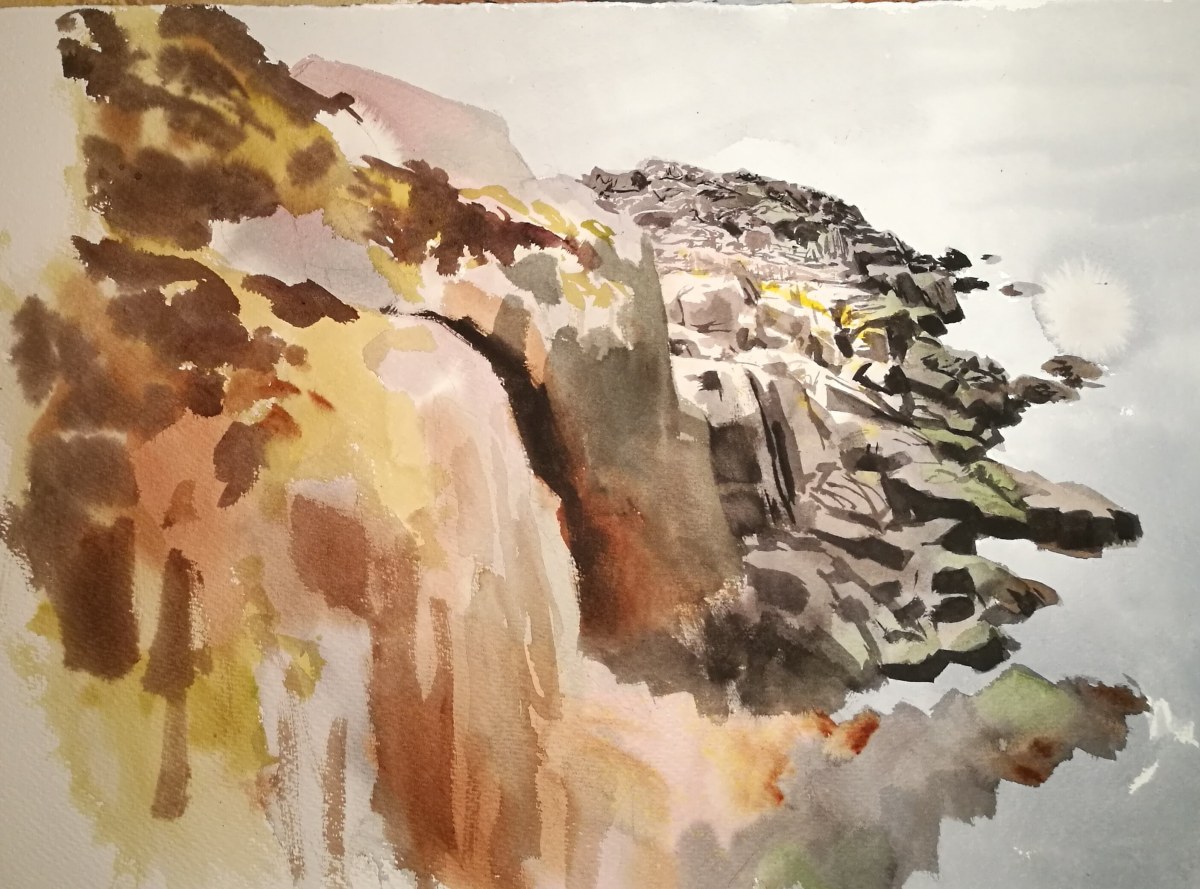
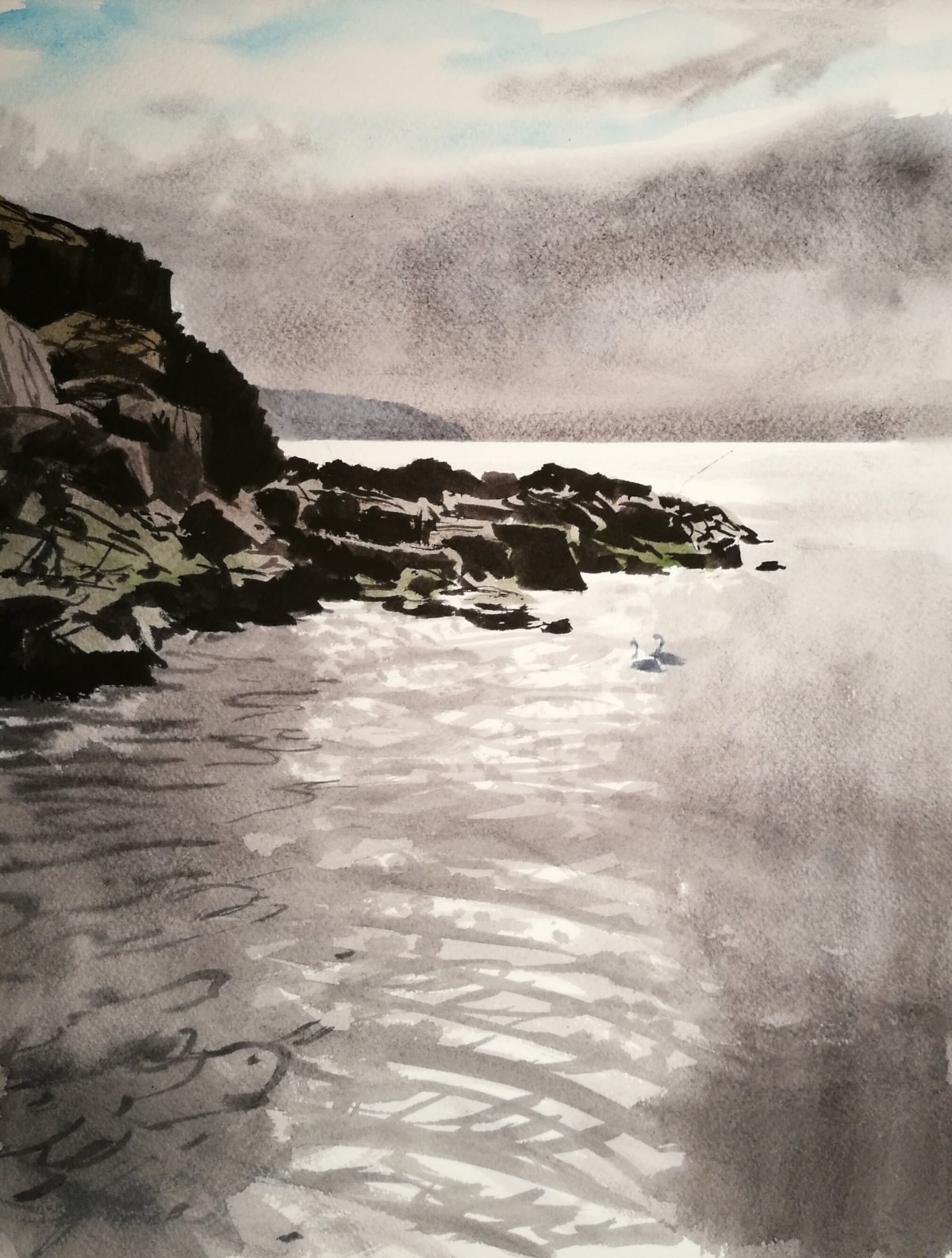
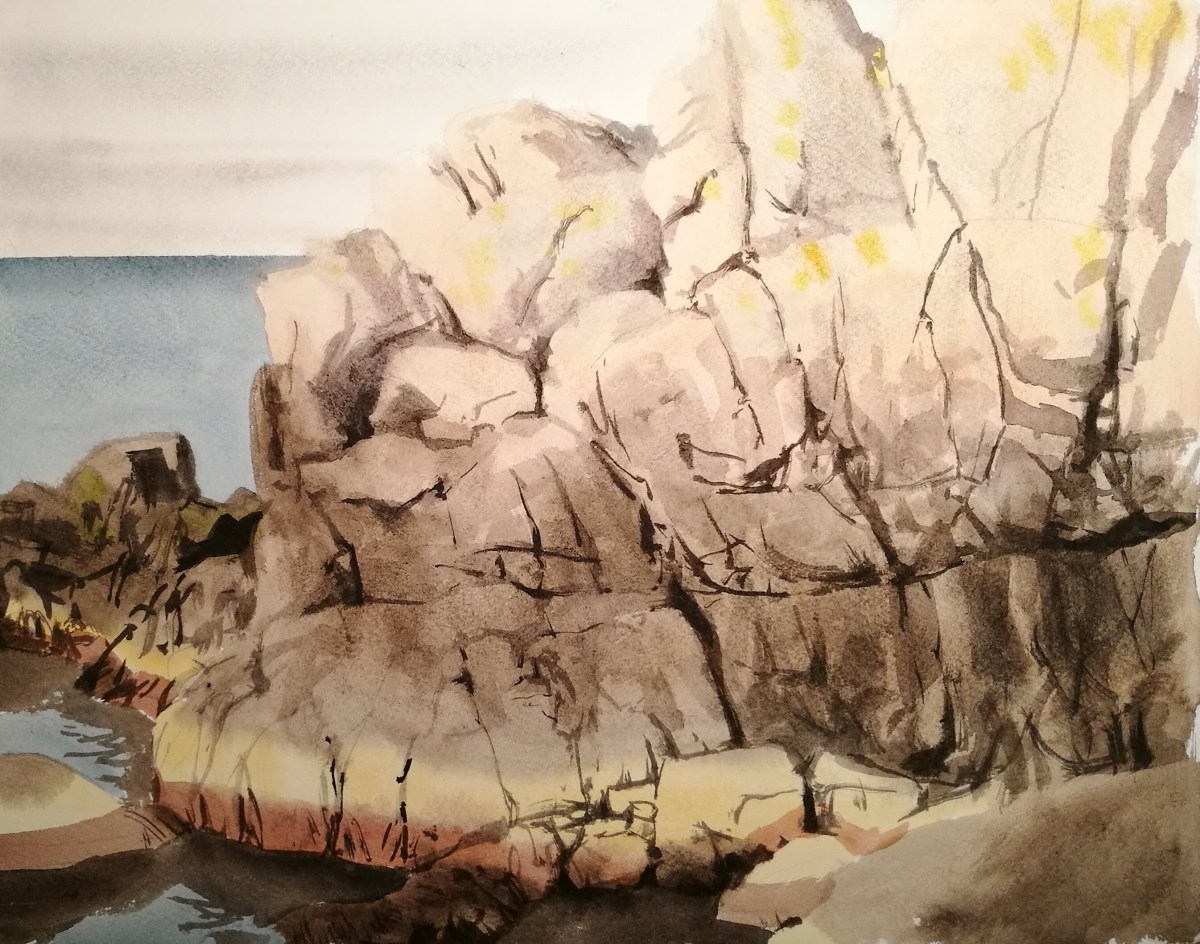
I continued southeast and scrambled over the impressive pink granite rock formations, sometimes sharp and angular, sometimes soft and folded, in places ground and polished smooth by glaciers. I struggled to find a good vantage point out of the blustering wind. I watched huge flocks of long tailed ducks frolicking in the distant waves, suddenly taking flight or diving in unison. There was an incredible joy and independence to their movements. Closer to shore a huge greater black backed gull brooded menacingly, while nearby a herring gull kept a watchful eye open.

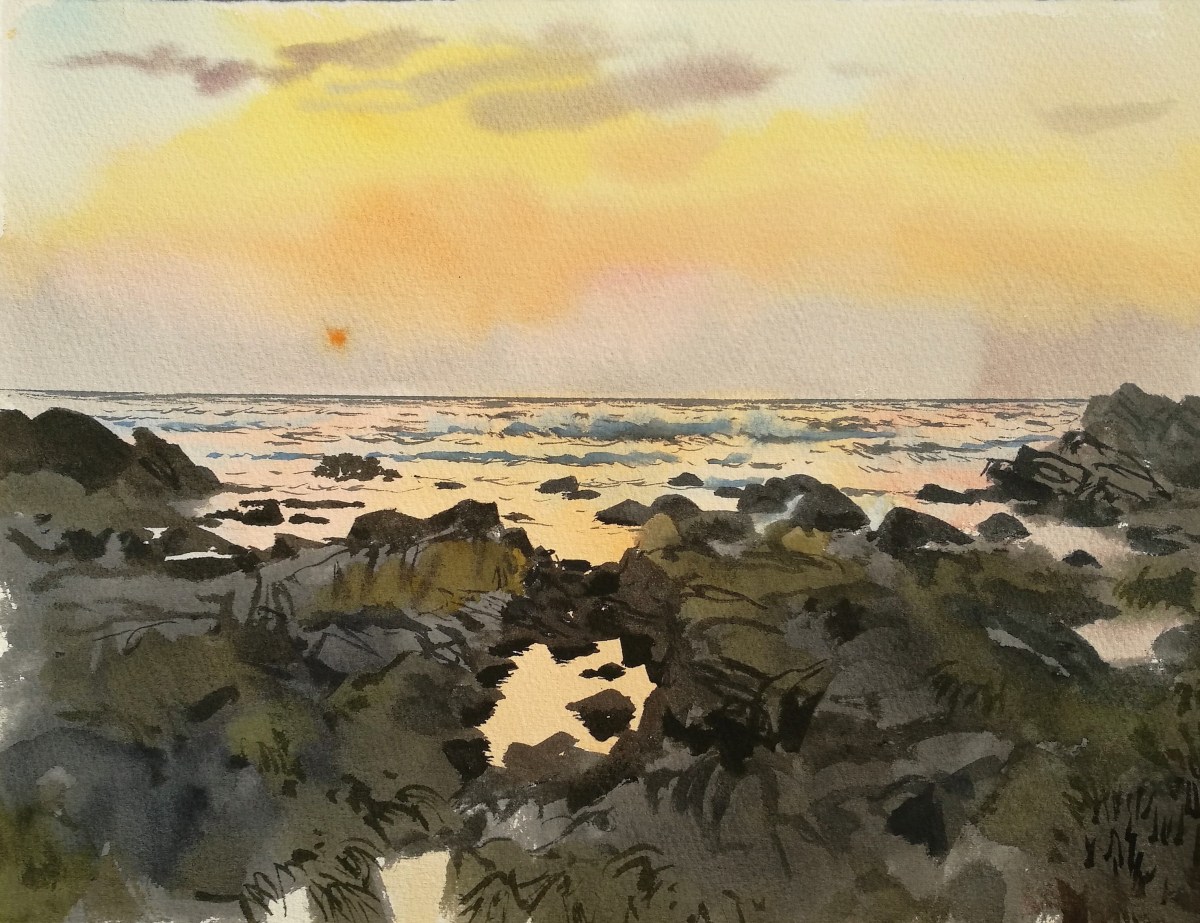
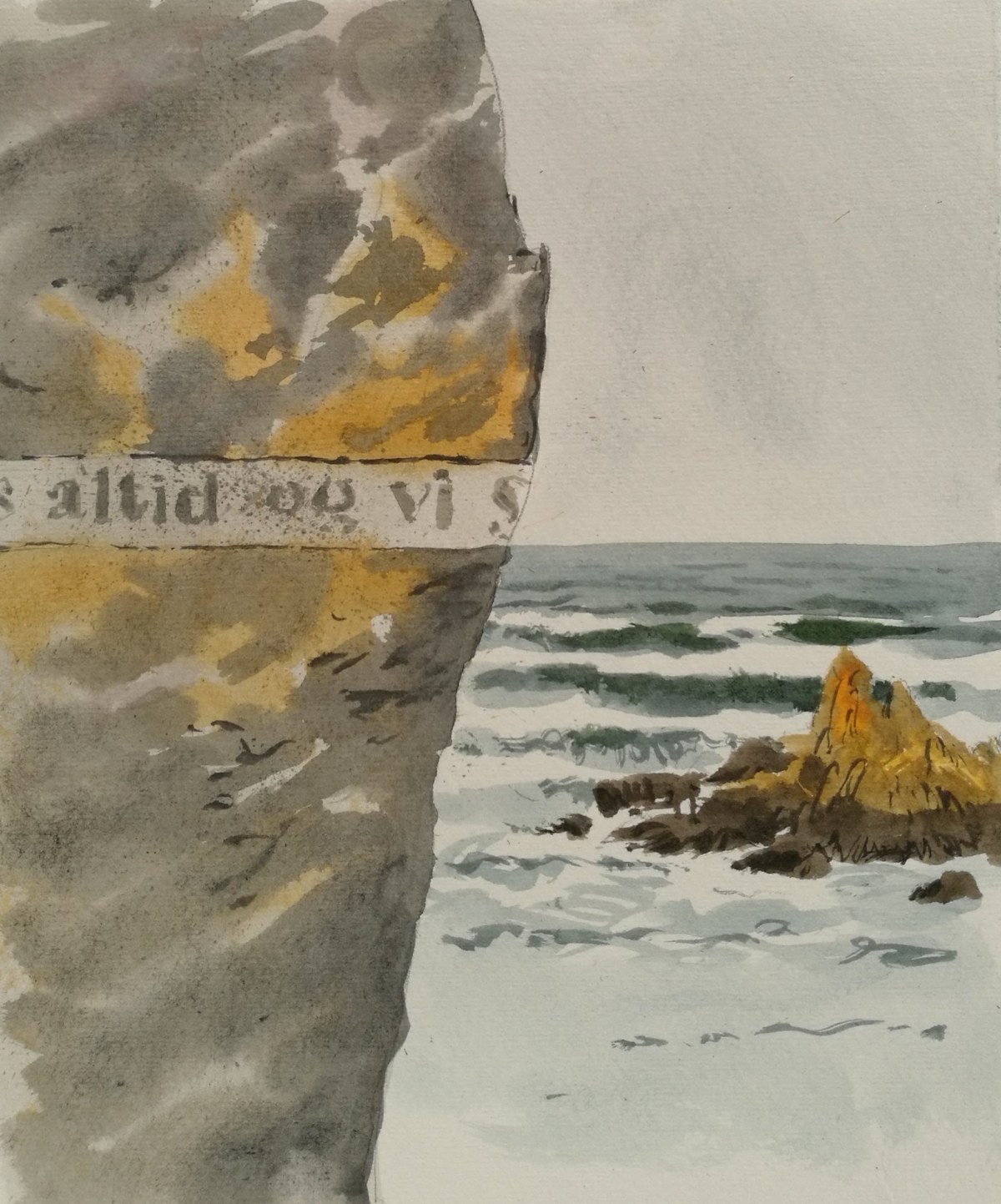
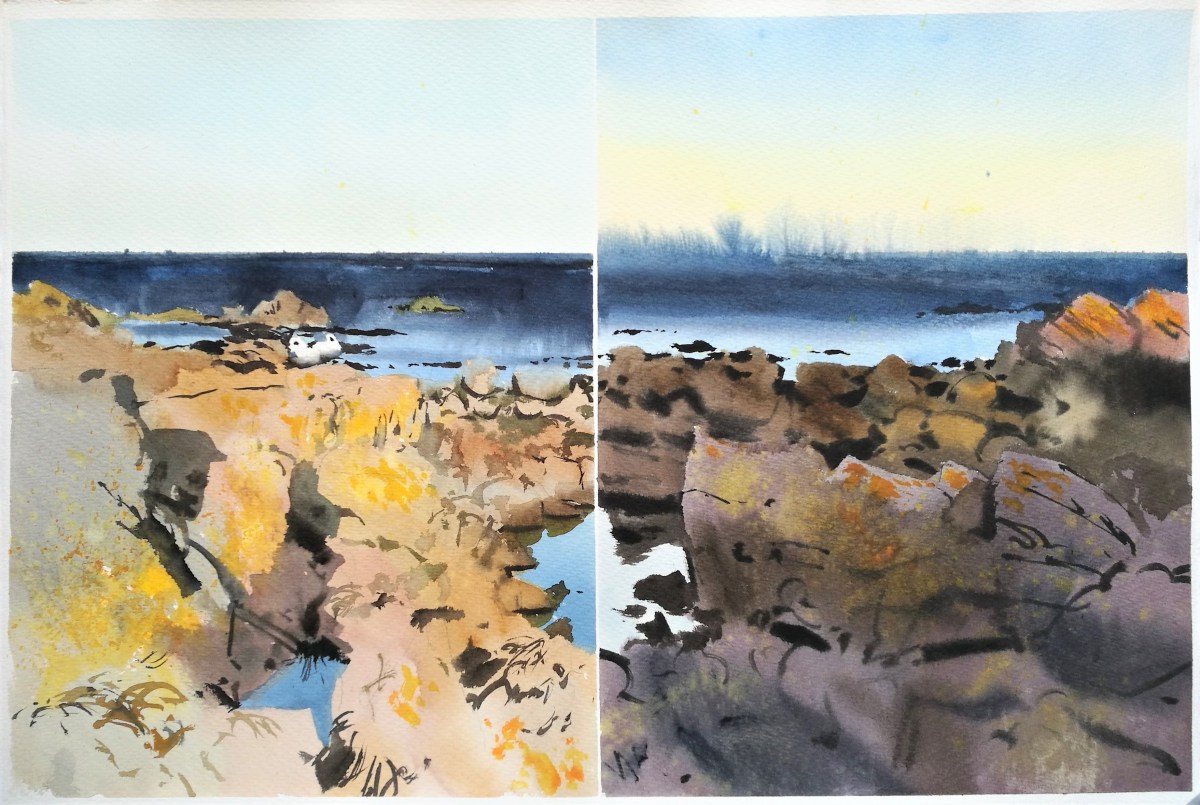
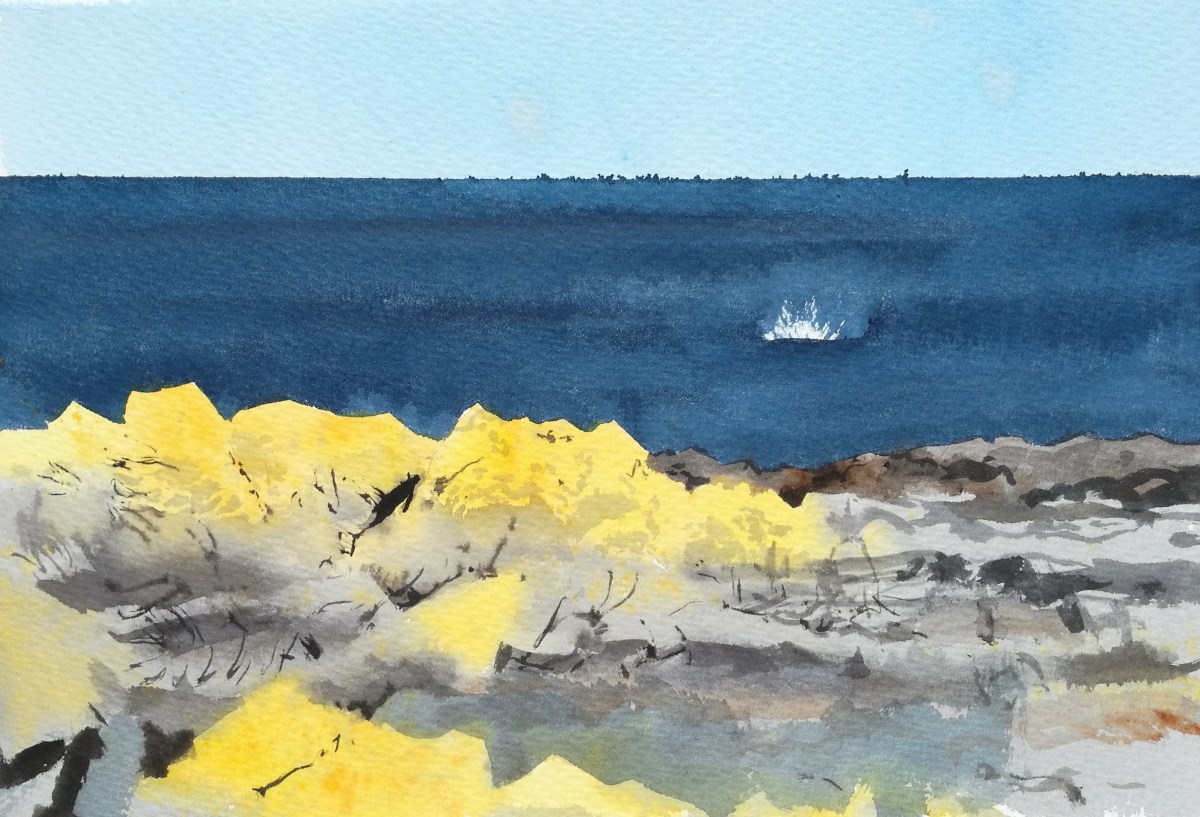
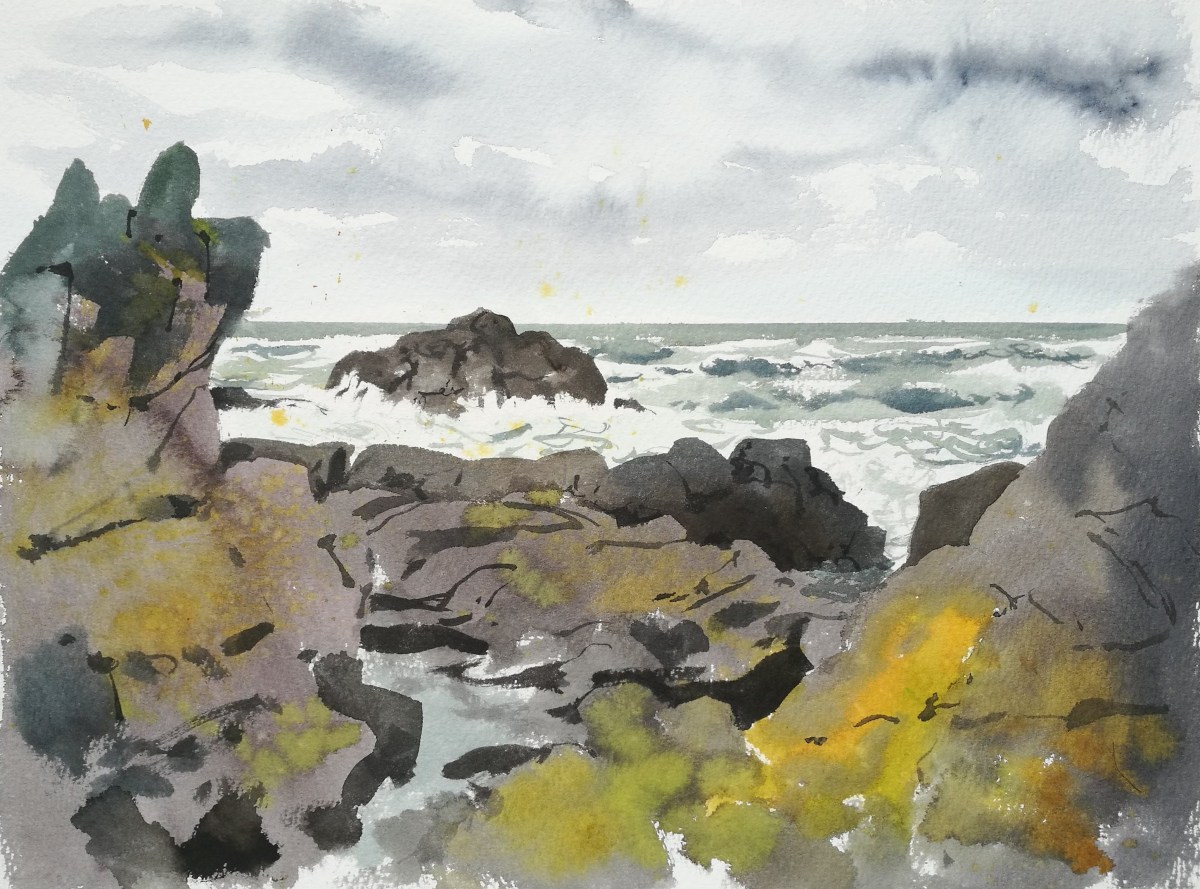
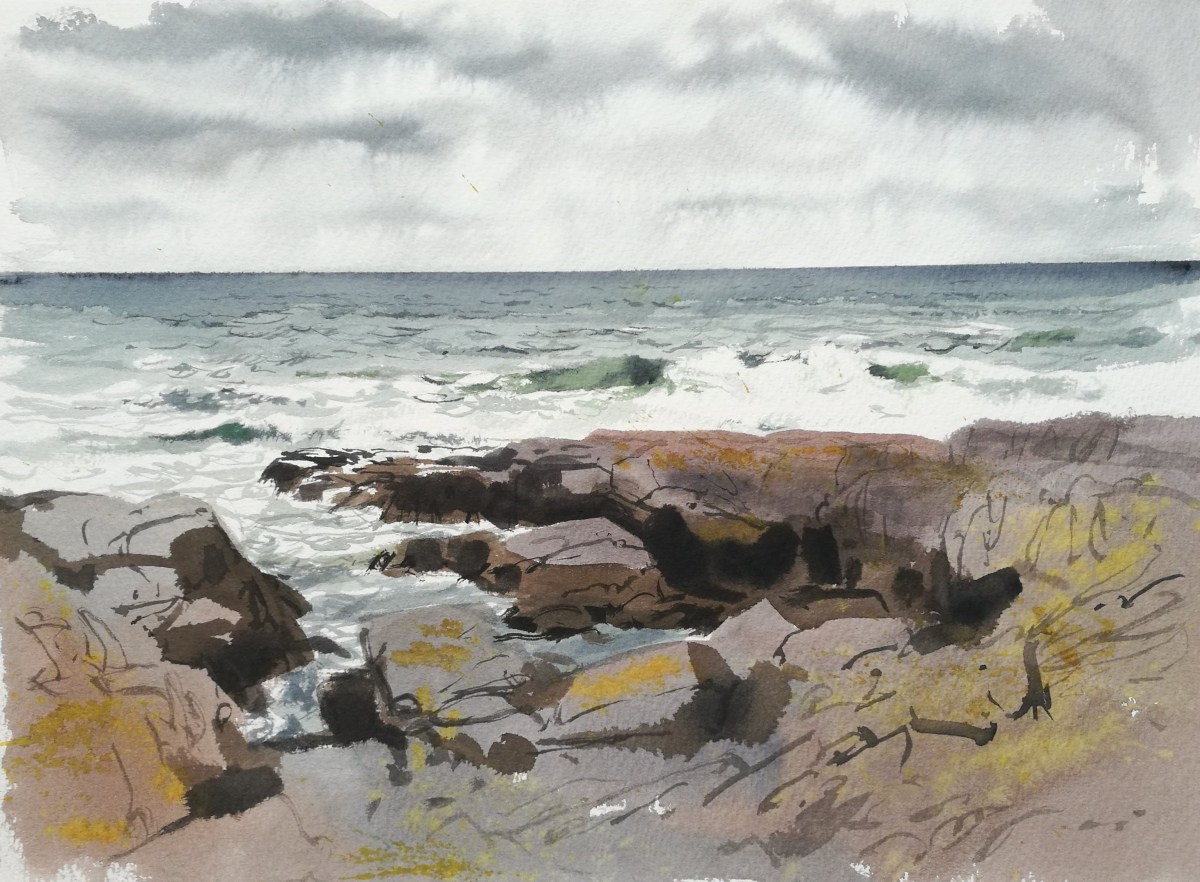
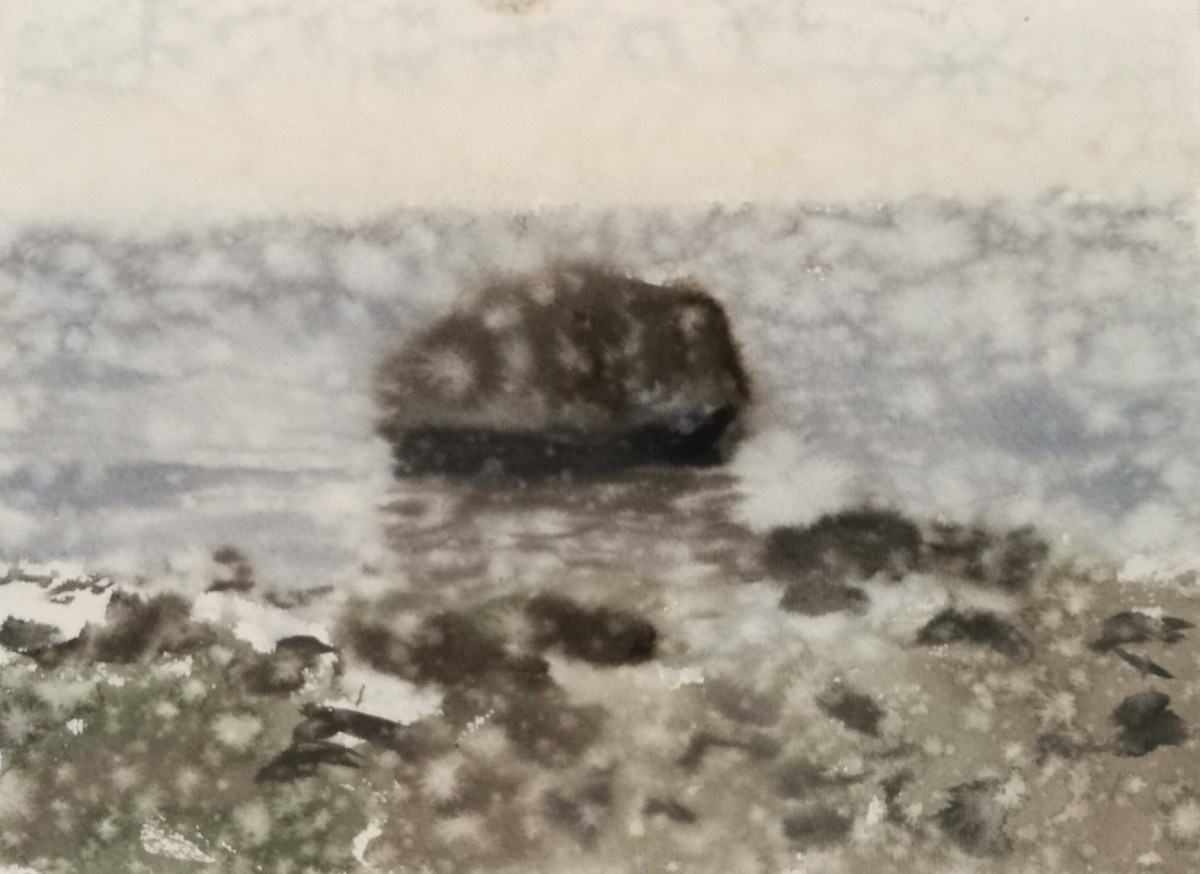
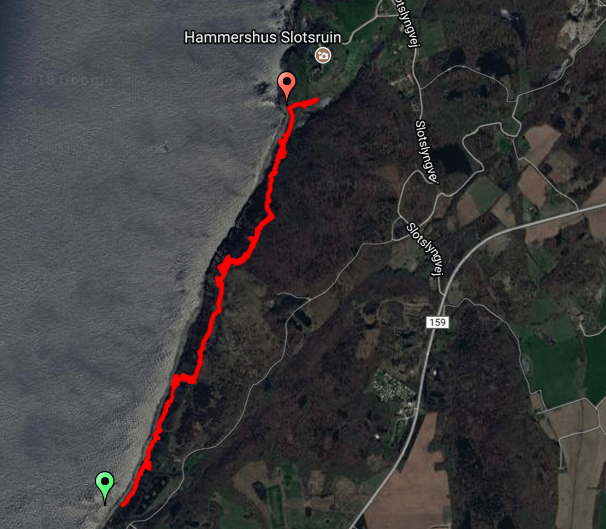
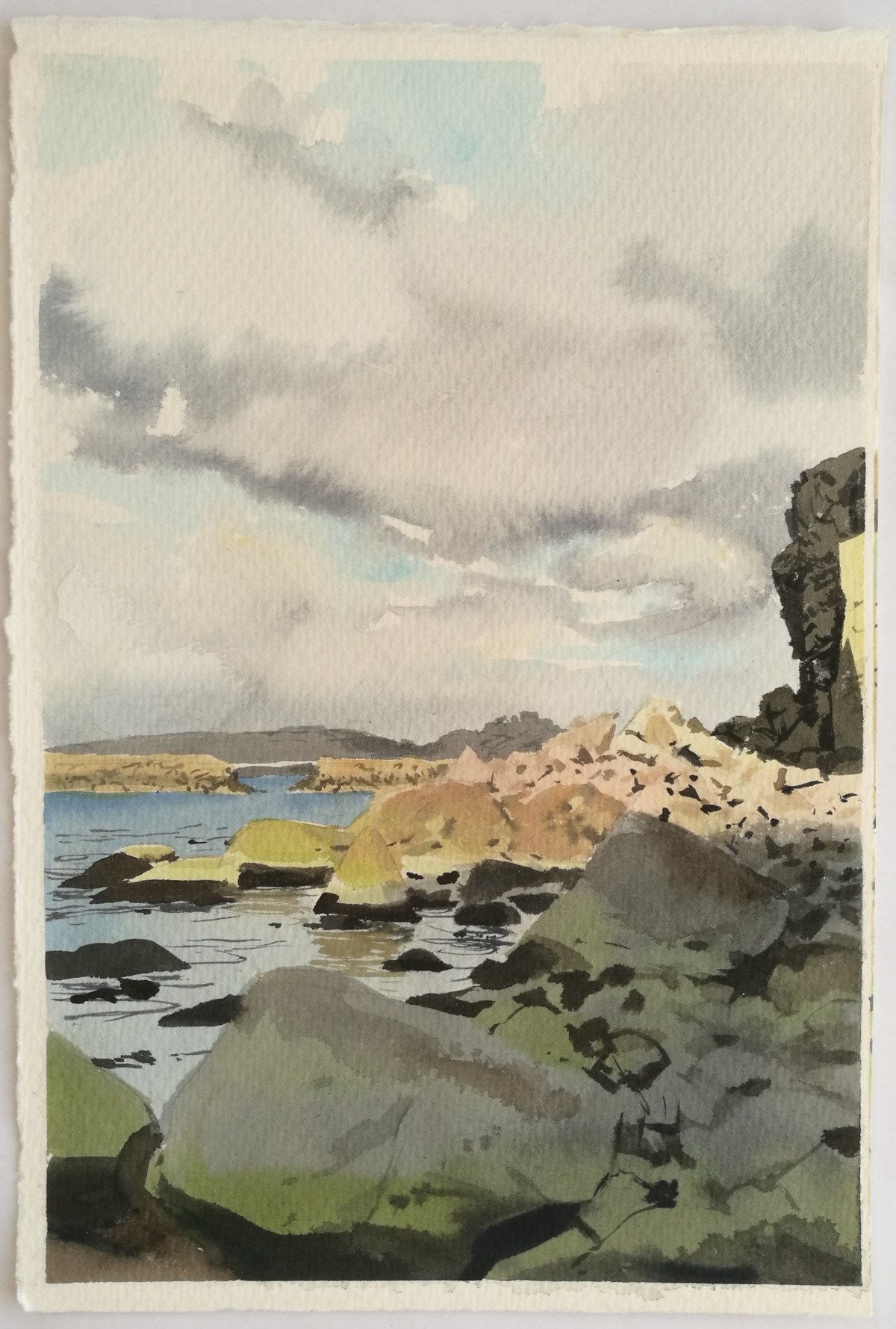
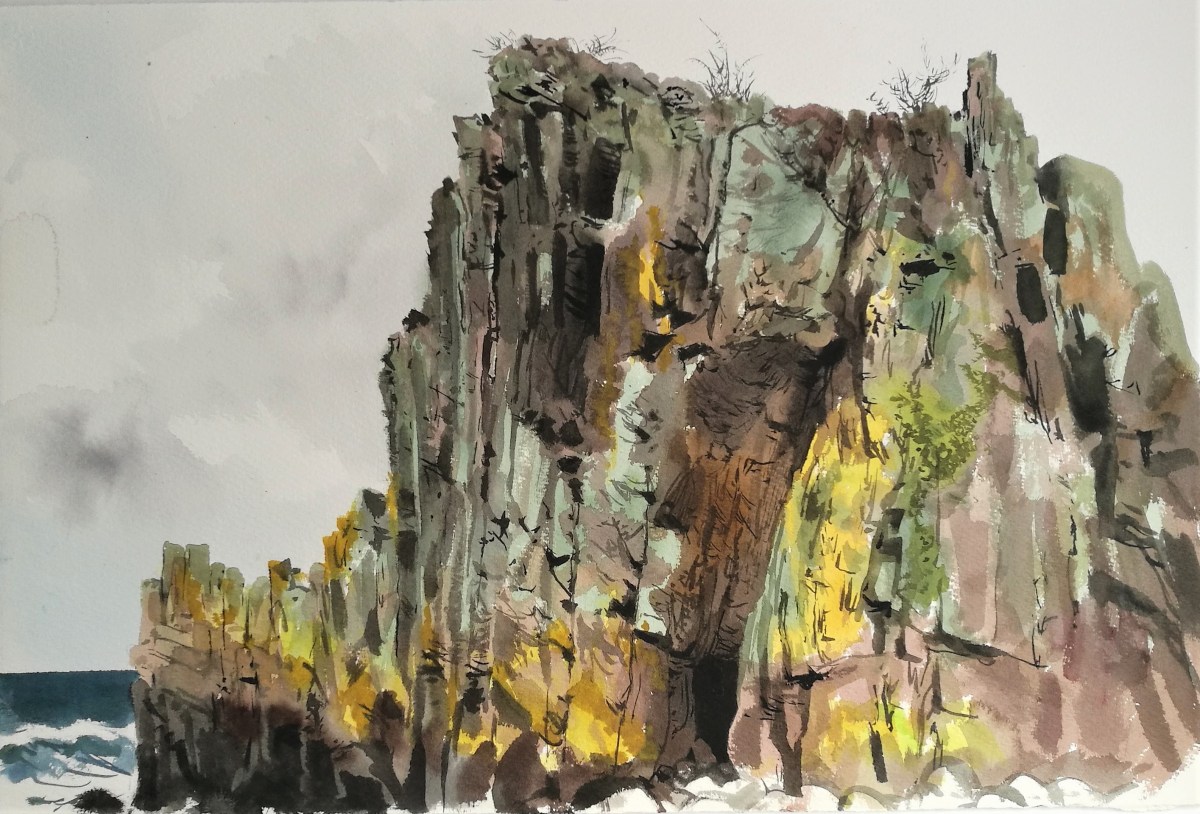
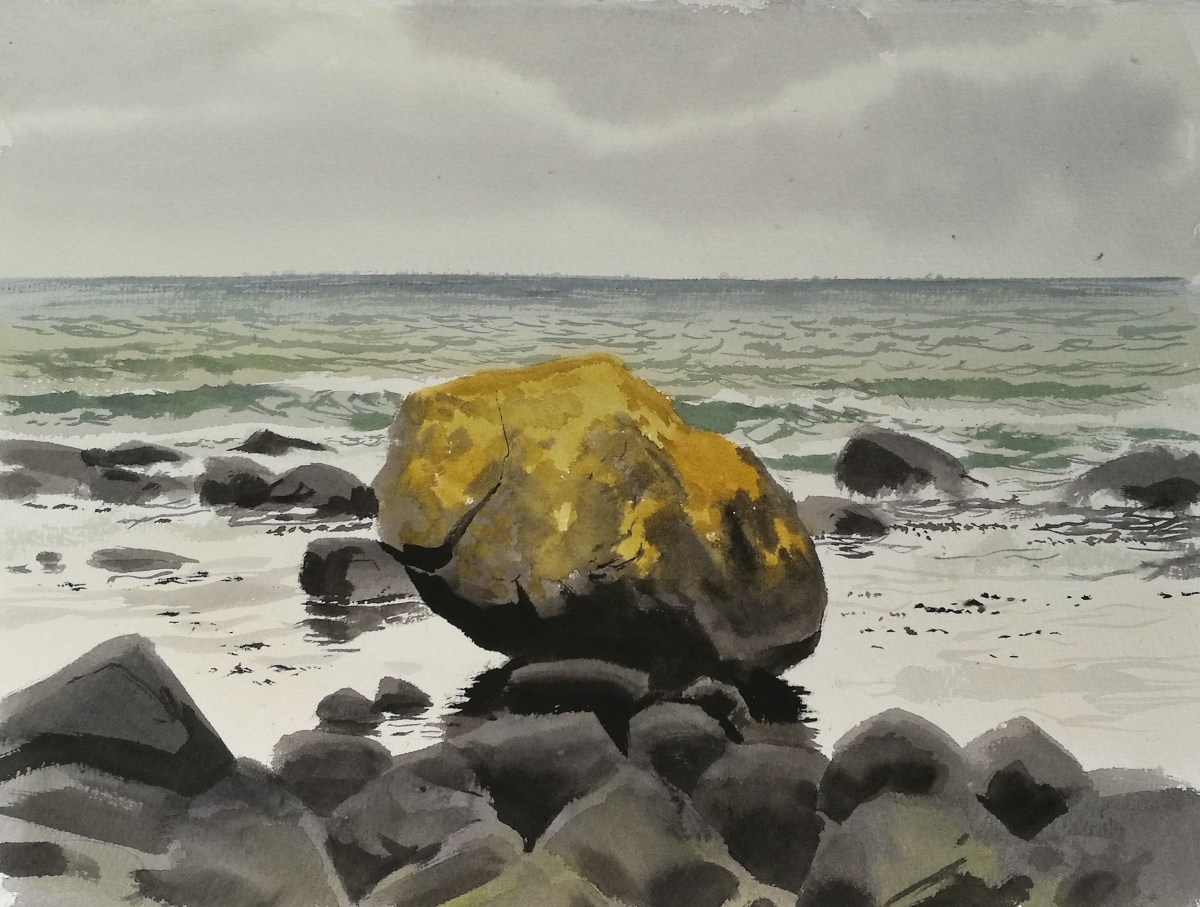
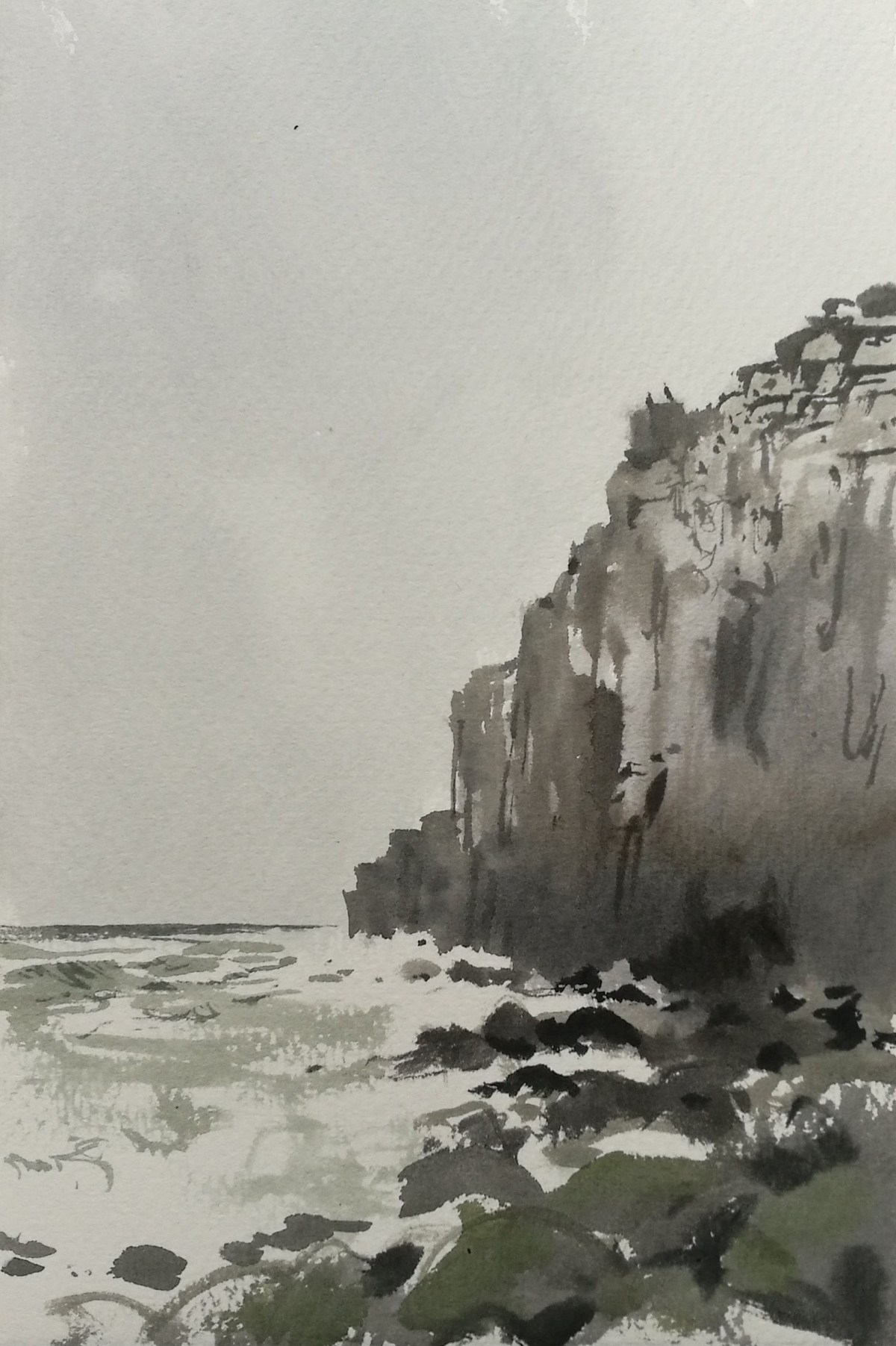
It was getting late and there was still a way to go. Here there is no coastal path, so I decided to keep to the rocky shore, passing in front of hotels and private gardens. Despite having right of way, I felt almost like a trespasser as I scrambled over innumerable rocky outcrops and through patches of brambles. The houses and hotels here are exclusive and the views are incredible. Now, in the early evening I had the sun on my back for the first time, and the rich saturated colours of the mustard yellow lichen, the pinkish granite and deep blue water was intoxicating. I met a friend and we shared a sublime whiskey on the rocks, before I got to work on my last painting of the day, finishing as the sun dipped below the horizon behind me (see top).

KYST 14 

Weather report = No rain or snow. Sunny with a short cloudy period in the morning. Temperature between 2 and 5 °C . Wind between 12 and 5 m/s from the west. Visibility good. Hours of sunshine: 10 hours 30 minutes.

Lessons learned – I need to stop overthinking assessing and rating my paintings and the day itself. The day is so long, and such a physical and emotional roller coaster, that any idea of ‘good’ or ‘bad’ is made redundant.

Stops with the M60 = 3

Kilometers walked = 6.92 km

Day lasted = 13 hours, 4 minutes

Birds seen and heard = 34 species (9 new ones = black kite, red necked grebe, pheasant, common crane, sandwich tern, black redstart, goldcrest, starling, carrion crow = running total 67)

Other stuff = for a moment, a starling in all its metallic finery, with the blue sky behind.

People talked to = 3 ( 1 + 2)

In my head = aches and pains, my shoulders and back, how can I improve my posture, my Achilles, need to start running, etc, etc… the shitstorm that is UFC 223…

2018-04-07


KYST 13 – fra Salomons Kapel to Sandvig Strand, 30/03/18

For at læse denne KYST 13 blog på dansk, se her

cof

See here for an introduction to the KYST project

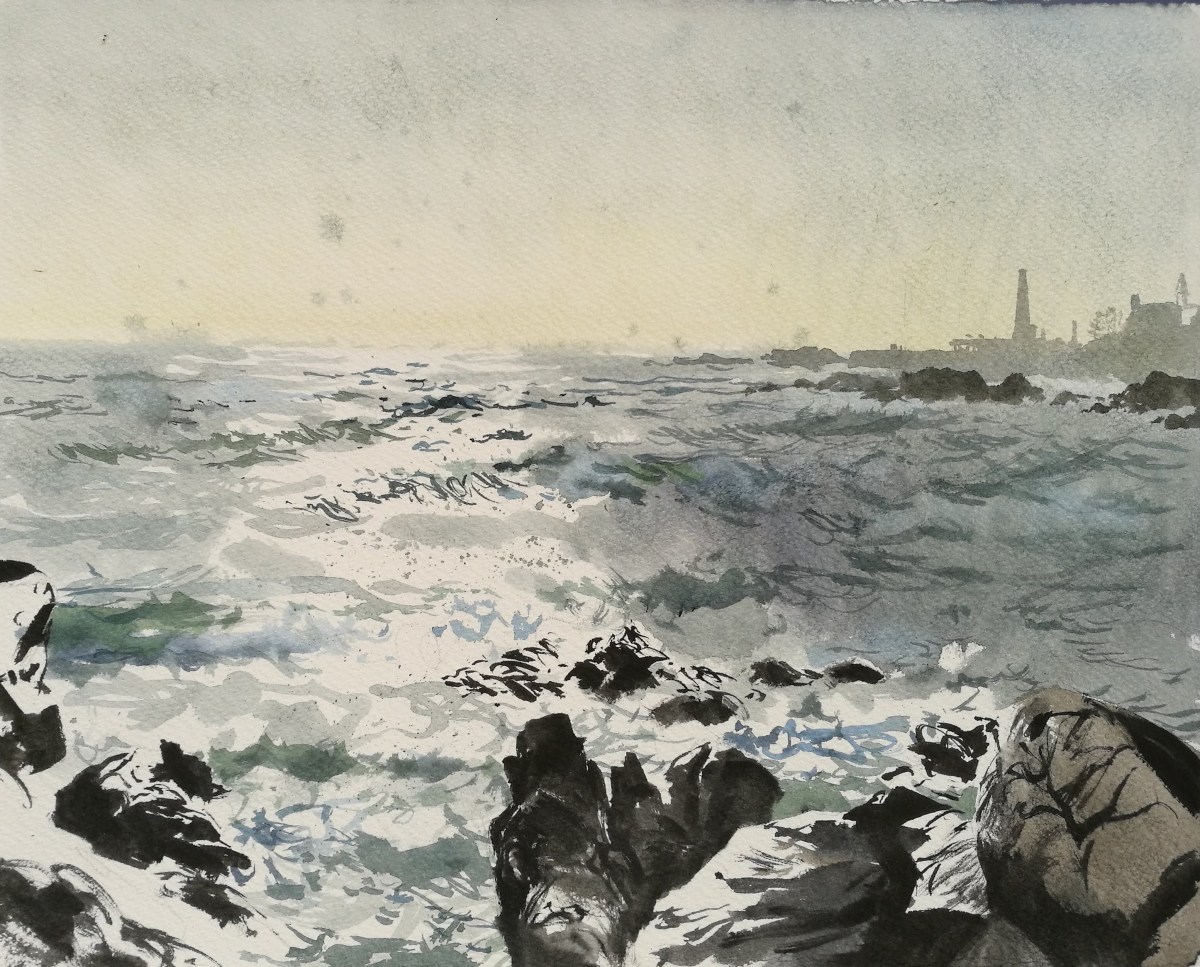
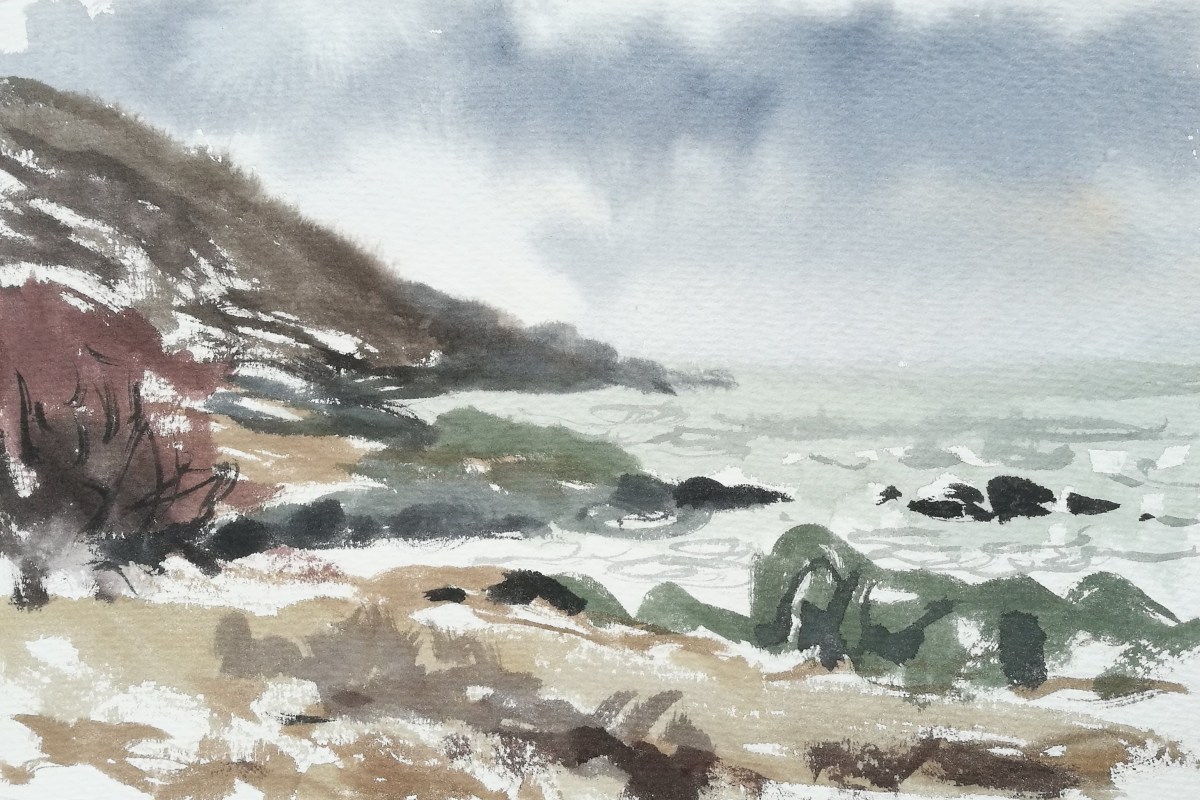
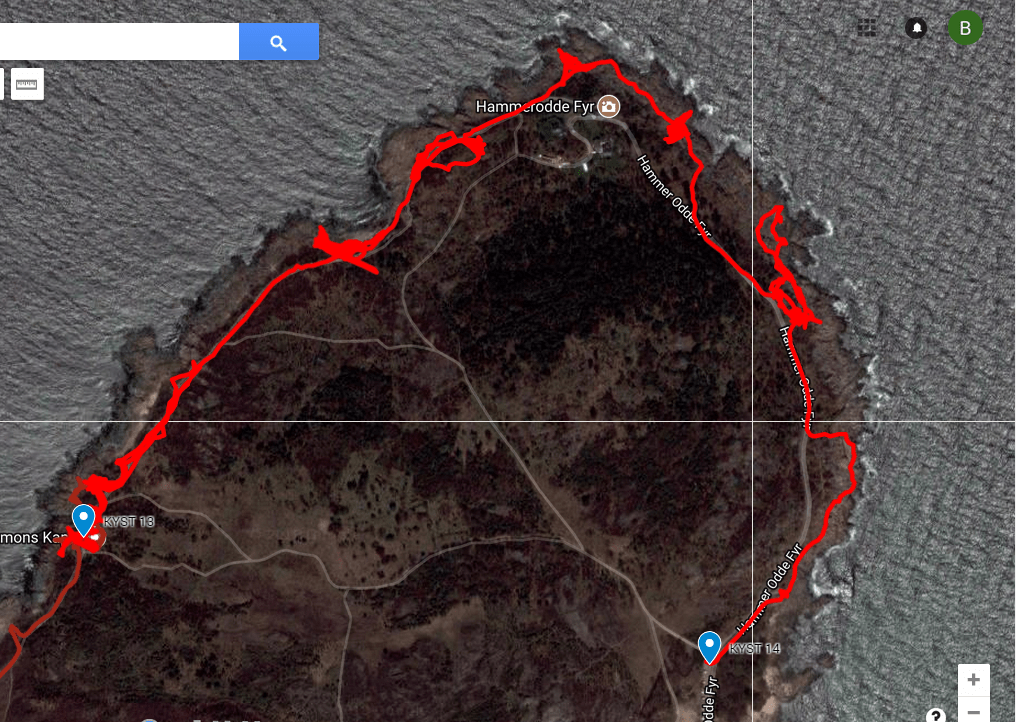
KYST 13 Whilst the rest of Bornholm was still blanketed in snow, I was surprised – and a little disappointed – to find out there were just remnants left on the Hammer peninsula. According to the weather forecast, the day promised sun and no wind in the afternoon, but when I finally made it to the start point at Salomons Kapel just as the day began, it was overcast and the onshore wind was howling with huge waves crashing on to the rocky shore. It was too windy to put up the M60 in the exposed spot where I had finished last week, so I hunkered down and made a quick sketch before moving on in search of shelter.

cof

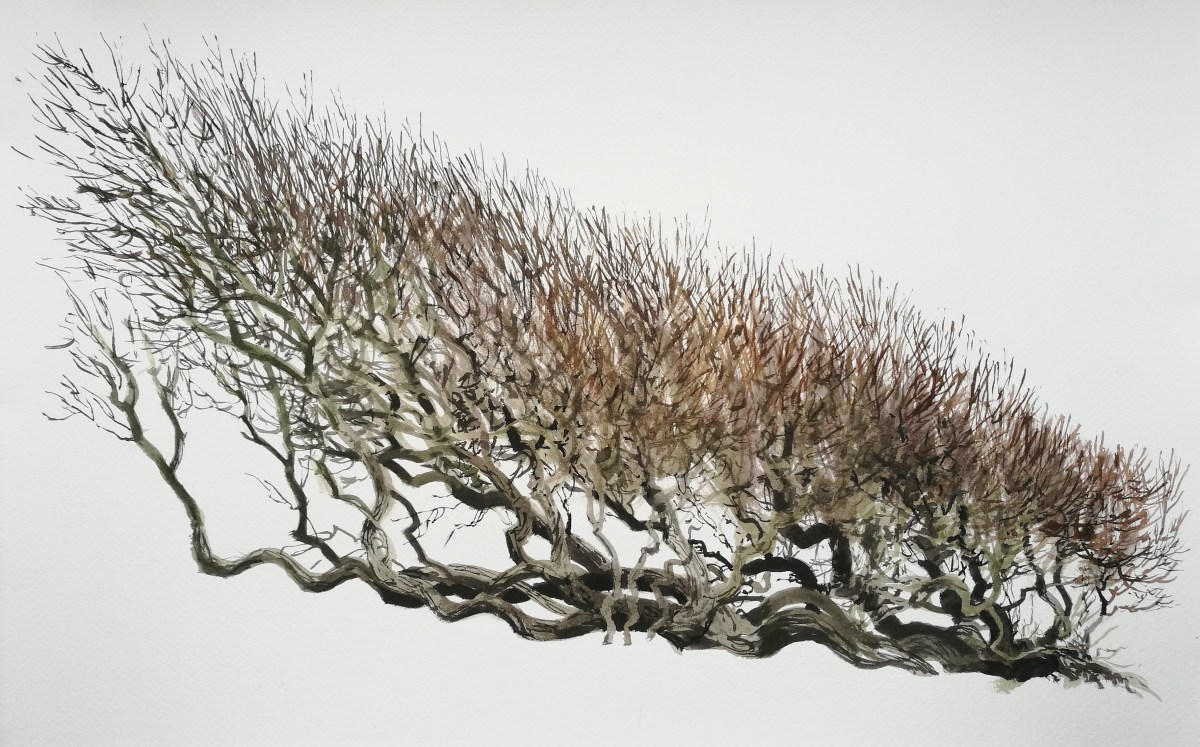
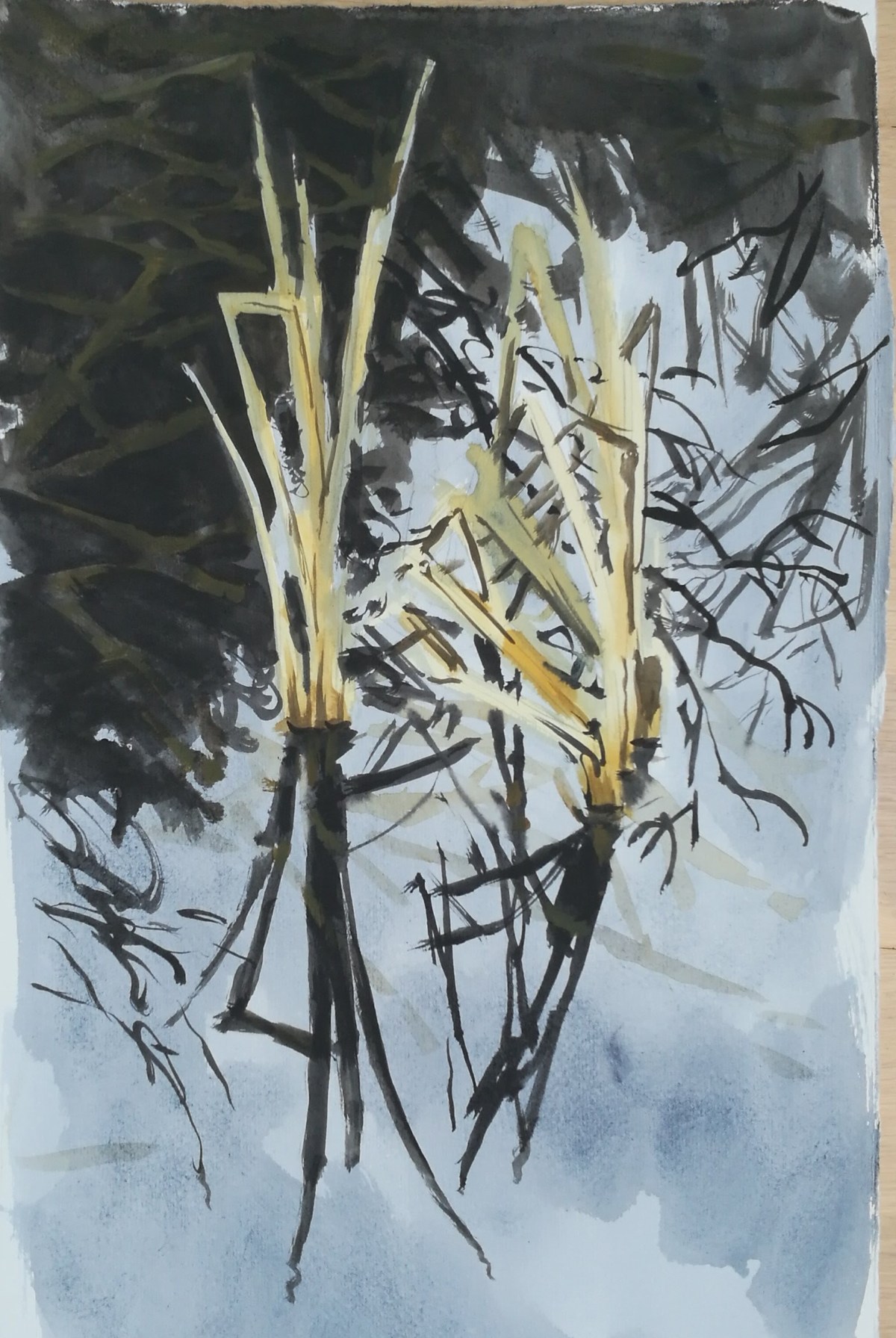
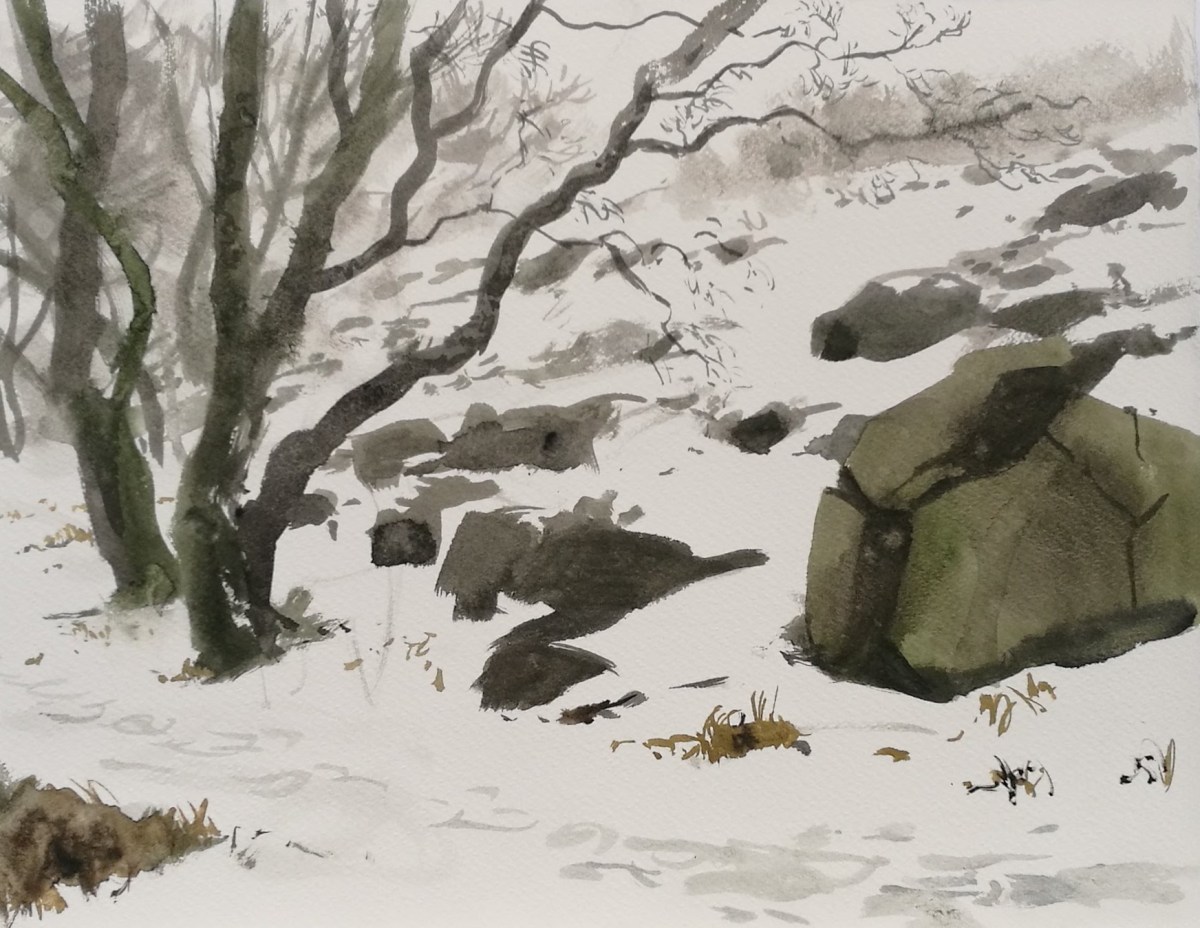
Close by I found a spot beside a rocky outcrop where I could put up the M60 and draw an incredible series of windswept whitebeam trees. As always, my mood, the day’s weather and the environment conspired to dictate my choice of motif. No birds sang, it was hard to believe that is was Easter Friday.

cof

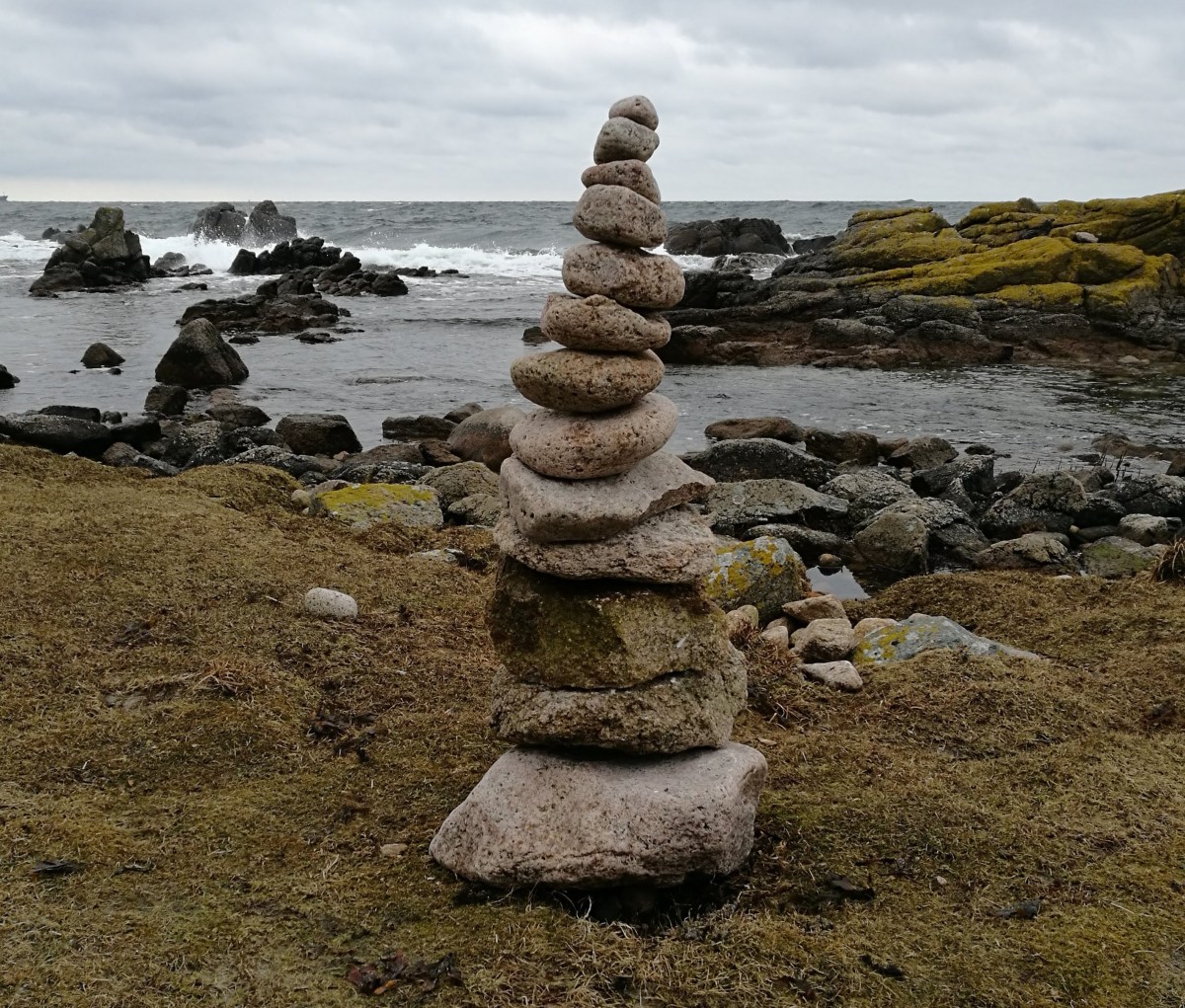
I packed up and continued northeast to a more sheltered beach, just before the lighthouse. In recent years a tradition has sprung up here – a wonderful and spontaneous collective land-art project whereby passers-by have started creating stone towers. Passing tourists add their own and by summertime the whole area can be covered in hundreds of them – only for them to quietly fall and disappear during the autumn and winter storms. There were none to be seen, so I got the season off to a good start.

cof

Warmed up from my exertions I sat and looked at the wonderful rock formations with the waves crashing in.

cof

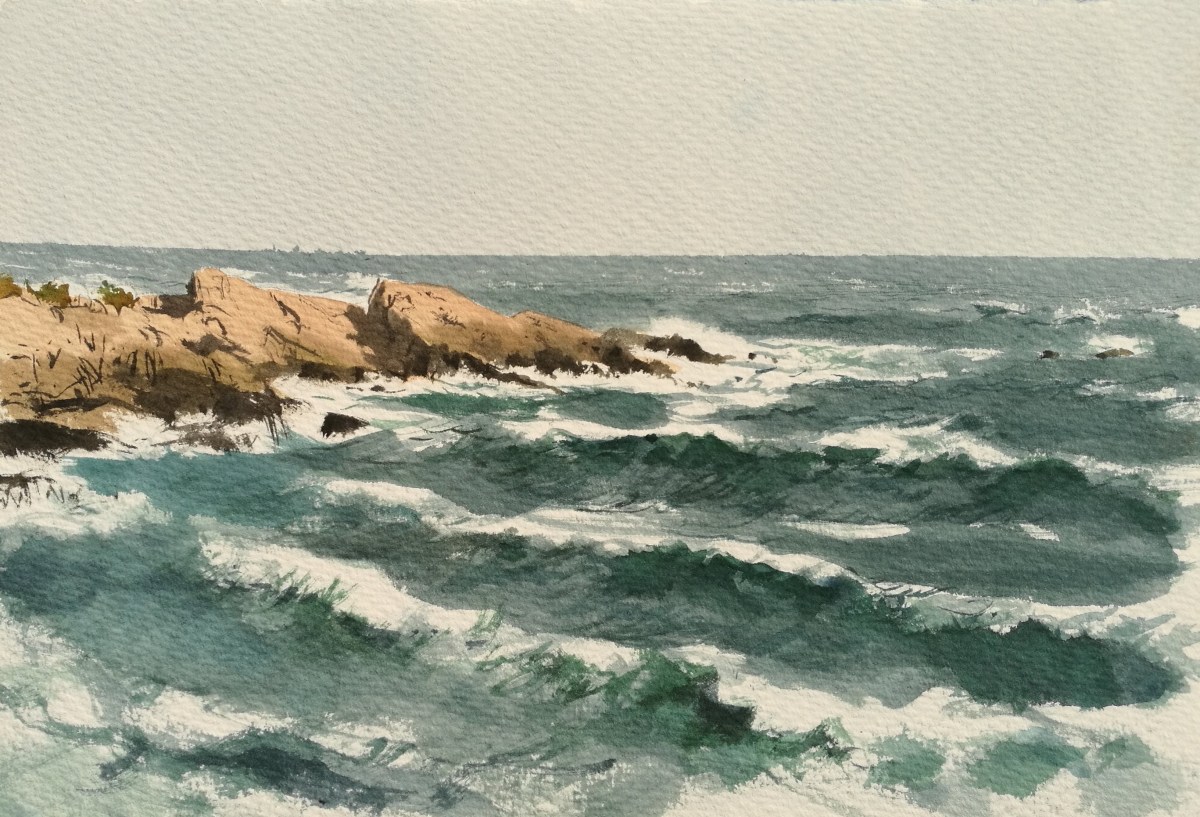
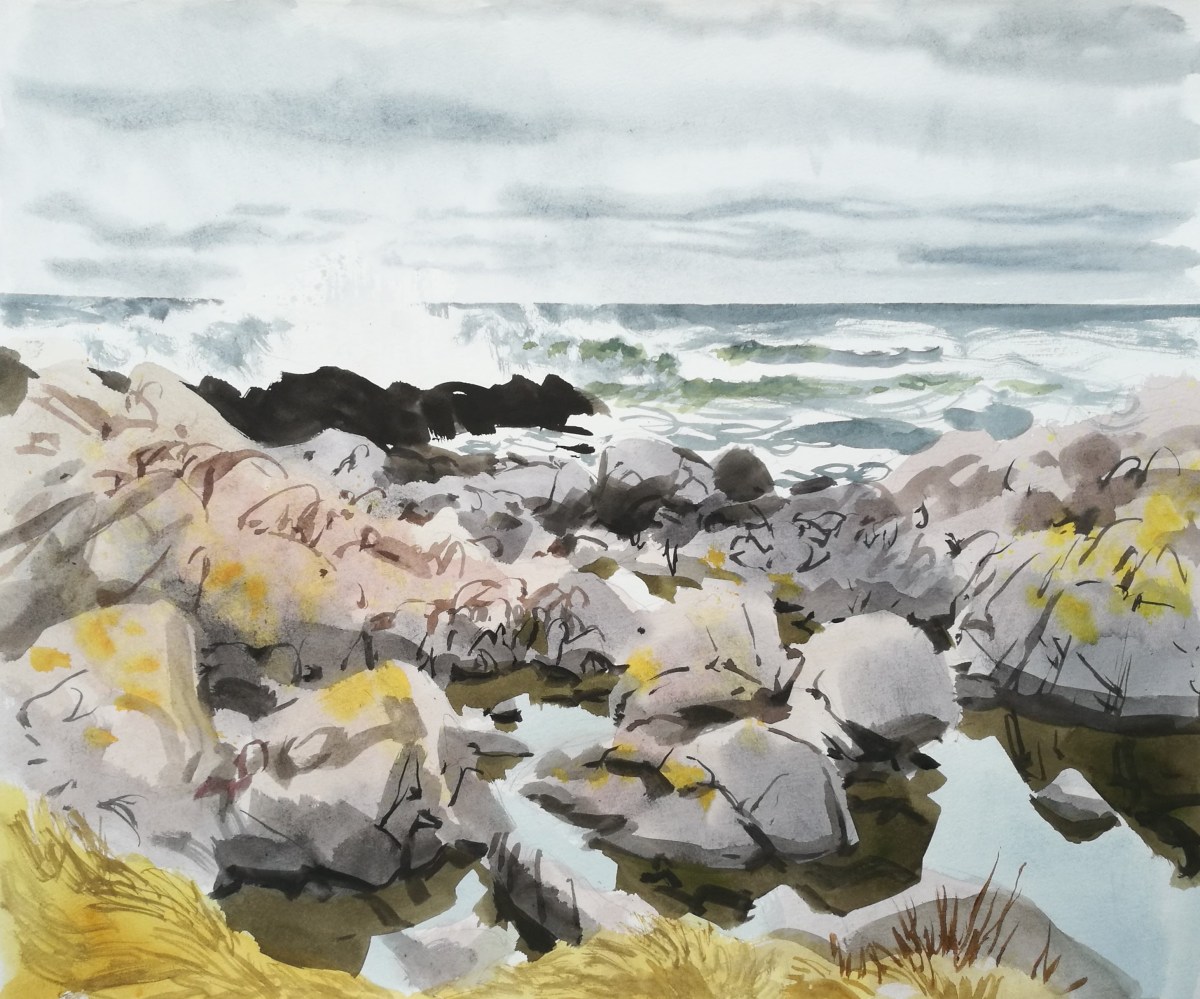
After an early lunch in the small sheltered pine wood nearby I carried on to the lighthouse – Bornholm’s northernmost point. I sat as far out as I could and painted the waves pounding the lichen covered granite rocks. From now on, and for the next 18 weeks, I would be heading in a southeastern direction.

cof

I kept on the rocks below the coastal path, and clambered around trying to find shelter. The wind had abated only a little and the sun had shone for 15 minutes or so before disappearing again. The pink granite formations flecked with all sorts of lichen were incredibly complex and striking. Below the cliffs away from the shore there were several pools and springs, the whole area a universe in itself. In spring and summer the Hammer peninsula attracts botanists, but all was brown and dead and there were few signs of spring. In one pool, however, I did find rafts of frogspawn – my first of the year.

dav

I walked around enjoying my solitude. I studied rocks and waves. I felt far from everyone and everything, despite the steady stream of walkers on the coastal path above.

cof

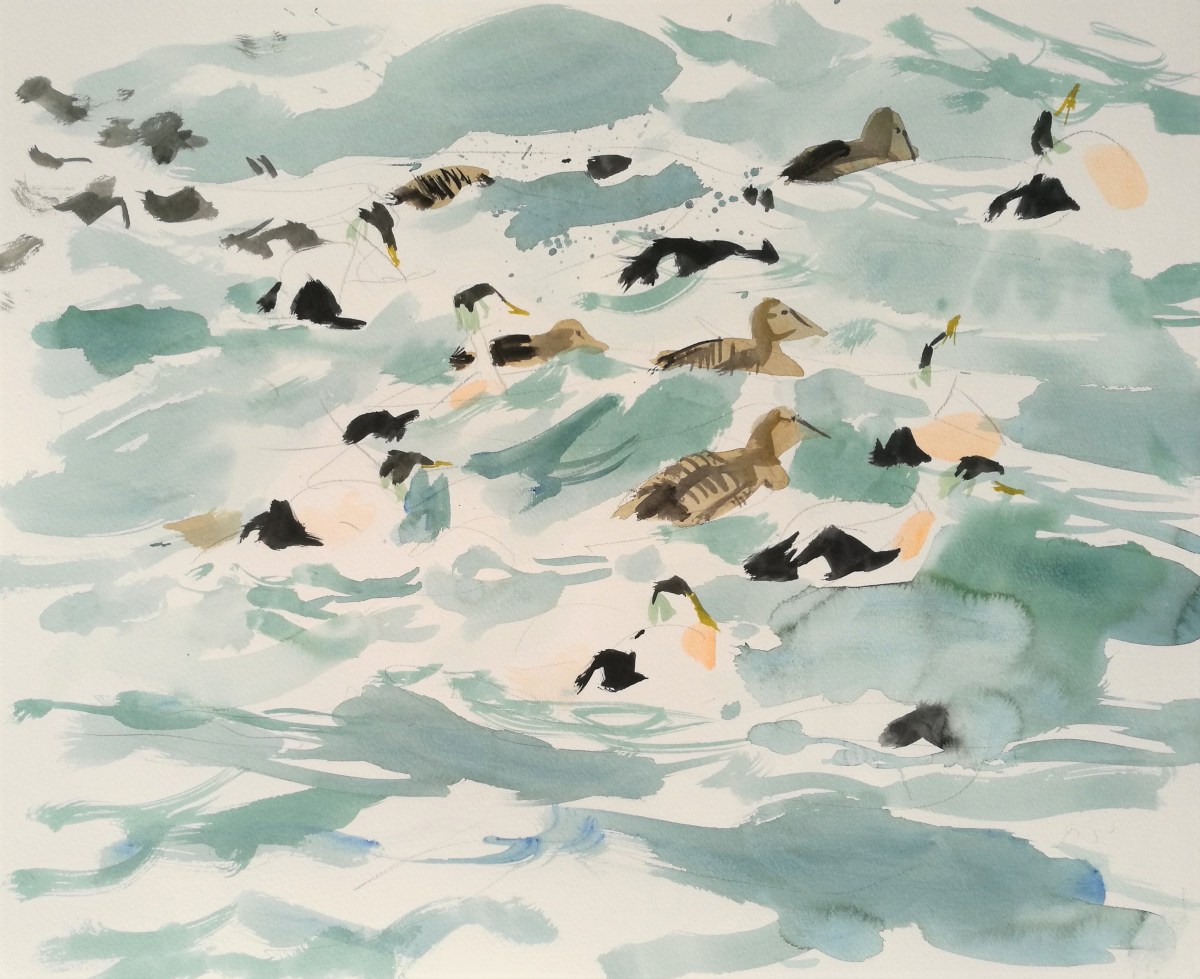
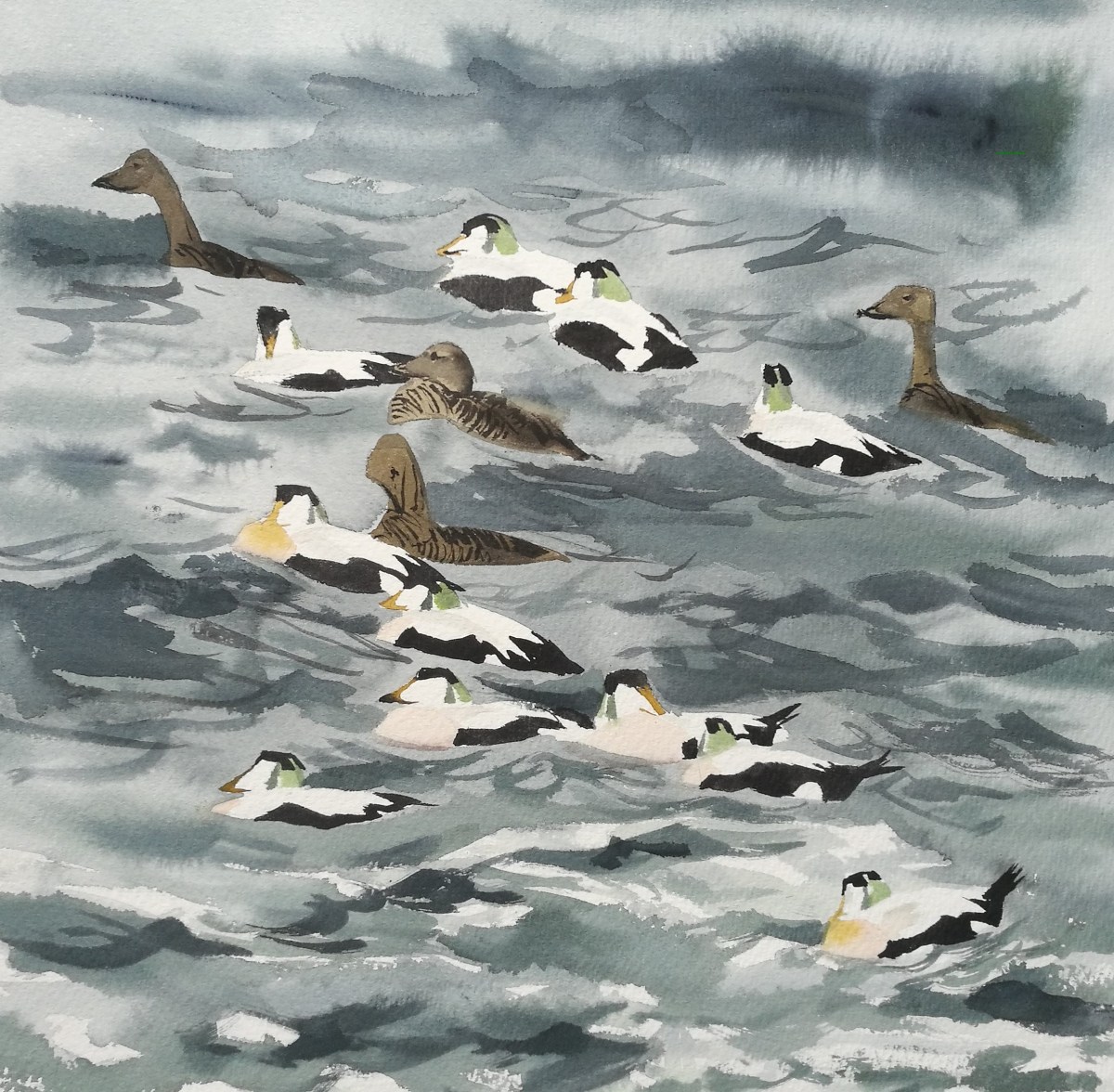
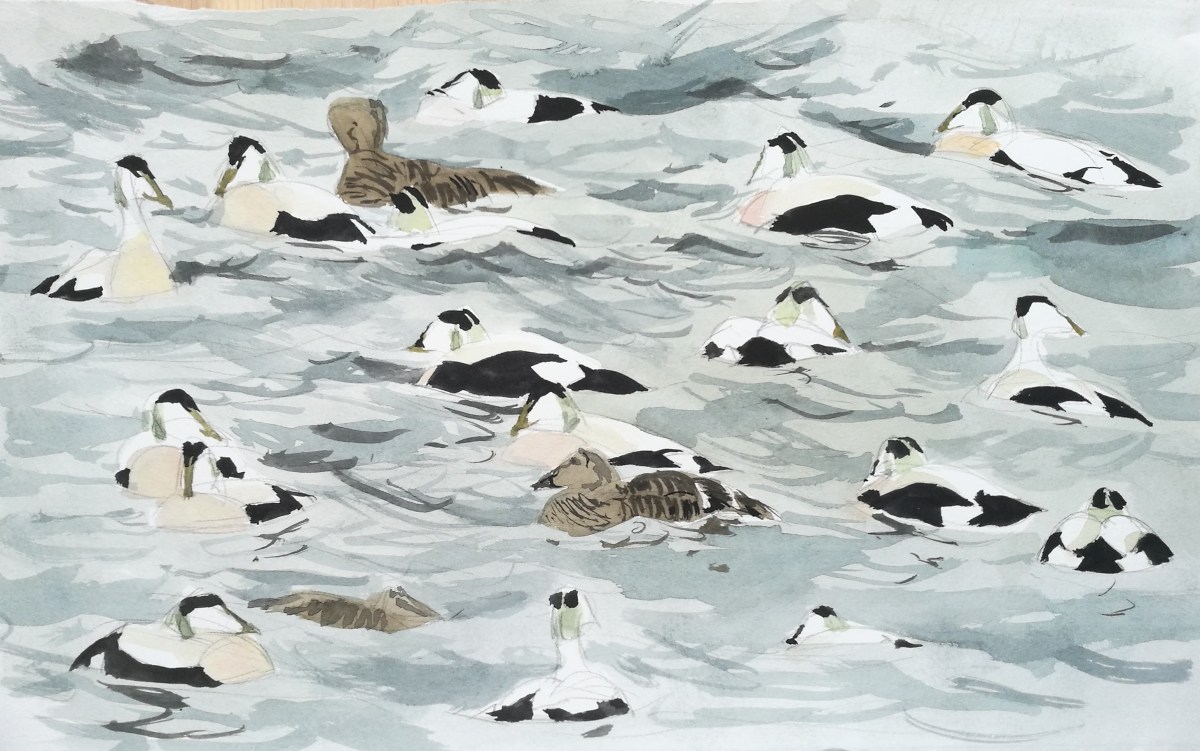
Eventually I found a good spot looking south to Sandvig strand, where I set up my telescope and watched a distant group of eiders rocking in the surf (also see top).

cof

The day felt long and when I finally packed up and moved to my destination point close to where I had left the car 12 and a half hours earlier, I was exhausted. I looked across the bay. In the far distance the town of Gudhjem could be seen as a blue stripe. A small bird caught my attention – a fine male stonechat, a handsome and unusual bird in these parts. It felt like my reward for the day.

KYST 13

Weather report = No precipitation. Overcast with a short period of sunny intervals. Temperature between zero and 3 degrees. Wind between 3 and 9 m/s first from the north and later north east. Visibility: good. Hours of sunshine: maybe 30 minutes, if squeezed altogether?

Lessons learned – While Danes generally ‘keep back’, Germans are more like English people in that they have no qualms approaching you when you are painting. Twice I got huge shocks from some sweet German tourists whilst I was away with the fairies.

Stops with the M60 = 3

Kilometers walked = 7.14 km

Day lasted = 12 hours, 47 minutes

Birds seen and heard = 28 species (1 new ones = stonechat = running total 58)

Other stuff = I am sort of sad to leave Bornholm’s west coast – driving back I noticed the remnants of a fantastic sunset, which I had completely missed where I was.

People talked to = 7 ( 1 + 2 + 3)

In my head = ’God’s Plan’ awful Drake song that my girls listen to. The video is horrific. Need to move up to studio and sleep there Thursday nights. Underslept, noisy teenagers coming home from parties.


2018-03-31


KYST 12 – from Hammerhavn to Salomons Kapel, 23/03/18

For at læse denne KYST 12 blog på dansk, se her

cof

See here for an introduction to the KYST project

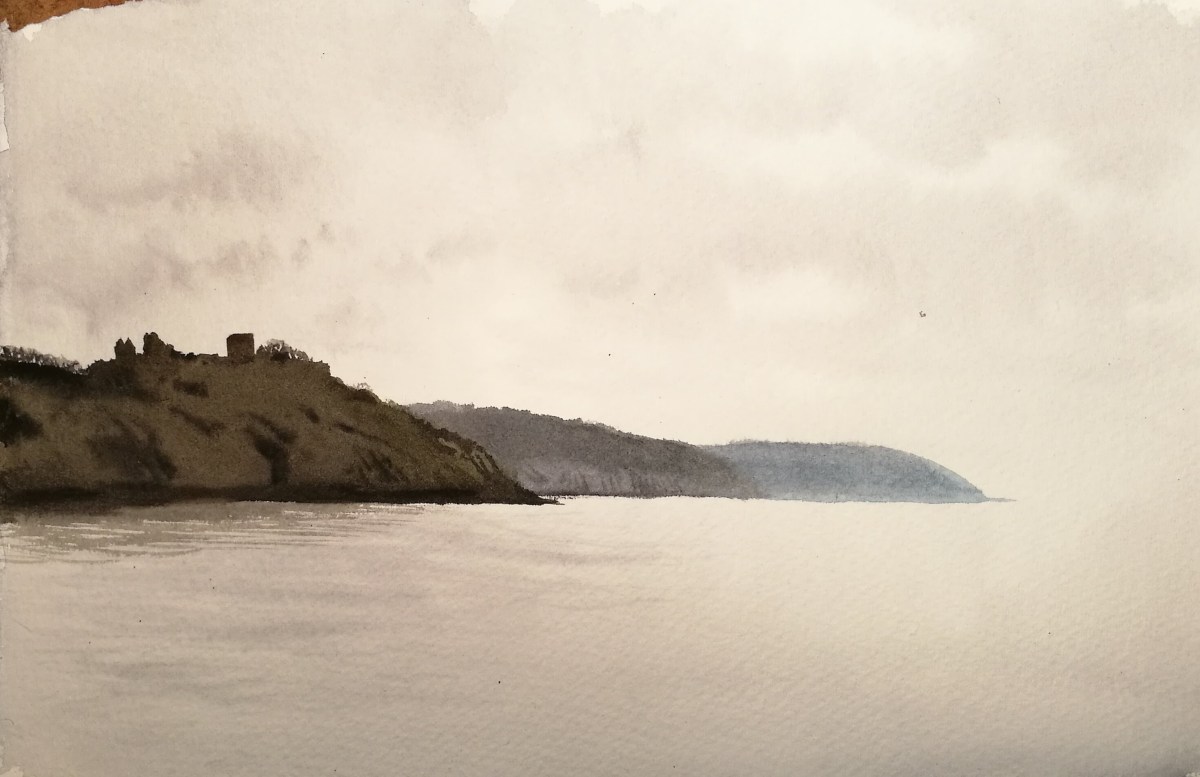
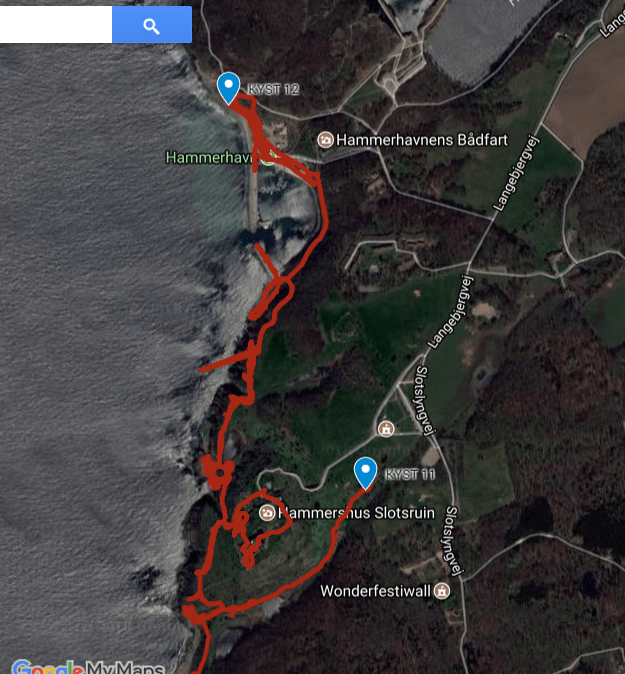
KYST 12 Arriving at Hammerhavn harbour just before 6 am, I was still tired and groggy after an unsettled night’s sleep. For perhaps the first time, I was not really ‘up’ for the day ahead.  It was cold, but just above zero, so freezing paint would not be an issue. The sky was completely overcast and there was little or no wind. Compared to the gusty energy of KYST 11, the day seemed a little flat. I settled down and got stuck into the view of the castle and the cliffs beyond.

cof

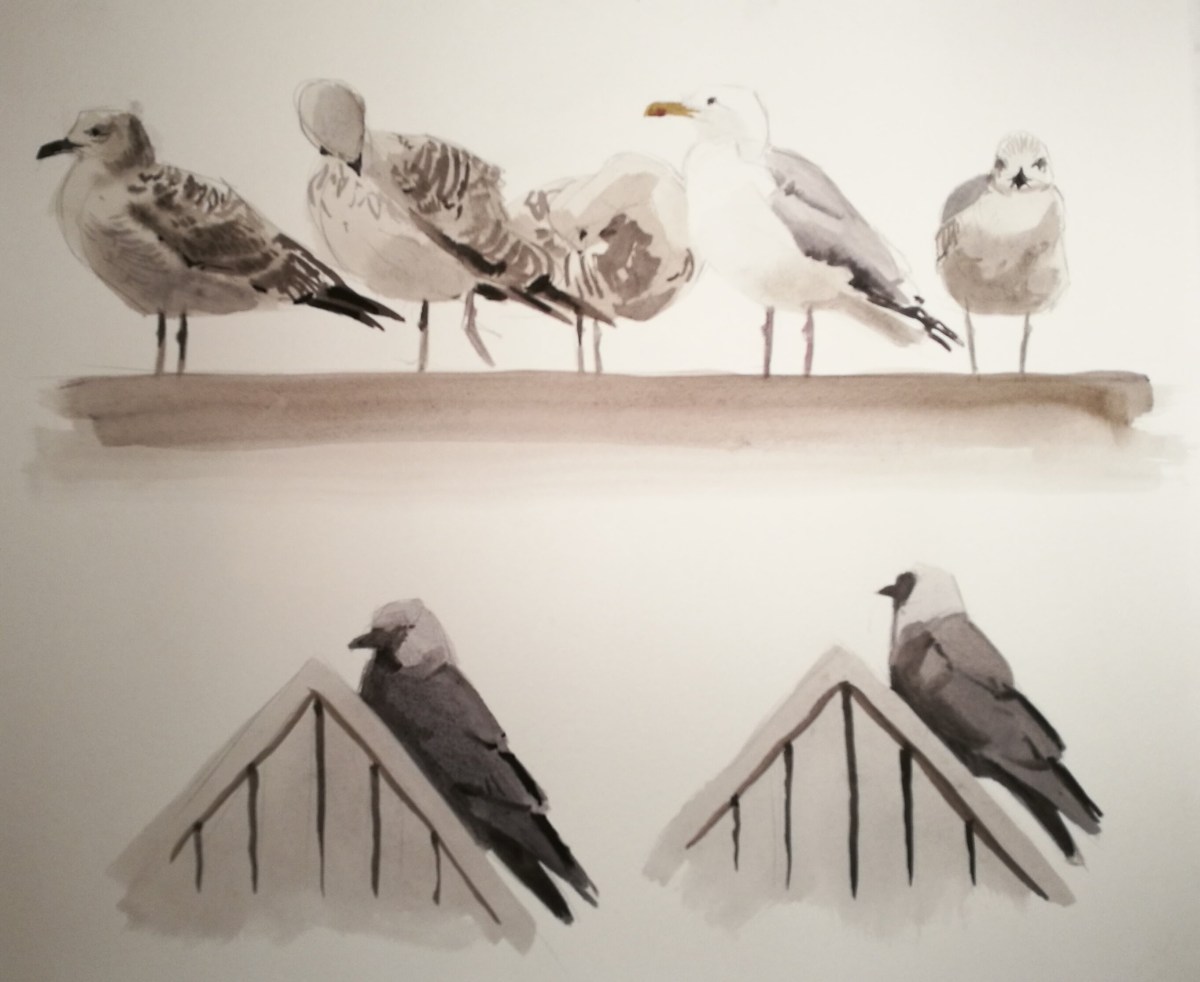
Some gulls and jackdaws were hanging around, the jackdaws perching on roofs of the smart new wooden cottages. Some yellowhammers sang, but otherwise there was little birdlife and spring felt far away.

dav

I walked onwards, north and up on to Hammerknuden – the granite peninsula that is almost separated from the rest of the island. Just before in one of the cottages in the harbor, I had read about and seen photographs of the huge granite quarries which had dominated the social and economic life of the area until very recently. Now, however, they were closed; either filled with water or clad with vegetation, and once again I was reminded how dynamic and ever-changing the landscape is.

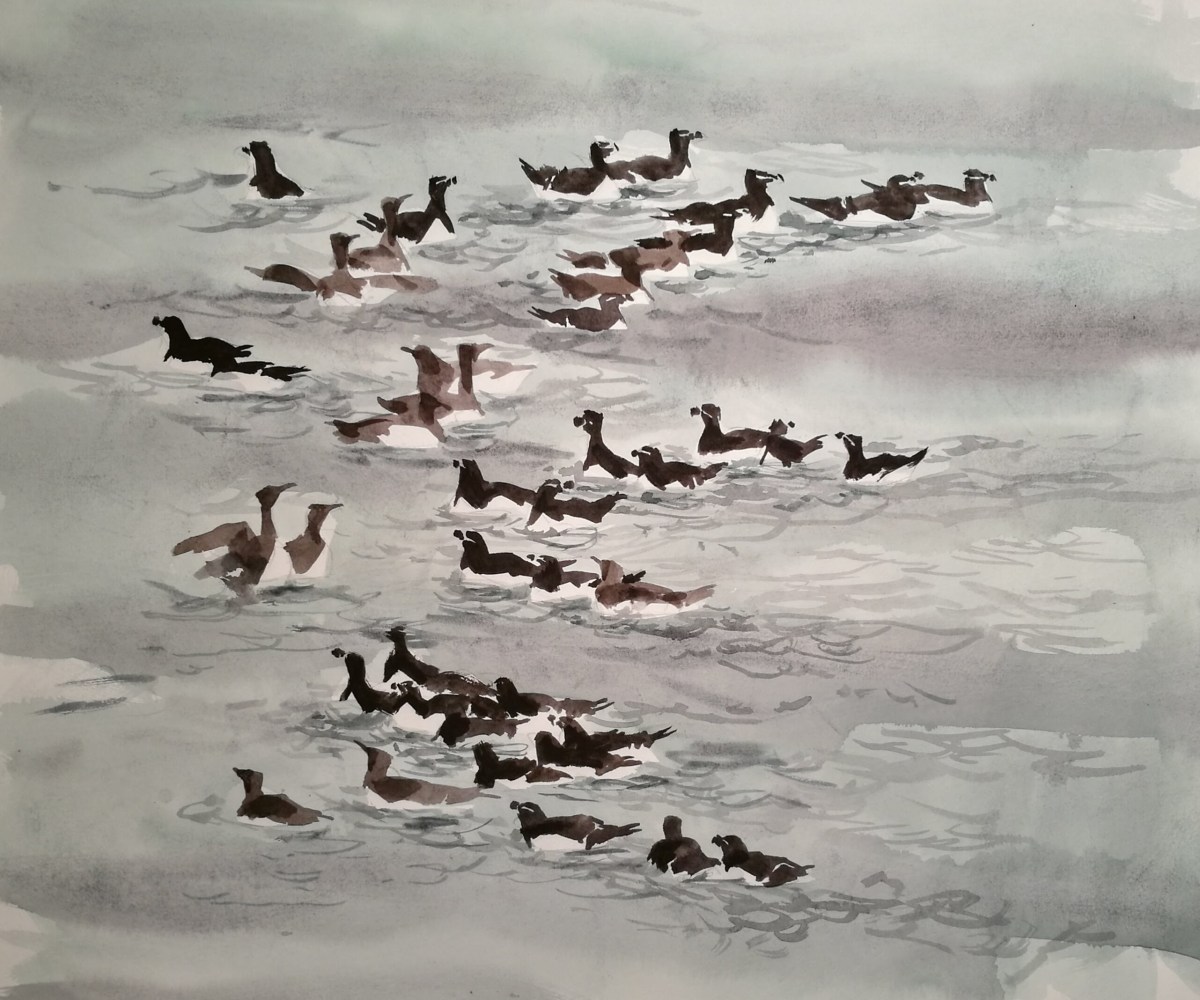
I passed through a low wood of twisted oak, birch and juniper, up over the cliffs and on to wind-blown slopes of juniper and sloe. Here I could look down at the groups of razorbills and guillemots cavorting on the waves far below. There was a manic energy in their movements which I tried to capture – first strung out in a line, then bunched together, sometimes in unison, sometimes in disarray.

sdr

I walked onwards along the eroded path, testament to the popularity of this walk in the summer. Today, however, I was alone, apart from the highland cattle and hardy-looking sheep that grazed on the slopes.

Whenever possible I tried to clamber down the cliffs on the shore. The geology was incredible. Slabs of pink granite, covered in all colours of lichen and moss, in some places hard and sharp, in others rubbed smooth and flat by glaciers. I found a fantastic spot, looking down over some interesting rocks. I tried to really follow the visual planes of the rocks, but the light was changing and uneven, as the overcast sky opened out and the sun shone in sporadic bursts. Unable to deal with the conditions – too hot, too cold, paints drying too quickly, too slowly – I gave up.

cof

I clambered around on the huge granite boulders at the base of the cliffs before looking back one more time southwards at the distant blue shape of Slotslygen, Mulekleven and Vang, before heading Northeast, for the first time.

dav

The coastline around the Hammer peninsula is wonderfully picturesque, but I was disorientated, cold and tired and struggled to find my groove. I decided to concentrate and faced a slab of lichen-flecked granite.

cof

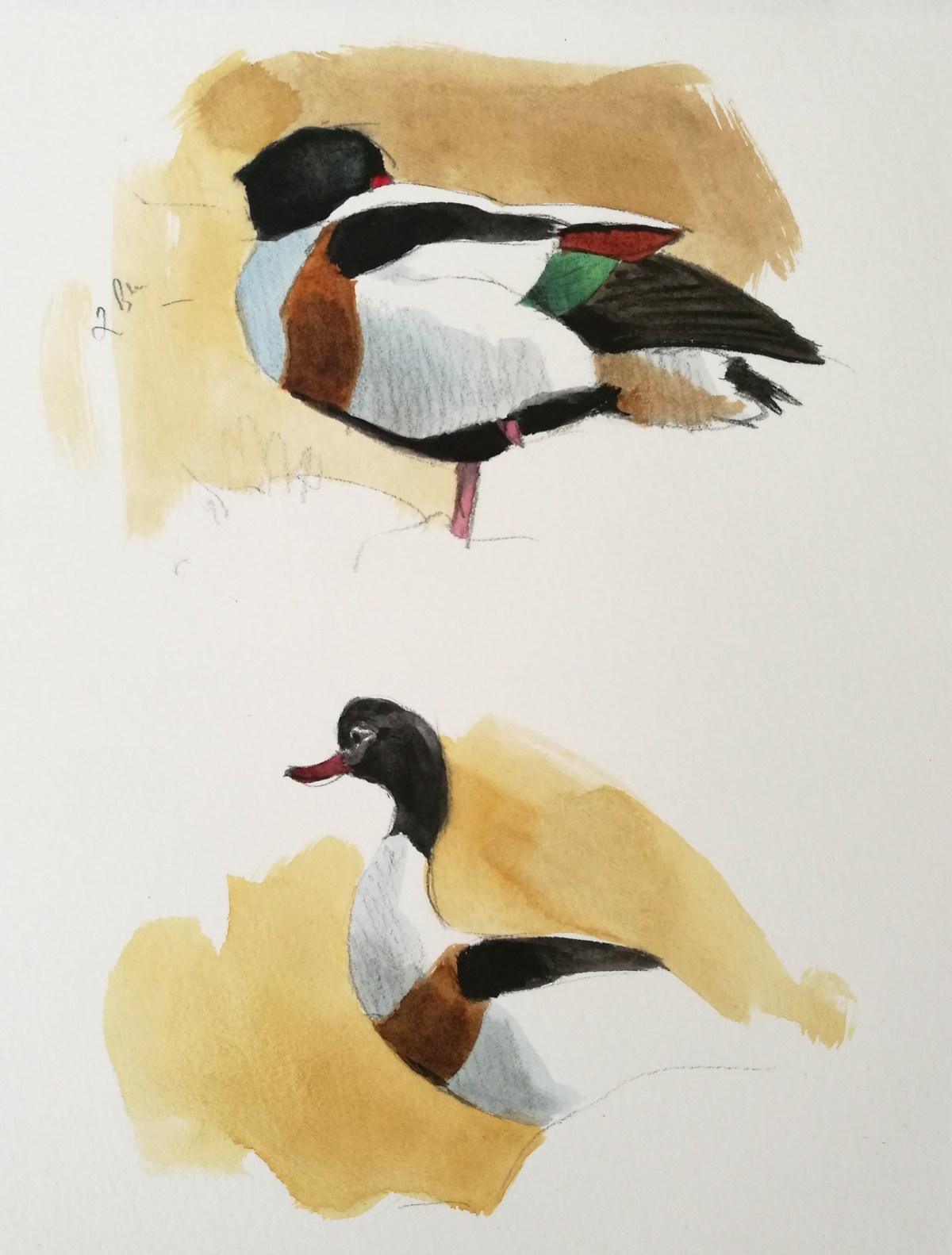
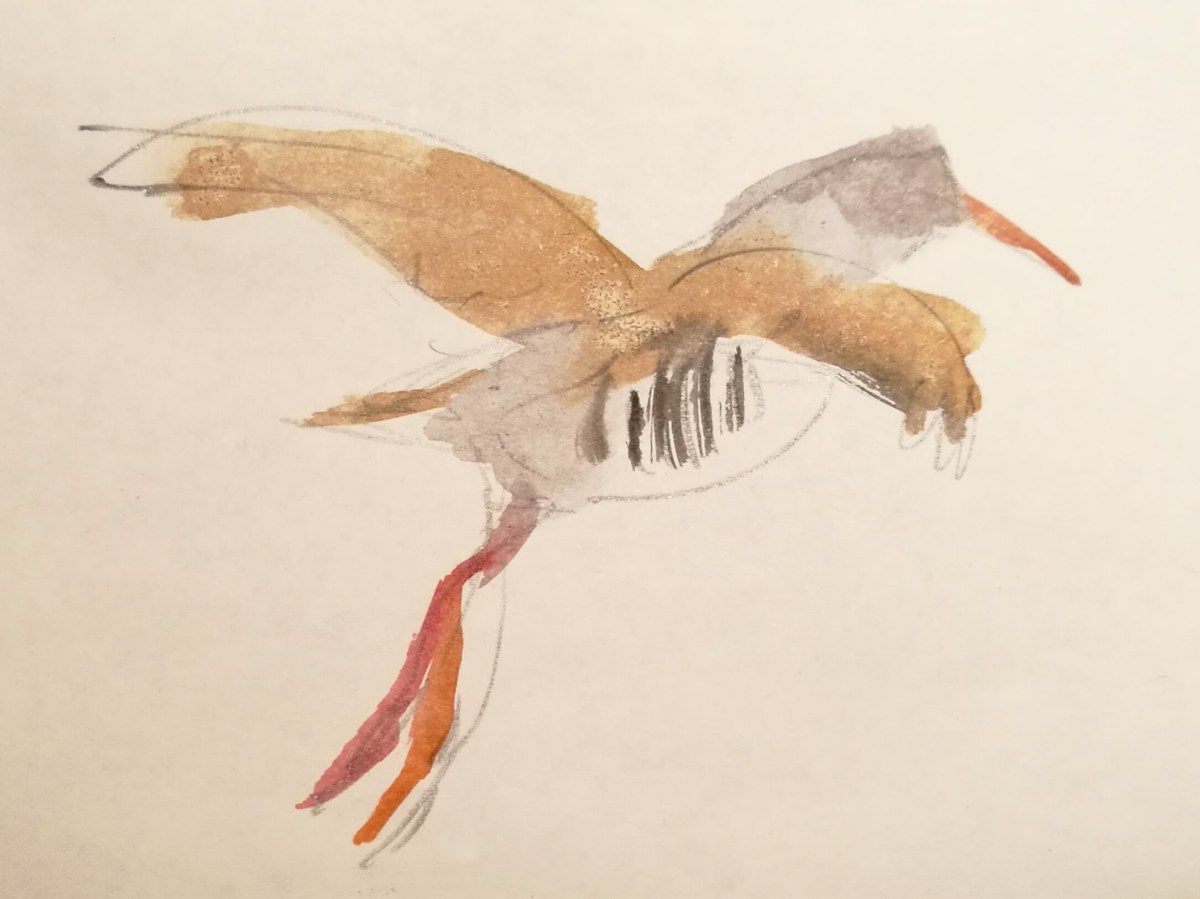
Just as I was about to set off again I almost trod on a water rail, which must have been there the whole time watching me as I drew. It flew weakly off. I tried to find it again, but could not. What an earth was a water rail doing on the coast – a bird whose pig-like squeal I was familiar with from the reed beds in the middle of Bornholm? Perhaps it was on its way north, to Sweden (see top).

A little later and I had reached my destination, Salomons Kapel, a ruined chapel from the 12th century that was once surrounded by a thriving herring market – now long since disappeared. My feet were wet and freezing and I struggled to even think about painting. Instead I walked around and looked for birds, and I was rewarded in no time by my first eider ducks of the year – a sure sign of spring – and a pair of black guillemots, my first ever on Bornholm.

cof

The day was long and I huddled under my M60 umbrella. A beautiful chocolate brown mink passed just metres in front of me trotting along the shore. I made a squeaky cat noise – it looked up at me for a second or two, then carried on neither interested nor alarmed. As the end of the day approached, a sea fog came rolling in from the east, over the granite outcrop and on to the spot where I sat and brooded.

cof

KYST 12

Weather report = Cloudy with regular sunny periods around lunchtime. Sea fog in the late afternoon. Temperature between 1 and 3 degrees. Wind between 1 and 3 m/s first from the east and later north-east. Visibility: medium. Hours of sunshine: maybe one and a half hours, if squeezed altogether?

Lessons learned – it doesn’t have to be amazing every time. It’s ok to just put the brushes down and have some time walking around, looking at birds and so on.

Stops with the M60 = 1

Kilometers walked = 7.2 km

Day lasted = 12 hours, 25 minutes (have now passed equinox)

Birds seen and heard = 32 species (no less than 7 new ones = woodcock (overflying), guillemot, black guillemot, skylark, rock pipit, eider duck, water rail = running total 57)

People talked to = 3 ( 1 + 2)

Other stuff = bigger paper next time?

In my head = Det er så fuldt af sjov, ude i en skov..’ children’s song STILL in my head all day… Thinking of impending trip to Billund. School shootings. Plastic pollution. The end of the world.

cof

KYST 11 – from Mølledal (Hammershus) to Hammerhavn, 16/03/18

For at læse denne KYST 11 blog på DANSK se her

cof

See here for an introduction to the KYST project

KYST 11 Swaddled in umpteen layers of clothing, I hunkered down and looked up at the imposing ruins of Hammershus castle, just as the sun crept over the horizon behind me. Once again, the temperature was sub-zero, and my watercolours froze and crystalized within seconds on the paper. The wind was strong and bitterly cold but thankfully blew from the east, giving me at least the opportunity to find shelter on this, my last KYST on Bornholm’s west coast.

cof

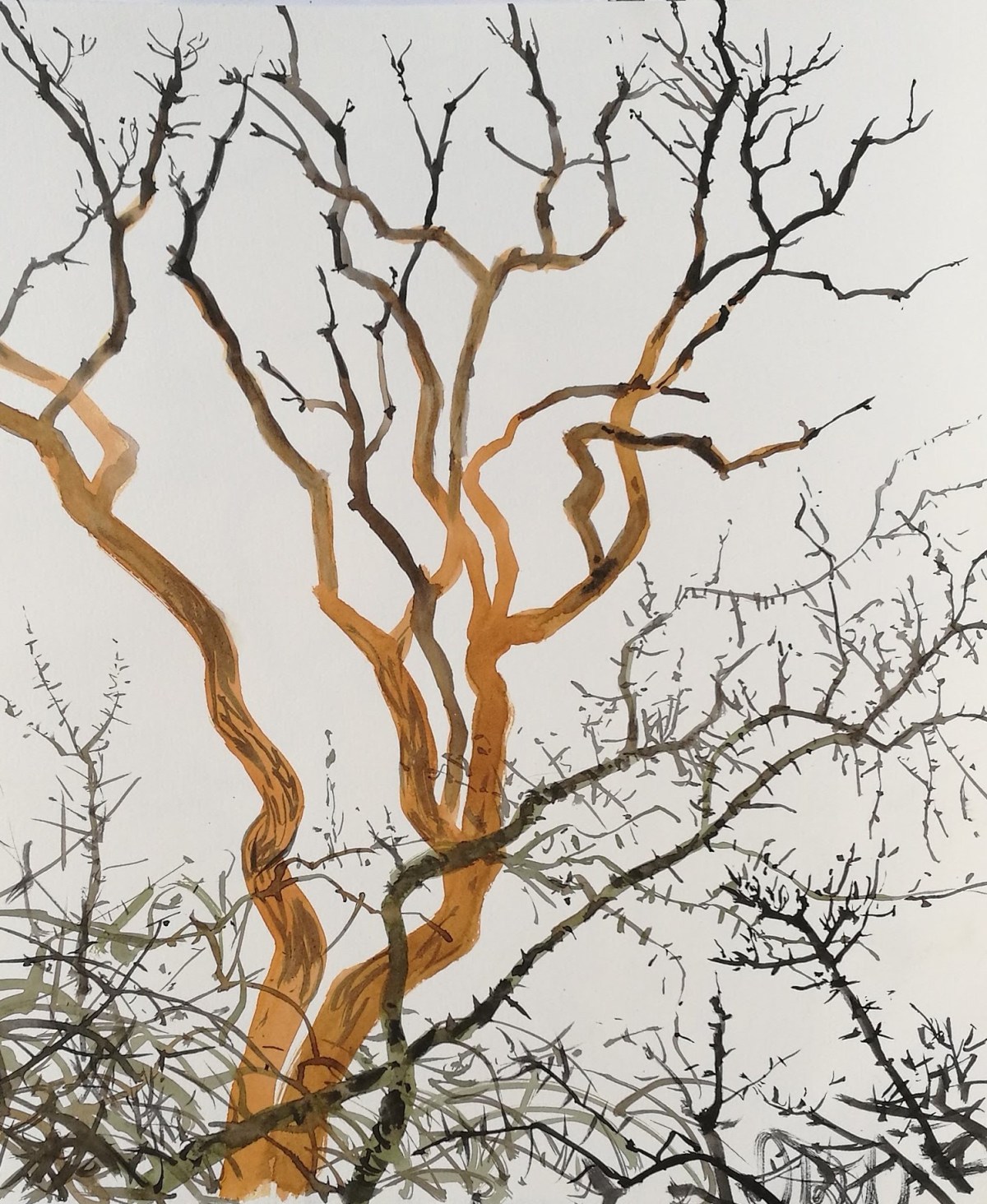
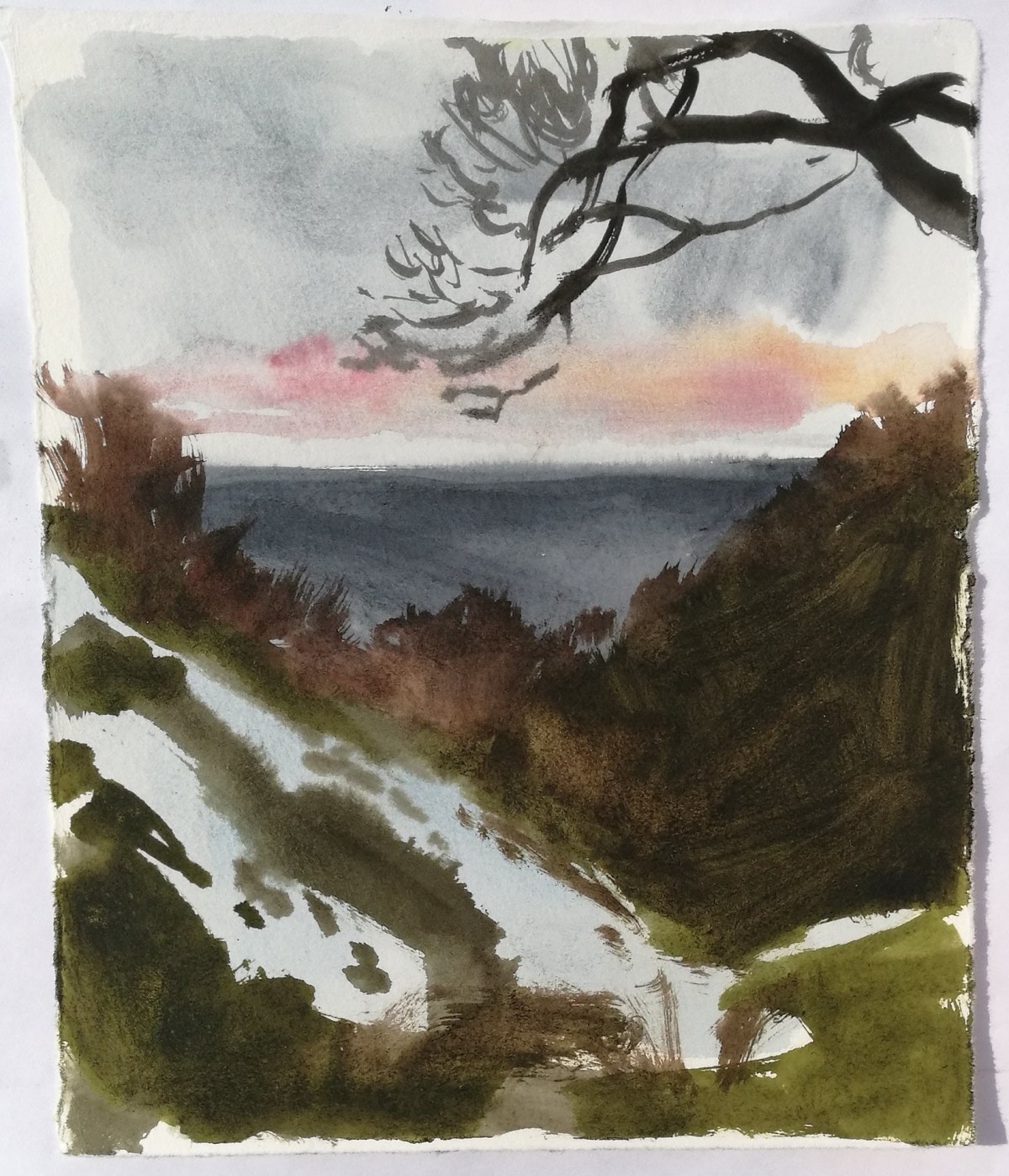
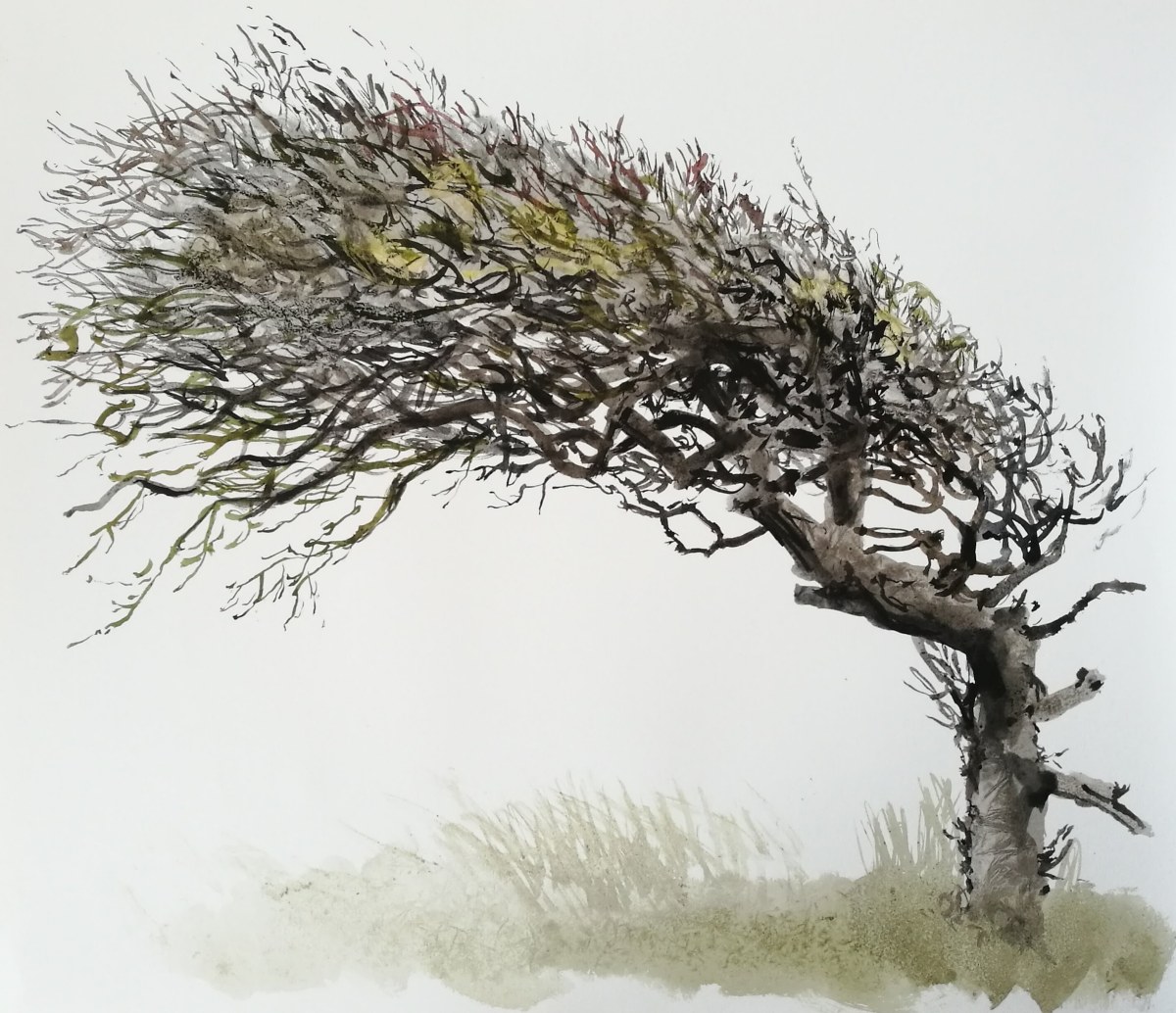
As I walked down Mølledal valley towards the coast some yellowhammer, greenfinch and a chaffinch sang rather weakly in the woods beside me. Hardly a dawn chorus, but nevertheless a sign of things to come. Last week’s slush had frozen back to ice, but a small stream accompanied me down to the rocky coast.  Spring felt very far way. A jay mimicked a buzzard’s call expertly, and settled in a tree close by, before flapping off with a prehistoric screech. Reaching the rocky coast, and partly sheltered from the wind, I felt inspired with sympathy for a wind-sculpted hawthorn (see top).

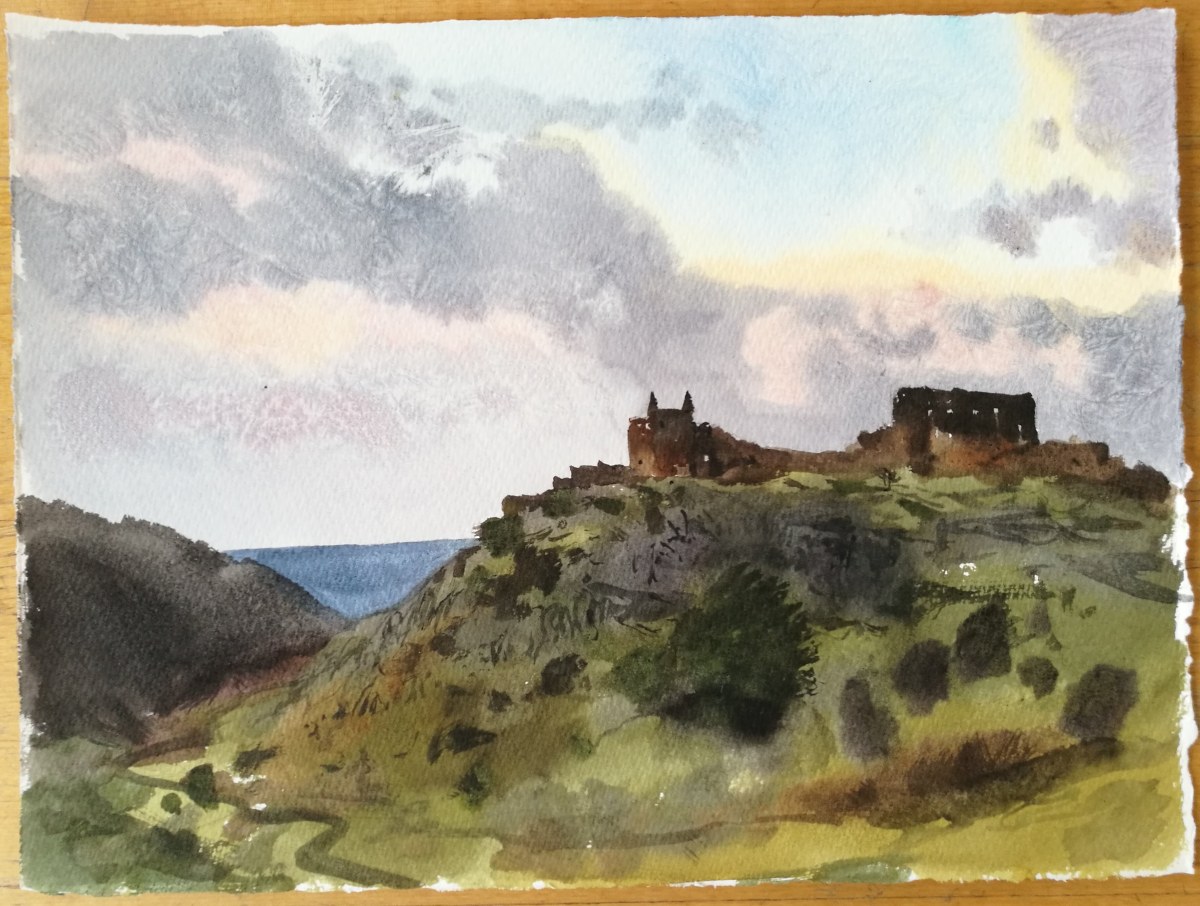
I climbed around the rocks for a while, partly to keep warm, and then walked up the massive granite outcrop, upon which Hammershus castle sits. The historic seat of power on Bornholm, the castle has been deserted since the early 18th century, but it still retains an imposing physical presence. I walked around the ruins, happy to have the castle to myself, but the wind up here was finger-numbingly and eyeball-freezingly cold. I tried to travel back in time and imagine the scores, hundreds even, of people who must have worked and lived here, at any one time – over many hundreds of years. I tried to imagine them on a day like today, when all was frozen hard and the wind bit through everything. I lasted but a few minutes, before retreating back in the lee of the cliffs.

cof

Looking out I could see how the sea was calmer in the shelter of the island. Every now and then huge gusts would be visible on the water, as if an invisible helicopter was landing. Further out, far from the shelter of the island, huge white crested waves attested to the power of the wind. I followed with my binoculars the red pilot boat, as it raced out from Hammerhavn harbor to help or guide tankers. My paints froze very quickly.

cof

I walked on, past the castle, and found a fantastic sheltered spot where I could put up my M60 and enjoy some food and a fine sea view. The sun at last struggled to break through, only to disappear again, as wave after wave of snowstorms came passing through. There was an incredible energy in the day.

cof

I walked back a little, and struggled to find shelter from the gusty wind. I clambered down a gully right down below the cliffs to find shelter, and here painted some rocks – about all I could manage as I battled with the cold.

cof

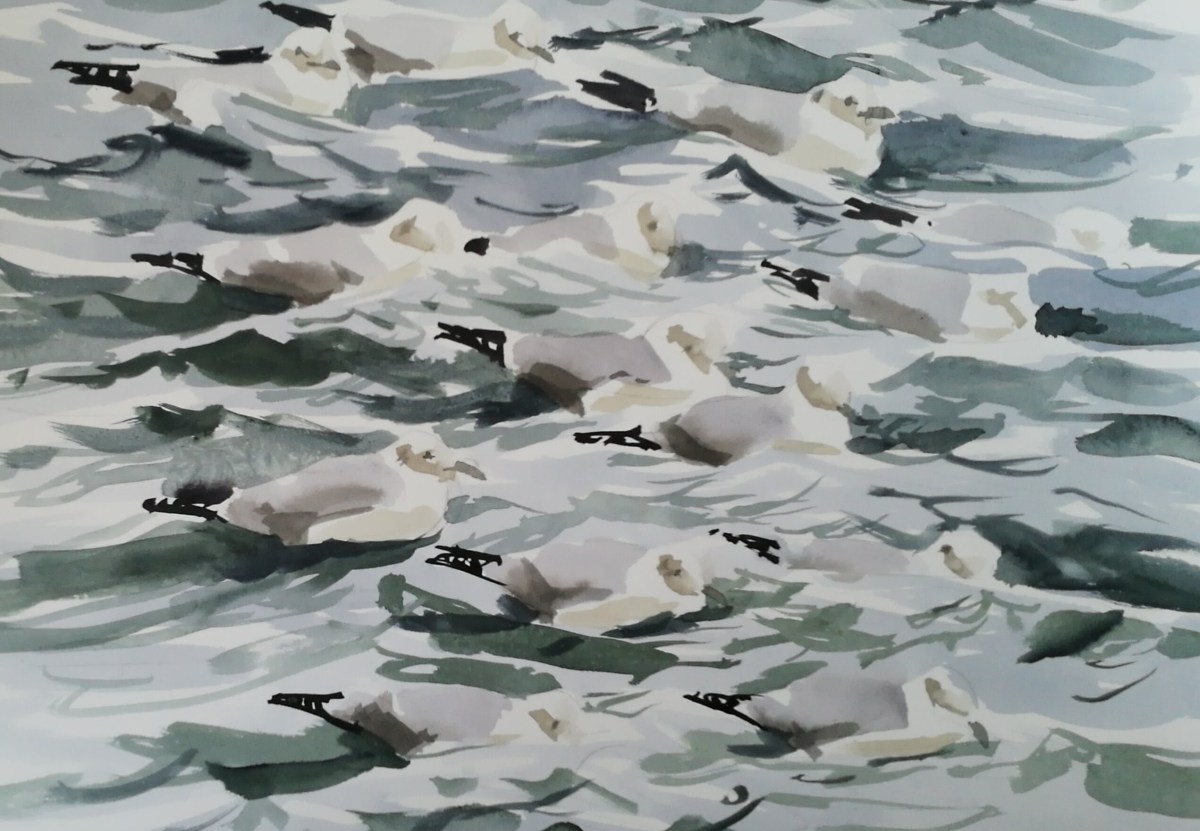
Back at my sheltered spot – and partly because I was aware that it had been so long since I’d attempted any bird studies – I got my telescope out and followed a distant flock of common gulls bobbing on the surface.

dav

Eventually I walked on, around the cliffs and down through a sheltered wood of cherry and birch, back to the shore and the arms of Hammerhavn harbor. There were few people about or signs of activity save the aforementioned Pilot boat. I walked around for a while looking for a sheltered spot to put up my brolly, but I struggled with the gusting wind and regular snowy squalls. I finally managed to peg it down but the snow kept coming in and at one point the wind lifted the whole thing up. I swore a lot.

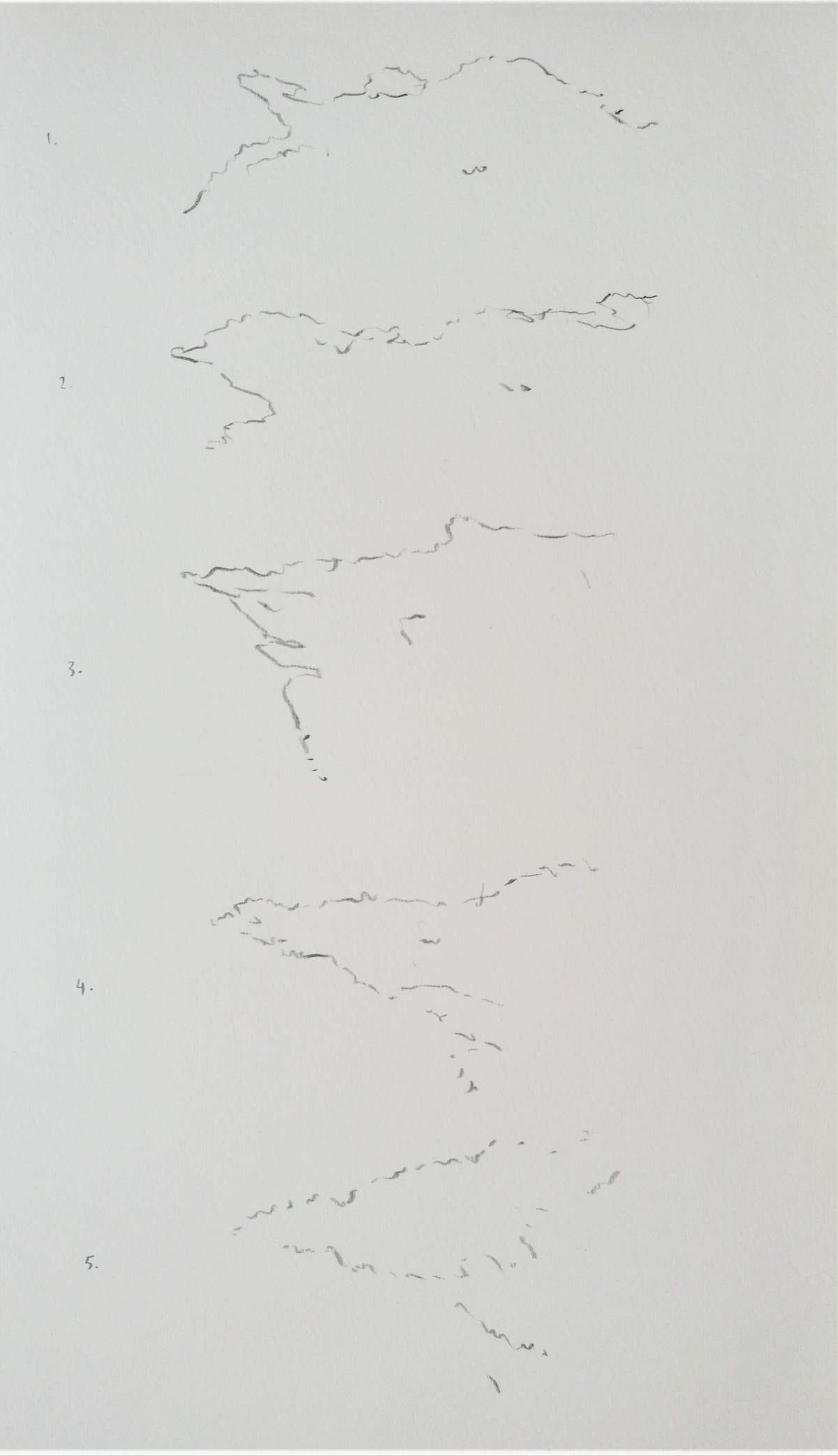
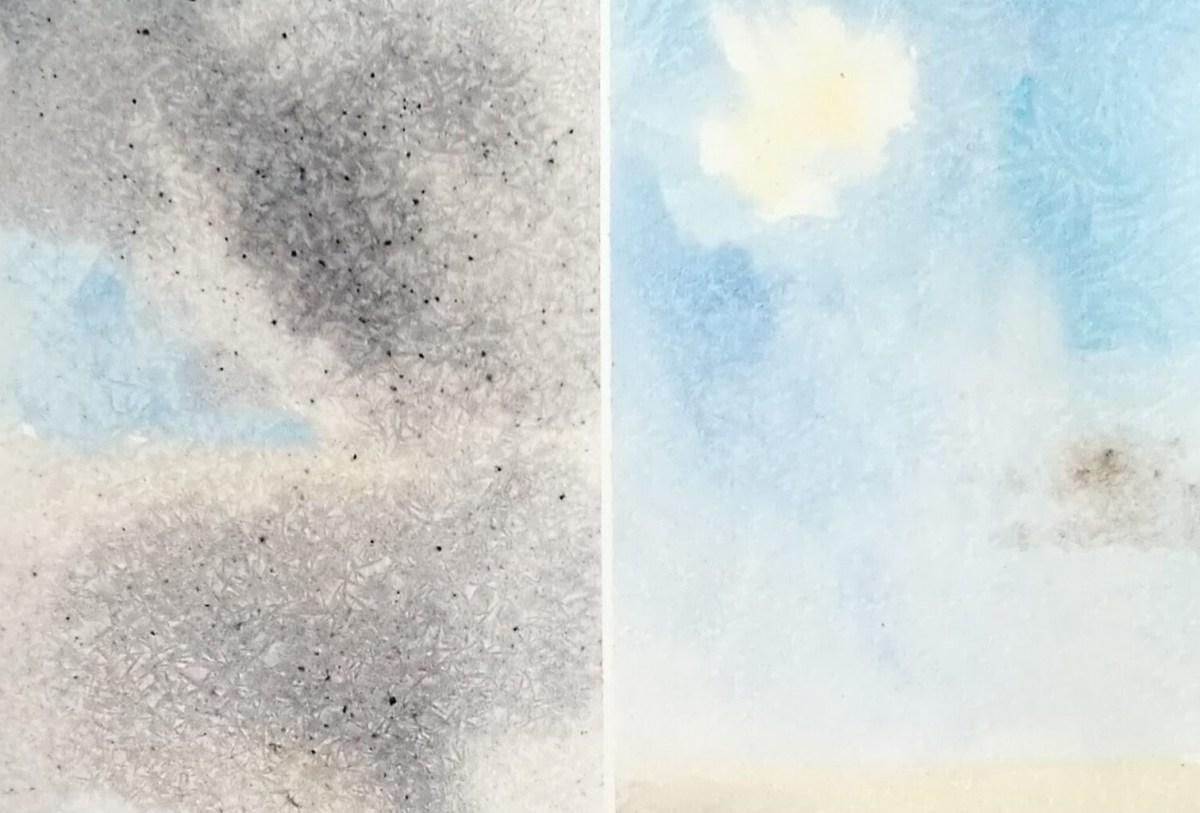
Looking back towards the castle I decided to make a timed ‘slice’ painting, trying to record the day’s energy. A snowstorm came suddenly and the castle almost disappeared, the snowflakes freezing onto the paper, to be replaced by sun and a bright blue sky – before the next flurry. It was incredibly intense, trying to work with the weather and record and reflect my perception of it. This was exactly the sort of experience and painting I had hoped for when starting this project – it felt like a collaboration between me and the day.

img_20180317_130921.jpg

(Detail)

cof

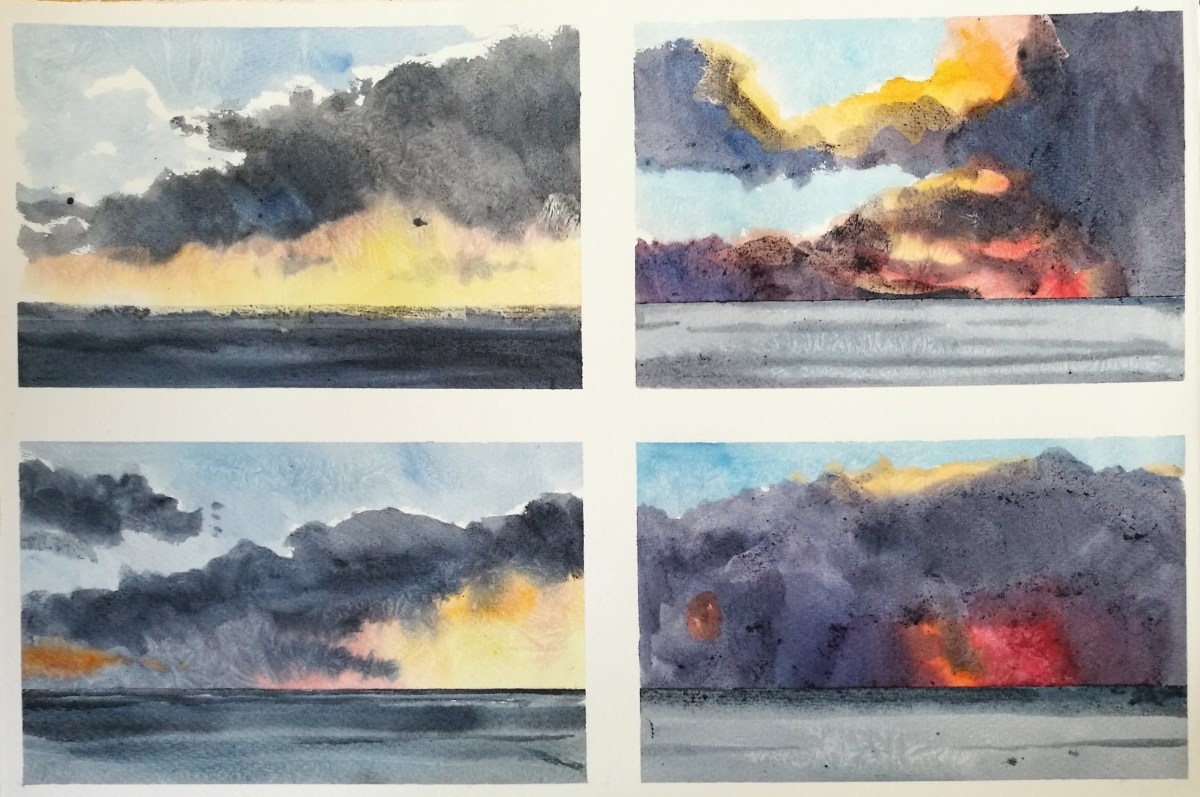
I finished off, completely exhausted, by making a four-part study of the wonderful setting sun, with the paints sometimes crystallizing, sometimes turning into a sludgy mess – before the lonely trudge back to Hammershus and my waiting car.

cof


KYST 11

Weather report = snow flurries throughout the day, cloudy with regular sunny periods. Temperature between minus 3 and minus 1 degrees. Wind between 10 and 18 m/s first from the east and later north-east. Visibility: very good, when not obscured by snow clouds. Hours of sunshine: maybe four hours, if squeezed altogether?

Lessons learned – peg the M60 down in one or two places before putting up in strong wind. The original Pot Noodle tastes much better than recent imposters.

Stops with the M60 = 2

Kilometers walked = 9.04 km

Day lasted = 11 hours, 44 minutes

Birds seen and heard = 28 species (3 new ones = mistle thrush, fieldfare and greenfinch = running total 50)

Other stuff = starting to get the handle of the freezing paint thing, and how to work with it. Winters from now on will be fun…

People talked to = 6 ( 1 + 5)

In my head = Det er så fuldt af sjov, ude i en skov..’ children’s song STILL in my head all day… Thinking of an old friend who passed away last week.

2018-03-17


KYST 10 – from Pissebækken to Mølledal (Hammershus), 09/03/18

For at læse denne KYST 10 blog på DANSK se her

cof

See here for an introduction to the KYST project

KYST 10 After a very early start the day began rather innocuously. I parked the car in Vang habour and walked along the coast and back to the waterfall. There was little wind and the temperature was around 1 or 2 degrees. While some ice and snow did remain, the waterfall was a torrent compared to last week. I struggled to depict the movement of the water.

sdr

Packing up my things I walked northward along the coast to ‘Stor Rams’ a huge erractic boulder depositied by a glacier, just by the water’s edge. This part of the coast is really off the beaten track and the only footprints in the snow were those of roe deer and hares. Already the wind was picking up and as I started painting it started to sleet, also on my painting.

cof

My path along the beach was blocked by the imposing granite cliffs of ‘Mulekleven’, so I decided to climb up the wooded slope to the clifftop path. Despite all the weeks of frost, the mixture of wet mud and slush made the going very difficult and I had to make two trips on all fours with all my gear. By the time I arrived at the top I was soaked with sweat, and I huddled under my M60 while huge snowflakes drifted down, followed by sleet, and then rain.

cof

Eventually I packed up and walked onwards along the coastal path towards Hammershus. The thick snow had turned into dirty slush, the path in places an icy brook. Soon my feet were completely soaked and frozen, so I was happy to find a small wooden hut where I spent the next few hours trying to warm up. I painted the view from the open door.

cof

I collected some branches with strange looking lichens and slime mould.

The sturdy hut was built long ago for the coast guard, who would patrol the rocky coast, looking for ships in distress. Inside the hut information panels described their work and some of Bornholm’s better known shipwrecks. When I had warmed up a little I packed up and carried on along the path, first through some weather-beaten birch and wild cherry trees, and later through a more open heathland. Here in the face of a strong and sleety west wind I looked back at Vang harbor. The day felt long.

cof

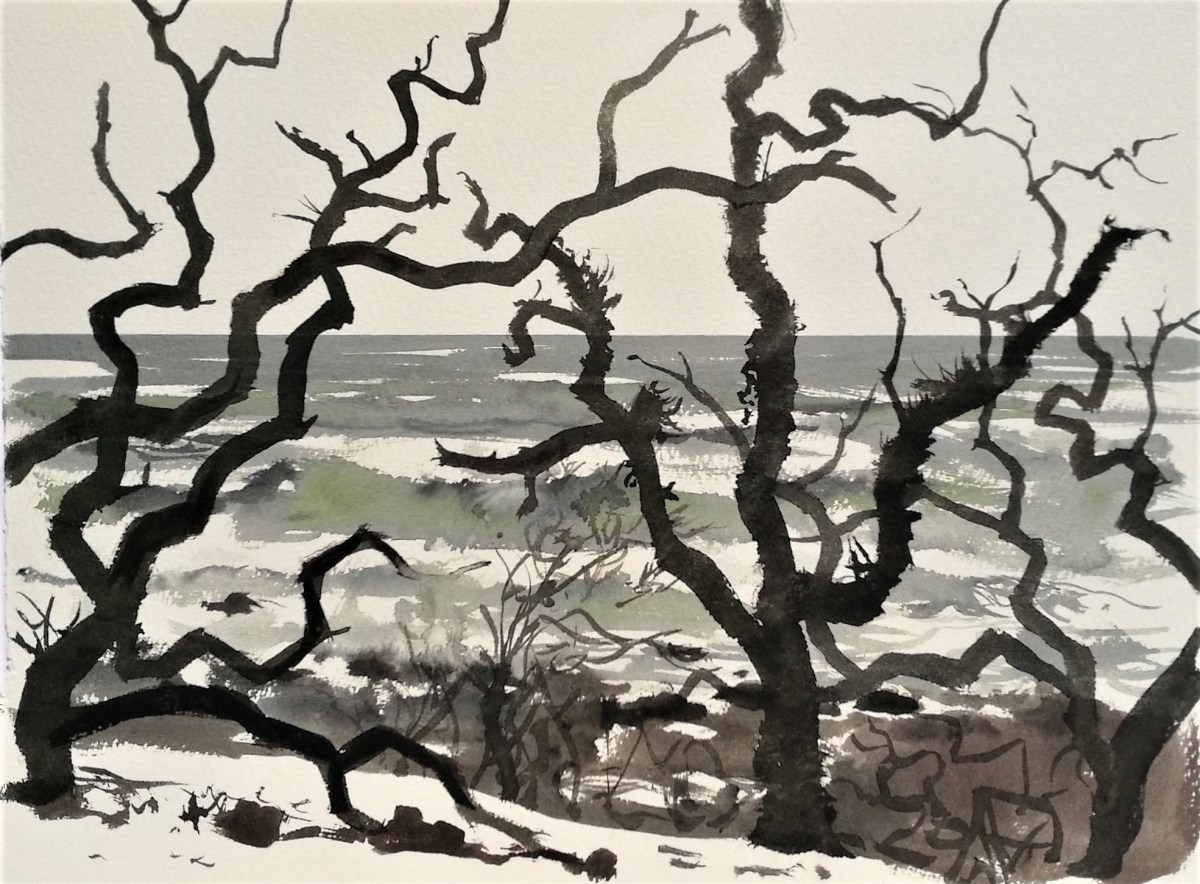
Eventually the path started descending back to the coast. I came into a large and open wooded area, full of huge oaks with twisted branches. The waves crashed into the shore and the wind roared in the tree tops. There were no birds, no signs of life even, and the atmosphere felt foreboding, threatening even. (see top)

I came down to the beach under the shadow of Hammershus, the ‘Hated Castle’, perched on a granite outcrop. The wind was blowing from the sea right up the valley and I sat and made a last painting, lasting just a few minutes before having to stop. I walked along the valley up to the road, annoyed with myself for giving up before the sunset.

cof

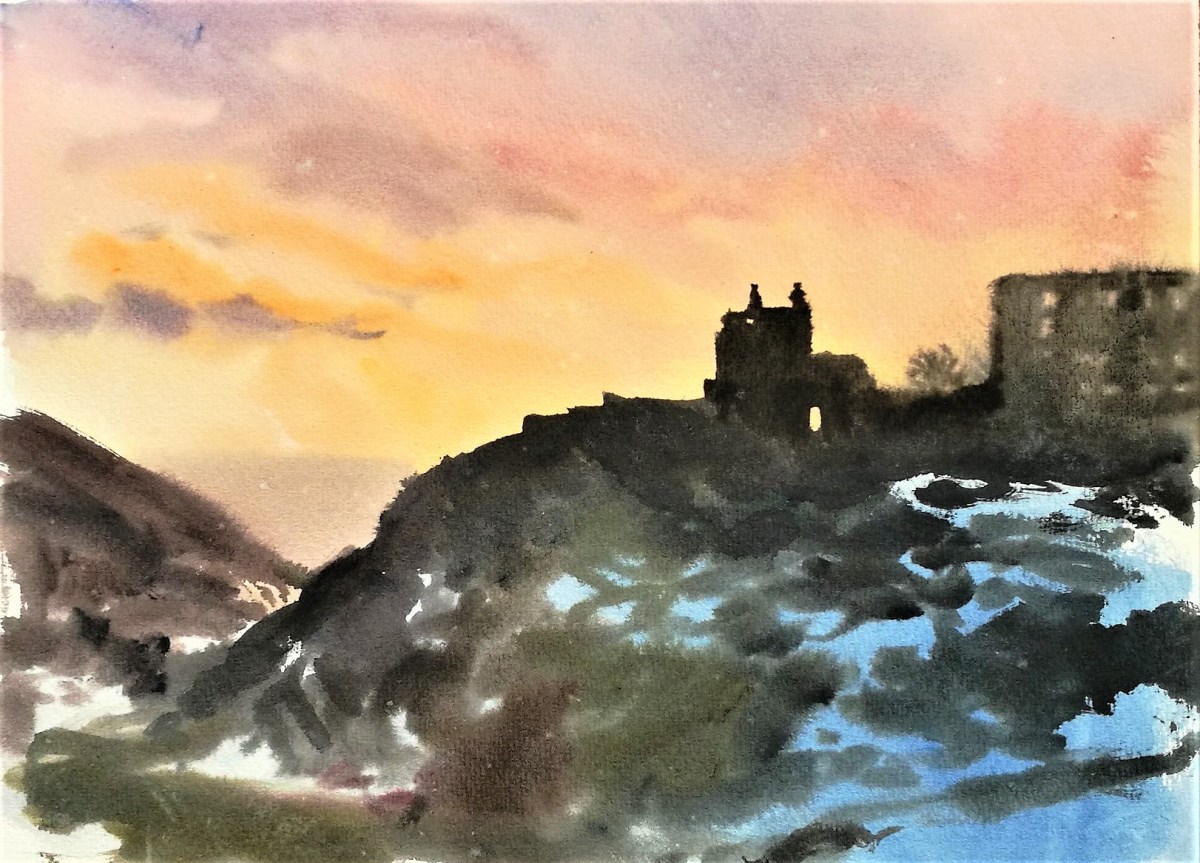
Just as I reached the new Hammershus Visitor Centre I noticed a change in light. Somehow, after such a grey and dreary day, the clouds and sun had conspired to create an awe inspiring sunset. I sat down and drank in the incredible colours, with the castle silhouetted against a constantly shifting backdrop of oranges, purples and reds. It seemed like an amazing reward after a hard and challenging day, and this burst of sudden positivity lifted my spirits whilst I trudged through the slush all the way back to Vang where my car waited.

cof

KYST 10

Weather report = snow, sleet and rain in the morning, light sleet in the afternoon. Overcast. Temperature between minus 1 and 3 degrees. Wind between 3 and 11 m/s first from the north, then the west. Visibility: poor, then better. Hours of sunshine: 5 mins (just as it set)

Lessons learned – take it easy. Take stops, do not allow yourself to get too hot and sweaty. Do not let your inner gloves get wet. Do not ever again go for a walk on slushy paths. Frozen and wet toes do eventually get warm when you walk on them. Stay to the end, it might be worth it.

Stops with the M60 = 1

Kilometers walked = 6.53 km

Day lasted = 11 hours, 22 minutes

Birds seen and heard = 18 species (0 new ones = running total 47)

Other stuff = irony of wanting to be outside all day and ‘away from it all’, but making Facebook and Instagram updates through the day. No bird drawings again.

People talked to = 2

In my head = Annoying development: voice in head commentary ‘should I write this in the blog?’ (including this sentence). ‘… Det er så fuldt af sjov, ude i en skov..’ children’s song in my head all day…

2018-03-10


KYST 09 – from Vang Pier to Pissebækken, 02/02/18

For at læse denne KYST 09 blog på DANSK se her

dav

See here for an introduction to the KYST project

KYST 09 Ever since the weekend, Bornholm had been covered by a thick blanket of snow and battered by a chilling east wind. School buses stopped running and only the main roads were cleared of the constantly drifting snow. After six in the evening, all activity ceased and we were warned not to make any unnecessary journeys. But as I looked out of the window early Friday morning the wind had died down a little, so I decided to go for it. The drive to Vang, which usually takes only 20 minutes or so, took nearly an hour, and I luckily fell in behind a convoy of slow moving cars. The road down to Vang is very steep and I was glad to find somewhere to leave the car by the harbour, and walk back to the start point by Vang pier through the thick virgin snow and morning gloom.

Despite leaving early, due to the long drive I was 10 minutes late for the sunrise just before 7am. It was still snowing hard, so I cleared a space and set up my M60. Despite being sheltered from the wind, the snow still swirled under the brolly and onto my paper. Four whooper swans sheltered in the sea under the cliffs, flanked by a rather confused and aloof mute swan.

cof

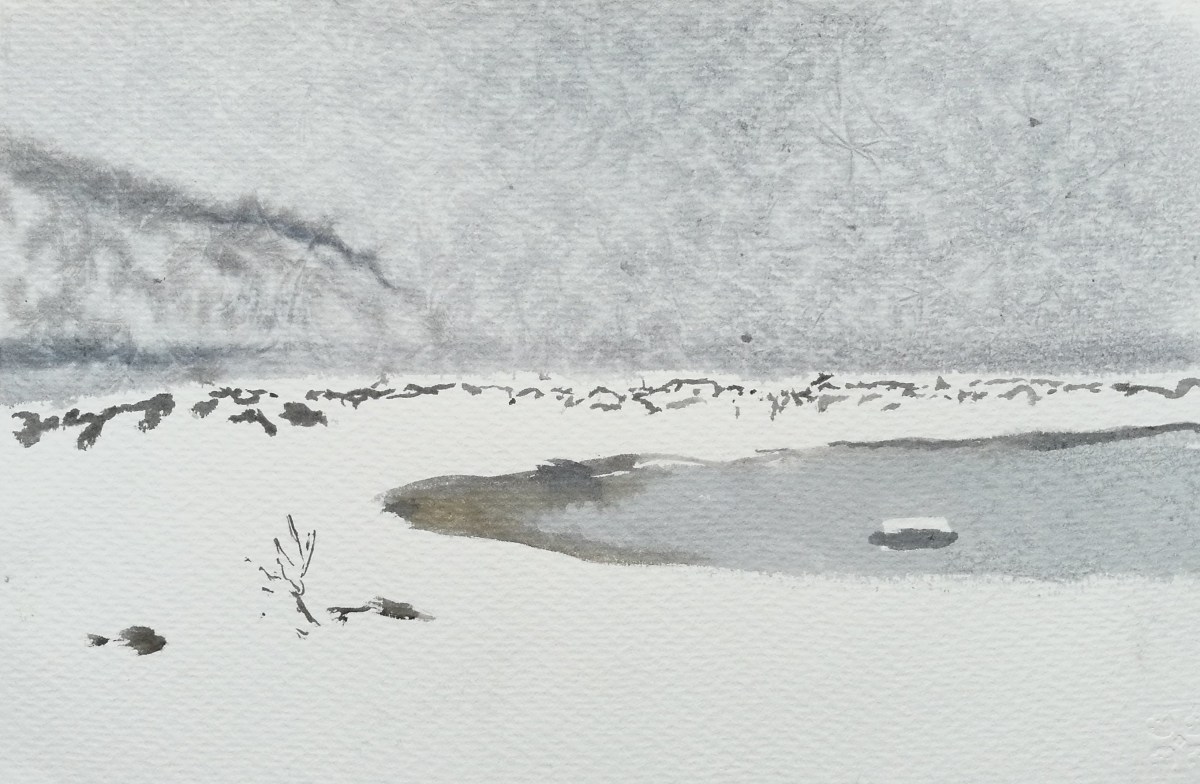
It was minus seven out of the wind, but I was well prepared with seven layers of clothing, a hot water bottle and a thermos flask. I had also left extra provisions and firewood in the car. I painted with nearly boiling water, with my palette resting on the hot water bottle. This way I could mix paint and apply paint to the paper, where it froze almost immediately. I made many experiments and studies of the pigments freezing, letting the snow fall on the wet paint, or even burying the painting in the snow.


cof

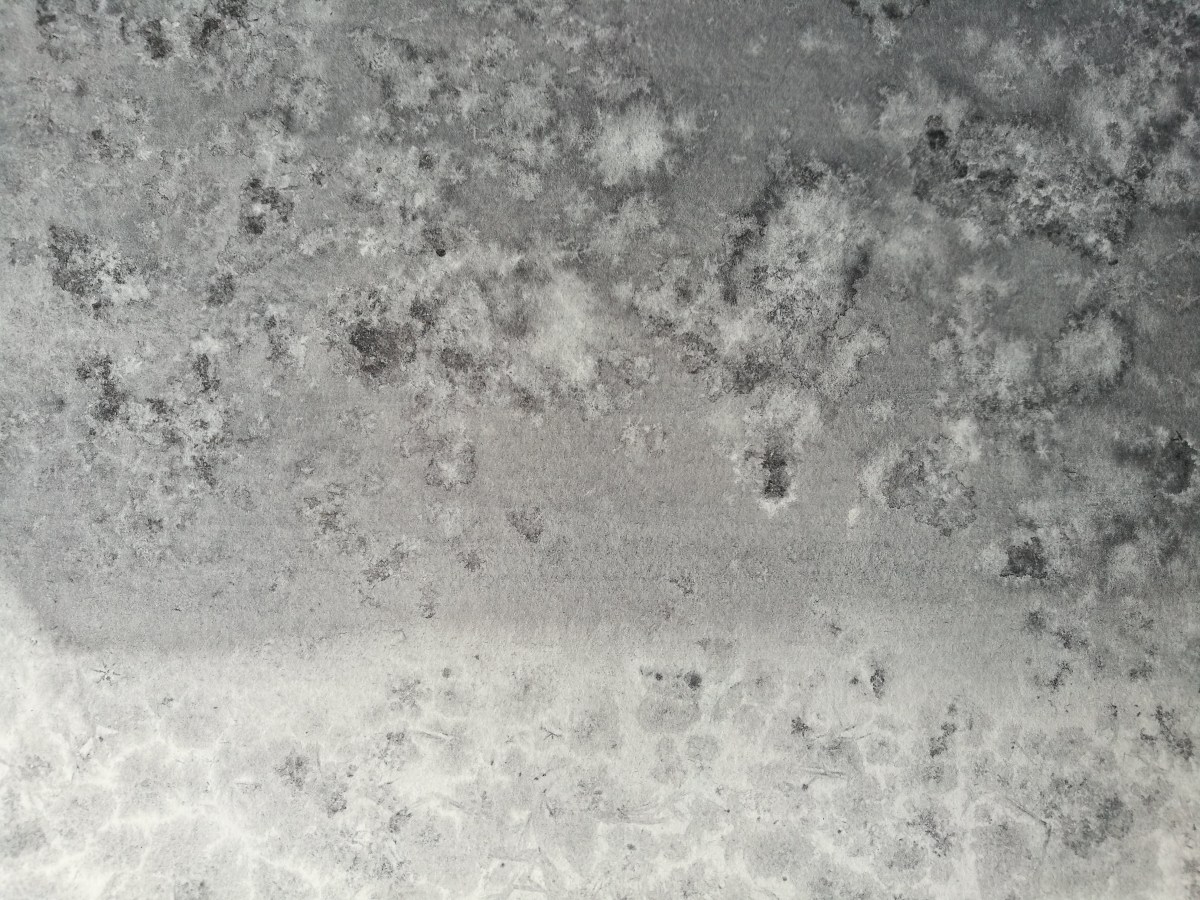
Here you can actually see how the outline of some of the snowflakes have been ‘captured’ by the pigment and frozen in the millisecond before being destroyed. I don’t really understand the physics, but it was incredible to see.

cofcof

I packed up and trudged through the snow back towards Vang. In the shelter of the granite cliffs I cleared a circle of snow with my shovel and set up the M60 again. Here I tried to depict the wonderful wintry scenes around me.

dav

At one point the sun briefly came out, and with direct sunlight on the paper I was able to avoid the paints freezing.
cof

After a wonderful pot noodle and a warming coffee, I walked back to Vang harbor. I still had not seen a soul. Every now and then the sun would break through the clouds. The old fishing hamlet of Vang looked incredibly picturesque covered in snow.

dav

A very kind couple I know invited me back to their summerhouse for a warming coffee. By this time my toes were frozen and I was glad for the opportunity to warm up, though it did feel a little wrong. Their house, an incredible old fisherman’s cottage that at one time had housed two families, was situated just outside Vang only metres from the shore. We talked about Vang, and how hard it must have been for the families back then, in crowded uninsulated and unheated houses, with little to look forward to other than another day on the freezing sea or slaving away at the quarry face. The fishermen have gone now and the quarry is closed, though Vang somehow retains its sense of community.

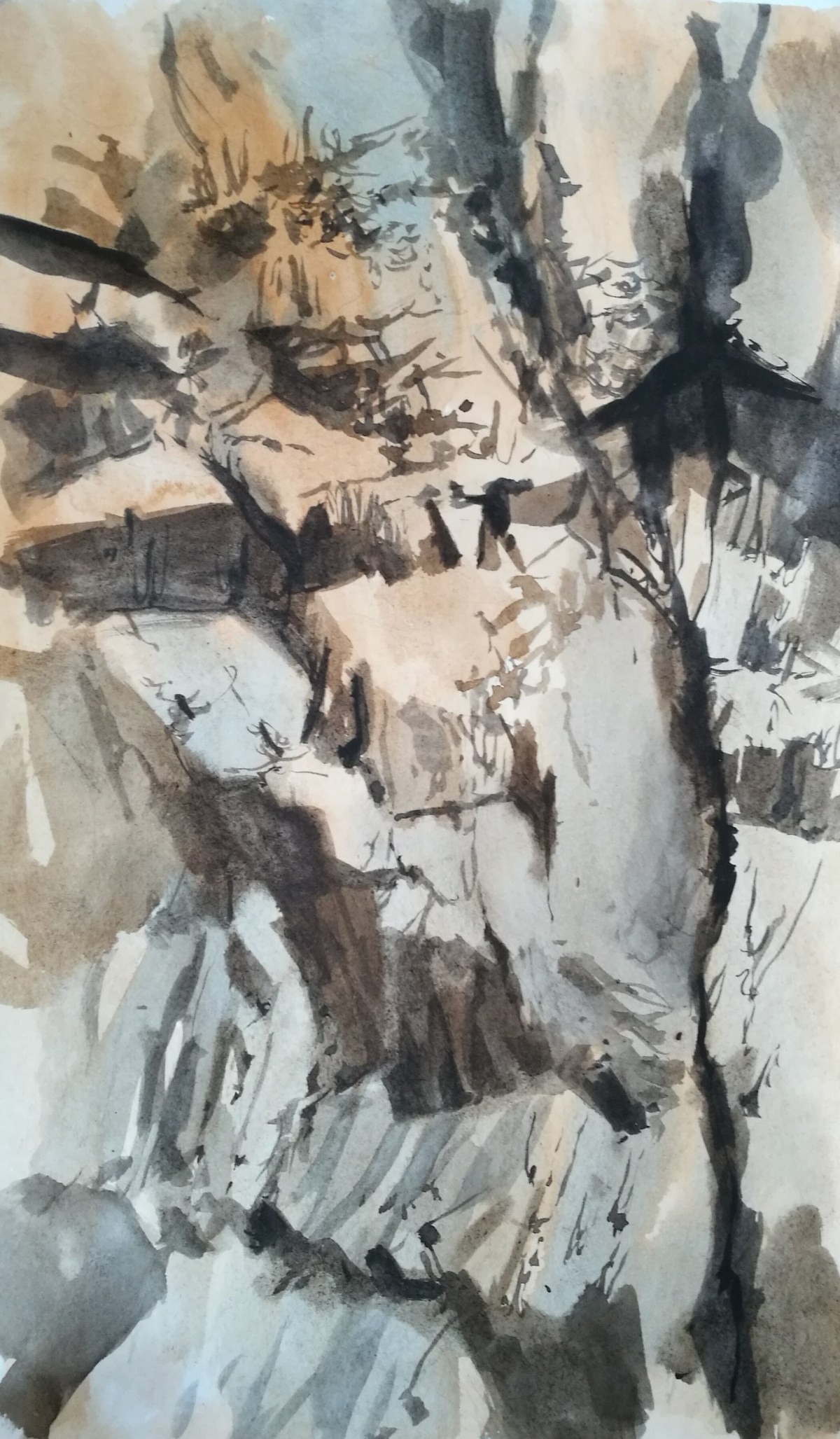
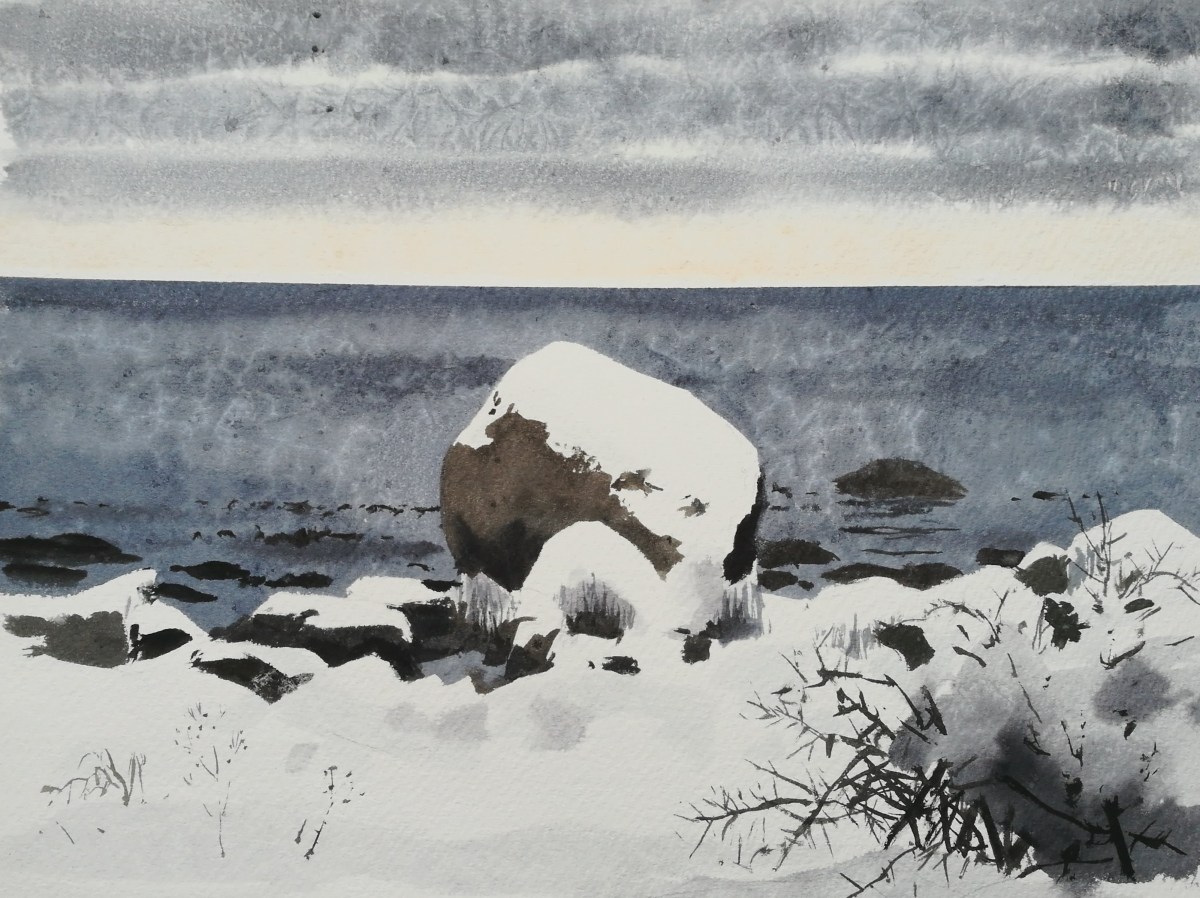
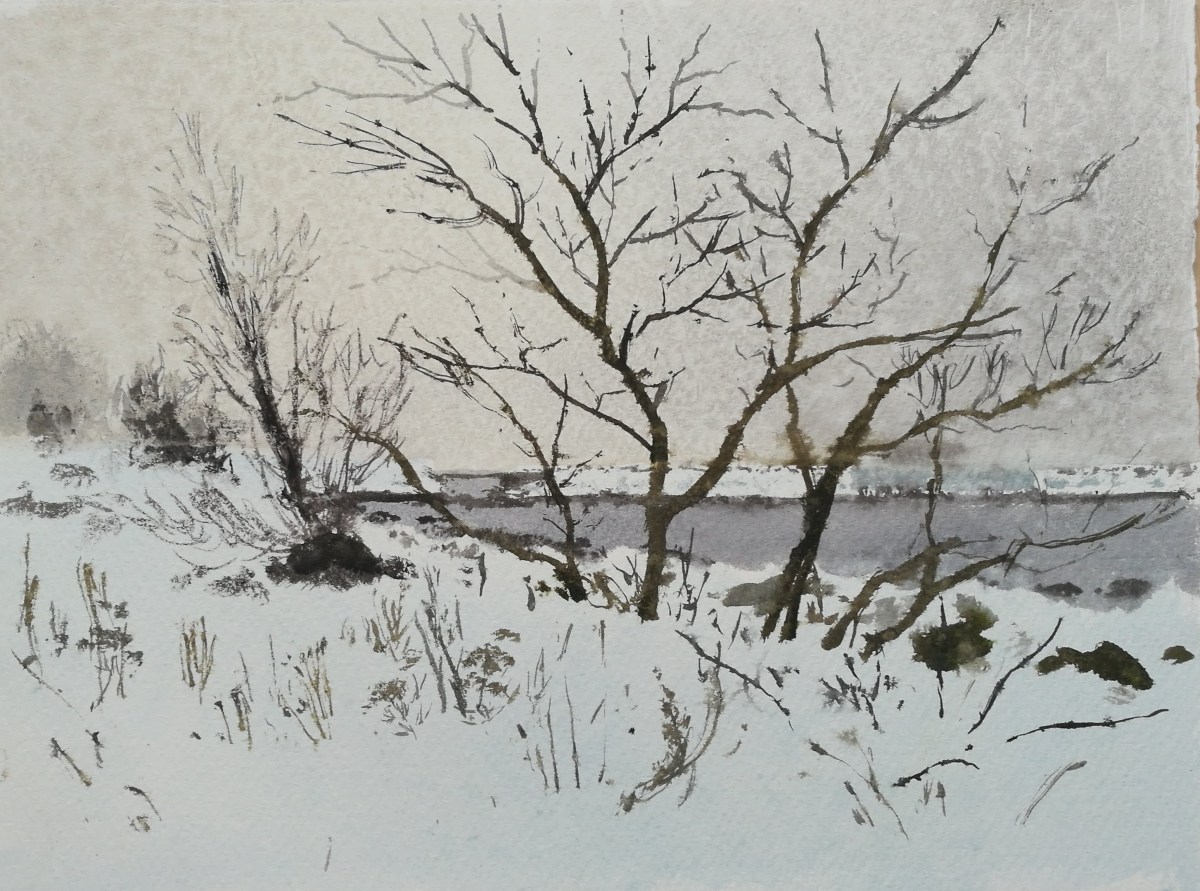
Soon I was burning up in all my clothes and I got back outside. The path along the shore was hidden in the thick snow. In the small wood skirting the base of the cliffs a roe deer bounded away before pausing and looking back at me. A flurry of feathers and blood on the snow marked the point where a sparrowhawk (or goshawk?) had surprised a woodcock. I could see where the hawk’s wing tips had brushed the snow as it swooped down. I imagined the chase and kill in the snowy silence. Further on I paused by some snow and ice covered boulders. The prospect was bleak but stunning in its clarity. (See top)

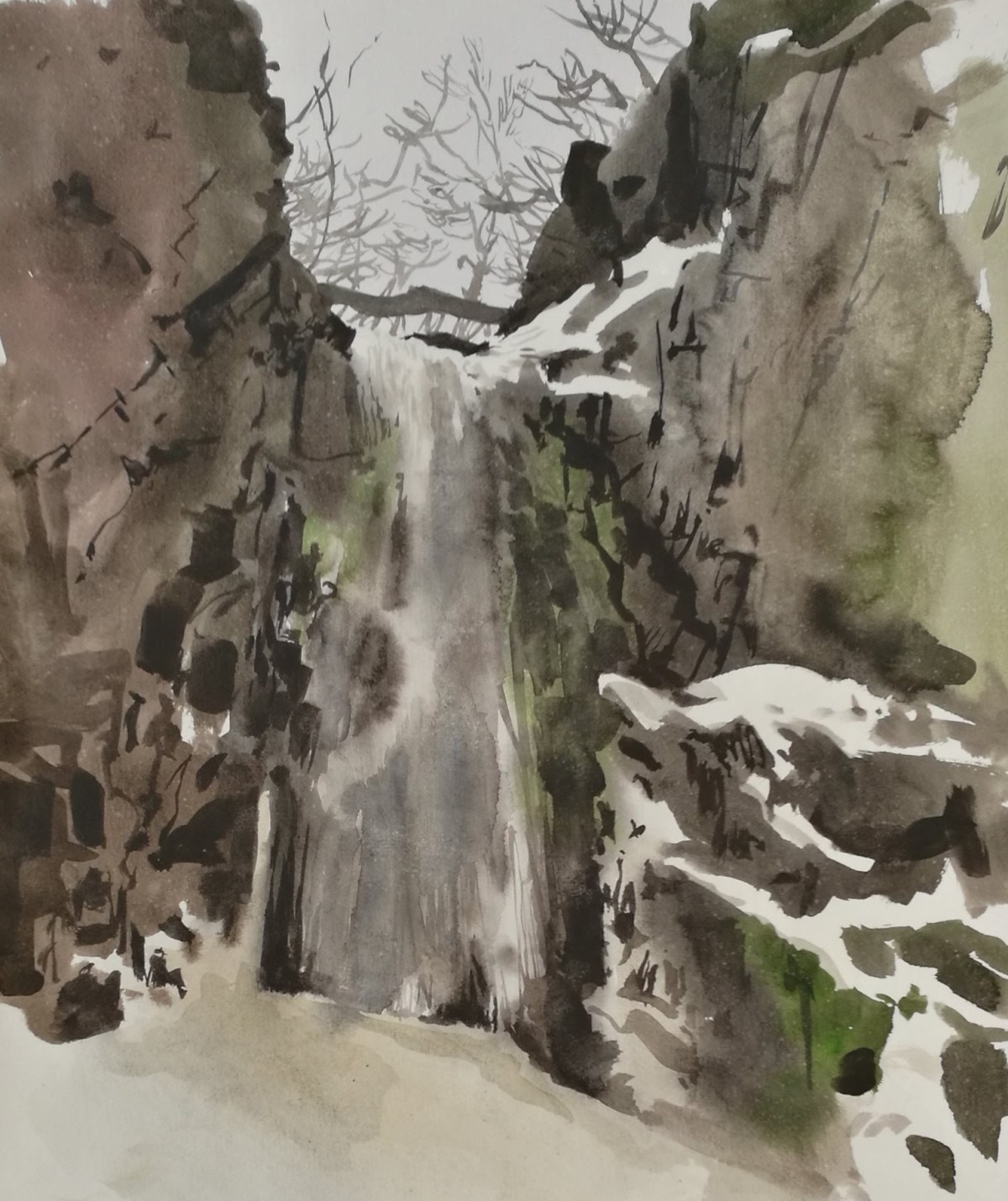
I walked back and forth along the path; partly looking for inspiration, partly looking to warm up. At my journey’s destination, Pissebækken (‘Piss Stream’) I sat down in the wood and looked up to the frozen waterfall. Under the ice I could still hear a trickle of water cascading down the granite cliffs. It was so cold now that the paint almost crackled on the paper as it froze. As the sun set behind the snow clouds at 5:29pm I walked back along the path, completely exhausted, to my waiting car.

cof

KYST 09

Weather report = heavy snow in the morning, light snow in the afternoon. Overcast with some brief sunny spells in the morning. Temperature between minus 7 and minus 4 all day. Wind between 1 and 6 m/s first from the north, then the east. Visibility: bad. Hours of sunshine: 30 mins?
Lessons learned – hot water bottle and hot water a good way of painting in sub-zero temps – glycerin too wet and alcohol too damaging to paints and brushes. Need new boots.

Stops with the M60 = 2

Kilometers walked = 6.16 km

Day lasted = 10 hours, 9 minutes

Birds seen and heard = 24 species (2 new ones, collared dove and whooper swan = running total 47)

Other stuff = hare in field, do more woodcocks get taken in the snow? Why are there so many blackbirds by the coast?

People talked to = 2

In my head = keeping warm… too cold for telescope, no bird drawings in two weeks… Amazing Andy Goldsworthy exhibition in Lund.


2018-03-03


KYST 08 – from Jons Kapel to Vang Pier, 23/02/18

For at læse denne KYST 08 blog på DANSK se her

cof

See here for an introduction to the KYST project

KYST 08 Nearly two months in – I’m already an eighth of the way around the island and an eighth of the way through the year. Each walk is logistically more challenging, as the days get longer and the start and collection points are further from home. The project’s internal rhythm is settled now – recovery, research, walk, blog, recovery – and each Friday is a fantastic revelation, an adventure.

I settled in the snow at the top of the wooden staircase. It was completely still, the sea down below mirror-like and reflecting the pinks and oranges of the clear sky. It was minus 7; so cold that my fingers froze almost as quickly as the watercolours on the palatte.

cof

As the sun crept over the horizon I wandered on a little, out of the shadows in the forest, and to a clearing where I basked in the warming light and gazed down at the ocean below. Suddenly a yellowhammer sang its familiar song – my first of the year and my first sign of spring, of rebirth. I tried to work with the ice and the colours, whilst all around me and further along the coast, I could see and hear yellowhammers singing and flitting around.

dav

I moved on a little, but was unable to get down to the coast below. Up on the rocky coastal path, the familiar blackthorn, juniper and wild cherry trees hugged the hillside. An incredible feeling of peace and contentment.

dav

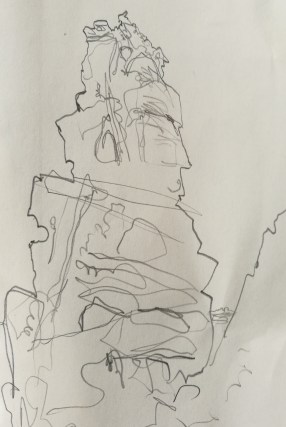
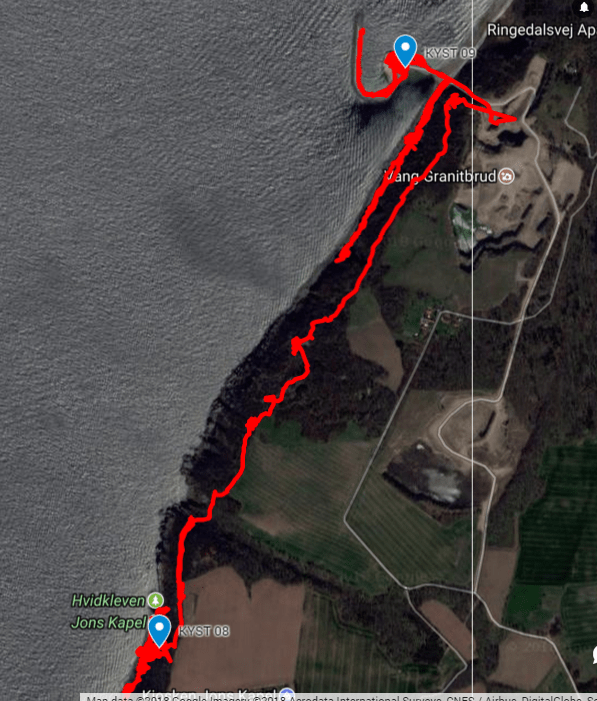
cofI was joined unexpectedly by a friend and we walked on for a while, then rested in the sun, enjoying a wee Bornholmian dram and a warming coffee. I ambled on alone, but still couldn’t find my way to the coast. Eventually I walked through the huge Vang granite quarry and down on to the rocky coast. Here, in the gloomy shadow of the cliffs, my aim was to walk back along the coast, to Krogeduren, a huge freestanding granite outcrop which I wanted to paint. There was no path and I jettisoned my chair and M60 brolly as the going was tough. The granite boulders were rounded and slippery by the water, but angular and unstable closer to the cliffs. Eventually I made it to Krogeduren and found a wonderful vantage point, just as the first rays of sun broke over the top of the cliffs and onto the top of the granite tower…only to realise I had left my paints and drawing board sandwiched in the chair. Much swearing. I made a quick pencil drawing, but I was cold and tired.
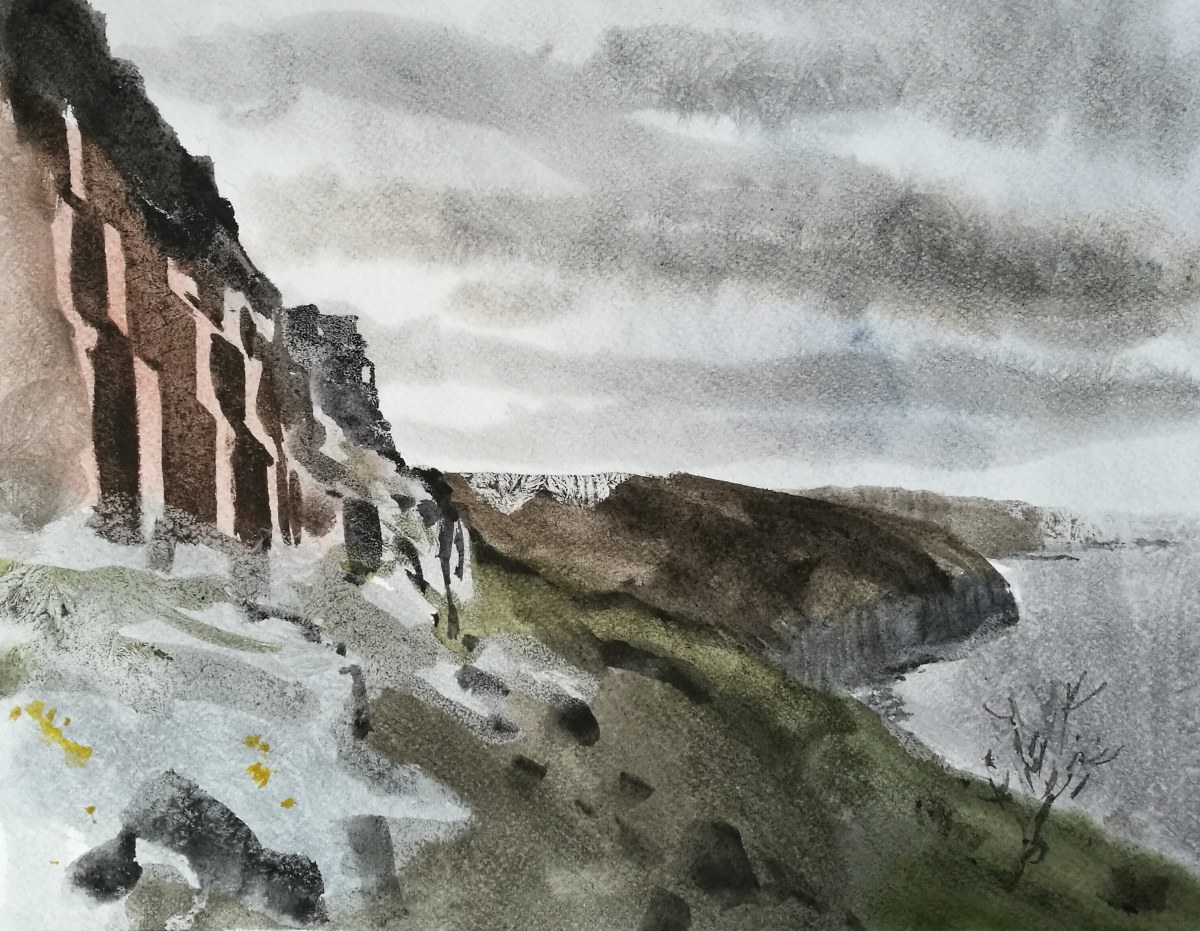
Back where I had left my equipment I looked towards the edge of the Vang pier, with Hammerhus visible in the far distance. I had intended to make a timed study of the passing of the sunlight and shadows over the rocks, but by now the sun was obscured by thick clouds and the wind was beginning to blow.

cof

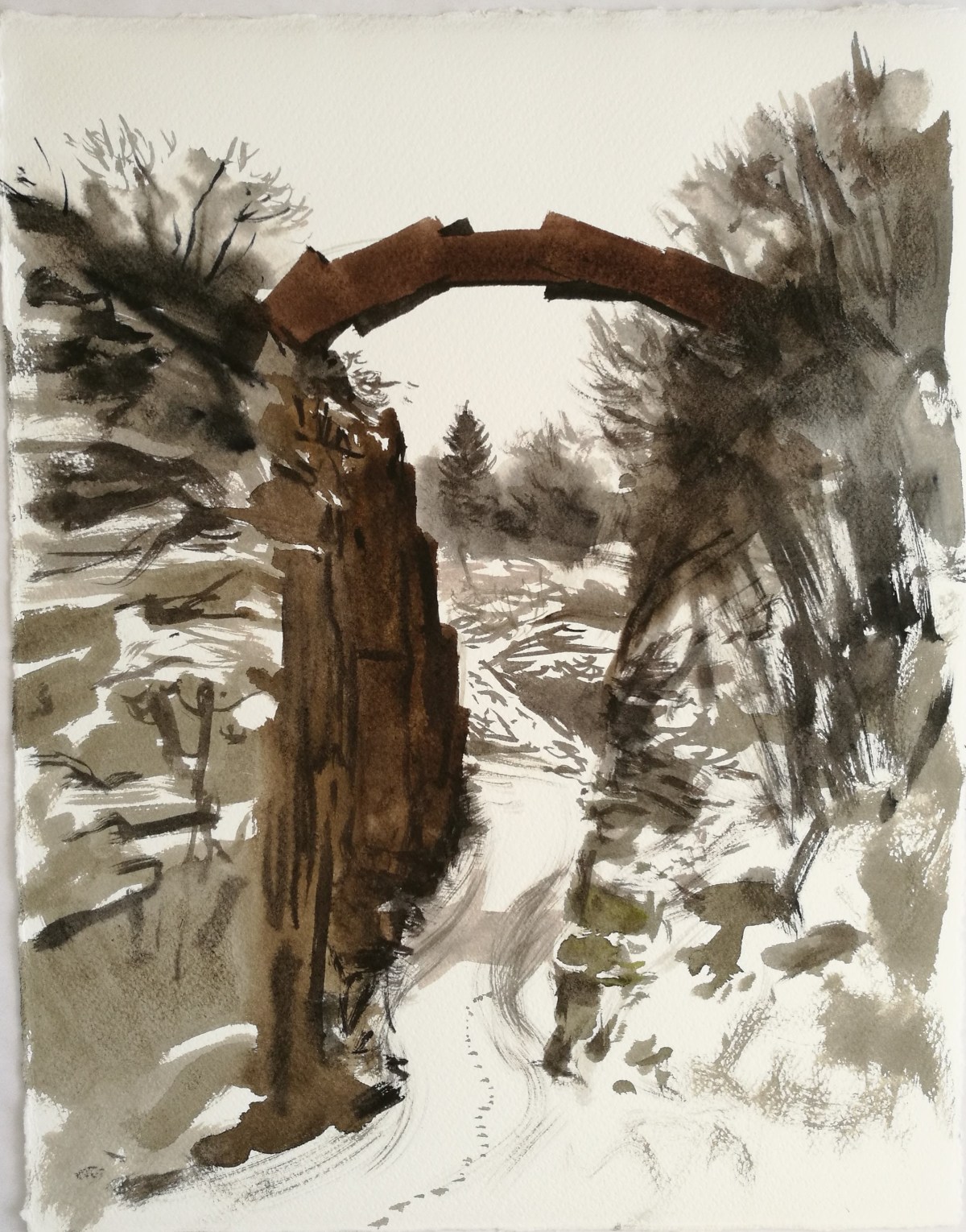
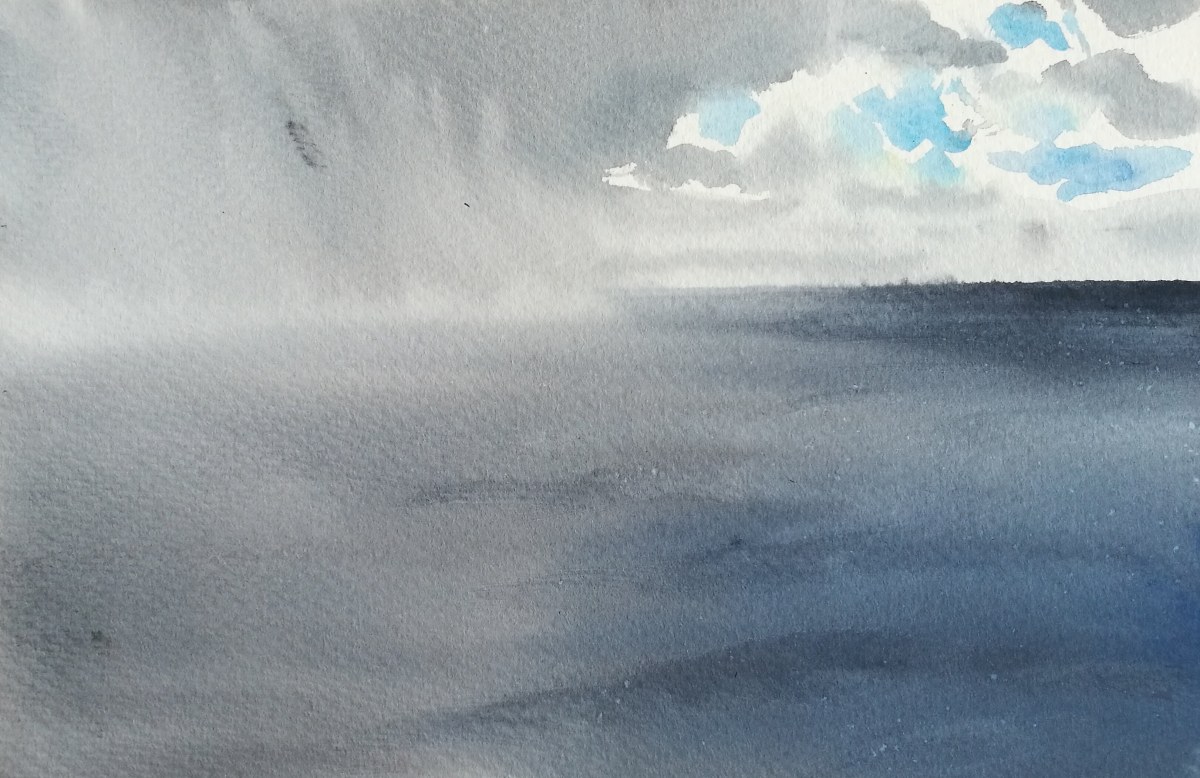
I boiled some water for my late lunch, a pot noodle, only to spill all of the newly boiled water over my drawing board, my bag and my tarp. Much more swearing. In the space of half an hour the day had gone from clement to inclement, and my mood with it. I walked around a bit to warm up, then made a quick and wintery study of the Vang ‘art bridge’, where the cliff between the quarry and the coast was dynamited to provide improved unloading facilities from the quarry to the pier.
cof

On the pier itself, in the freezing wind and gloom, I was momentarily cheered up by a small group of zestful meadow pipits. The heavy grey clouds slowly pushed on southwards, gradually covering the remaining strip of light on the horizon, as it passed from yellow, to orange, and then to red, before finally disappearing altogether (see top).

KYST 08

Weather report: clear start to the day, later overcast, minus 7 to 0°C, wind 1 to 6 m/s from north. Visibility: not bad. Hours of sunshine: 4

Lessons learned – always put the stove on something level and stable, and take gloves off before taking the boiling water off. If you’re going to put the frozen watercolour palette in your trousers to warm it up, be prepared for defrosted paints to run down your legs.

Stops with the M60 = 1

Kilometers walked = 7.45km

Day lasted = 10 hours, 18 minutes

Birds seen and heard = 18 species (3 new = yellowhammer, robin and meadow pipit = running total 45)

Other stuff = roe deer bounding across the field in the freezing dawn

People talked to = 3

In my head = ‘alene i vildmarken’ (‘Alone’), what it would be like to NOT have anyone to talk to at the end of the day, to NOT come home to a lovely shower and a cold beer. Chess, again. Trust.

2018-02-24


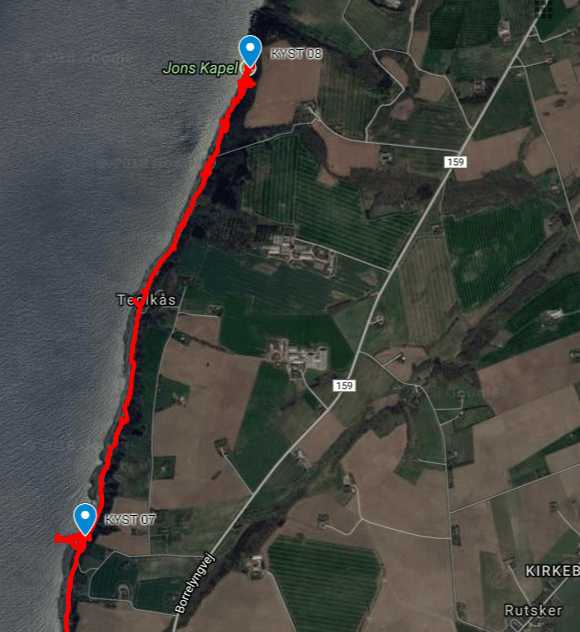
KYST 07 – from Helligpeder to Jons Kapel, 16/2/18

For at læse denne KYST 07 blog på DANSK se her

cof

See here for an introduction to the KYST project

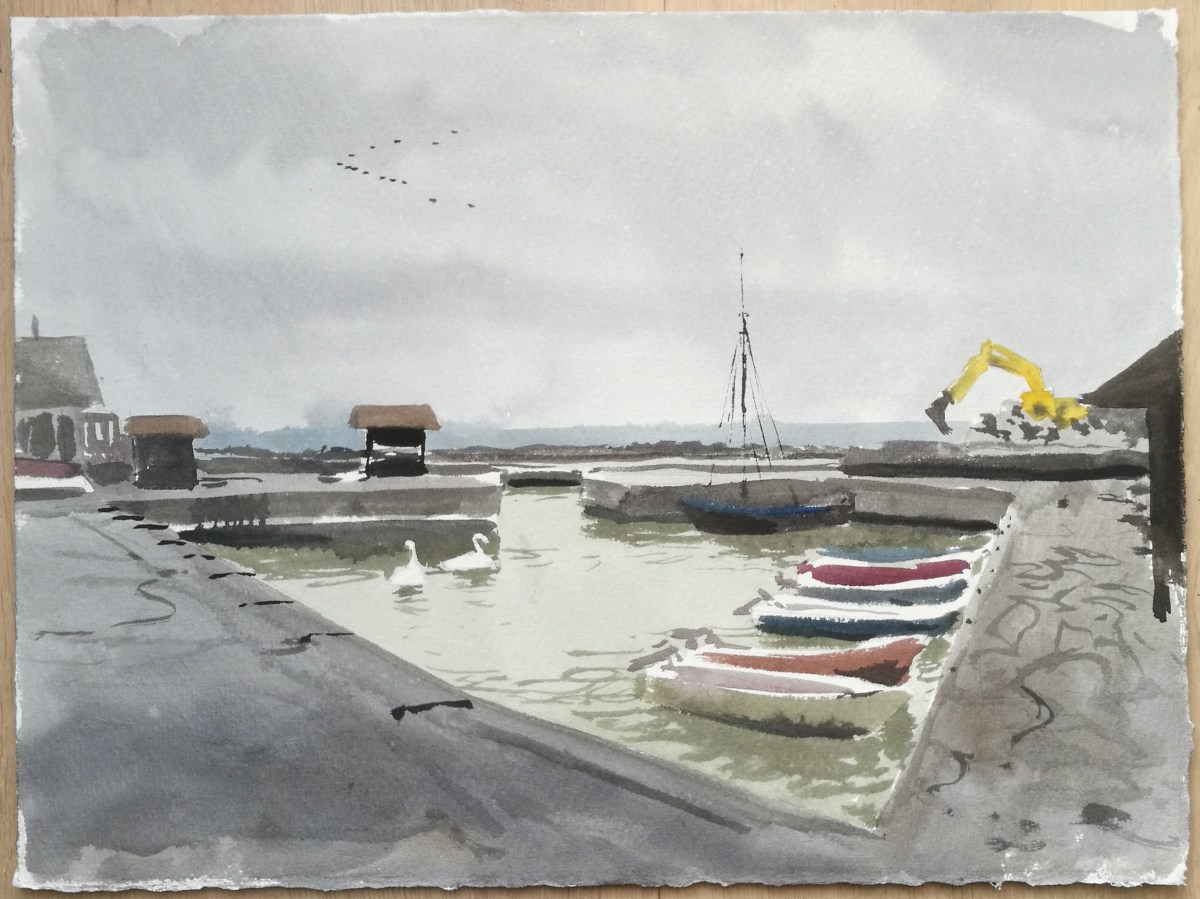
KYST 07 Overcast, cold and facing an onshore wind, Helligpeder presented a bleaker prospect than it had during last week’s visit. Squadrons of cormorants flew over the agitated waves. A pair of swans took shelter in the harbour, the only noise the grinding of a digger repairing one of the harbor arms. There was not a soul to be seen save the digger operator, who must have started work even earlier than me.

cof

I walked northwards, at first on the beach and then on the road when the going was too hard. Groups of flightly mallards sheltered from the waves amongst the huge erratic boulders that skirted the shore. Soon I had reached Teglkås, another tiny fishing harbour, almost a carbon copy of Helligpeder. Here too generations of fisherman and their families had based their lives around the catching and processing of herring, cod and salmon. According to an information panel in the harbor, there was only one commercial vessel still registered at the harbor.

At some point between Helligpeder and Teglkås I must have crossed the ‘Tornquist Zone’, a geological boundary between the younger rocks of south of the island and the older bedrock of the north – a crustal boundary that runs from Norway all the way to the Caspian Sea. Stepping from the Jurassic sandstone of Hellipeder to the gneiss of Teglkås was effectively a journey of a thousand million years. I stopped just before Ginesminde, the last house before the cliffs really started, and previously a cafe.

cof

At this point the coastal path turns into the woods and up over the cliffs. I thought I’d try to see if I could walk all along the shore to my destination Jons Kapel, where I knew there was a wooden staircase that would take me up the cliffs and back to my pick-up point. The shore was strewn with slippery granite boulders of all shapes and sizes and hard going. I stumbled and tripped, laden with my ridiculous unwieldy rucksack, chair, drawing panels and umbrella. I stopped for some food and marveled at the lichen diversity on the boulders. Here I really felt far from the madding crowd.

cof

Finally I rounded a small cape and could see the strange and impressive granite formation of Jons Kapel (‘John’s Church’), framed by the vertical white cliffs of ‘Hvidkleven’ further north.

cof

As I settled down in front of Jons Kapel the sun suddenly started to shine – surely a good omen, for here I was supposedly at the site of Bornholm’s conversion to Christianity. According to legend, Jon was a hermit who gave sermons from the cave at the bottom of the cliff, eventually climbing to the ‘pulpit’ at the top of the cliff, when space ran out. With the constant roar of the waves, the awkward boulders and the steep cliffs, it is difficult to imagine a less agreeable spot for introducing a new religion. In any case, the ‘church’ lit by the sun was a marvelous sight, clad in a rainbow of lichens and mosses (see image at top)

cof

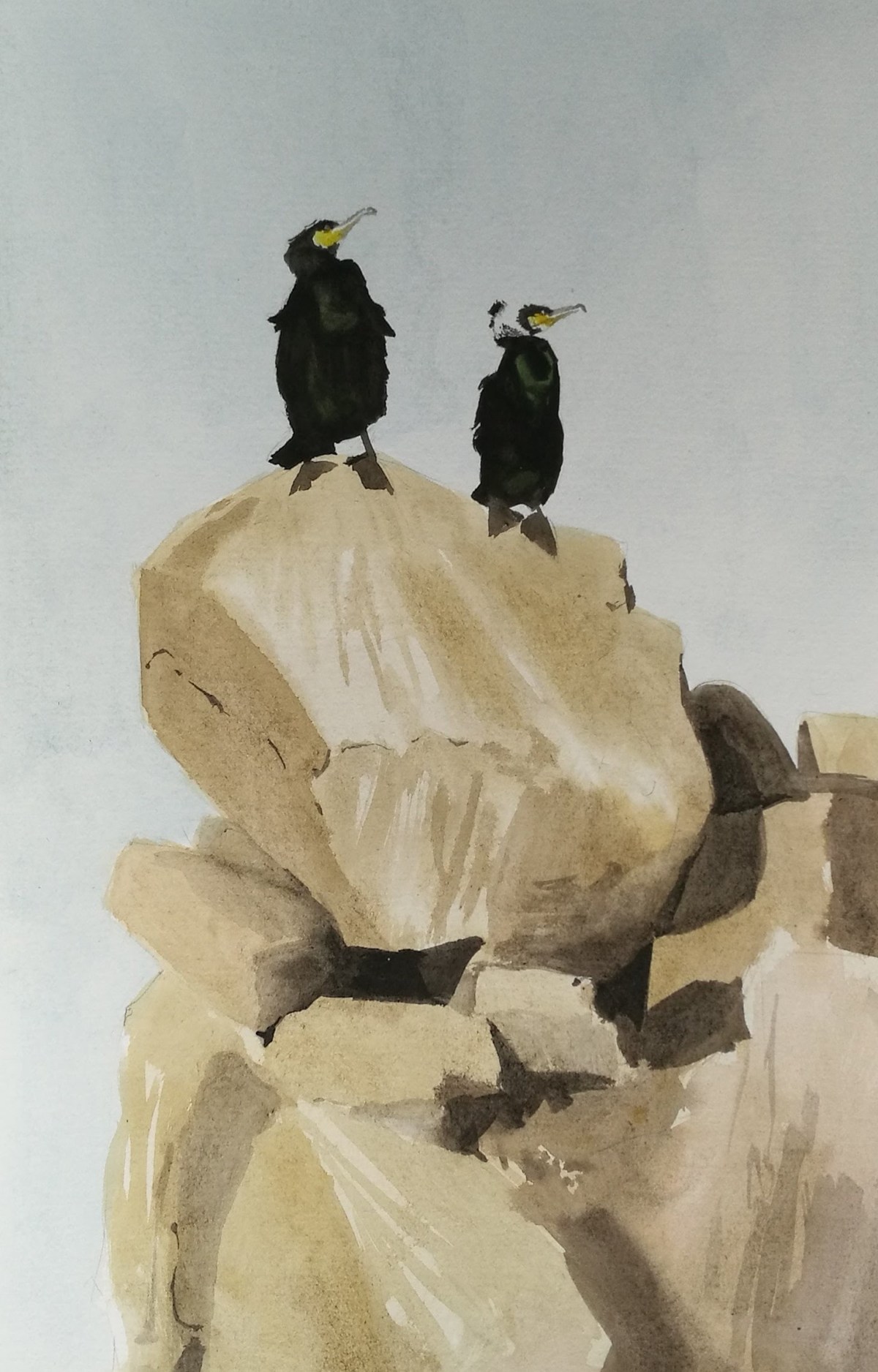
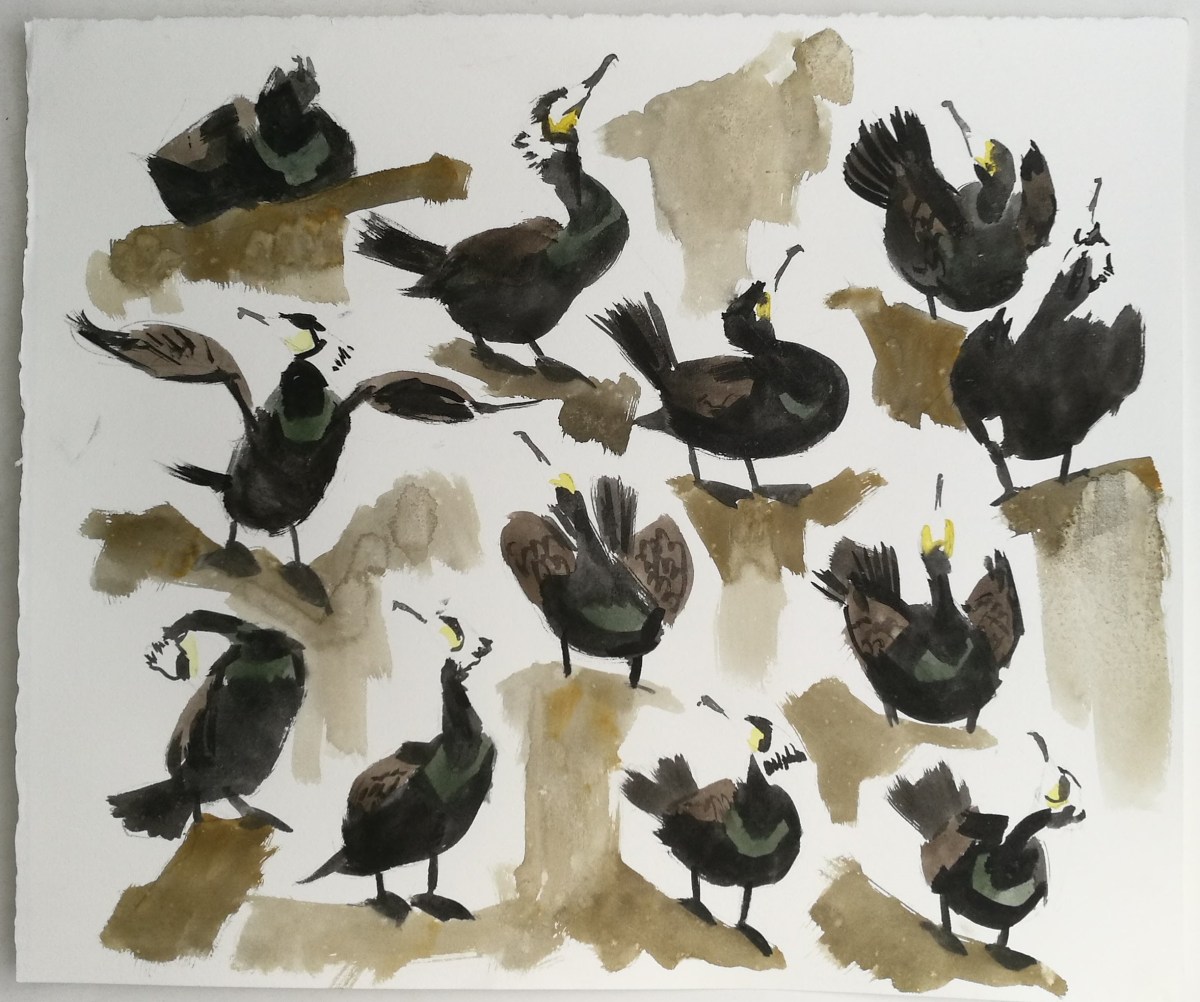
Soon the sun retreated behind a band of clouds and the wind increased in intensity. I retraced my steps a little and made some studies of the cormorants perching on the cliffs. Many of the birds were engaged in a rather half-hearted courtship display, arching their backs and wafting their wings provocatively, before giving up and looking around, seemingly a litte embarrassed. Still, a sign of the impeding spring, though spring itself still feels very far way.

cof

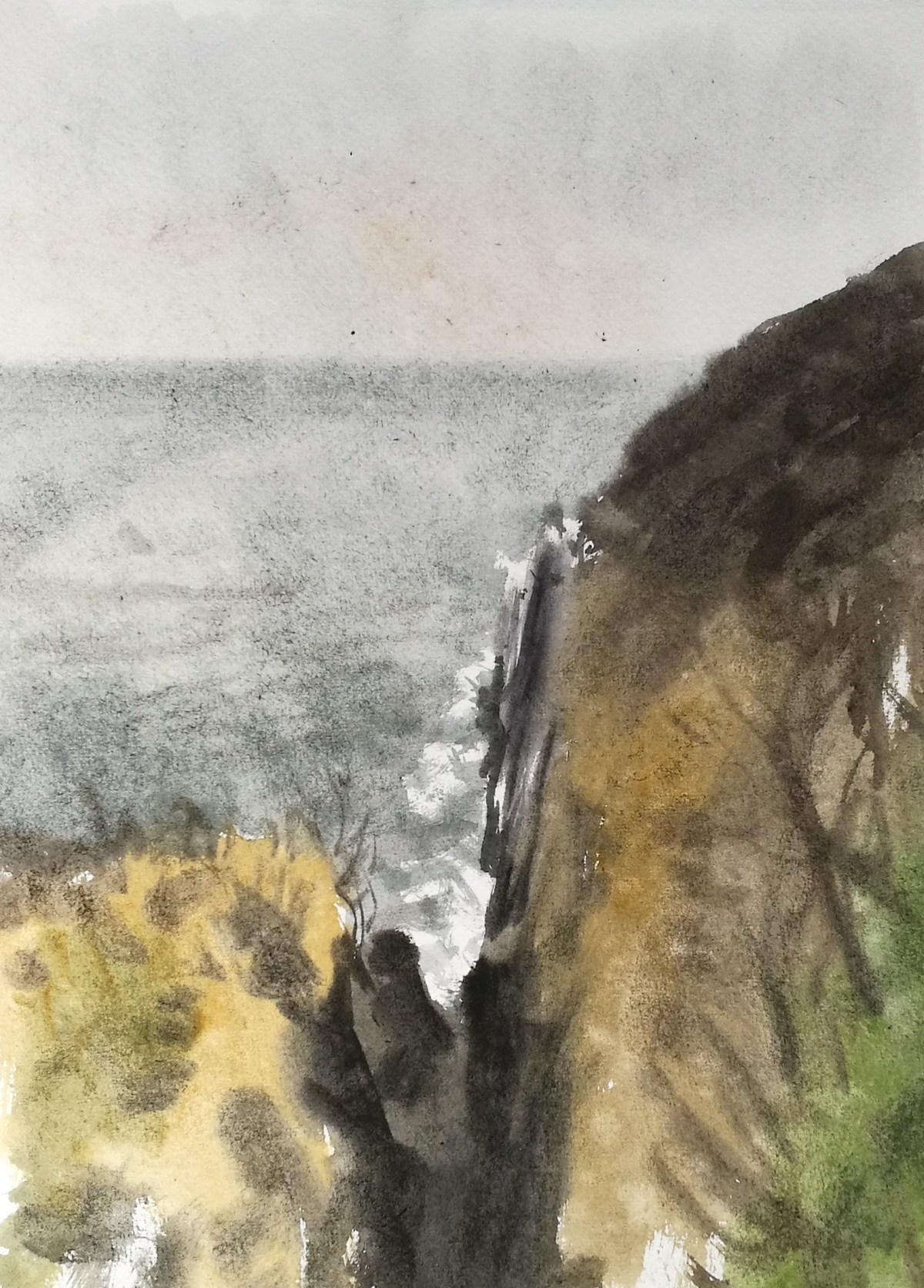
By now it was spitting and I made my way back to the Jons Kapel and climbed up the huge wooden staircase to the top of the cliffs. Here, gazing down at the granite cliffs, I made my last painting in the gloom and the rain, and trudged off, absolutely exhausted, to my lift home. For the first time, I had not seen or spoken to a single soul all day.

cof

KYST 06

Weather report: overcast with some sunny spells in the afternoon, 2 to 4 °C, wind 6 to 9 m/s from west. Visibility: bad. Hours of sunshine: 2

Lessons learned – walking on granite boulders is not fun. You need to peg the brolly down in even minimal winds (boulders are not good enough)

Stops with the M60 = 2

Kilometers walked = 8.18km

Day lasted = 9 hours, 52 minutes

Birds seen and heard = only 17 species (1 new one, a razorbill, though not perching on the cliffs unfortunately = running total 42)

Other stuff = looked for ‘dragons gold’ moss, but couldn’t find any

People talked to = 0

In my head = chess moves constantly running in an unarticulated way in the background of my consciousness (without actually thinking, I move boulders across my vision as if playing a game of chess)

2018-02-17


KYST 06 – from Hasle Havn to Helligpeder, 9/2/18

For at læse denne KYST 06 blog på DANSK se her

cof

See here for an introduction to the KYST project

KYST 06 As I settled down and unpacked my bag at last week’s end-point, I looked above the silhouette of Hasle’s marina up to a deep blue and completely cloud free sky. For the first time since this project began I could look forward to some sunshine. It was bitterly cold but crystal clear, and a deep frost had covered everything in white fuzz. There was almost no wind.

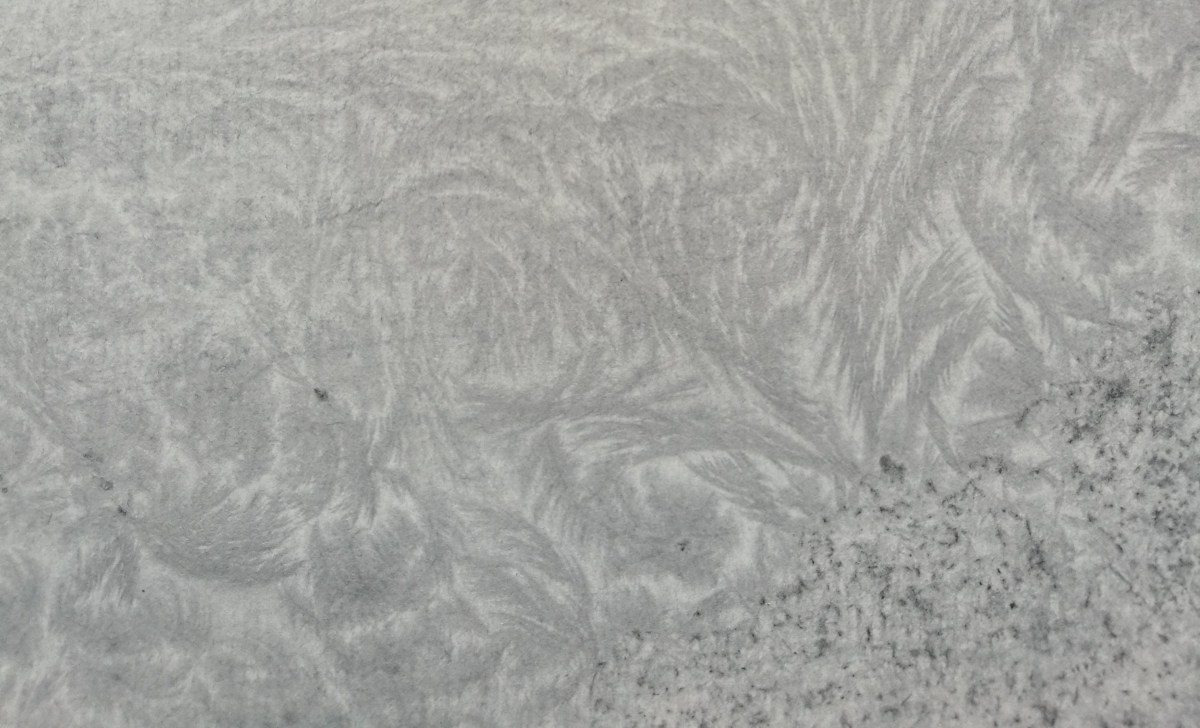
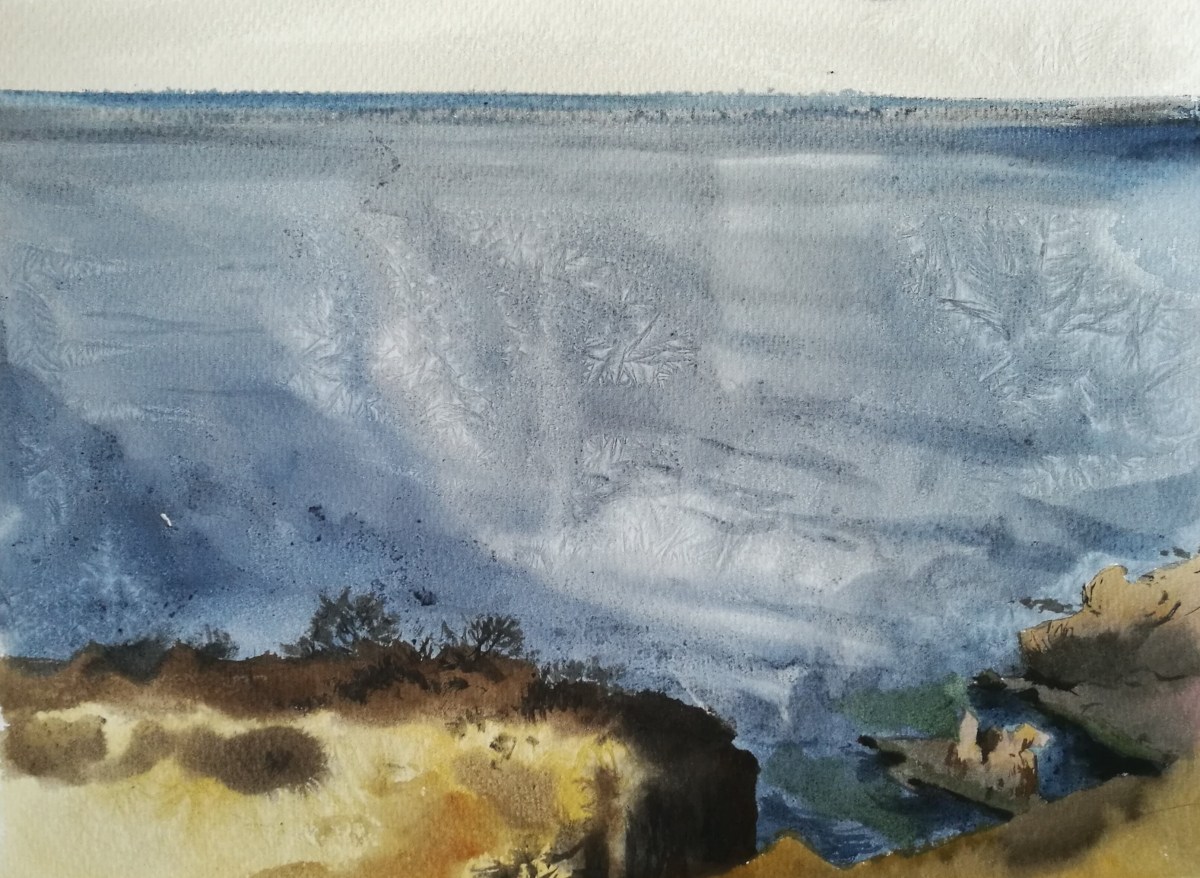
I began to paint but, as my palette and water began to adjust to the ambient temperature, the paint started to freeze on the paper. It was incredible to see the crystalline shapes appear within the painted washes but soon the paint started to freeze on the palette itself, and the sludgy mess was impossible to work with.

cof

I left the marina and headed north – not on the coastal path which deviates here from the coastline, but on the rough and barren beach itself. The gentle sandy shore of the last few weeks was now replaced with granite pebbles and rocks.  After a while I stopped and set up the brolly, and experimented a little – creating ice washes and adjusting the temperature of the water, and even adding a little gin that I had bought with me.  The ice and pigment combined to make incredible but very subtle patterns.

cof

The beach was covered in pebbles with some larger erratic boulders, bordered by layers of sandstone and clay finely marked with black veins of coal. I made studies of some far off gulls and cormorants, but fought against the ice on the paper and my freezing feet. As often happens, the discomfort I experienced translated into expressive and animated brush strokes – reflecting the moment in an honest and authentic way. Again the ice created incredible textures on the paper.

cof


cof

I packed up and ambled onwards, slipping on the ice-covered granite pebbles and boulders, deposited by retreating glaciers. This part of the coast bears witness to the time when Bornholm was released from the grip of the Ice age, and just inland is a terrace and slope which is actually a coastal cliff from 10,000 years ago. This afforded me some protection now from the freezing south easterly wind, which was picking up a little, and I looked back towards the rising sun and Hasle, and a fanstastic ivy-covered tree.

cof

Continuing northwards, I sat in the warming sun and spent far too long painting an old and twisted hawthorn bush. There were very few birds around and no people at all.

cof

I could see the white chimneys of old smokehouses in the distance. Here the path rejoined the coastline, and I was glad to get off the pebbles for a while and follow the road to Hellipeder, my destination. At Hellipeder I settled down and prepared for the fantastic sunset that I knew I was imminent. The small but very picturesque harbor is no longer used for commercial fishing, but is today managed and maintained by a group of volunteers. Again my thoughts drifted back to the recent past, only 60 or 70 years ago, when this harbor would have housed and protected a close-knit community of fisherman and their families.

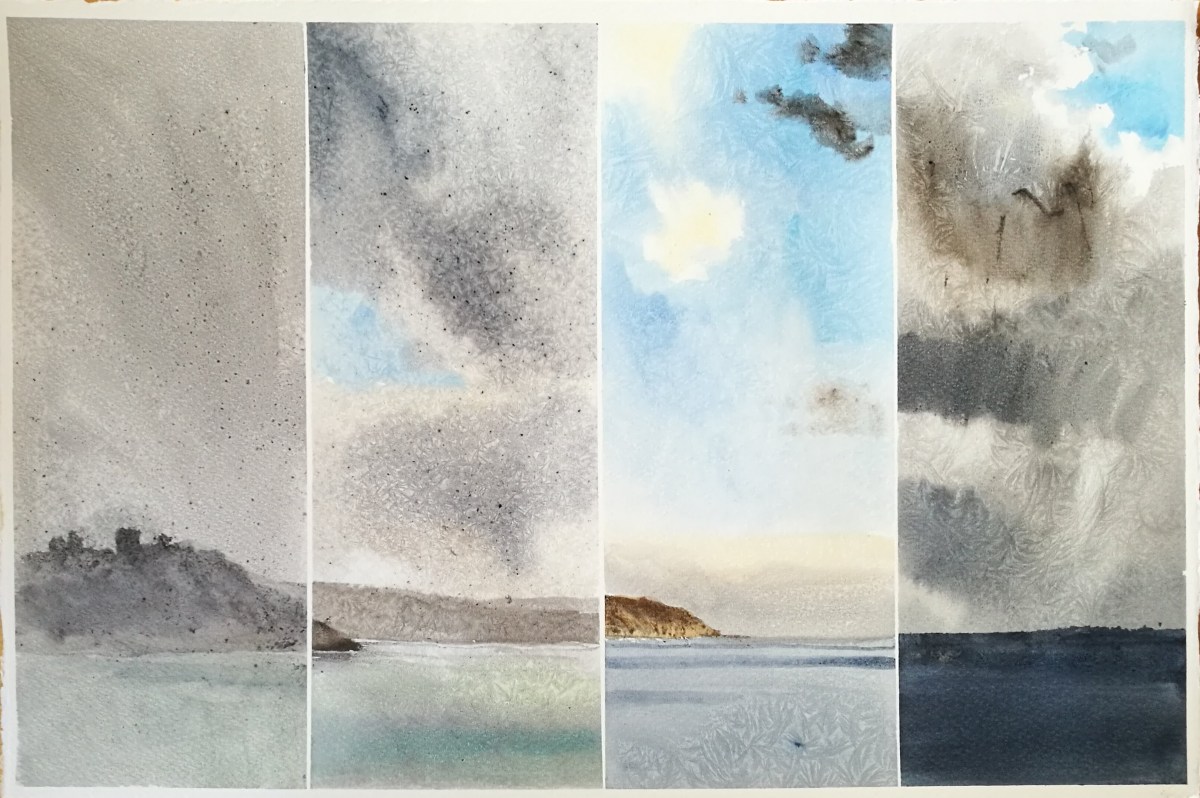
I painted in strips, every twenty minutes or so, and followed the sun as it disappeared behind some clouds, only to reappear momentarily blood red. I struggled with the colours and the pace of change, but just as the sun finally dipped below the horizon the paint started freezing again, creating some amazing crystal patters on the deepening blue sky (see painting at top)

KYST 06

Weather report = Sunny with some cloudy spells,  minus 3 to 1 °C, Wind 3 to 7 m/s from south and southeast. Visibility: Good. Hours of sunshine: 8

Lessons learned – you need to mix large quantities of gin into water to stop it freezing. Neat alchohol must be better and cheaper.

Stops with the M60 = 1

Kilometres walked = 6.93km

Day lasted = 9 hours, 27 minutes

Birds seen and heard = 27 species (1 new one = running total 41)

Other stuff = a sparrowhawk flashed by. What an amazing bird.

People talked to = 4

In my head = whether I can escape the illness currently afflicting most of my family and half of Bornholm, the Jordan Peterson interview on transgender politics, being strong and resiliant, social change, how best to protect and help people I love

2018-02-10