For at læse denne KYST 42 blog på dansk, se her
See here for an introduction to the KYST project
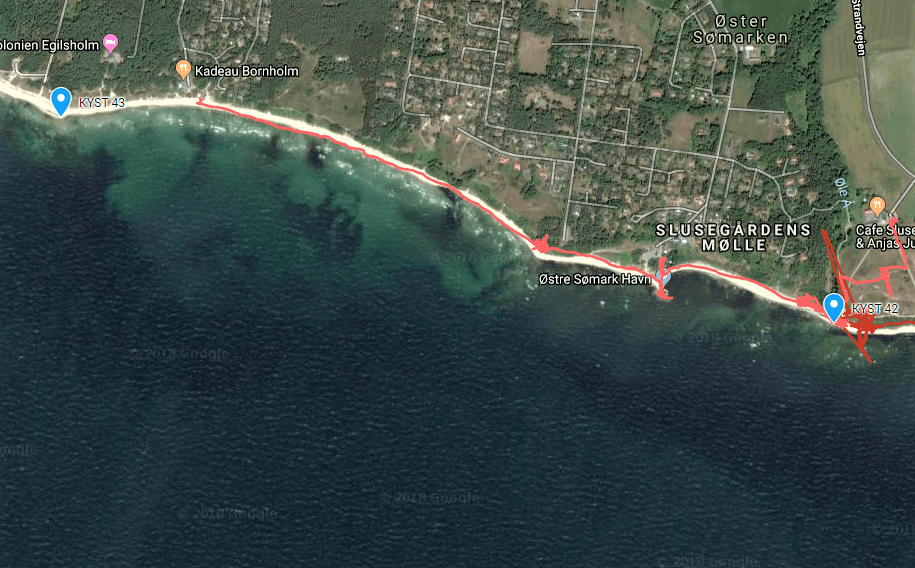
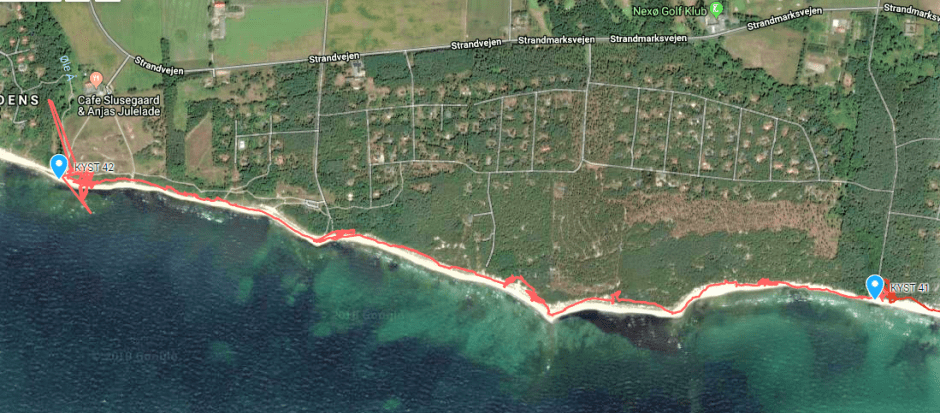
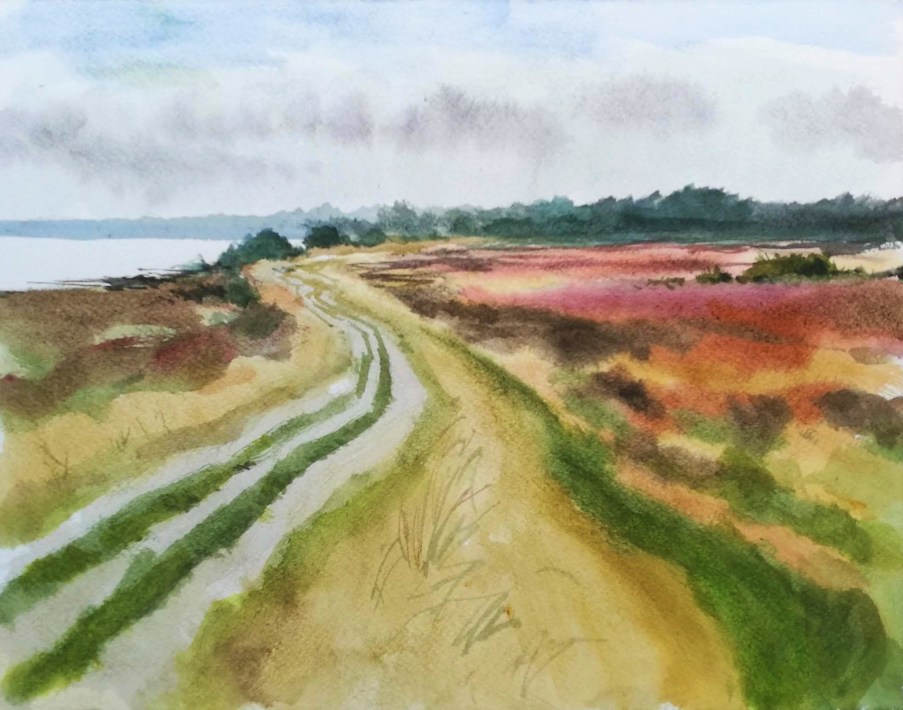
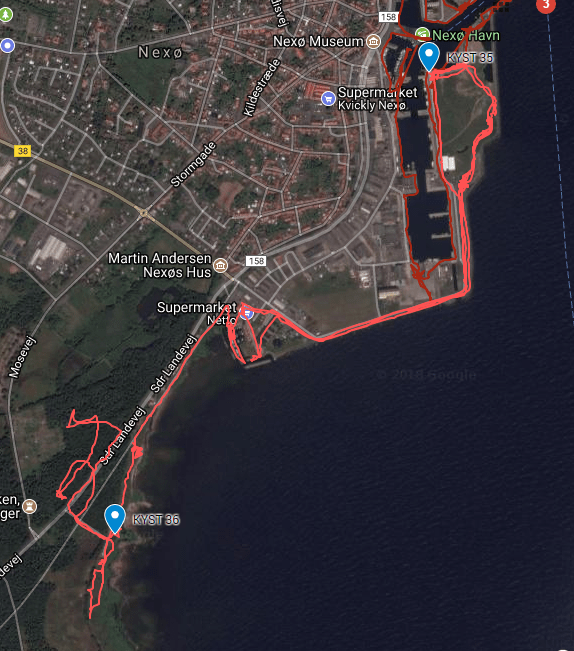
KYST 42 In good time again, I parked my car and walked down to the open heathland area at Slusegaard. On the way down to the coast I paused at the small stone marker that indicates the graticule of 15 degrees longitude east and 55 degrees latitude north. For the first time in many months, my toes and fingers were freezing, despite my wooly hat and gloves. The sky was clear and there was little wind, but the air was humid and I felt chilled to my bones.
Above, there was an almost constant stream of birds on the move: thrushes, siskins and greenfinches, with sparrowhawks and rough legged buzzards higher up. Eventually I moved down to the beach and basked in the warming sun. I painted the Ole stream emptying out into the sea – the unseasonably warm and dry weather meant that there was little more than a trickle.

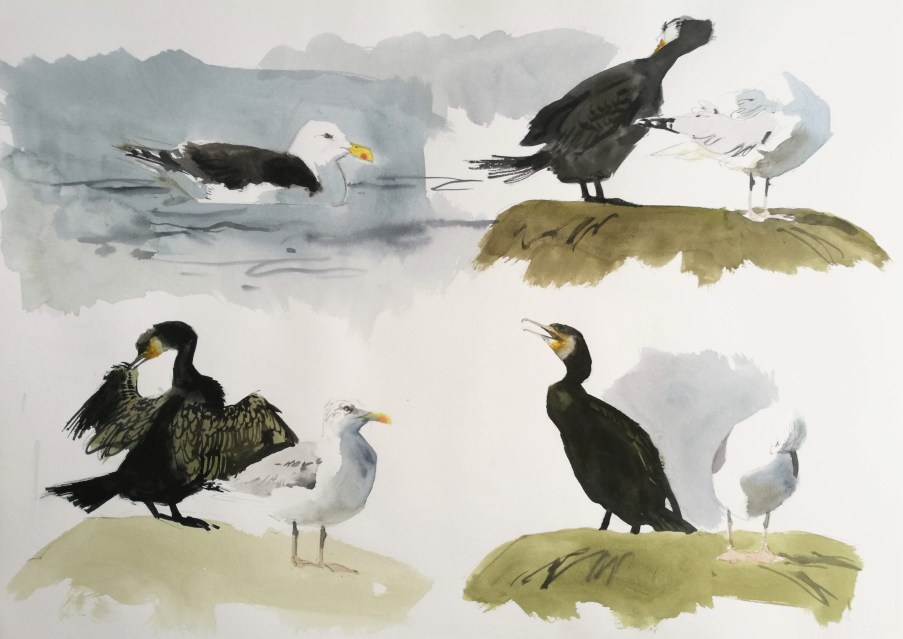
On the large erratic boulder close to the shore – the same one that the swans had fought on last week – a cormorant and herring gull sat and preened together. After last week’s pessimism I felt relaxed and positive.
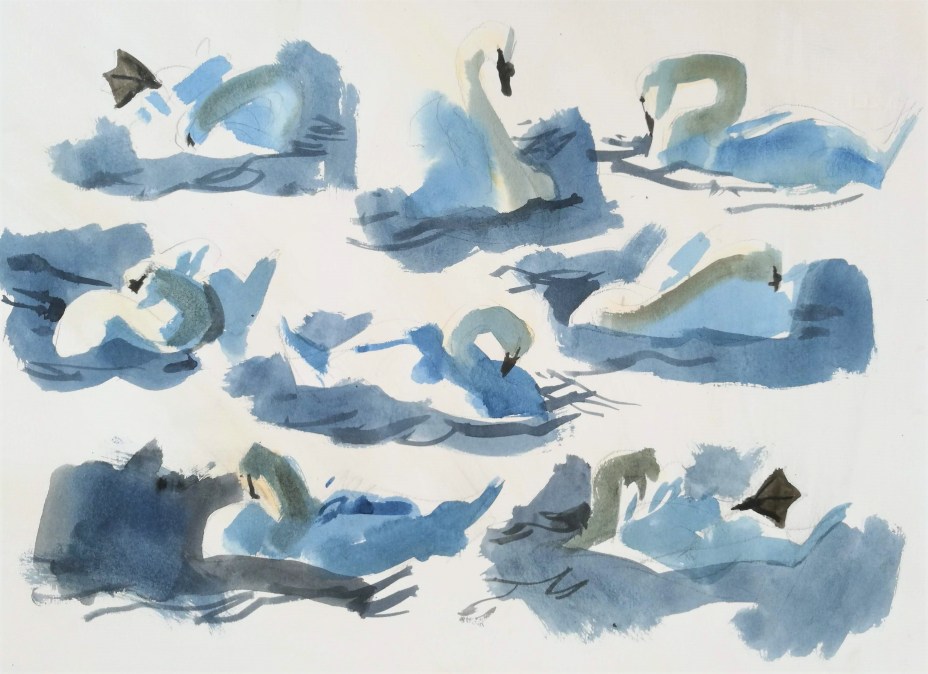
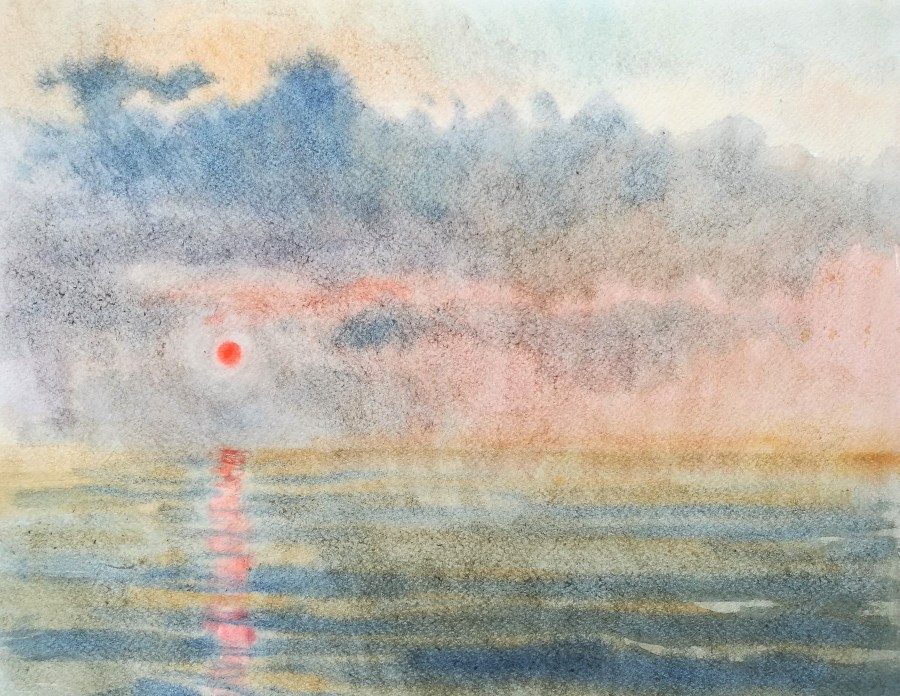
I found the swans again, this time feeding further out, silhouetted by the reflections of the rising sun.

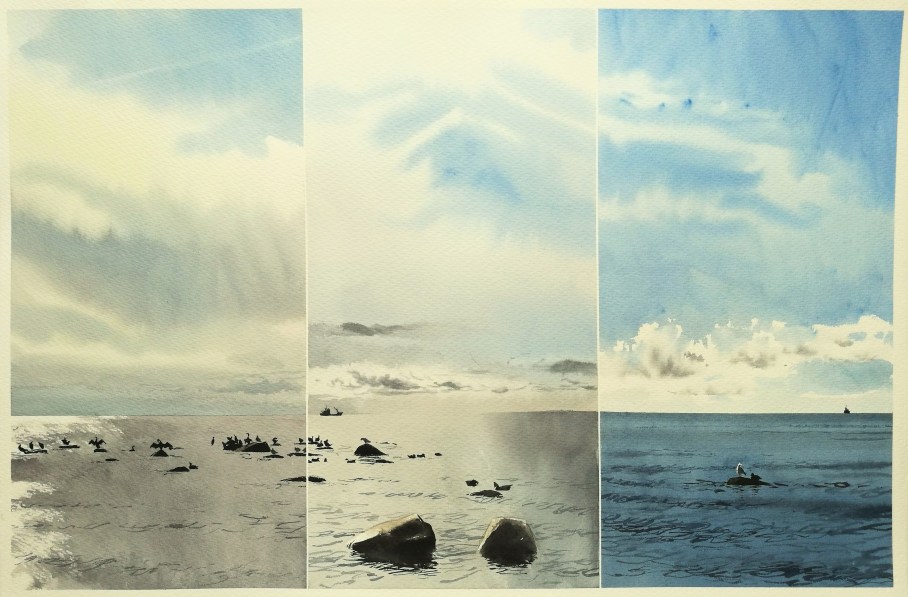
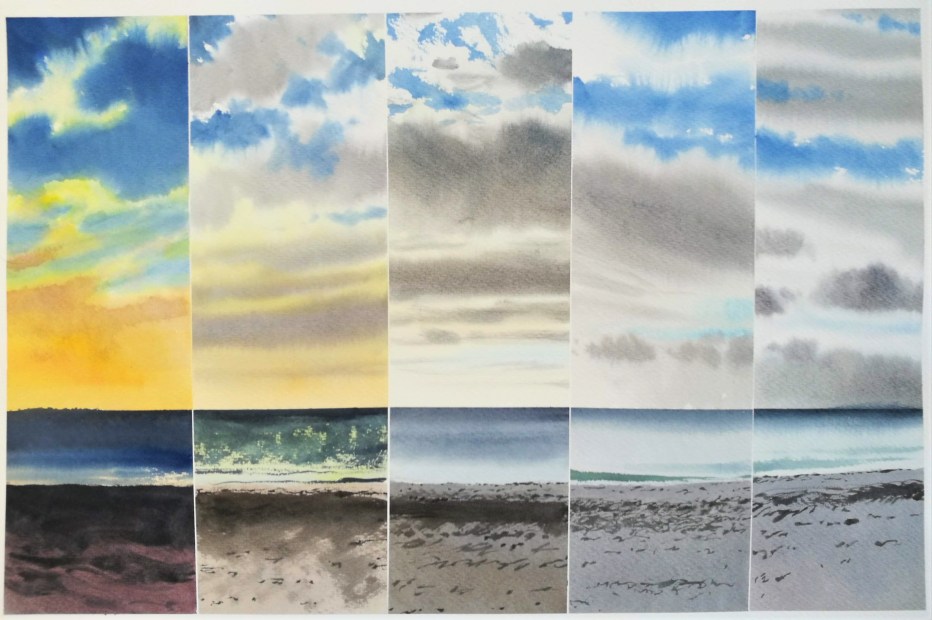
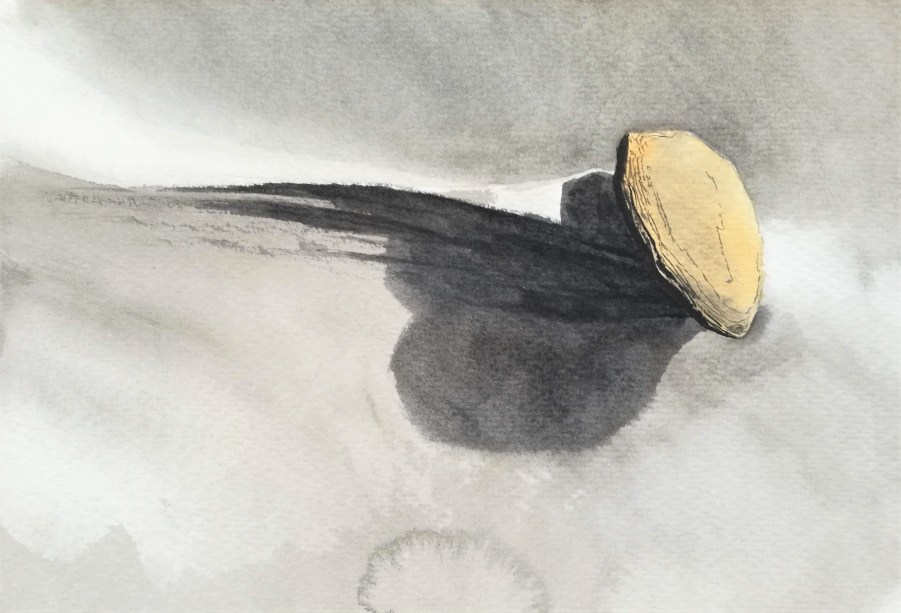
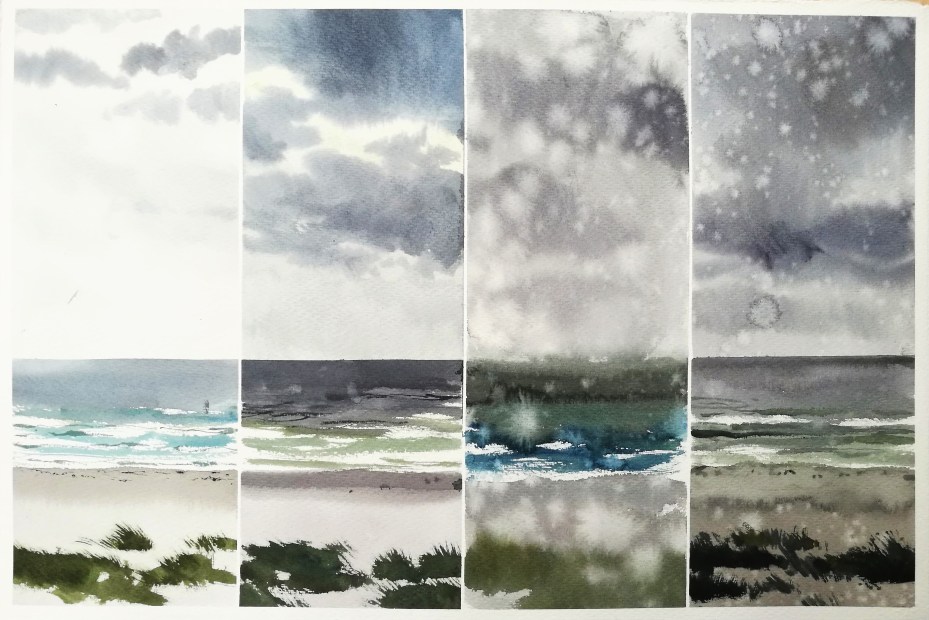
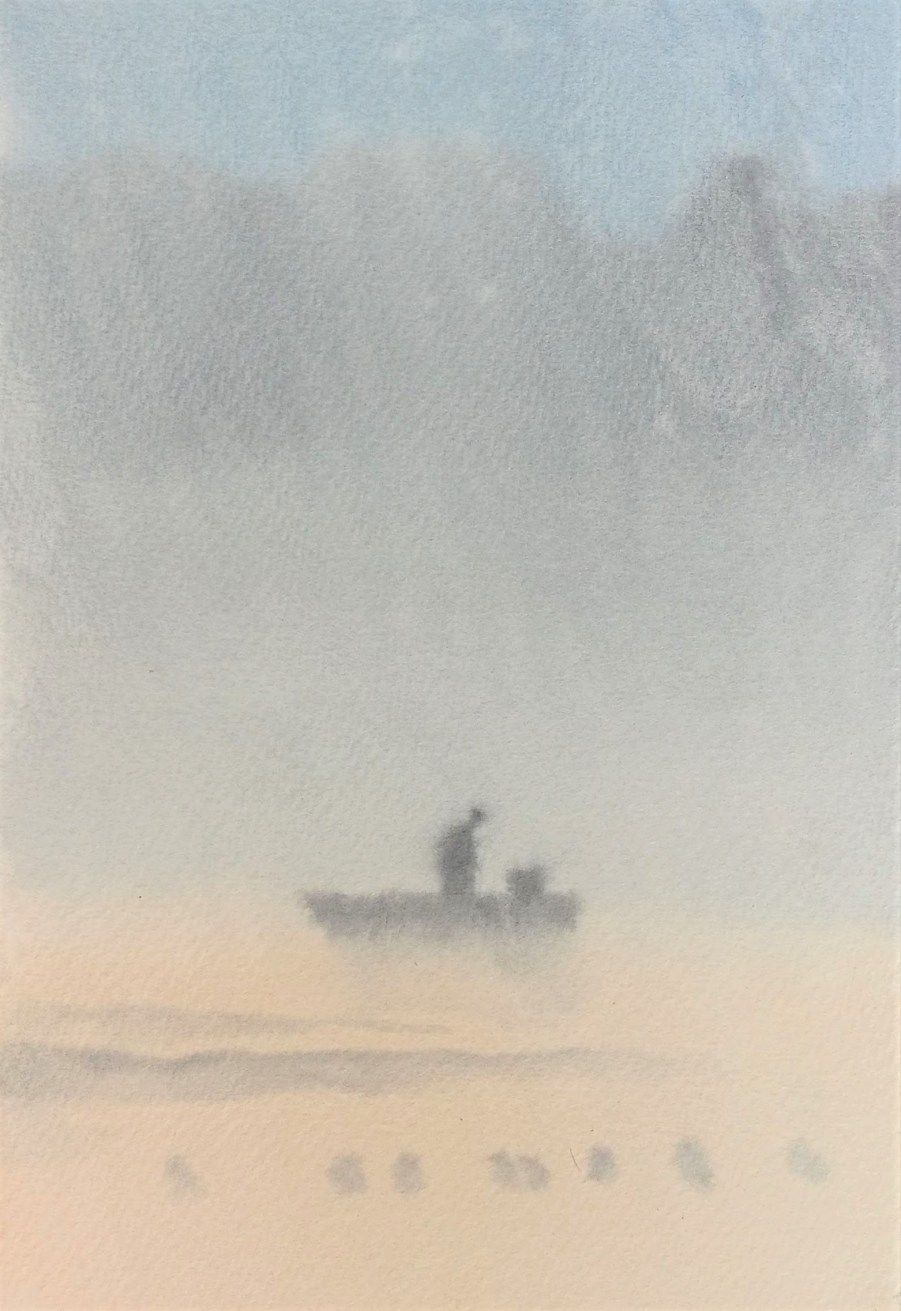
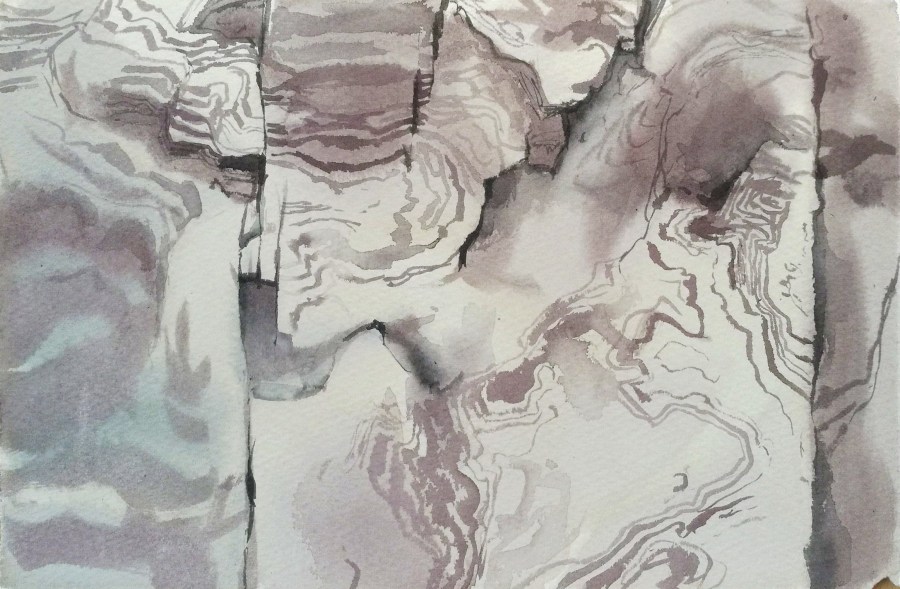
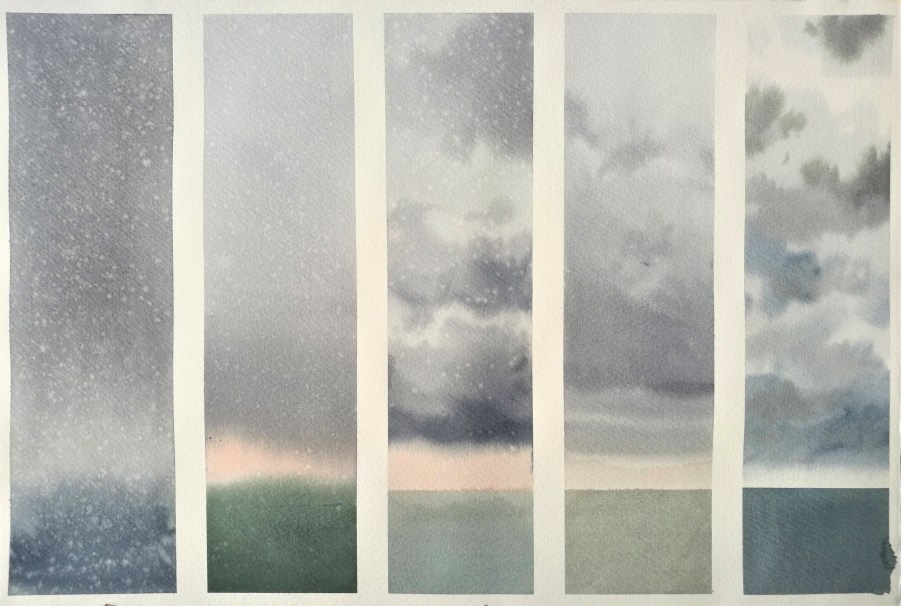
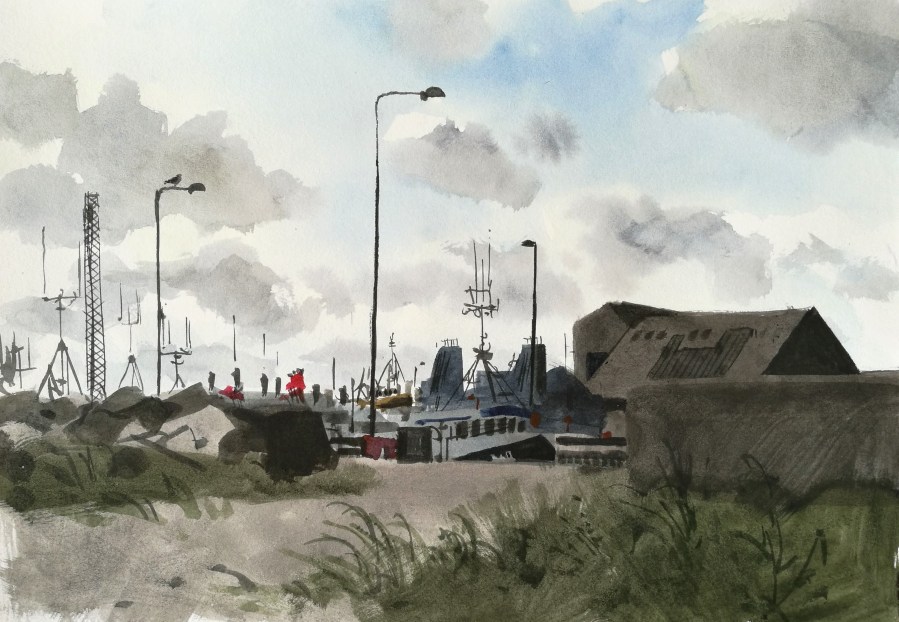
I walked on, to the tiny harbour at Bakkerne, where a collection of small fishing boats rocked gently on their moorings. Just inland, a motley collection of summer houses nestled in the dunes, together with a few more permanent looking houses. Returning to the beach I continued westward and soon arrived at Holster Odde, where scores of coromorants, gulls and mallards perched on the large boulders that lay scattered in the shallow water. The small cape at Holster Odde markes the boundary between the Silurian slate and the younger Cretaceous Rabække formation that continues westward – a jump of some 300 million years. I sat and marked the spot with a slice painting (see top).
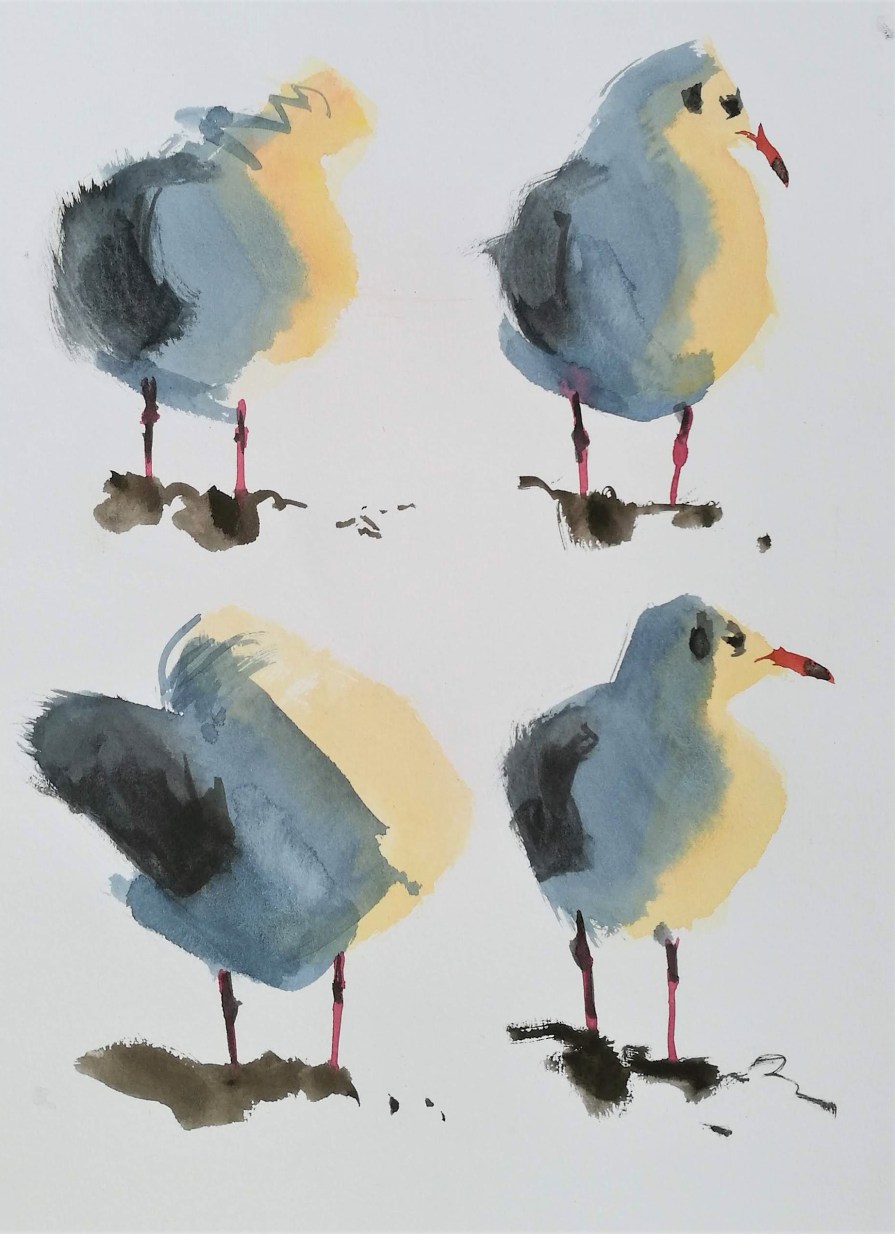
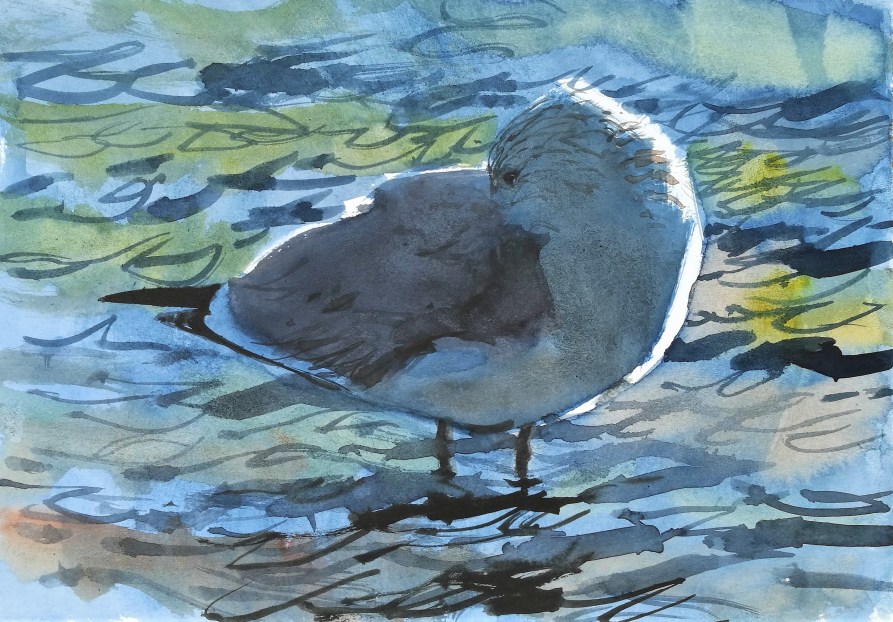
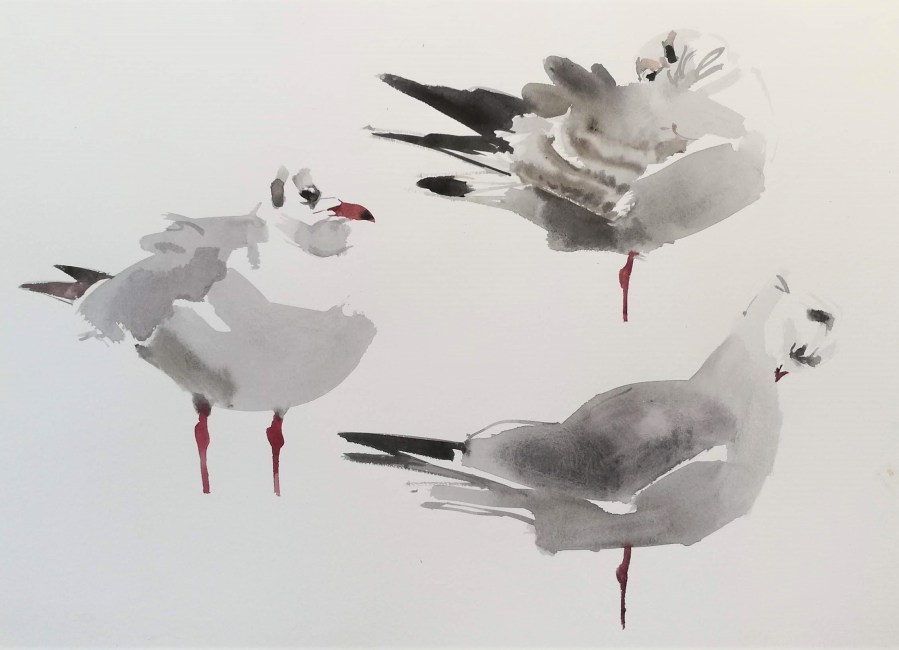
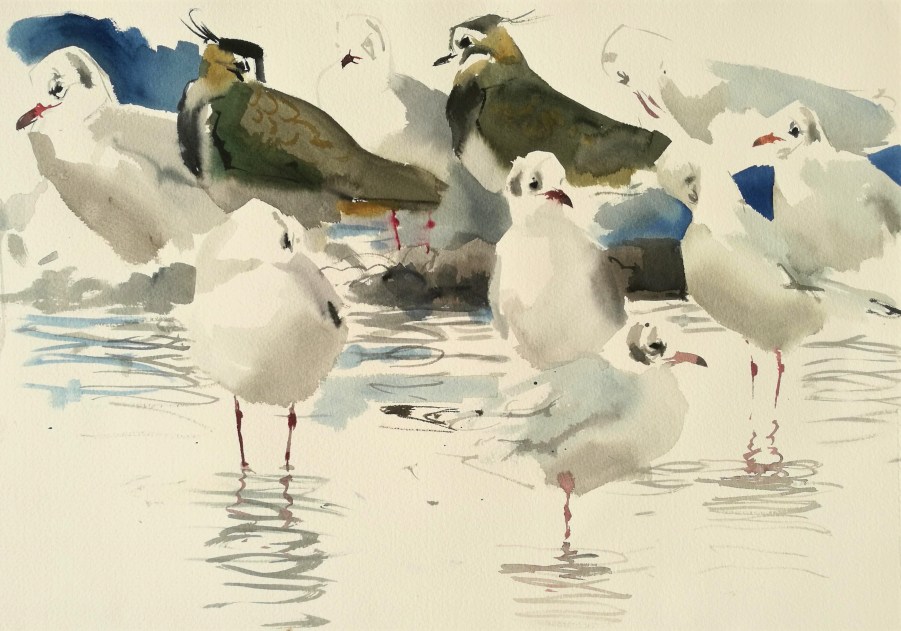
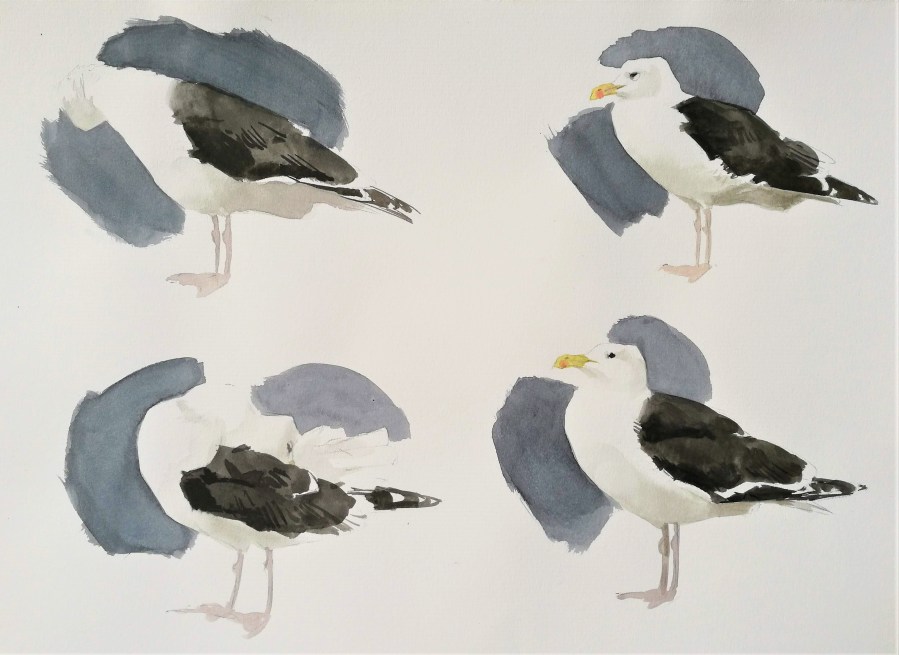
Before moving off I painted some studies of a wonderfully lit herring gull.

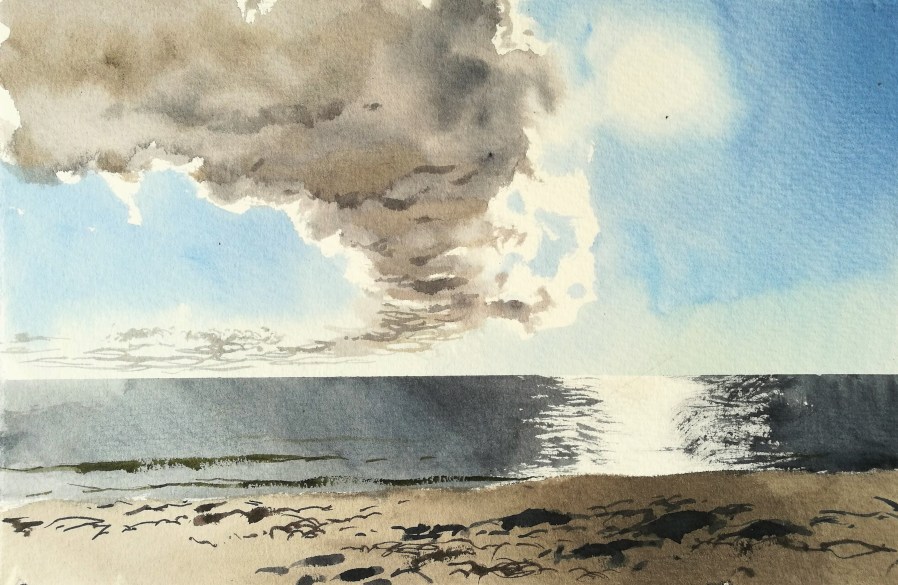
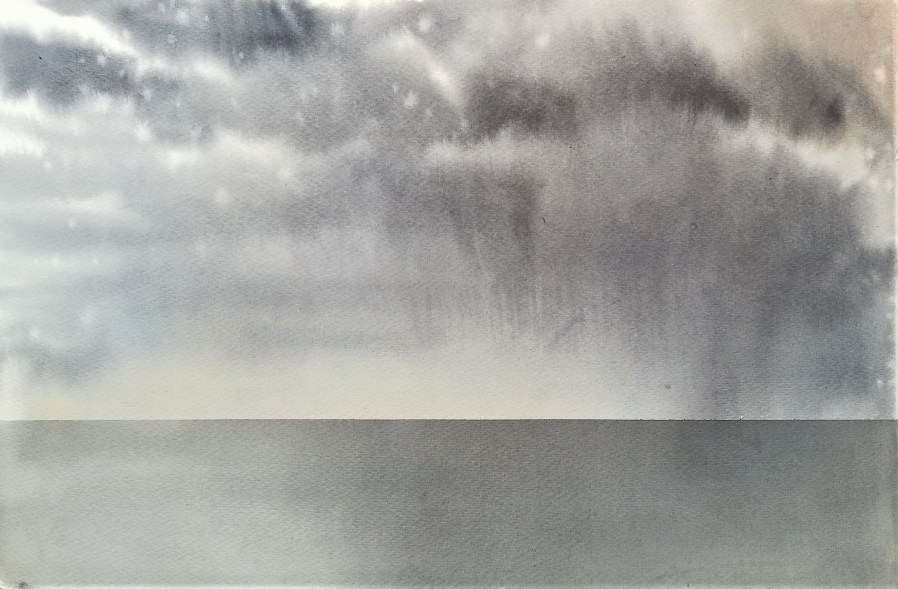
Now I walked all the way along the straight sandy beach to the Kadeau restaurant, in front of which I had arranged to meet someone. Sitting on the beach with the sun on our faces, it was difficult to believe that November was just a couple of weeks away. Several people swam in the crystal clear waters and I actually regretted not bringing a towel – to think I had been freezing just hours earlier. After some wonderful brownies and coffee, I continued westward, stopping to sketch the cloud formation that had momentarily obscured the sun and caused the temperature to plummet.
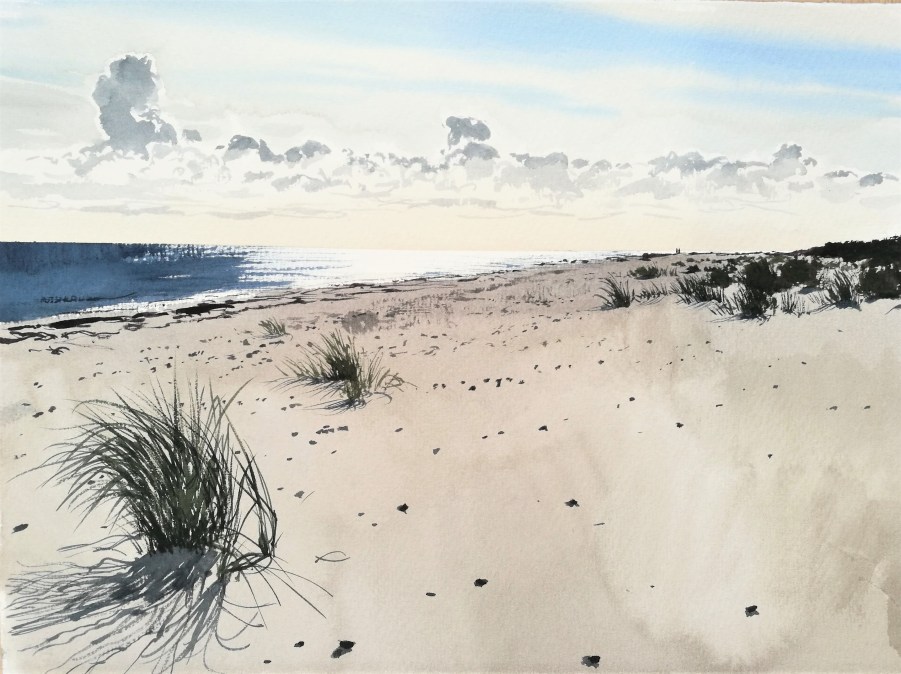
Further on still, my attention was caught by the shapes of the shifting sand in the dunes. Close to the shore, the forces of gravity and wind had created a miniature but ephemeral likeness of the Grand Canyon, not a metre high. Even whilst I sat there and painted small cascades of sand would periodically fall from the cliff face and gather on the slope below, as if time itself was sped up. Geological process that would usually unfold over thousands or even millions of years, were being played out before me, and as my eye soared over the sandy canyons I sensed a giddy feeling of omnipotence, as if I could control time and space.

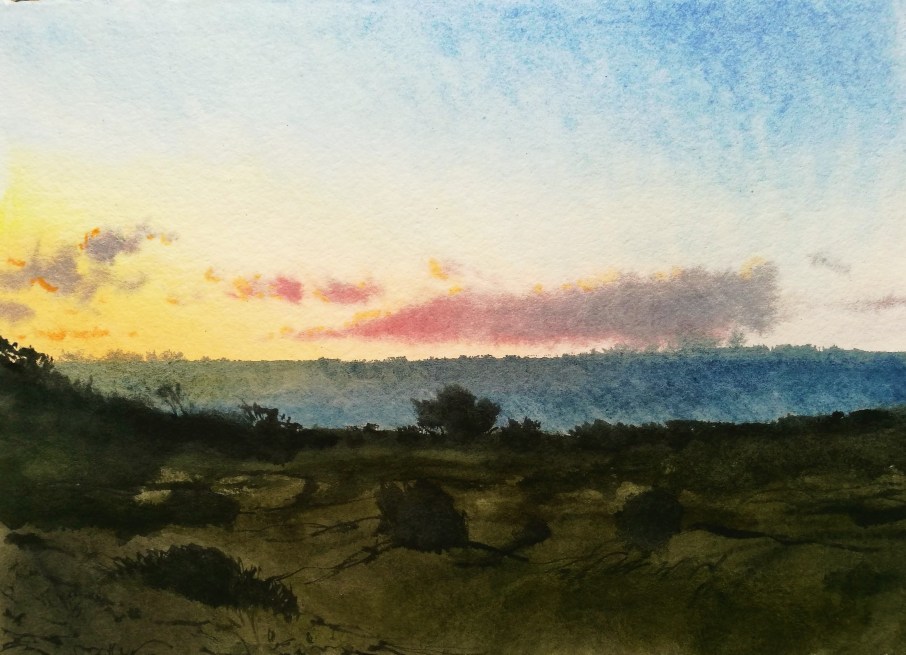
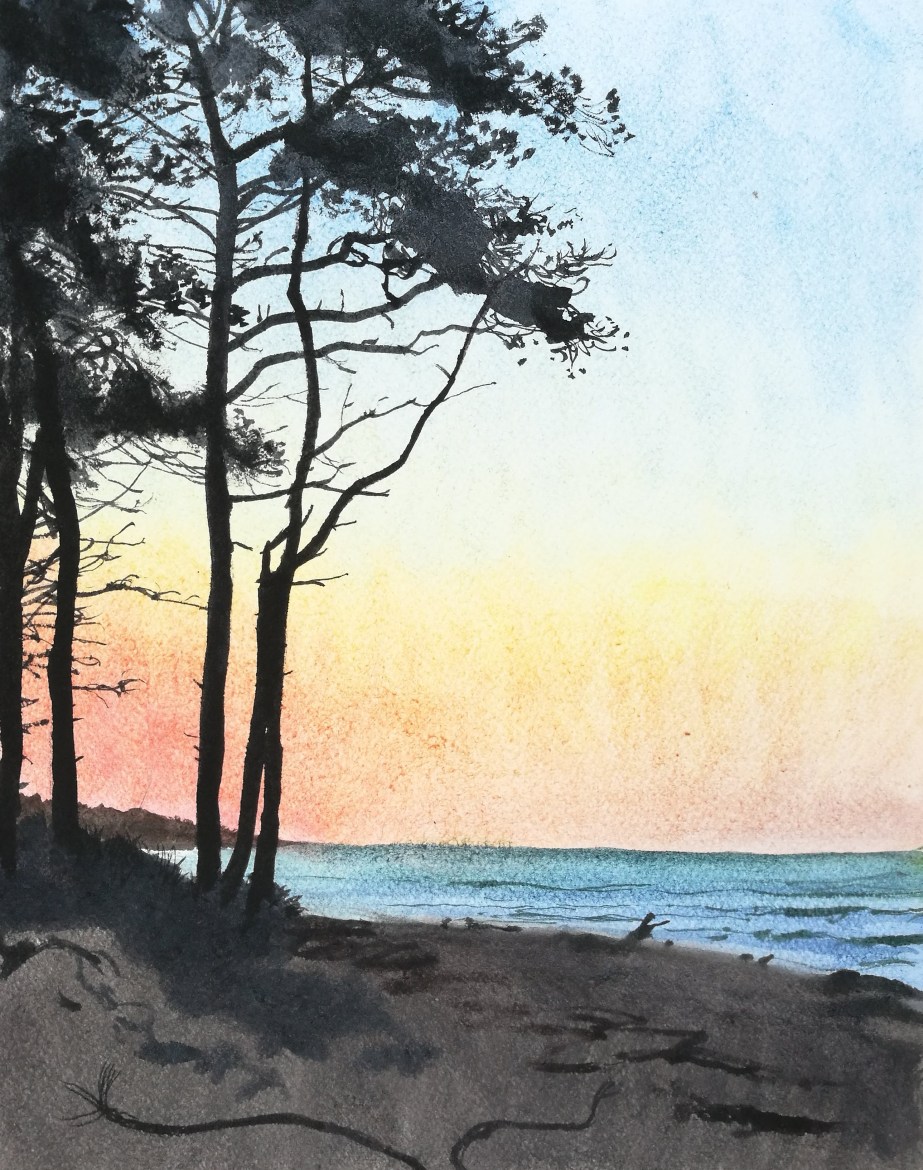
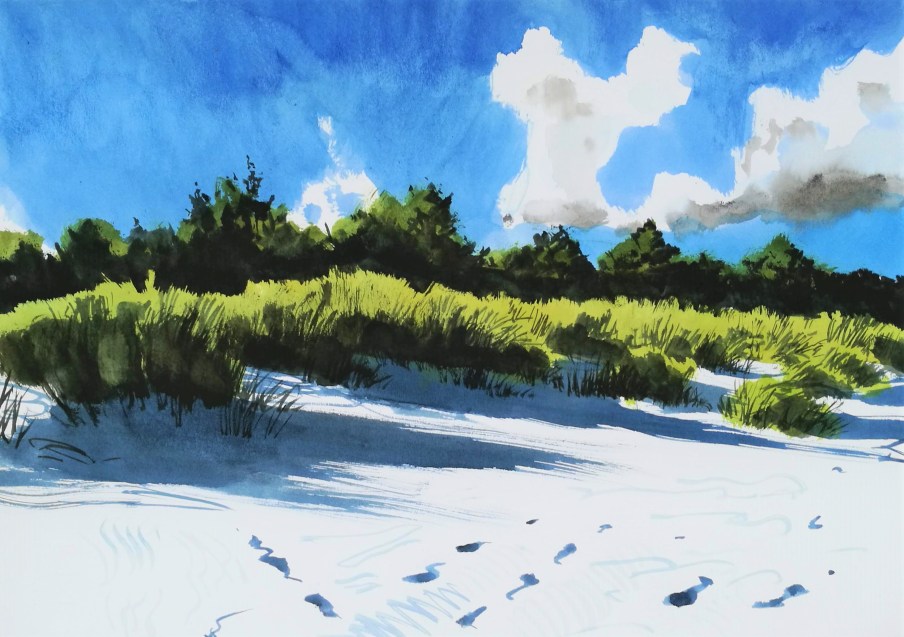
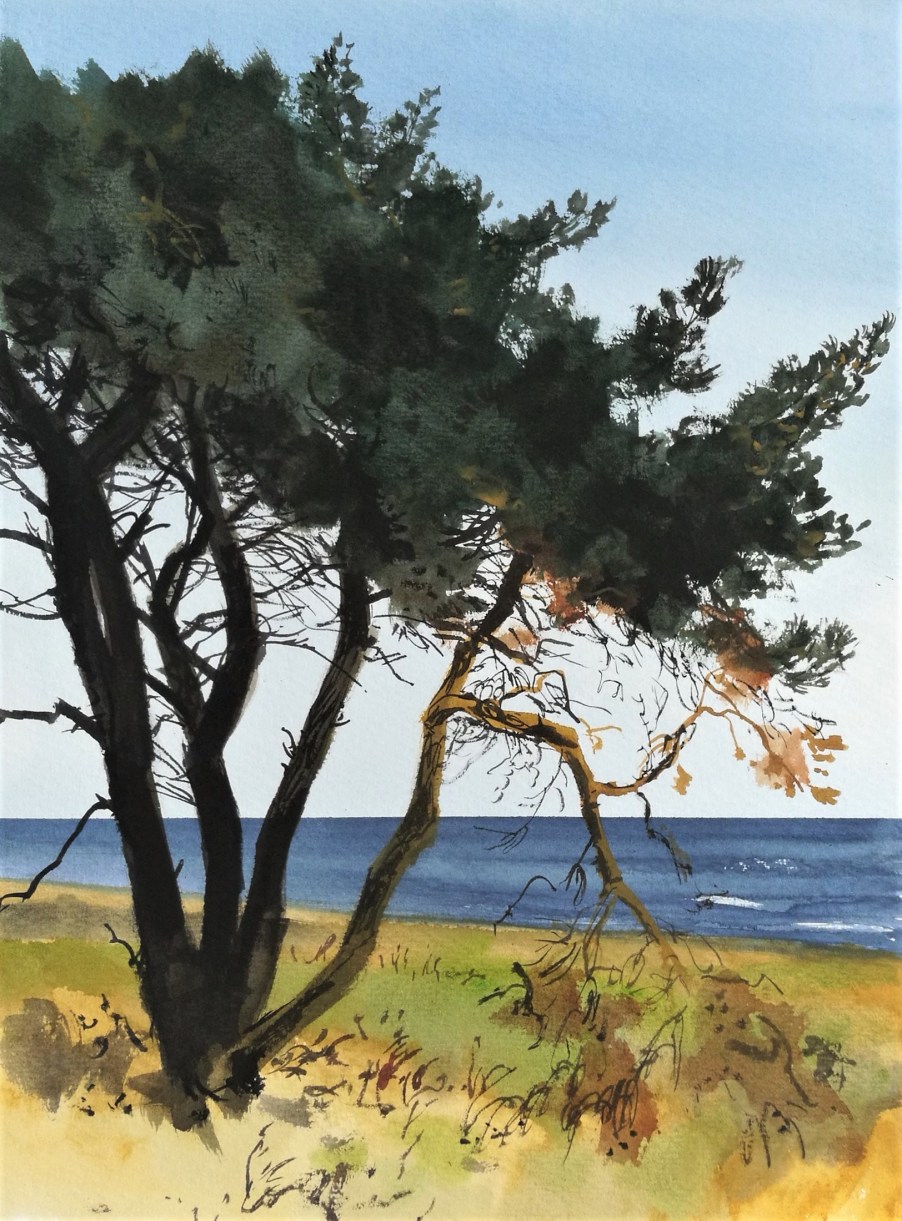
I reached Gedebække Point with an hour or so until sundown. I wandered around on the dunes before finally settling in front of a small oak tree that was silhouetted against the setting sun, its autumn leaves ablaze. It had been a wonderful day and I walked back along the beach to the waiting car, as the sunset continued behind me.
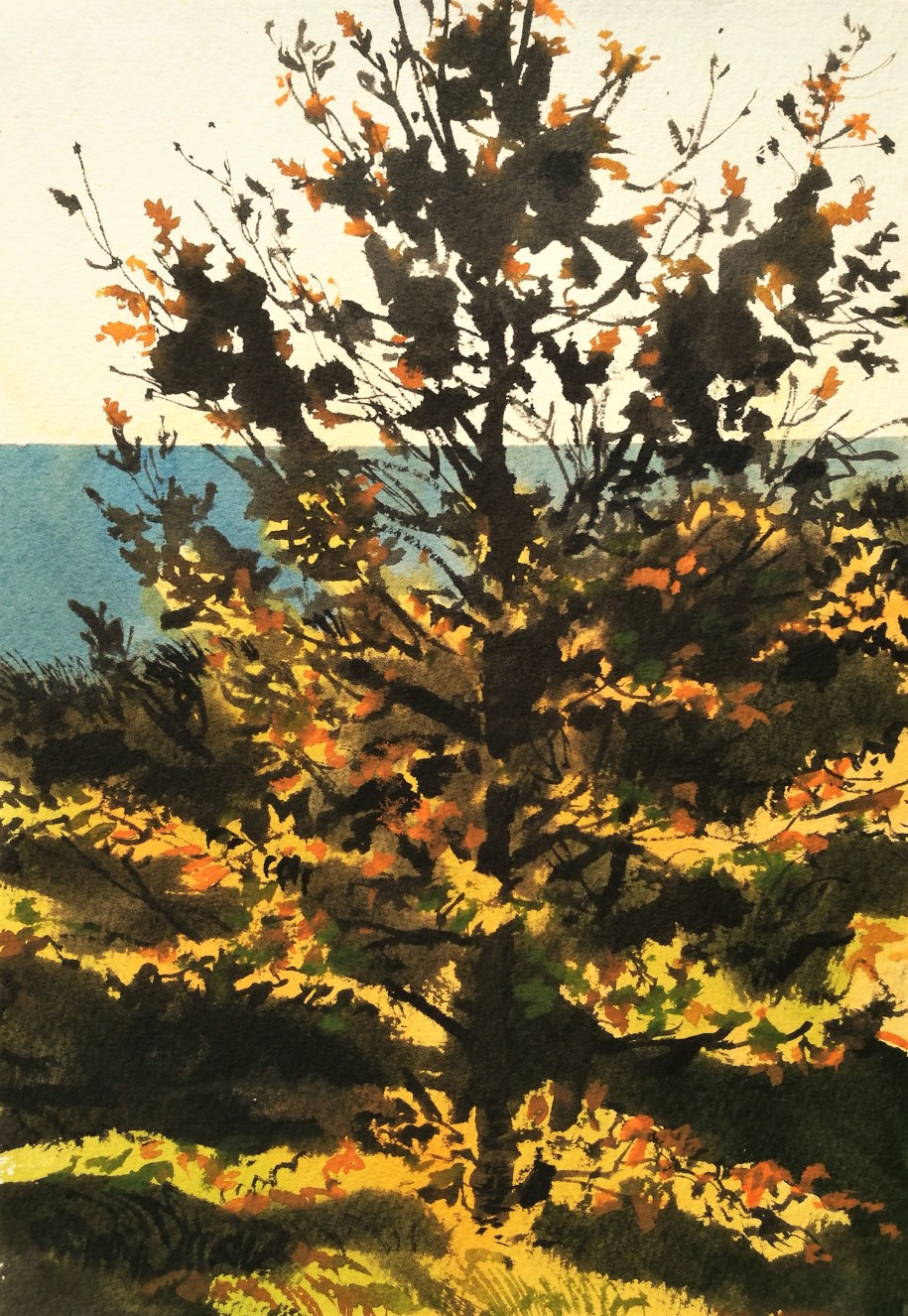
KYST 42
Weather report = Unbroken sun for most of the day. Temperature between 7°C and 13°C (though it felt much hotter in the sun). Wind between 2 and 3 m/s from the northwest. Hours of sunshine: 9.5 hours.
Lessons learned – I felt as though I was better at not worrying too much about what I was doing and just enjoying the day.
Stops with the M60 = 0 (I didn’t take the M60 again)
Kilometers walked = 7.00 km (an estimate, as my phone ran out of batteries at Kadeau)
Day lasted = 10 hours, 20 minutes
Birds seen and heard = 40 species (1 new ones: bullfinch – running total 136)
Other stuff = the most fantastic weather on Bornholm, all week. On the beach a steady stream of joggers, dog walkers, fisherman and other people just enjoying the outside.
People talked to = 5 (1 +2 + 2)
In my head – The trip to London next week, ‘4321’ a book I’m reading by Paul Auster. The KYST book, applications…










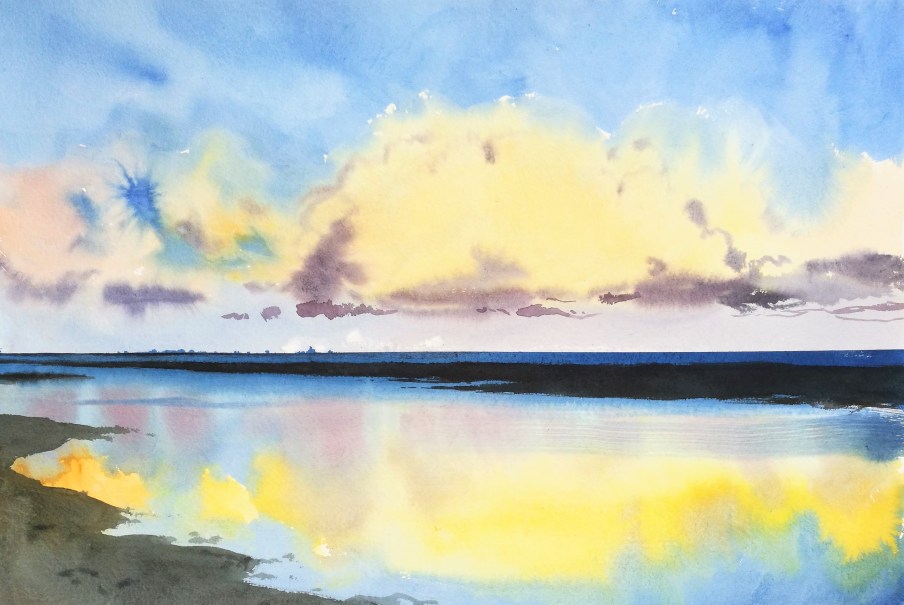


 On the shore, two women on horseback thundered up and down the beach, laughing with an unbridled abandon. Just when I thought the morning couldn’t get any more spectacular, a lone kingfisher darted out and flew low, dart like, over the surface of the mirrored sea, and disappeared into the sea mist.
  When the kingfisher returned and perched on a nearby rock I resolved to not paint and just soak in the atmosphere instead. I couldn’t though, and soon got overinvolved with a reflective gull.
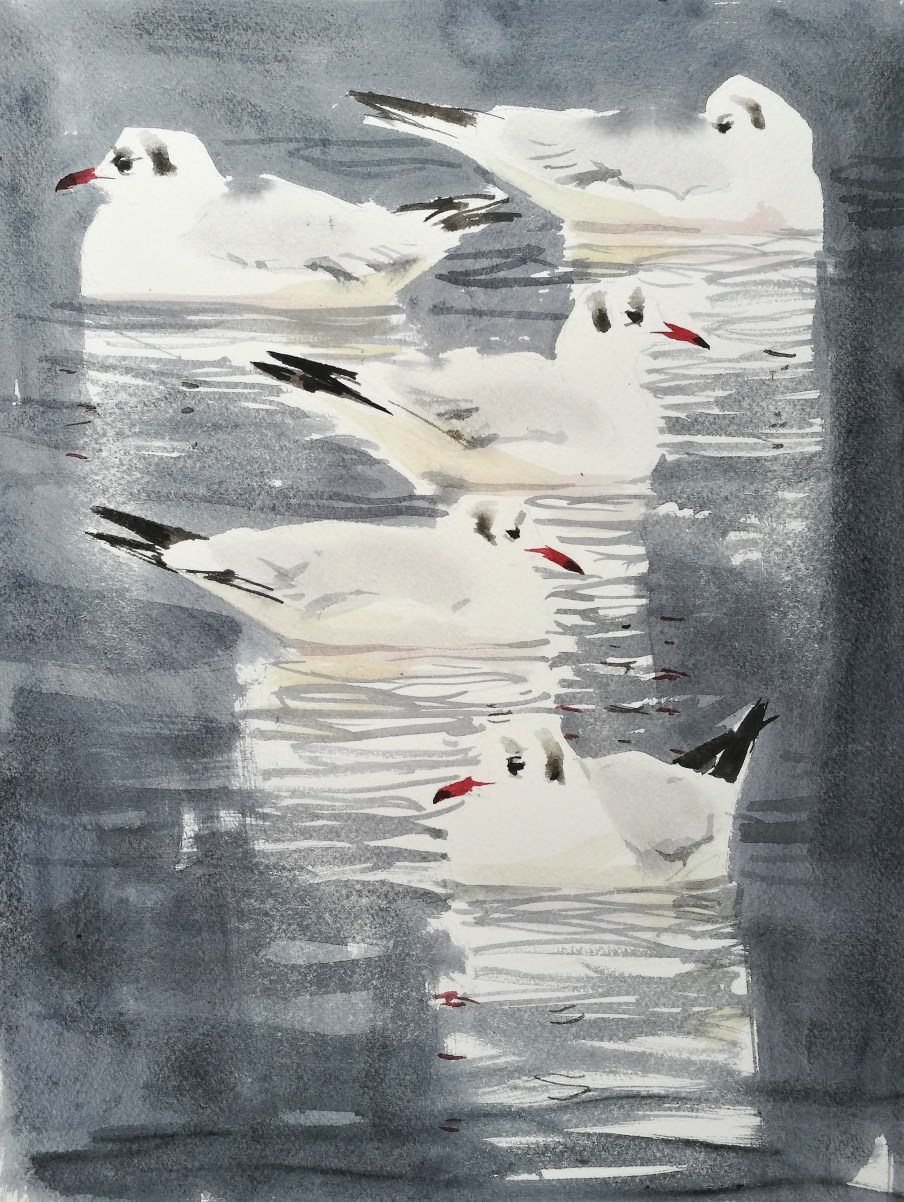
 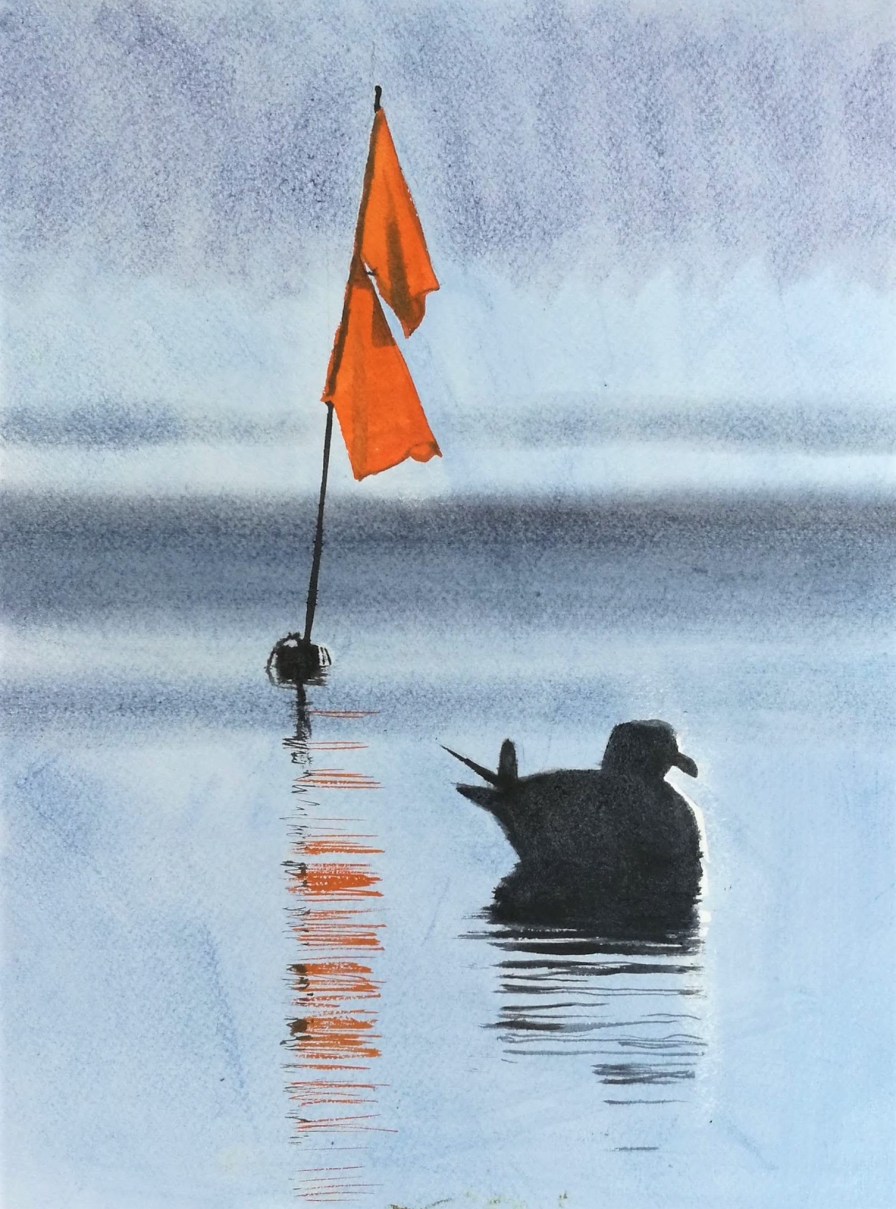 The previous week I had been teaching a field painting course at Bornholm’s Højskole, and the lessons of the week were still fresh in my memory. I tried to not get too upset with the reflective gull disaster, and just carry on (‘…don’t judge and keep working’). I lost myself in some herring gulls feeding in the bay, the sea mist long having been burned off by the rising sun.
  Before moving off from my perch at the end of the pier, where I had now been for many hours, I tackled the solar reflections on the surface of the water. I wanted to show how the green seaweed, rocks and innumerable jellyfish below the surface of the water replaced the reflections of the sky towards the bottom of the visual plane, but failed.
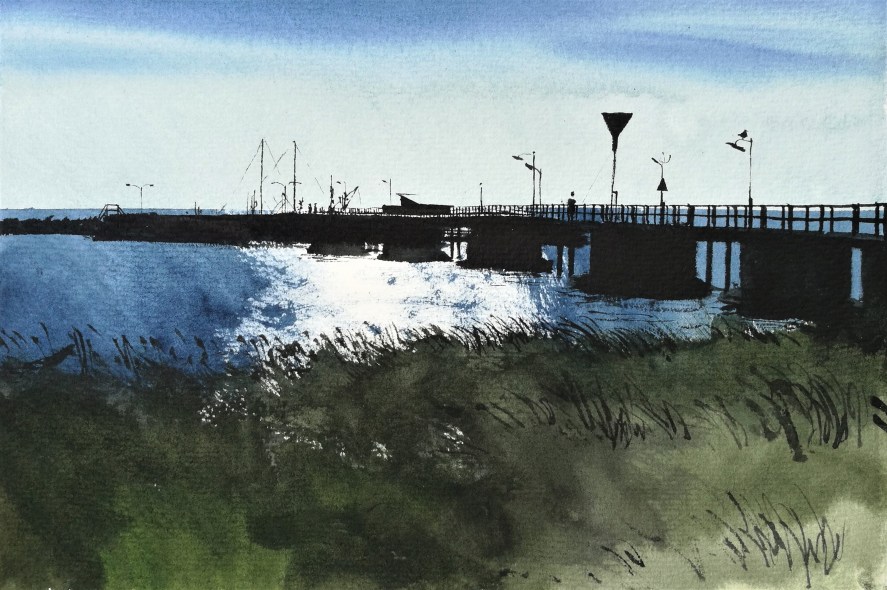
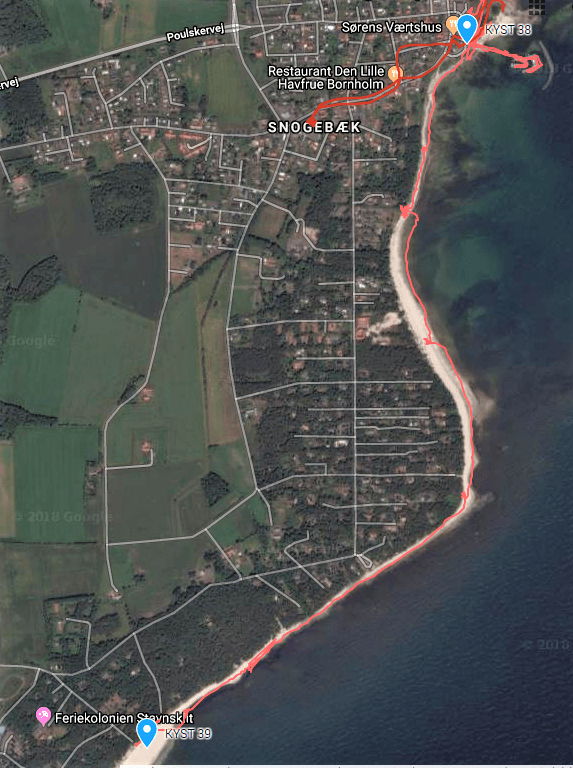
  I finally packed my things and started to walk on Balka beach towards Snogbæk, the day’s destination. I stopped again rather quickly, wanting to capture the sweep of the bay, with Snogbæk pier in the far distance.
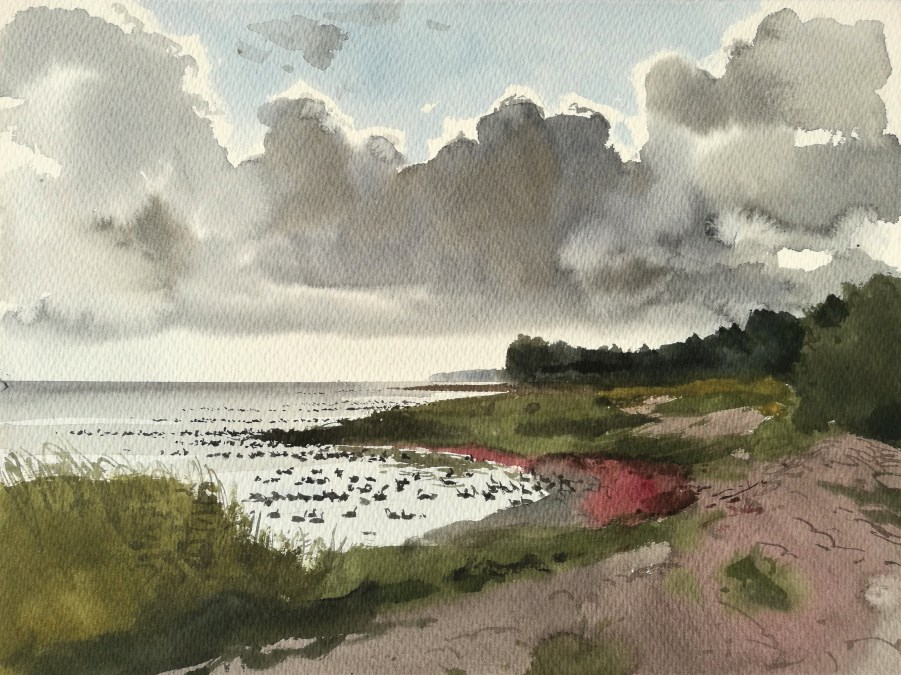
 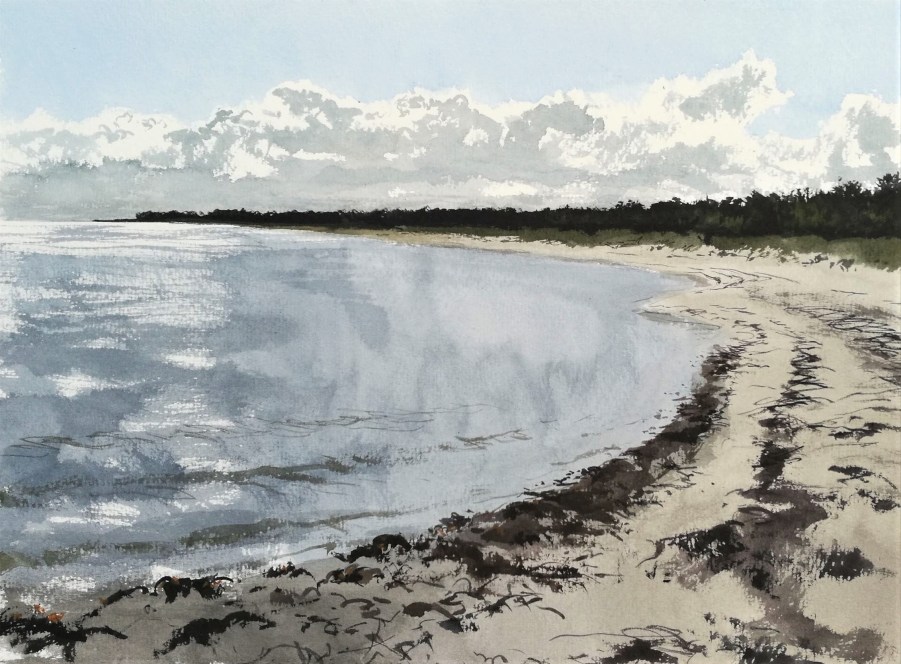 As I was painting, the first flocks of graylag geese flew overhead, returning to spend the day at Nexø Sydstrand, last week’s start point. I quickly drew the mutating shape of a large flock of several hundred geese, as it passed by.
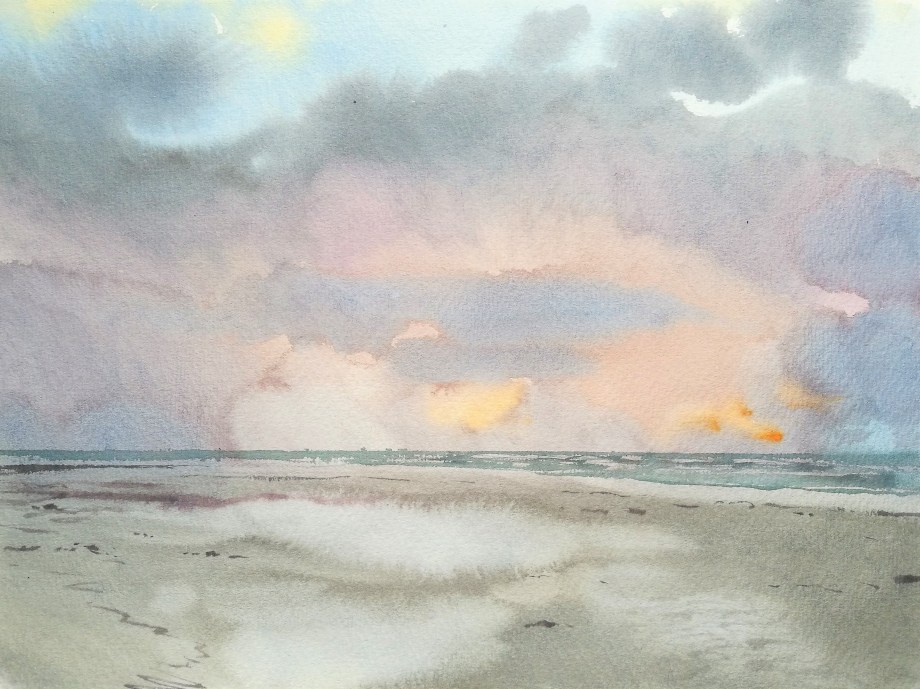
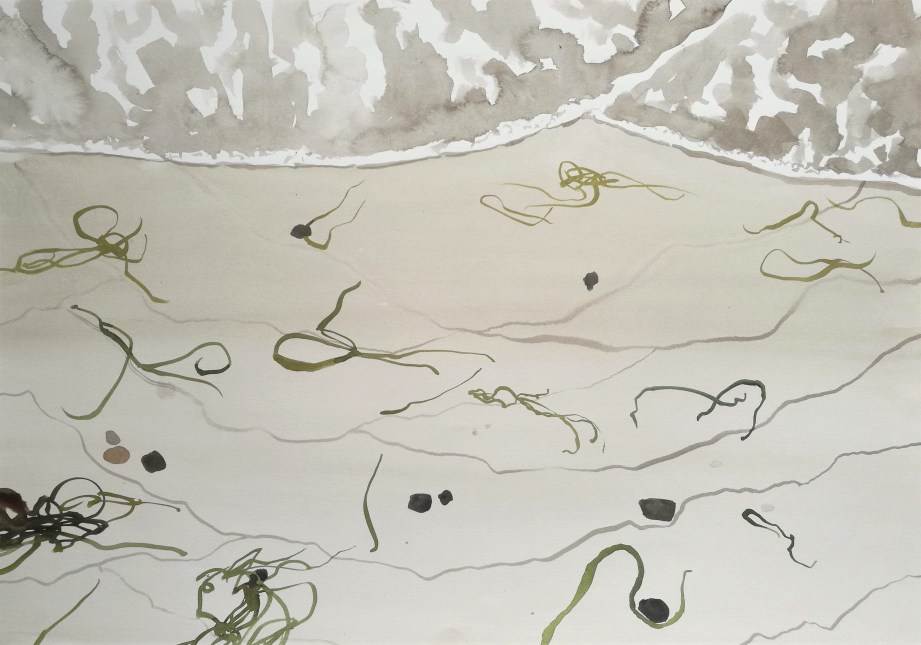
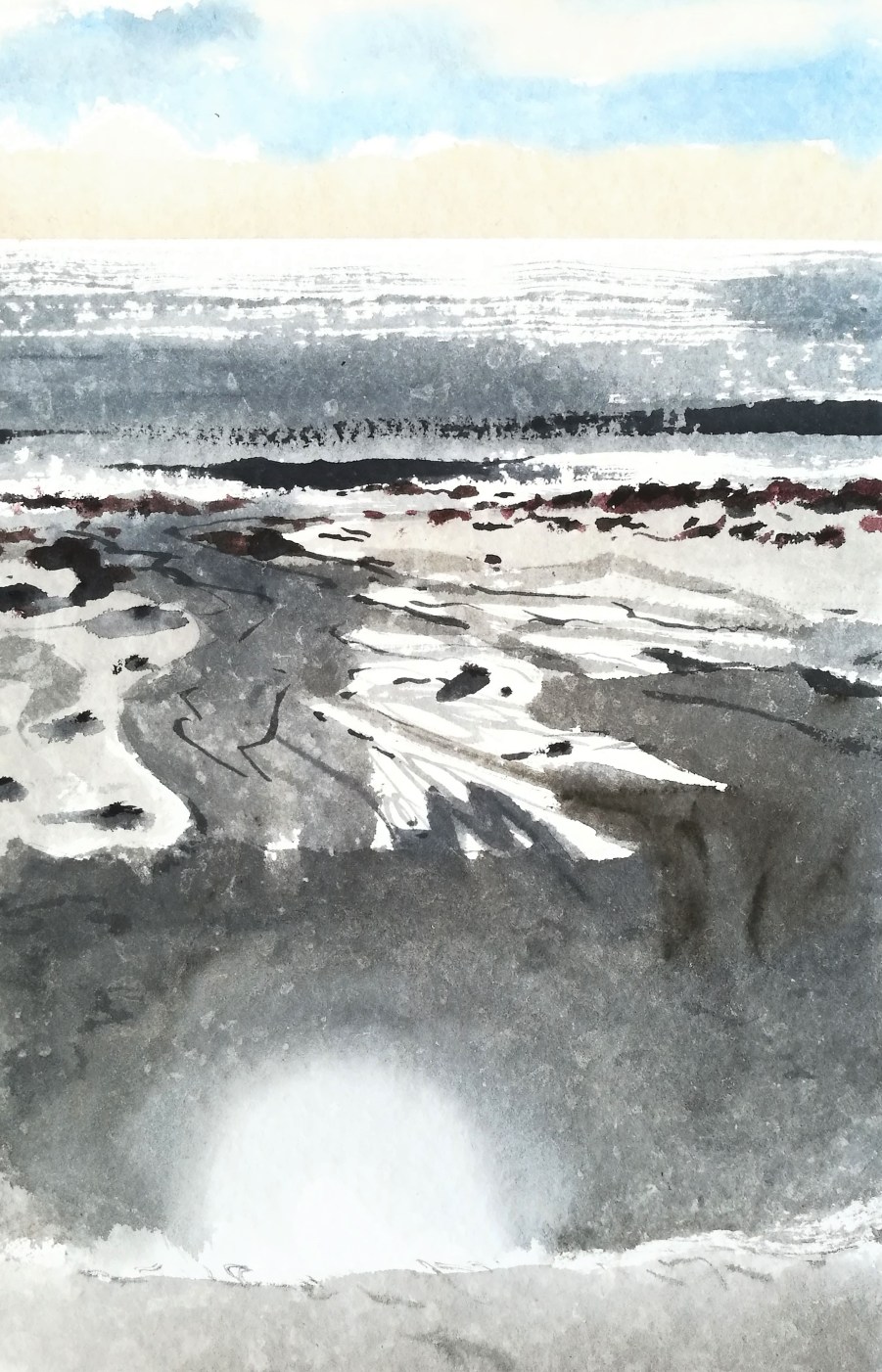
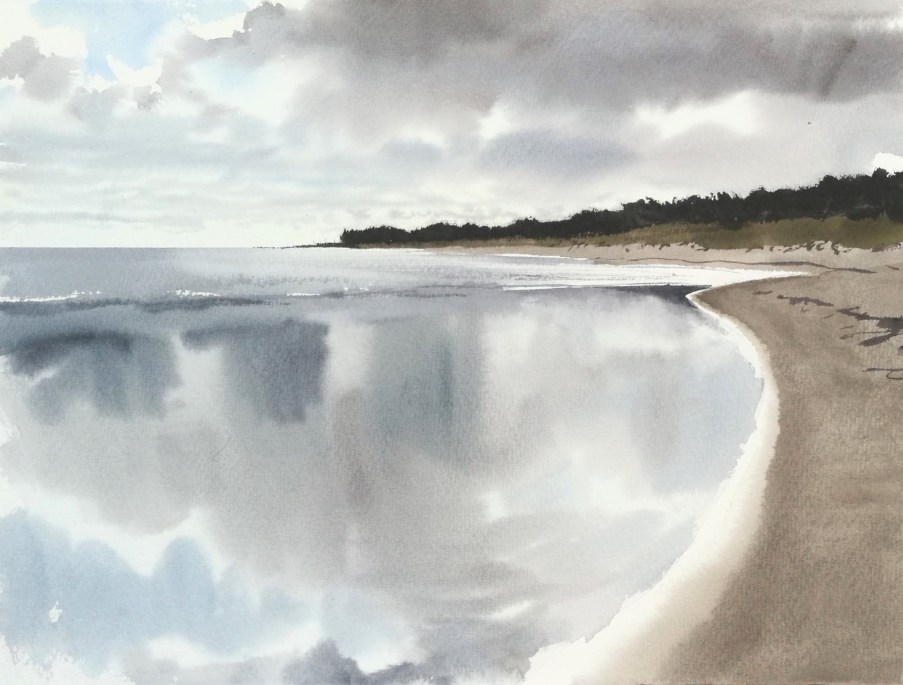
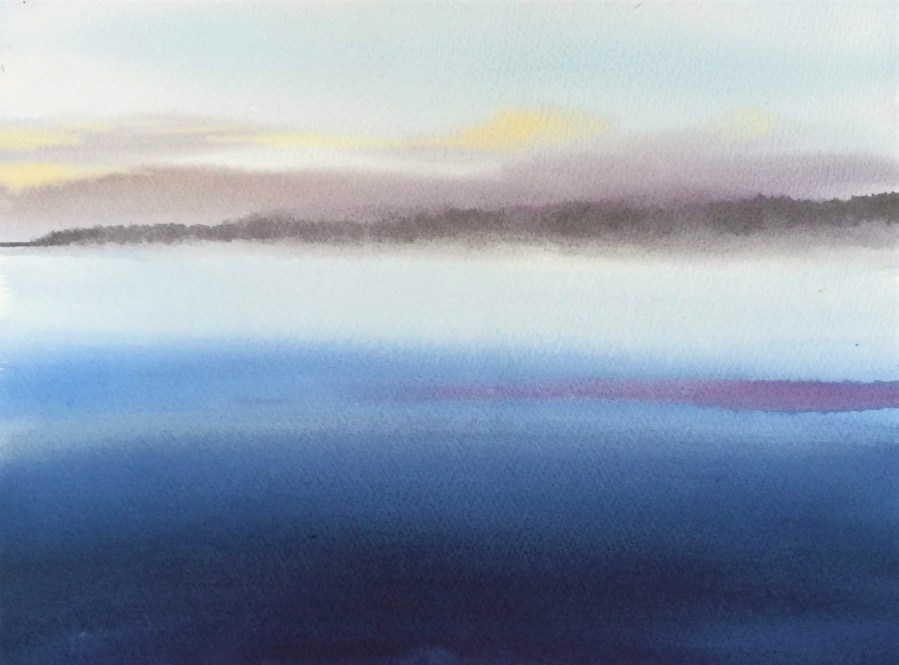
 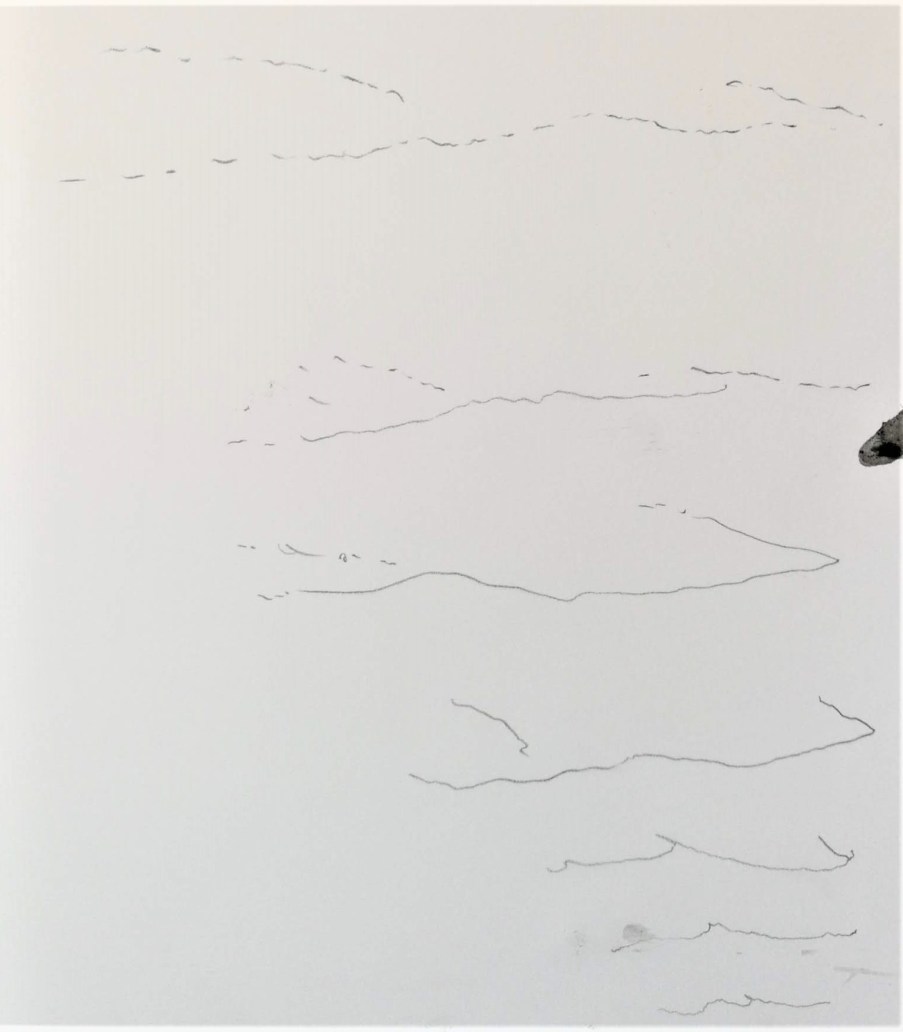 As I continued walking along the beach my eye was caught by the rills, folds and patterns in the sand caused by the action of the waves lapping at the shore, together with the tracery left by mica, crushed mussels and seaweed. A sandbank created a lagoon of completely still water that reflected the clouds scudding by in the dynamic skyscape. I made two studies (see also top)
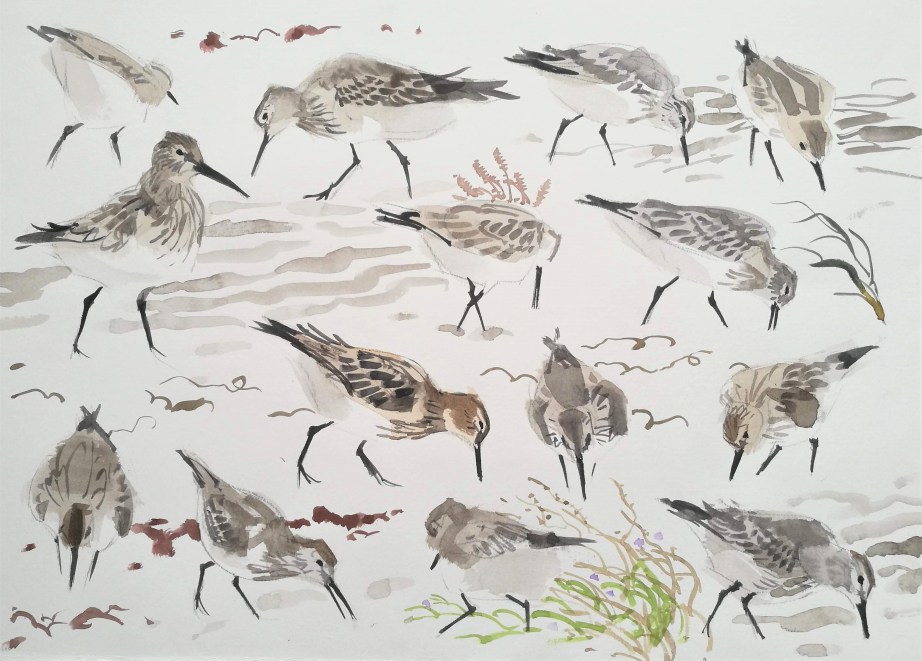
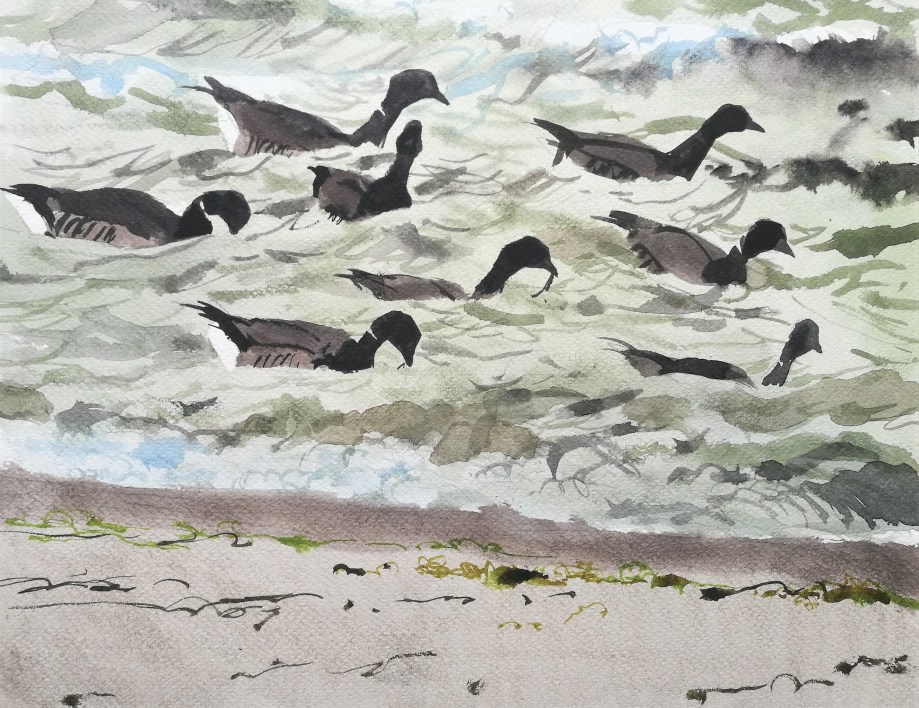
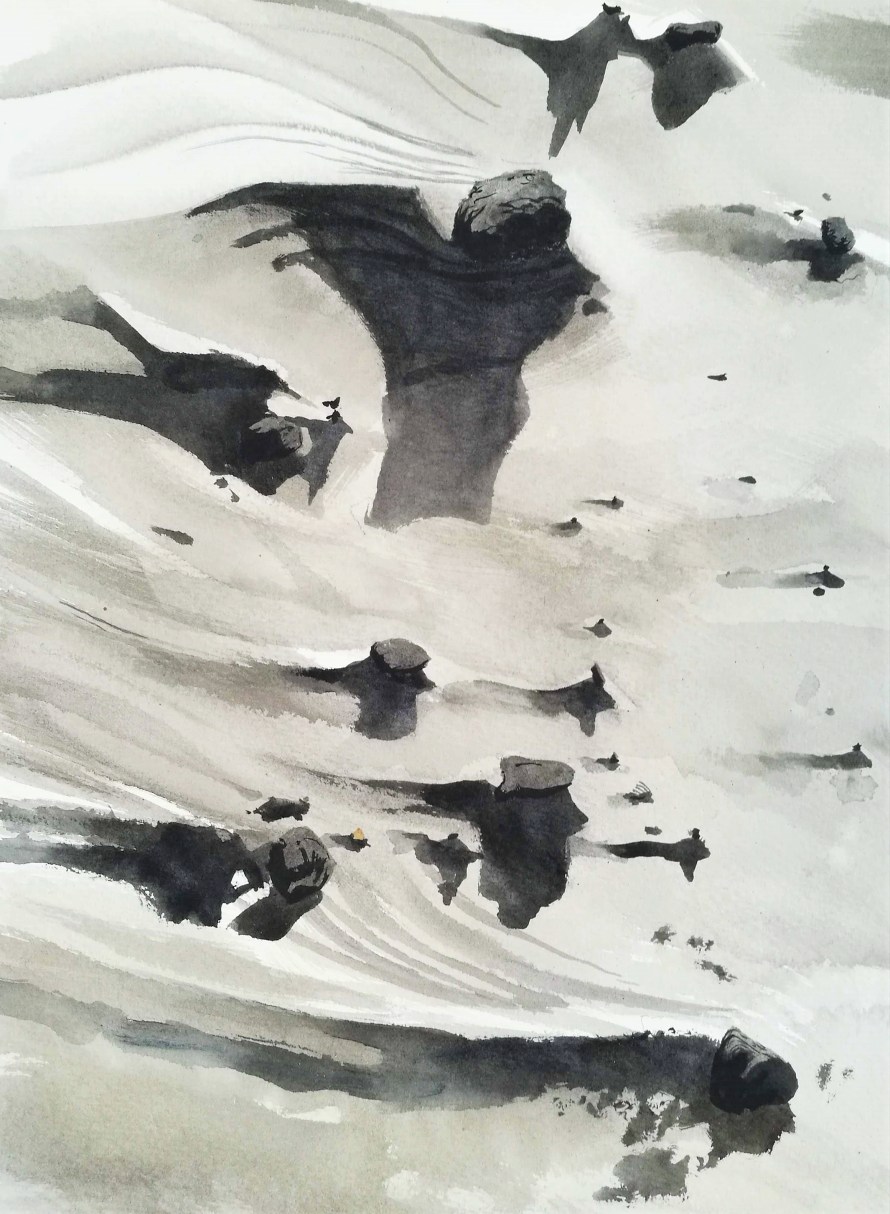
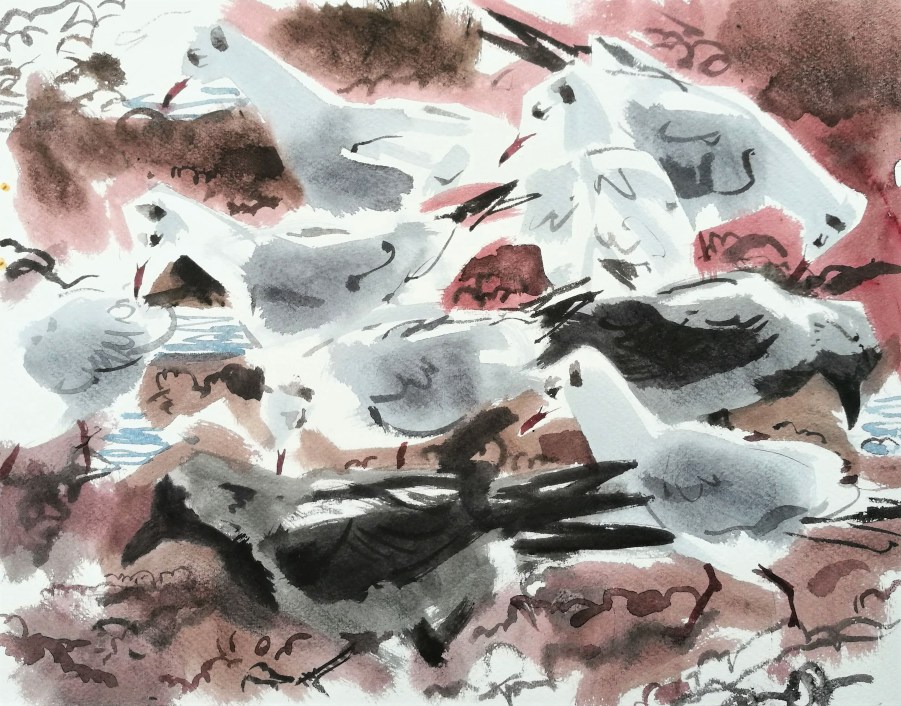
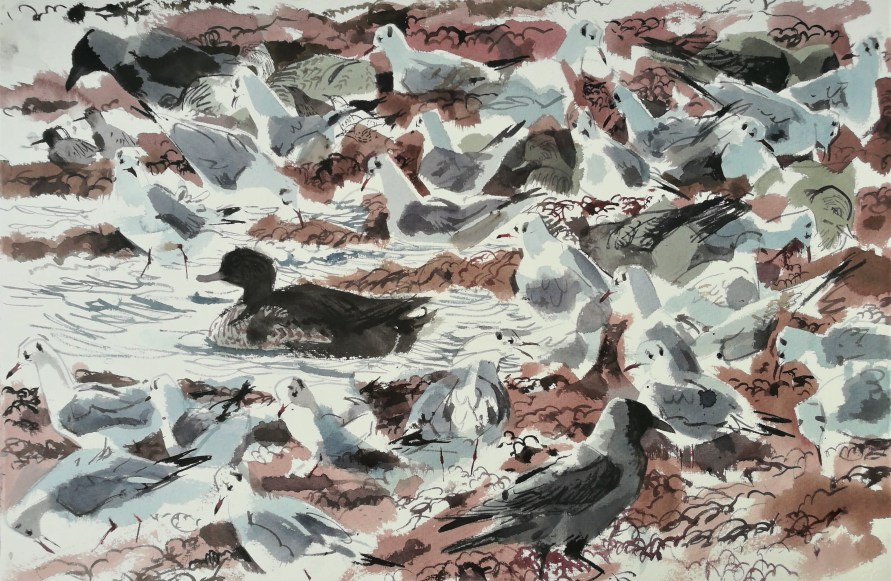
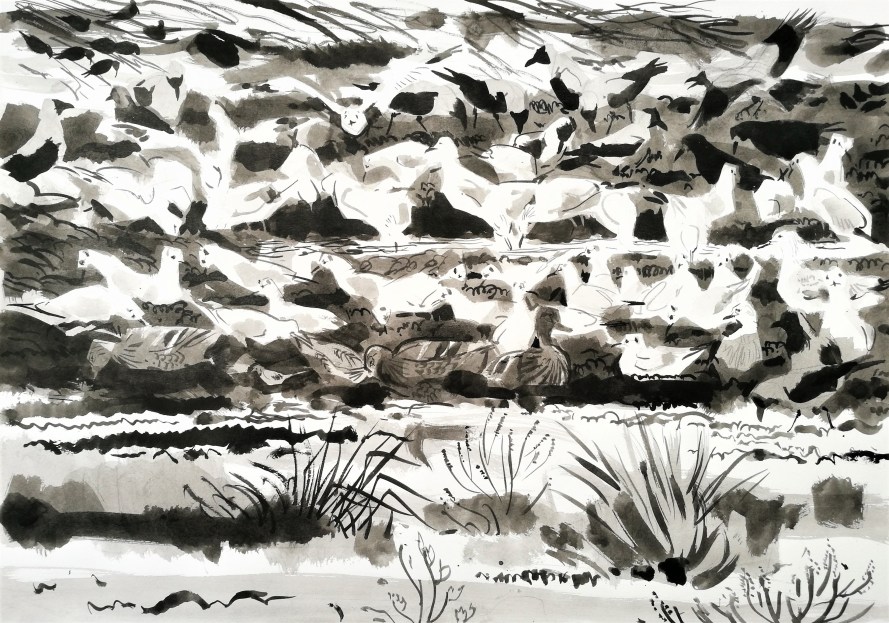
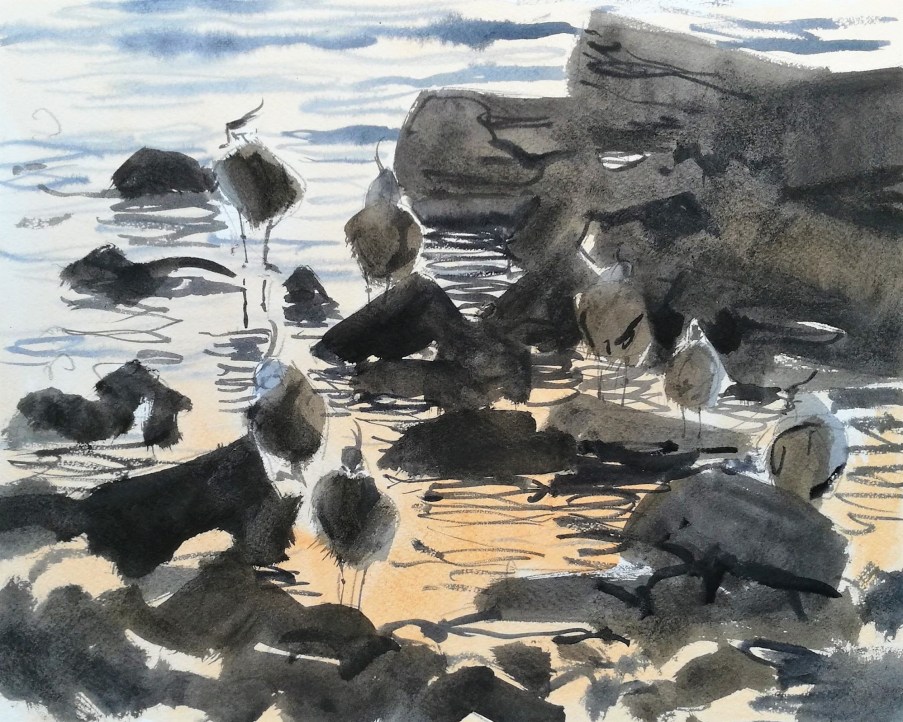
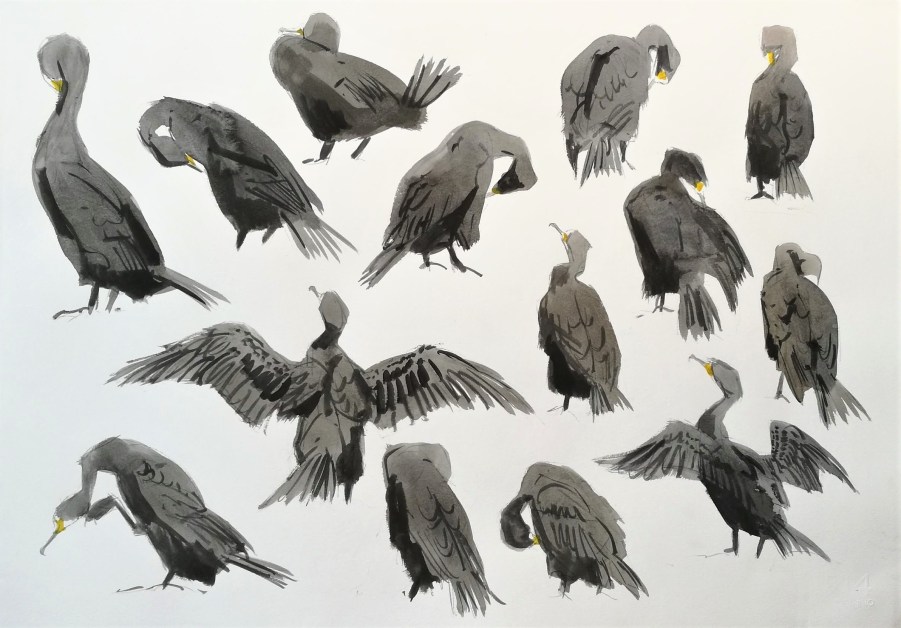
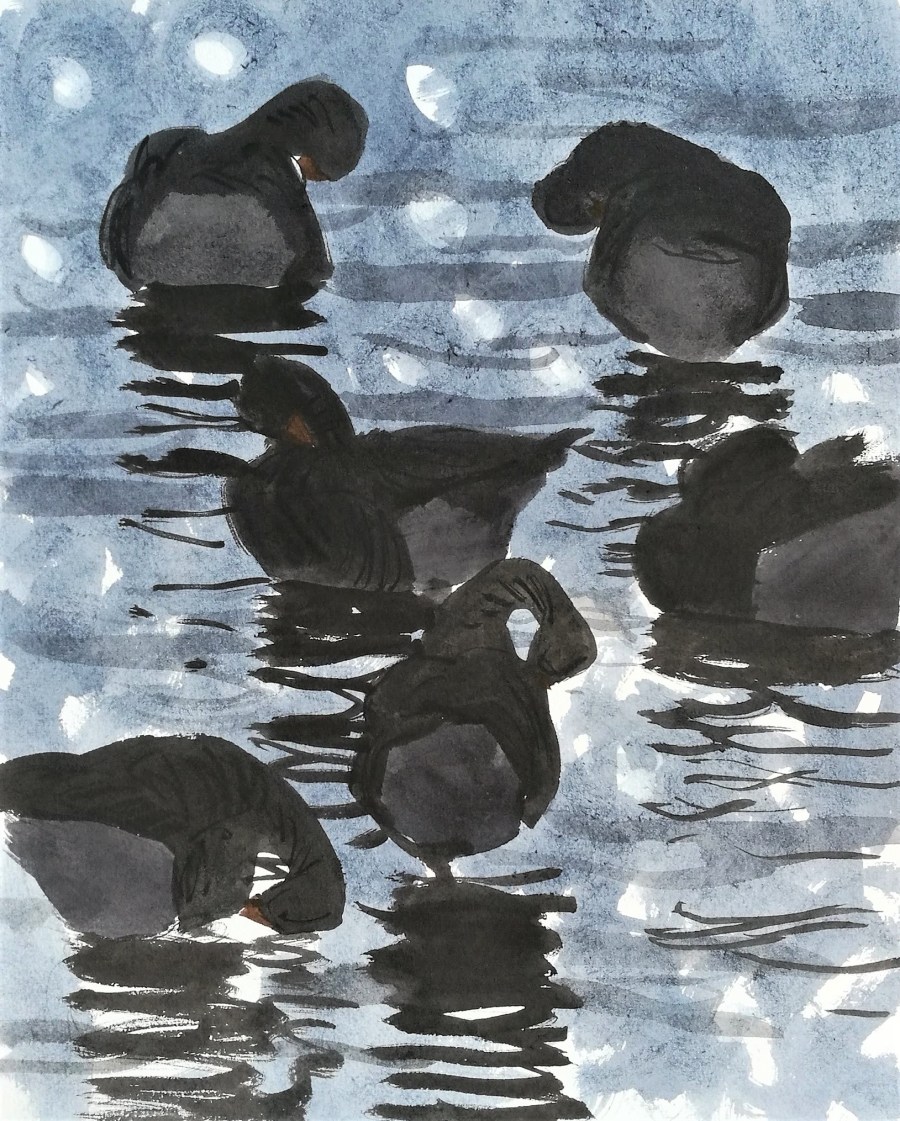
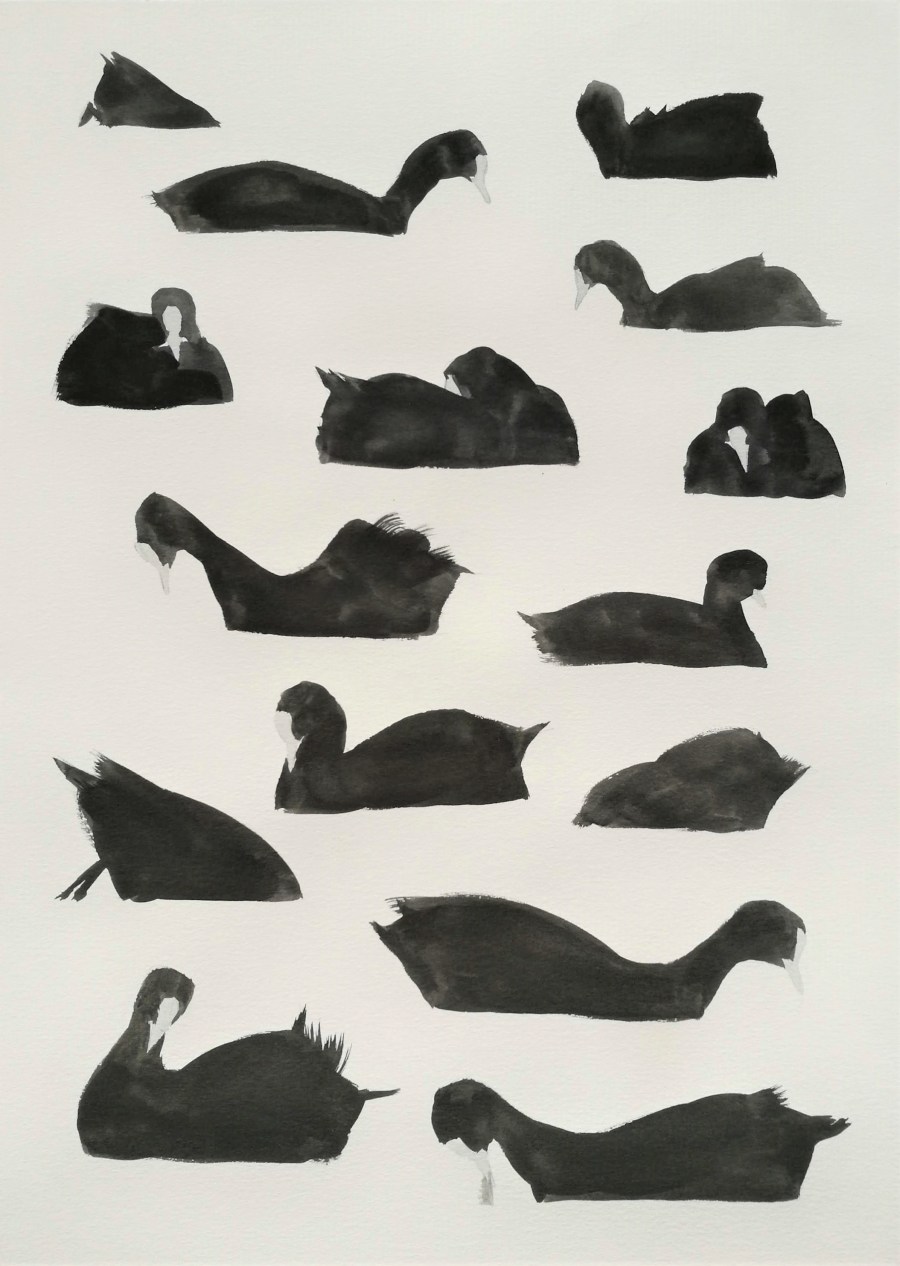
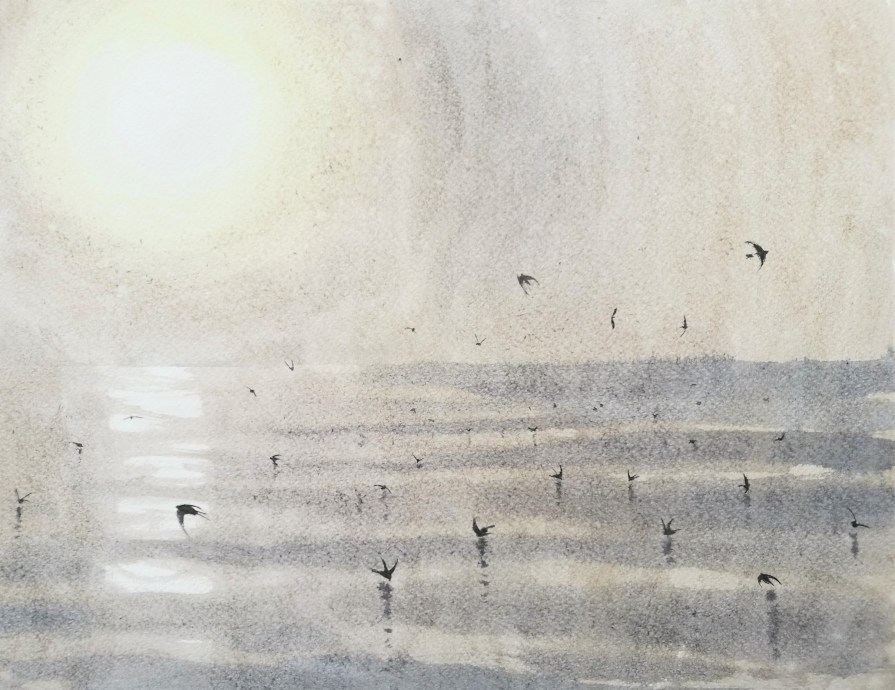
 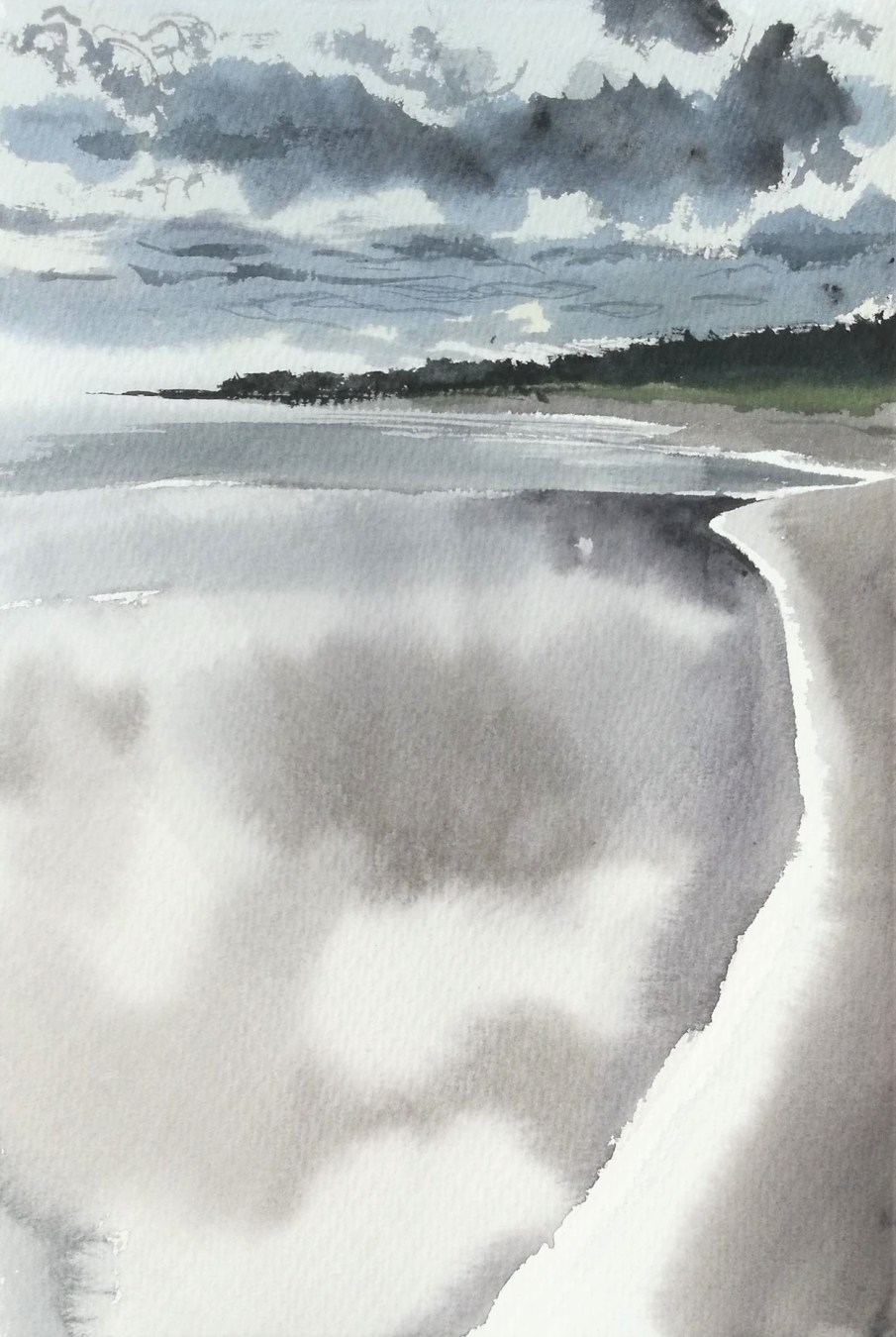 I carried on along the beach all the way to the end of the bay at Snogbæk, where I set up the M60 and had lunch and a really good sleep. On waking I looked towards Salthammer Odde, the great shelf of grey balka sandstone that juts out from Snogbæk and continues under the sea, attracting a rich diversity of sealife and birds. All week with the students we had been concentrating on tonal values and working with ink, which I had bought along. I tried to capture the movement of the feeding frenzy on a bank of seaweed, where gulls, geese, crows, pigeons and starling all worked together feverishly, hoovering up sandflies and the like.
 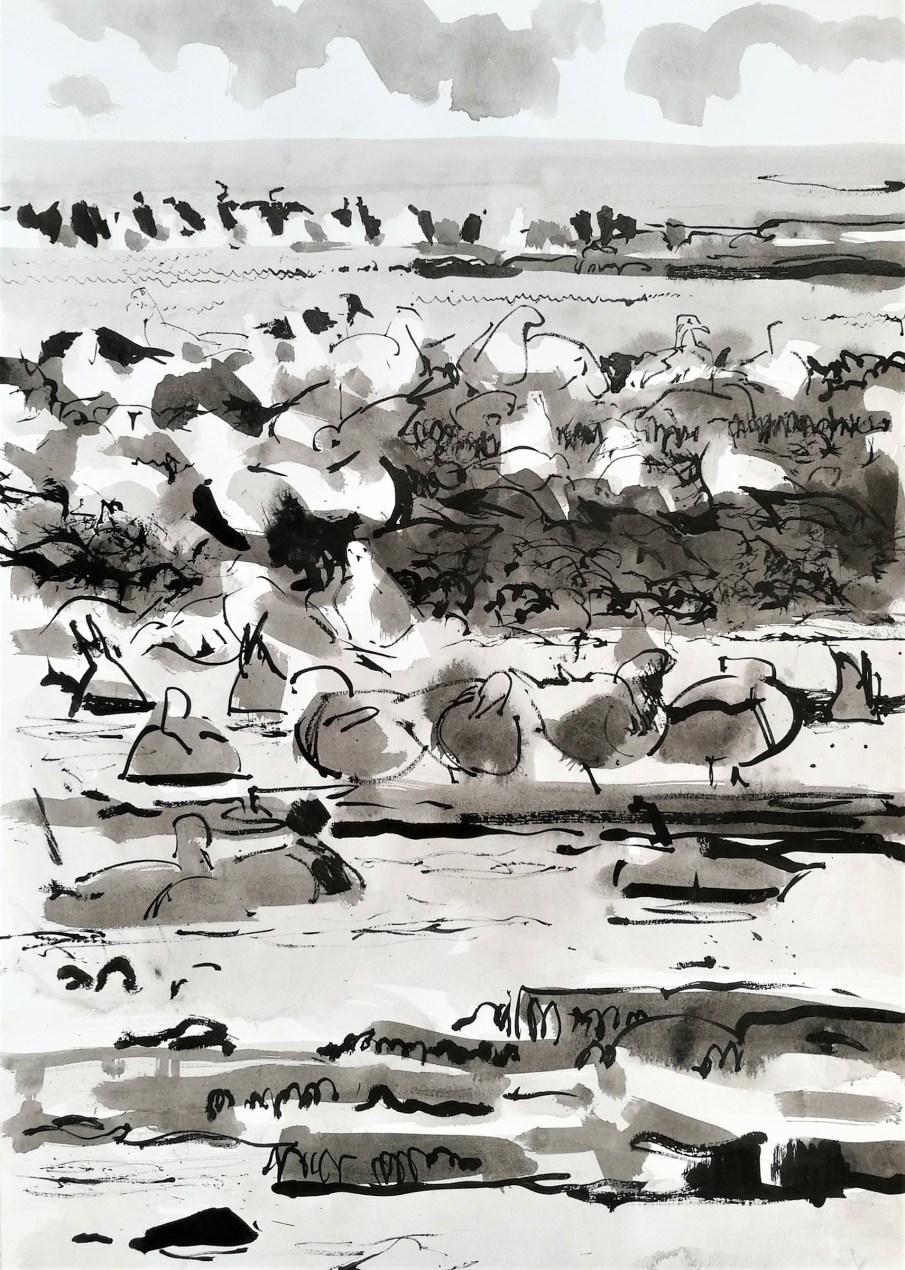 I worked again with the ink, trying to capture the dynamic shapes and silhouettes and making inky marks with sticks, feathers and seaweed.
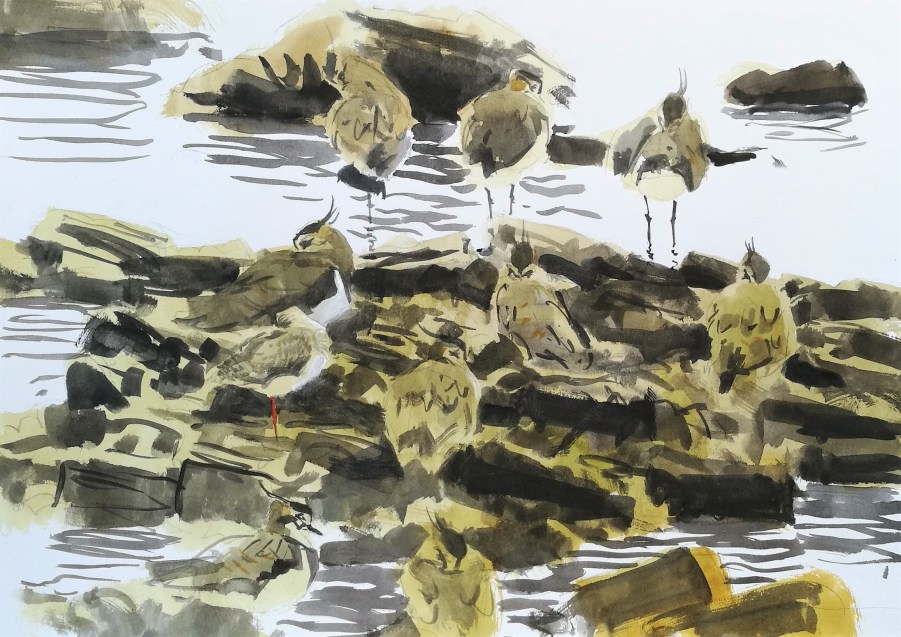
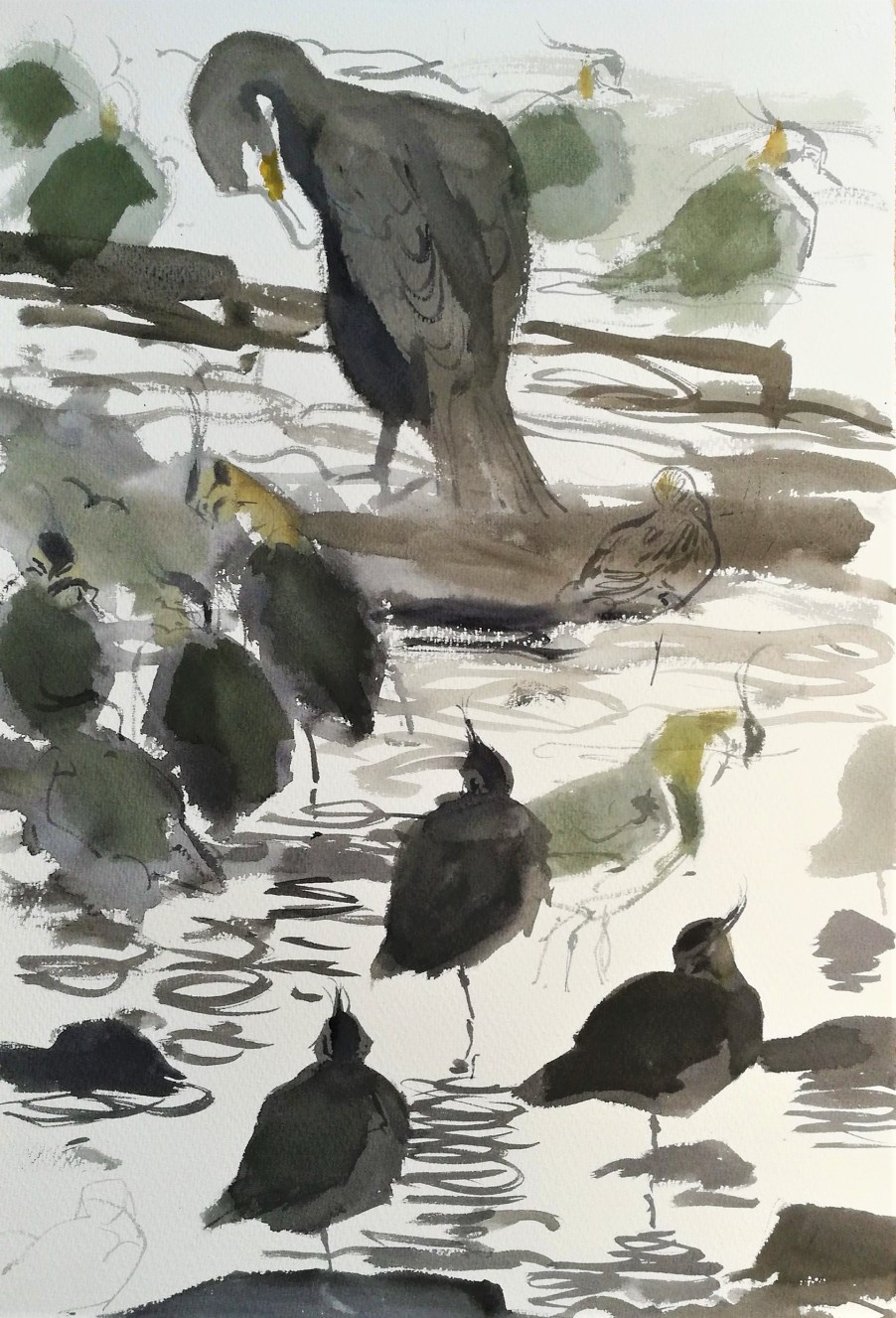
  I packed my things and walked on to Snogbæk, taking time out to look and listen before continuing with painting again. I turned my back to the town, an eclectic and unpretentiousness mixture of tourist cafes, bars, summer houses and fishermen’s’ huts, and looked instead towards the sea. After a detour to the local supermarket I sat on the sandstone bedrock, hidden amongst the vegetation, and looked with my scope towards the multitude of gulls preening, sleeping and standing stoically in the early evening breeze.
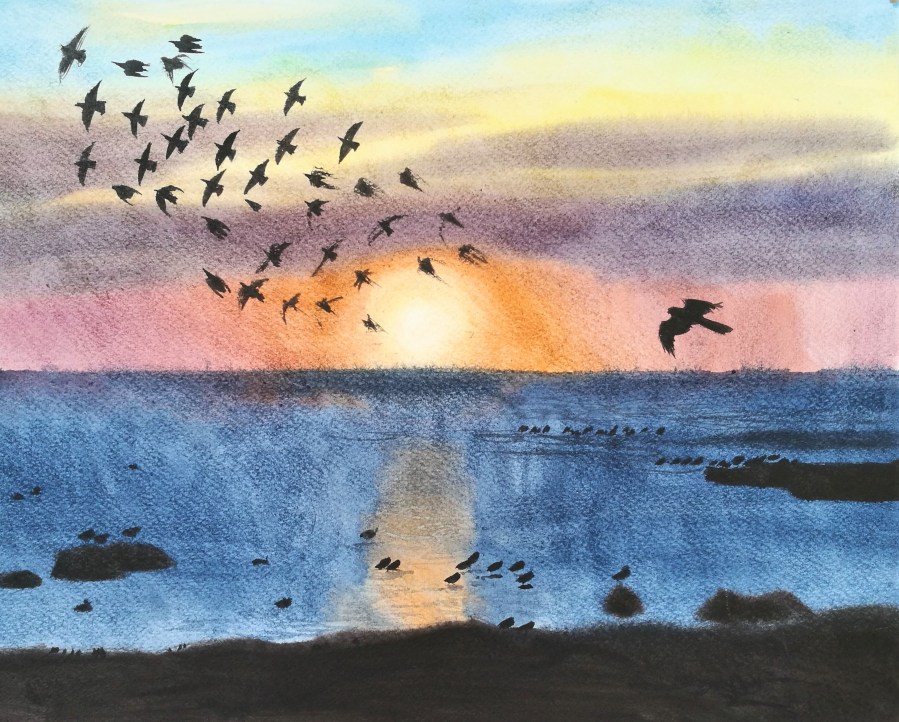
 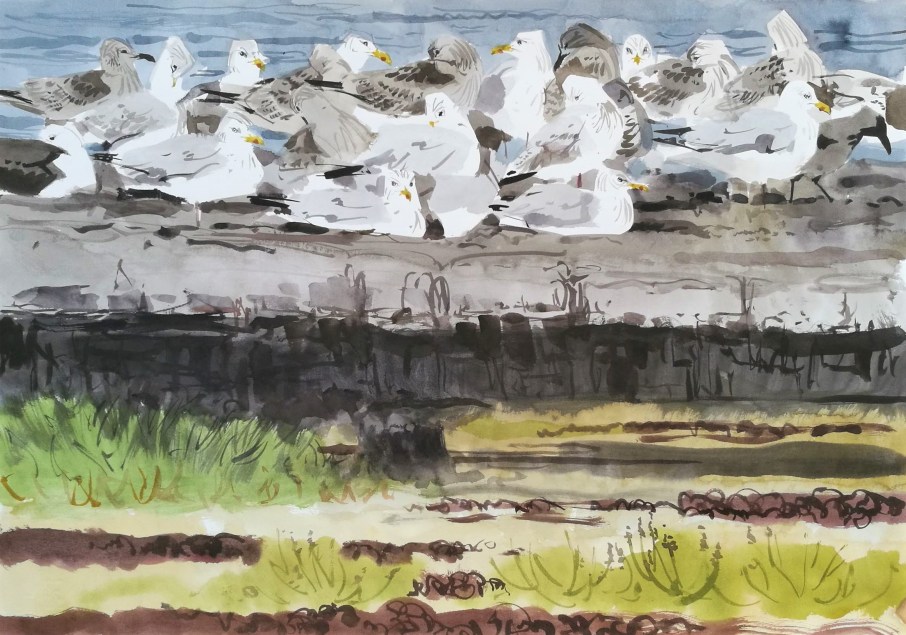 The day finished quickly and I had no time to draw the six curlew that arrived just as the sun was setting and my lift arrived.







 www.benwoodhams.com