It seems like an age ago now, but in September of 2020, I was part of the third Earthbound exhibition held at Gudhjem Museum. This post is just a short description of the process involved in preparing and delivering the work I produced for the exhibition – much too late of course, but hopefully this will spur me on to be a more regular blogger throughout 2021…
Earthbound is a very loose collection of five Bornholm-based artists, all of whom take direct or indirect inspiration from Bornholm’s natural environment. Earthbound III would be myself, together with the incredible pots of ceramic artist Eva Brandt, the delicate and shimmering watercolours and prints by Lone Schiøtz, atmospheric oil paintings by Barbara Sørensen and the tactile organic wooden vessels by wood turner Hans Henning Pedersen. We had exhibited together two times before, both at Gudhjem Museum, so this was to be the third act. The previous exhibitions had been very well received, and I was looking forward very much to joining forces with the other ‘Bounders’ and putting my work up on the walls of what I think is Bornholm’s best gallery space.
Right from the start I decided I would produce some large watercolours, larger than I had ever tried before. I was interested in seeing if I could make some gigantic plein air ‘timescape’ paintings, where I would follow the movement of the shadows over the landscape, through the course of a day.

I started off buying a huge roll of Saunders Waterford paper, and cutting off slices. To stretch and prepare the paper, I took it to Bjergebakke Quarry, about a ten minute cycle ride from where I live, were I submerged the paper and let it dry between huge sheets of hardboard. All this happened in August during a very hot period, which meant the paper dried too quickly and buckled a little anyway. I was OK with that.
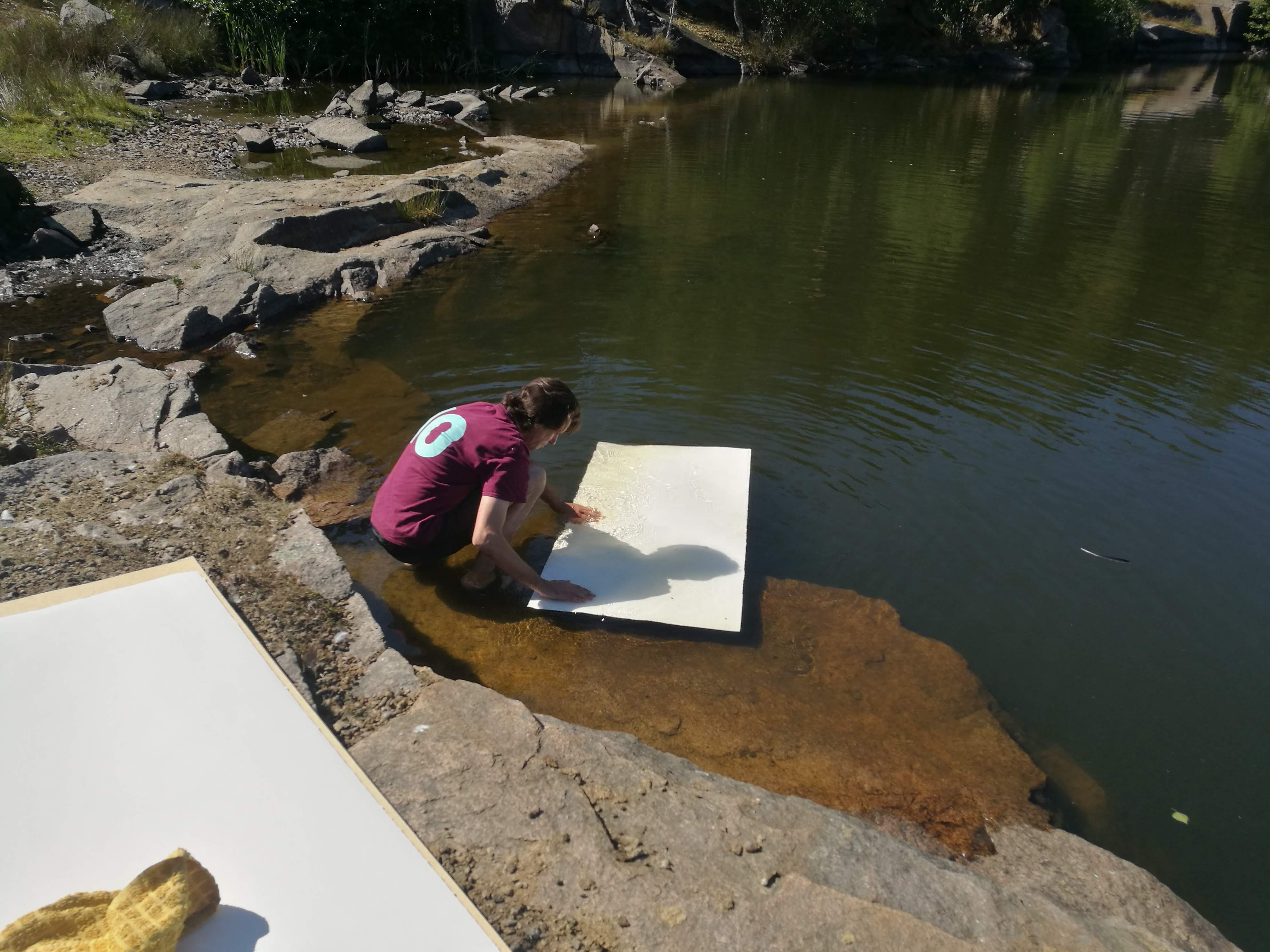
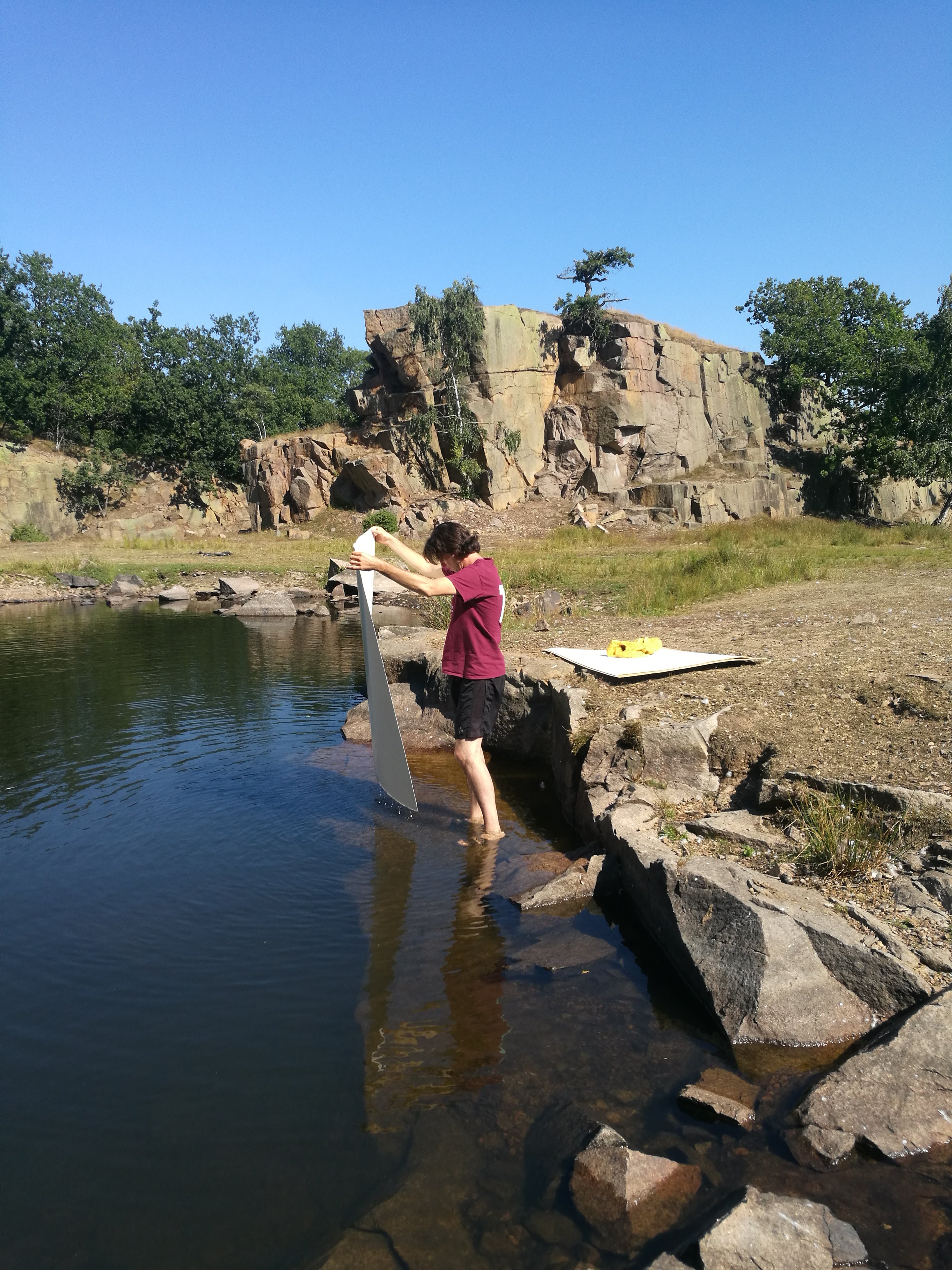
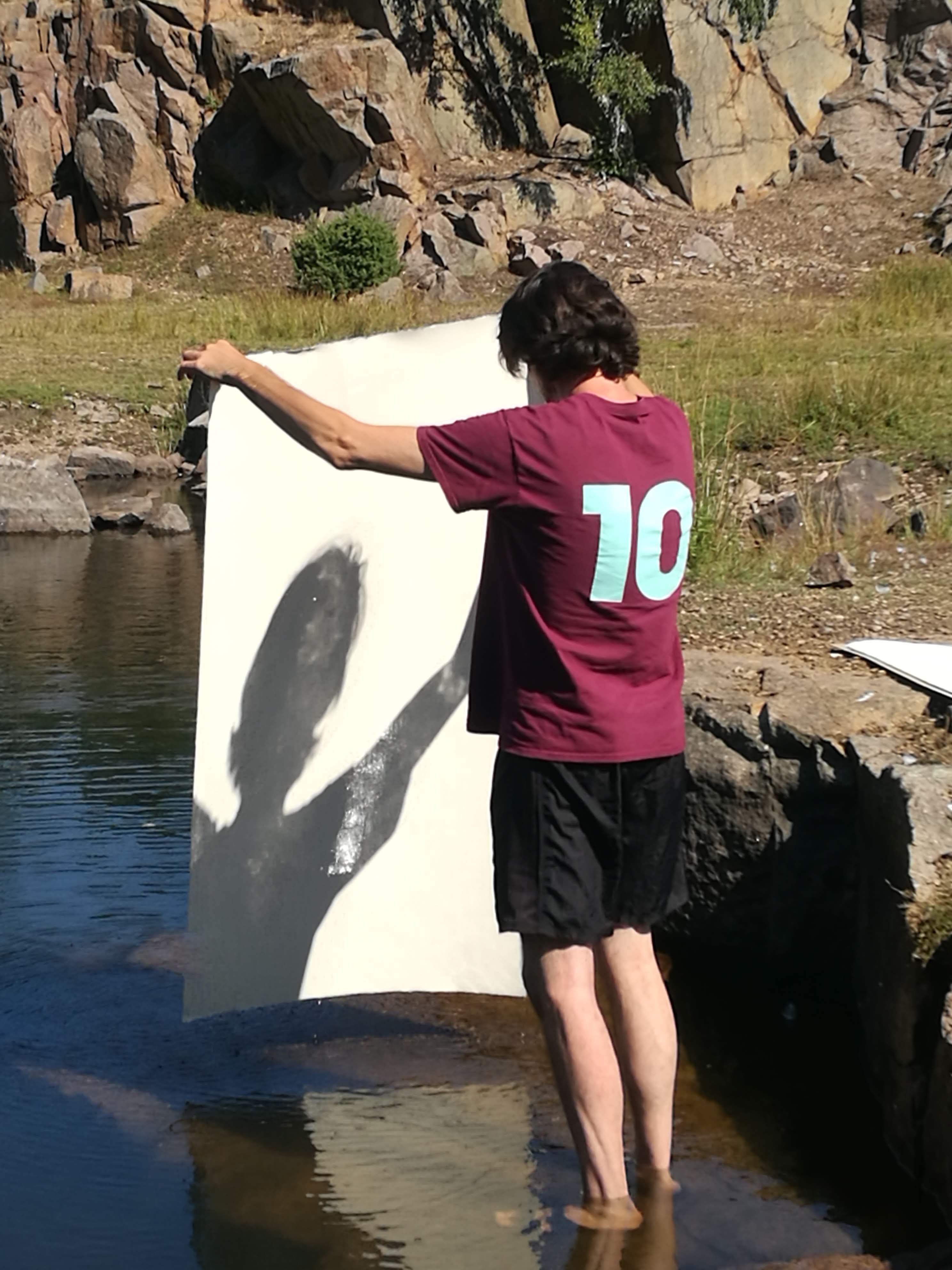
The first two paintings I completed in Bjergbakke Quarry itself. It is an old granite quarry, very small and local in character, that has been out of use since the 70s. Now it is used for grazing livestock and the owners have kindly built a diving platform, so people can jump into the deep quarry lake. Inside the bowl of the quarry, industrial machinery slowly rusts into the soil. It is an evocative place, a quiet arena cut off from its surroundings, where nature is slowly taking back territory previously lost to human activity.
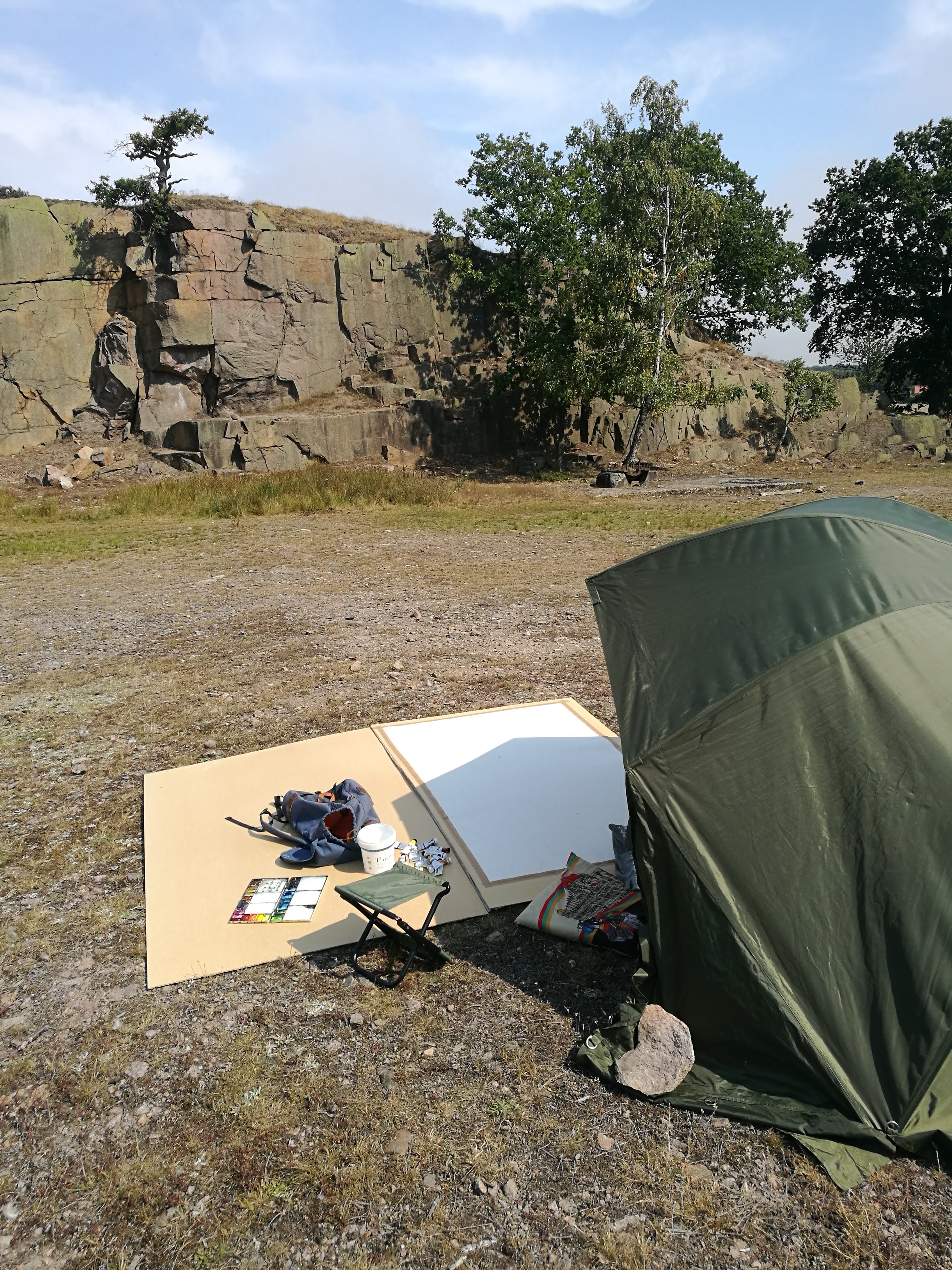
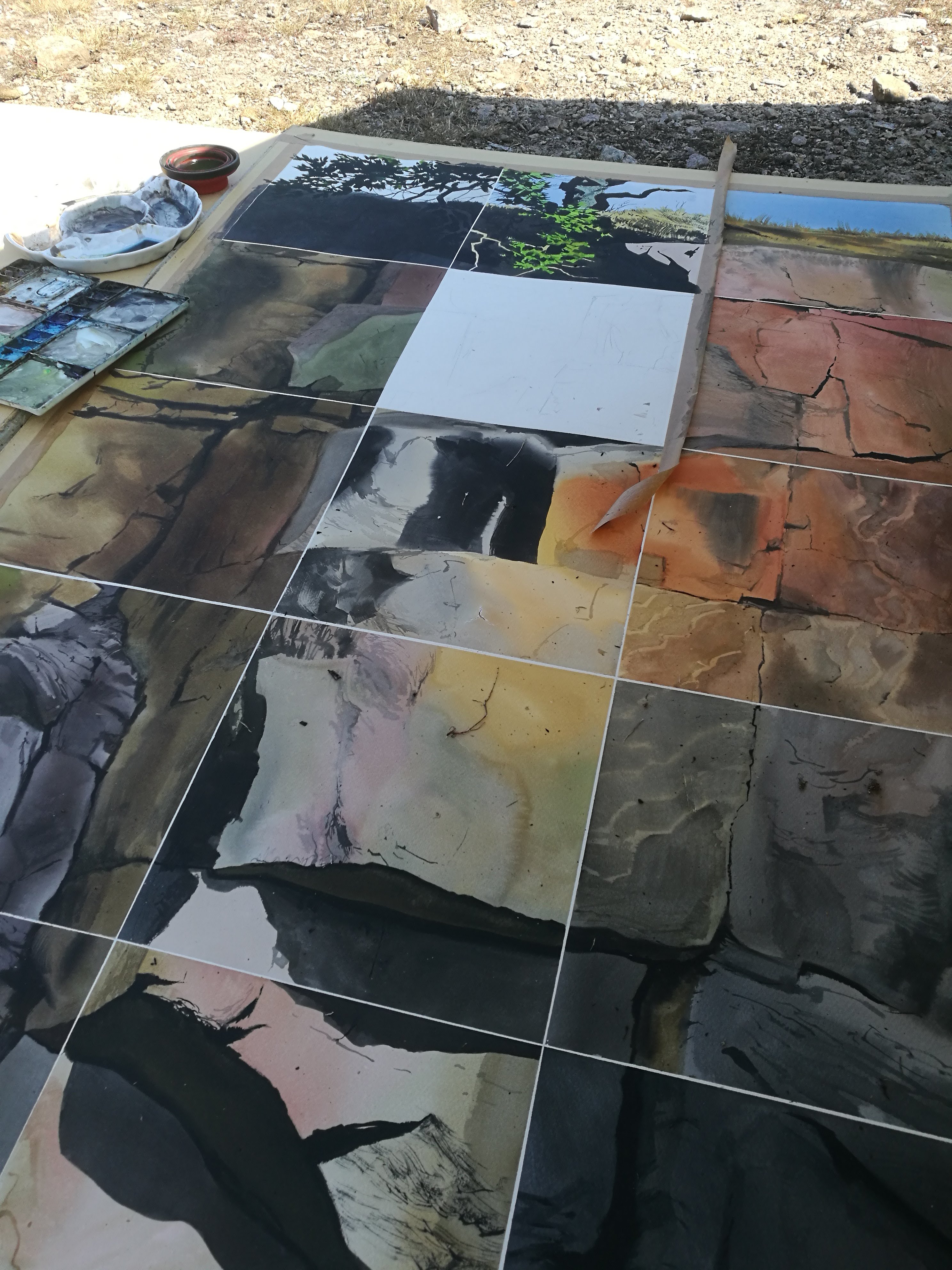
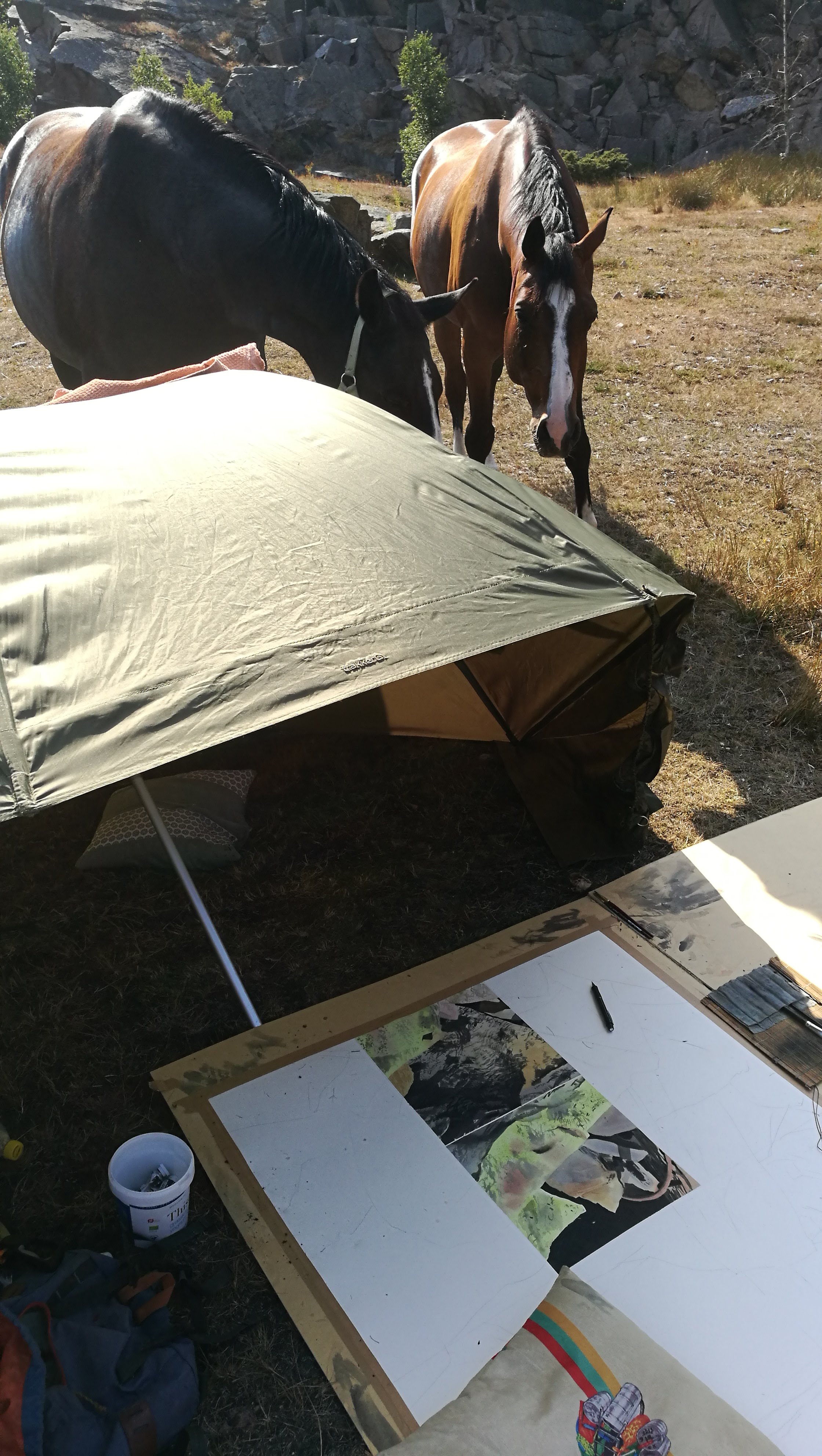
Next I went to Stevns Klint, a rocky outcrop in the northern end of Salene Bugt just south of Helligdomsklipperne. Here the natural granite rock face is completely different in character. As I had in Bolsterbjerg, I started by dividing the paper into 3 x 5 squares. Then I made a very simple pencil sketch of the whole area I would focus on, making notes and sketches. Returning the next day just after midday, I started in the middle of the painting and worked by way, square by square as time went, finishing in the bottom right square, at about 10 pm. The next morning at 5 am I returned and continued, starting from the top left square, until I reached there where I had begun the day before.
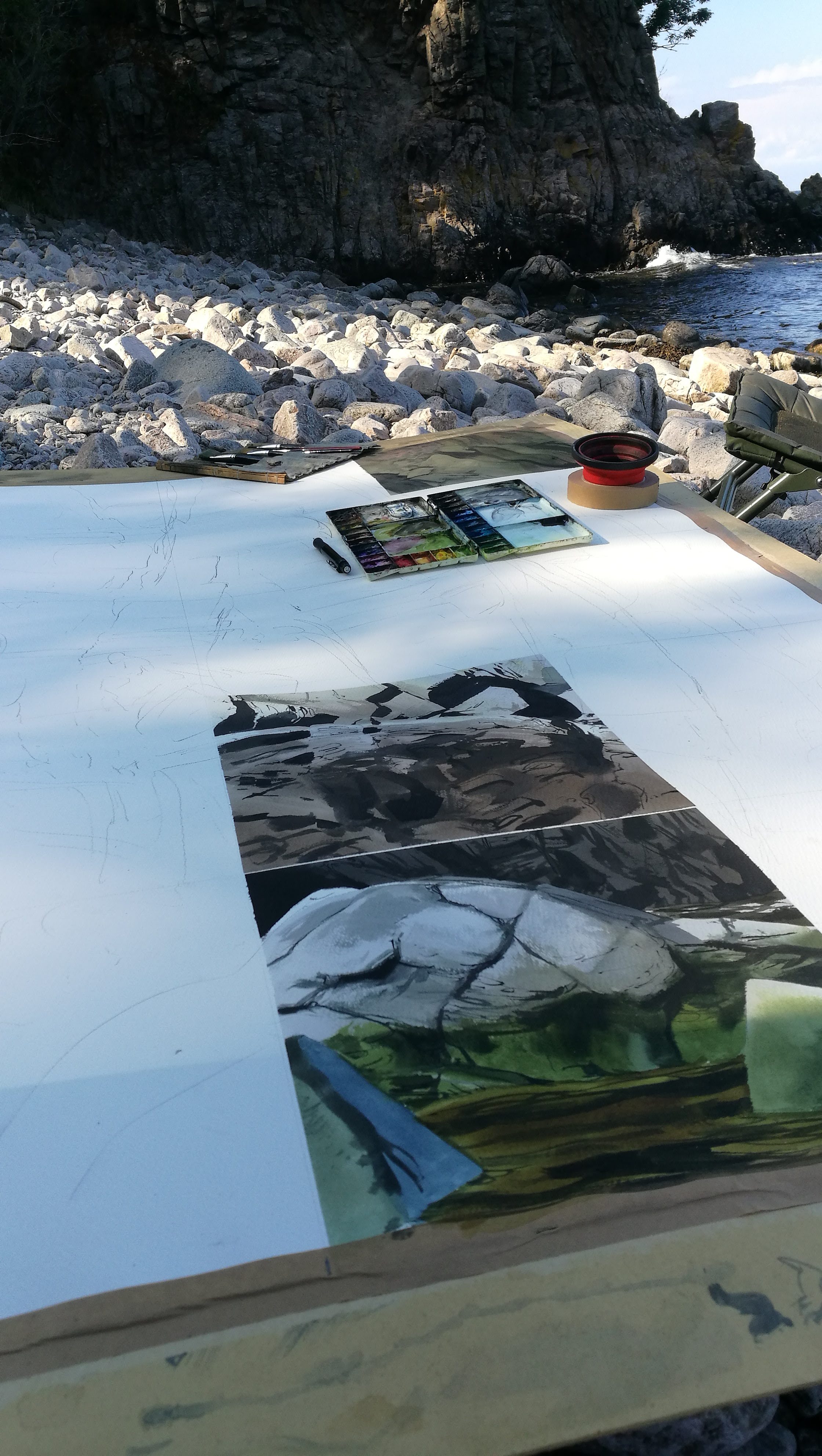
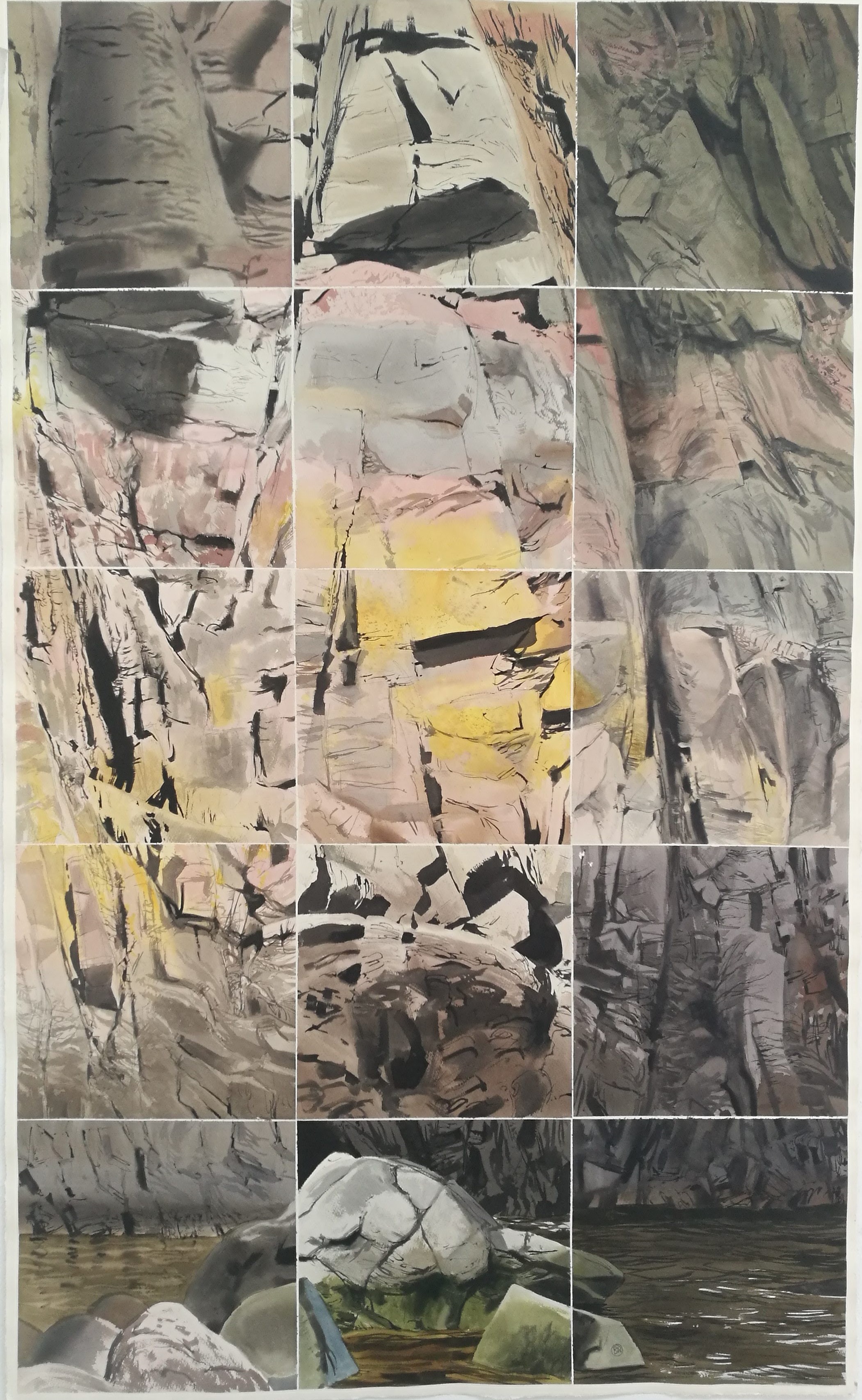
The third venue was Stammershalle, another rocky outcrop further north. Here the prominotory is riddled with iron and bronze age menhir and dolmen and I’ve always felt as though there is a special energy or atmosphere in the area. This time I worked horizontally from left to right. Again, it was an incredible experience to spend so much time outside in one place just looking and looking, and looking…
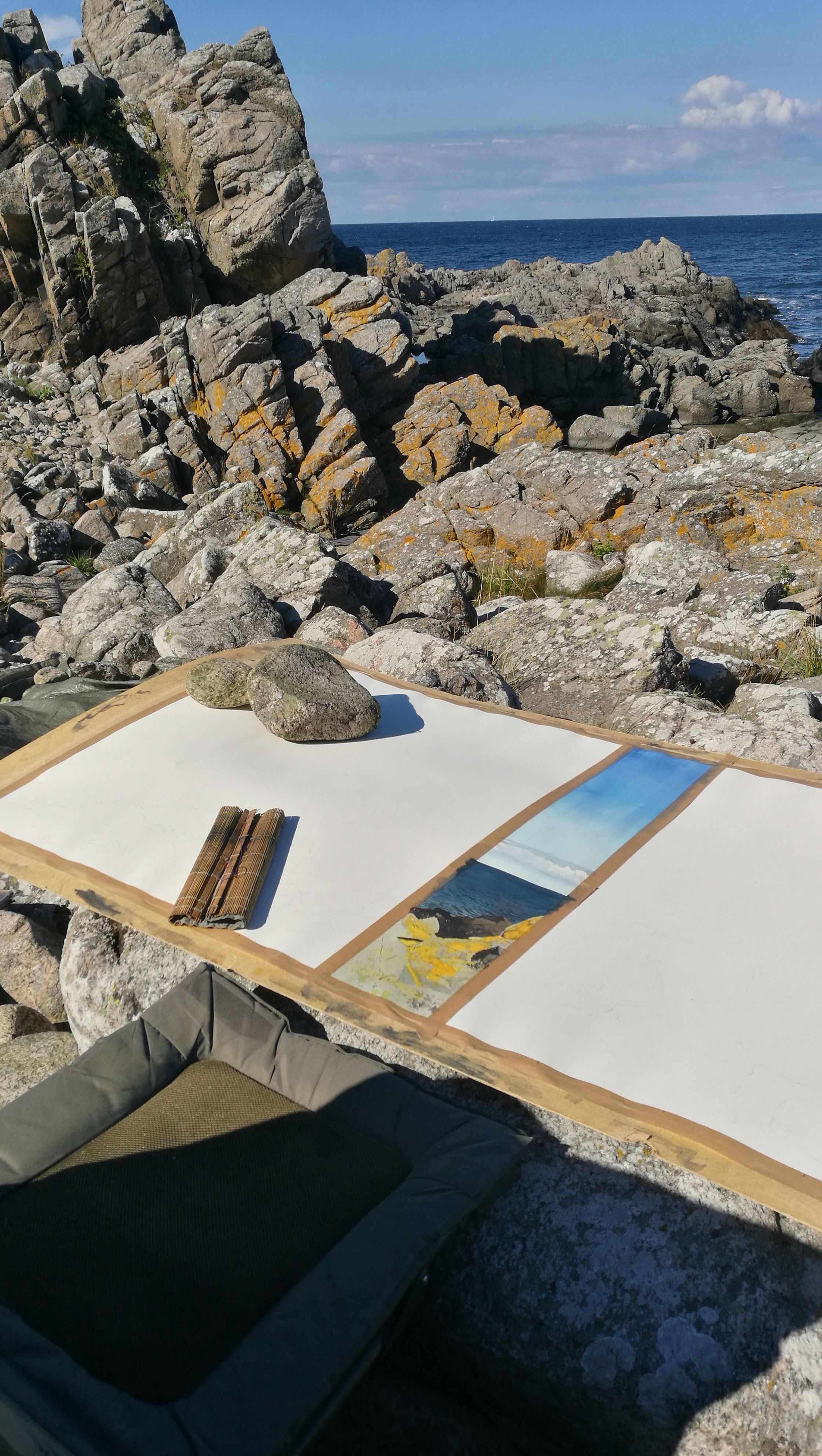

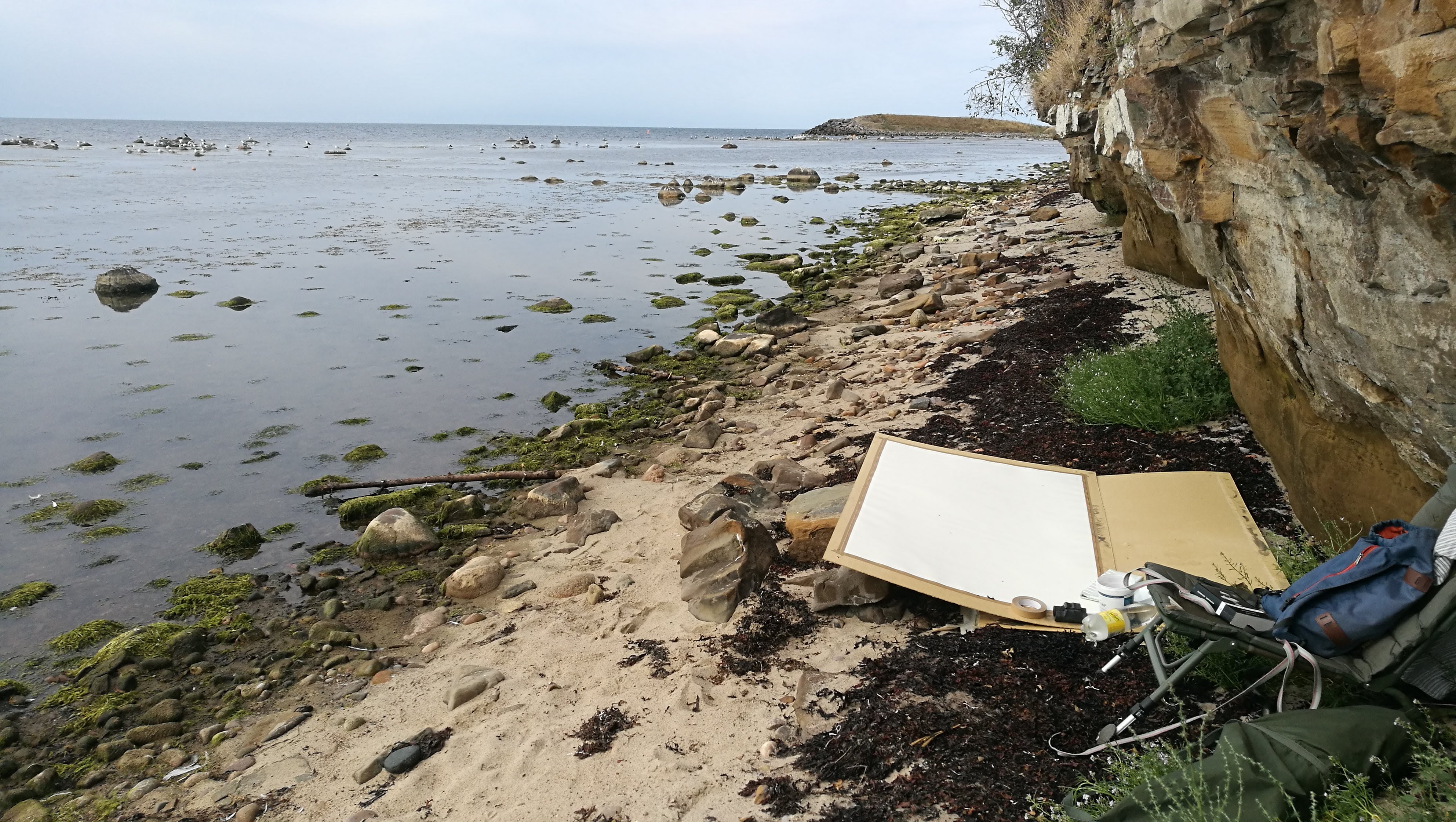
The fourth place I chose was ‘Peder Olsens Havn’ just south of Hasle on the other eastern side of the island. Here sheltering under a low sandstone cliff I was again completely cut off from everything and anyone and had only the gulls for company. At the end of the first day it started to rain and I struggled to keep the huge painting dry under my shelter. The next morning was the most incredible magical sunrise. Whilst I worked horizontally again, I subdivided the painting according to the Golden Mean. This meant that I ‘changed’ more quickly during those parts of the day that the light changed more quickly (the sunrise and the sunset).
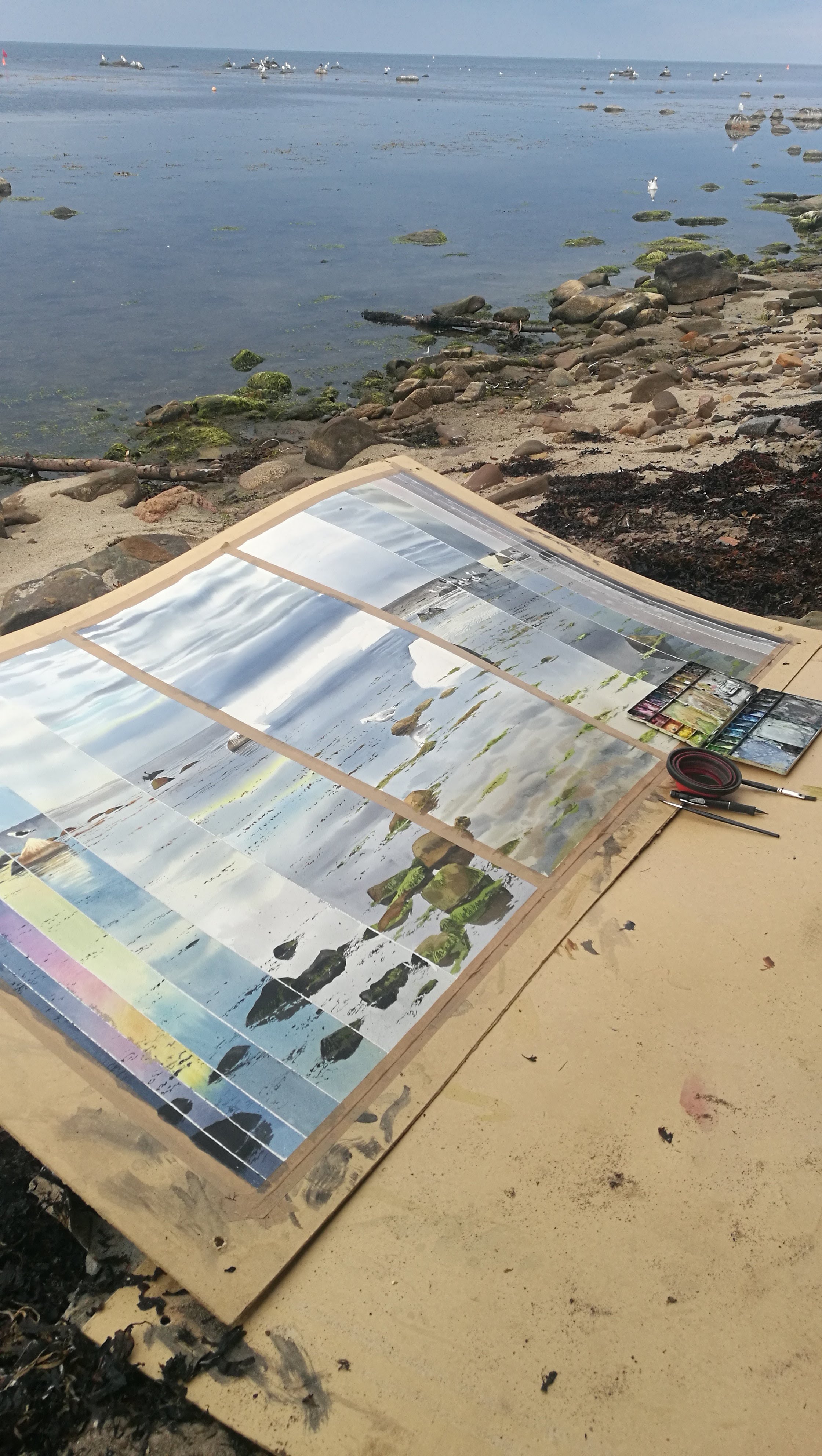

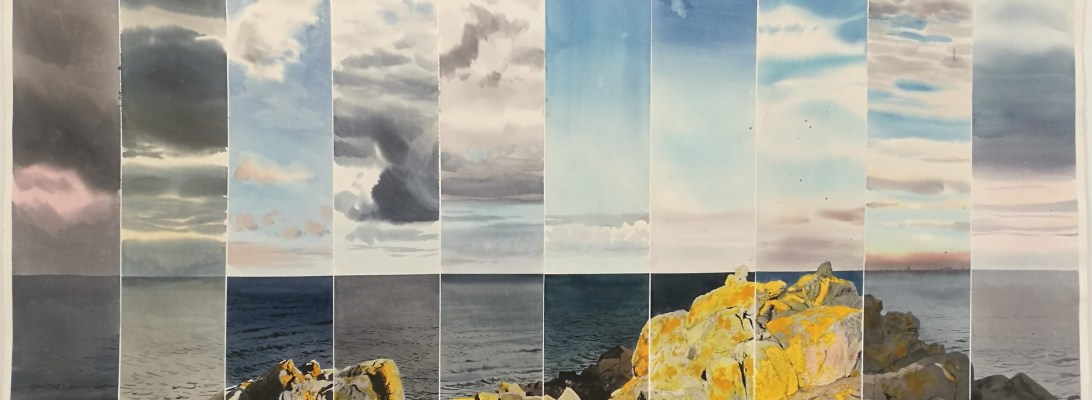
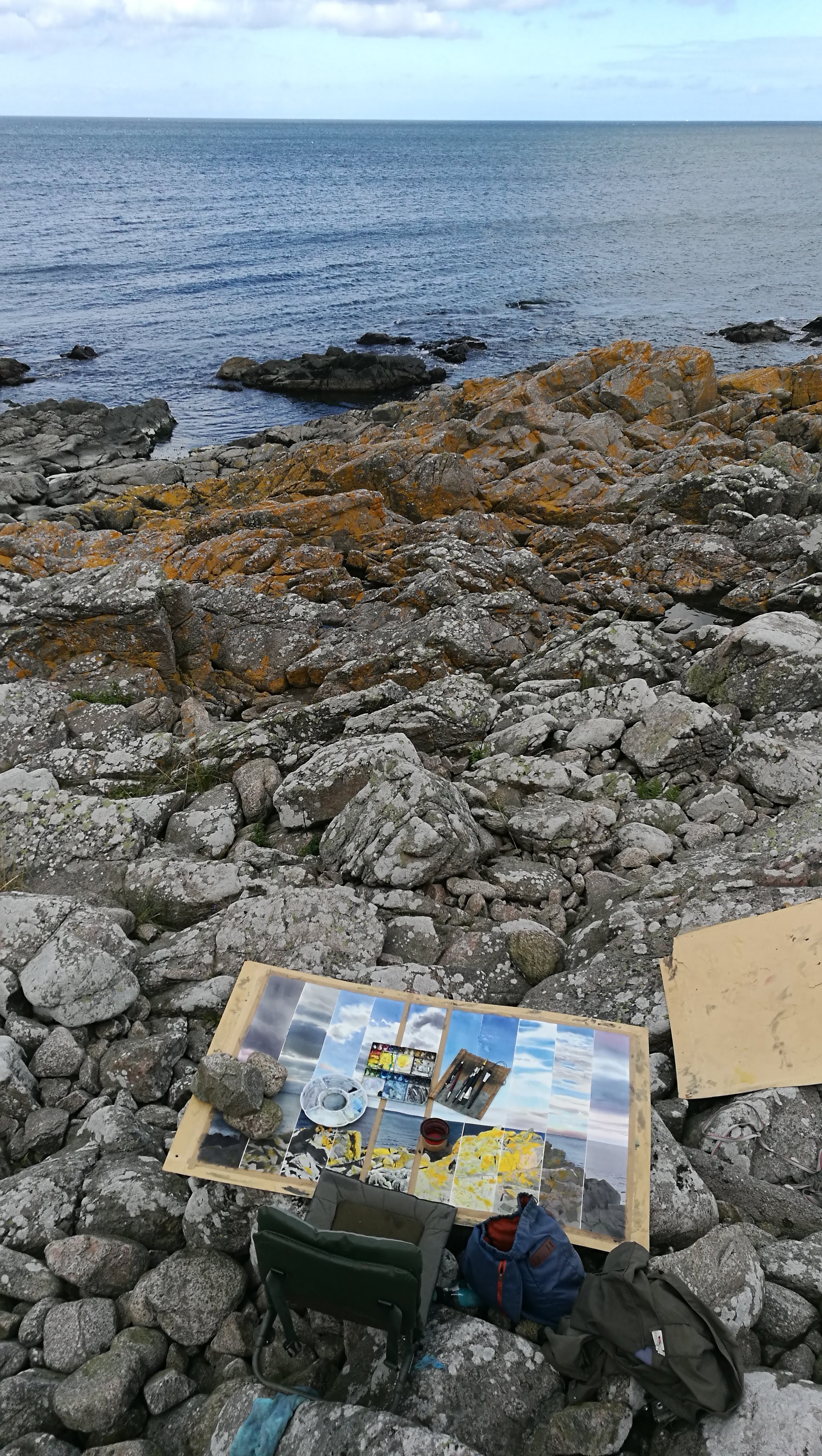
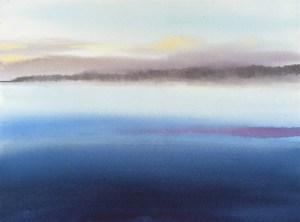
The final three paintings were sky studies, where I subdivided the sky into stripes or squares, and followed it through the day. In the painting below, I started in the top left and work down, then started up on the next column, and so on…

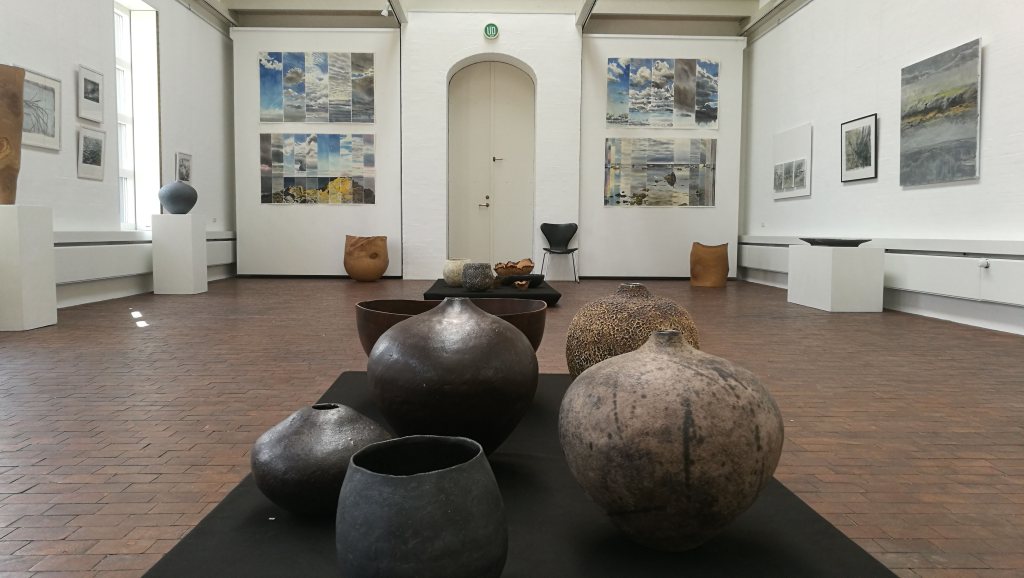
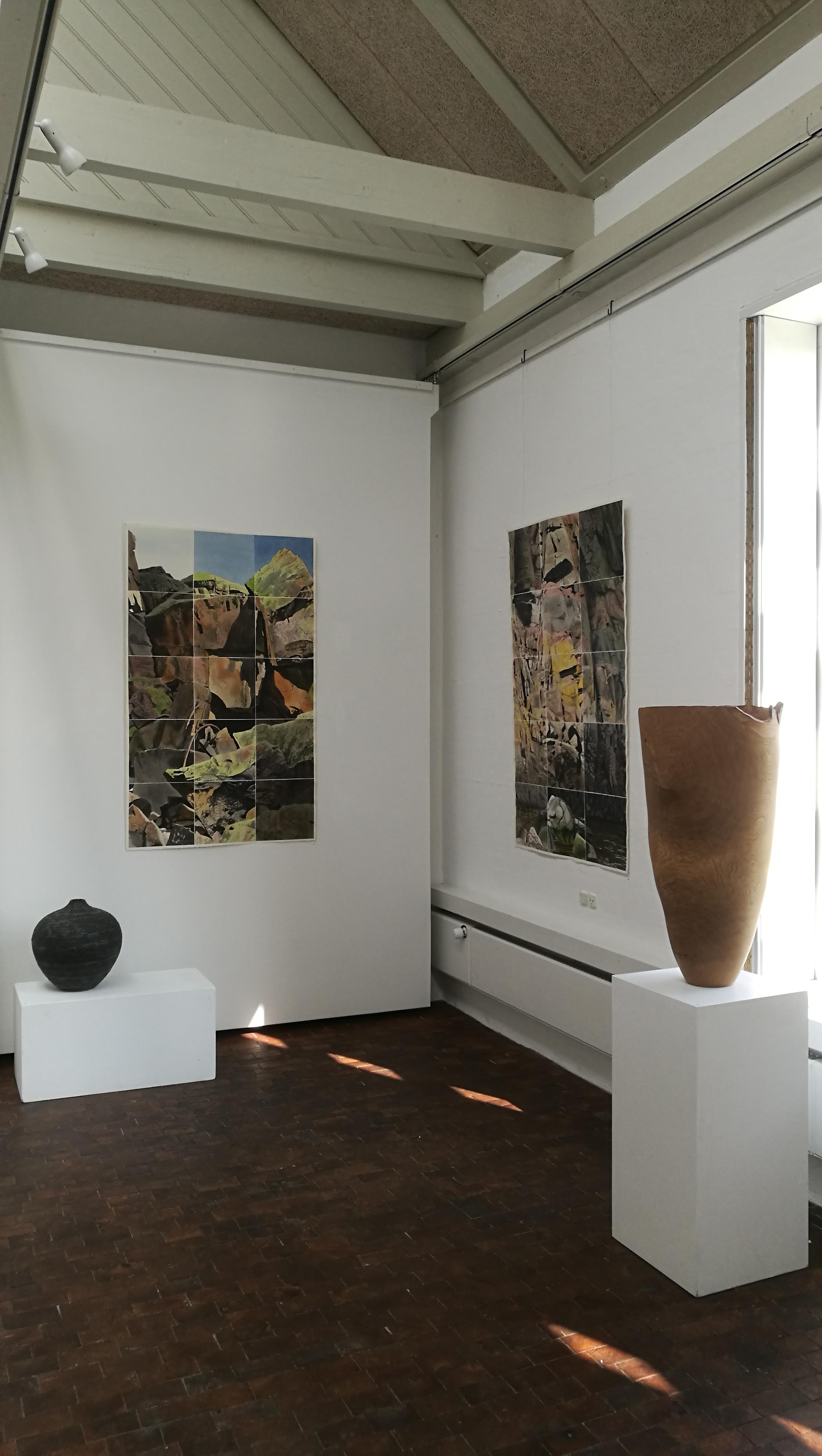
I used pretty much all of August and a bit of September on the paintings. We had a week to install the exhibition, and it went very smoothly, just as it had done the previous times. We the artists worked well together and were ably supported by the passionate and knowledgable volunteers of Gudhjem Museum. Here a photo taken during installation.
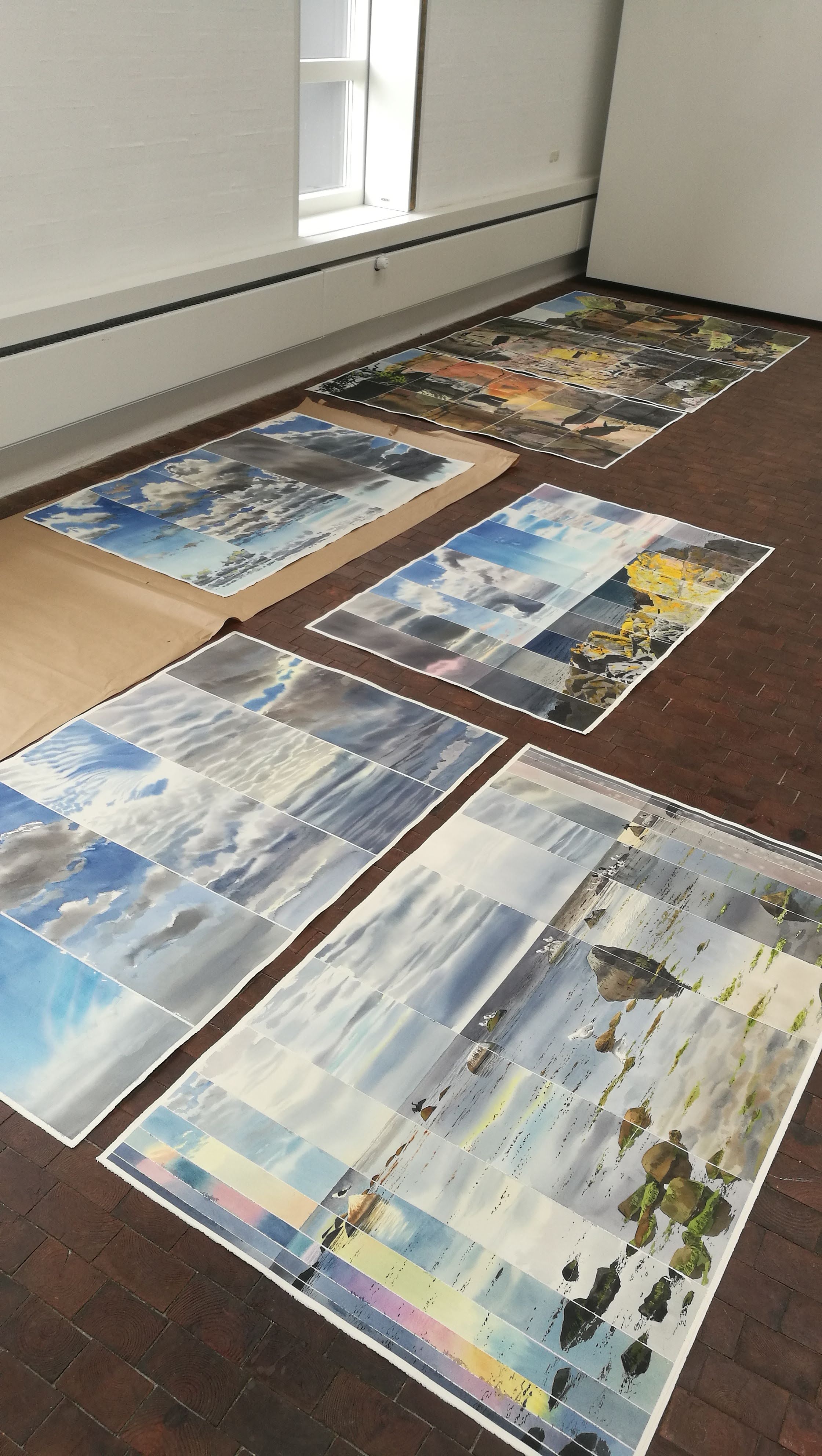
I was surprised and a tiny bit disappointed when I saw how my huge paintings shrunk once within the gallery, but overall I was very pleased with the exhibition and my large watercolours. Unfortunately due to Covid there was no PV, but now I just thank the lucky stars that we were able to open at all. Such a fantastic place to exhibit, and in the company of such talented artists. I think our stuff worked really well together – Earthbound IV? Who knows, watch this space…

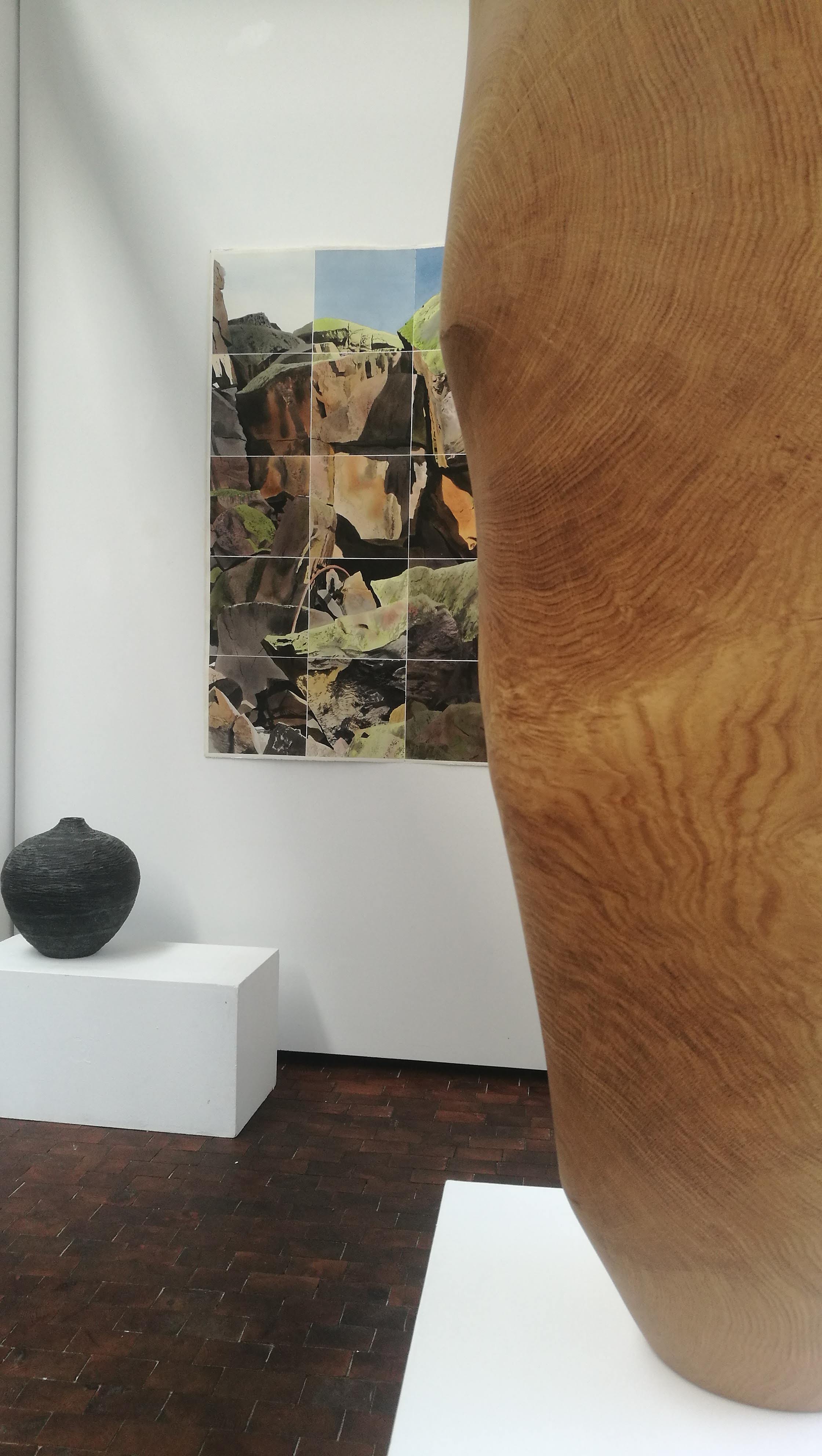
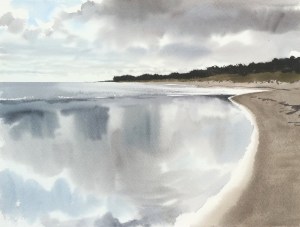
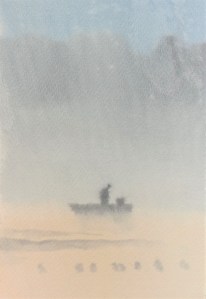 On the shore, two women on horseback thundered up and down the beach, laughing with an unbridled abandon. Just when I thought the morning couldn’t get any more spectacular, a lone kingfisher darted out and flew low, dart like, over the surface of the mirrored sea, and disappeared into the sea mist.
  When the kingfisher returned and perched on a nearby rock I resolved to not paint and just soak in the atmosphere instead. I couldn’t though, and soon got overinvolved with a reflective gull.
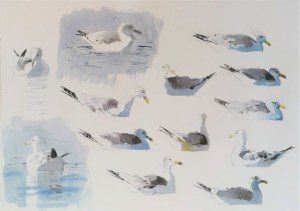
 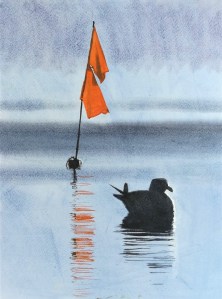 The previous week I had been teaching a field painting course at Bornholm’s Højskole, and the lessons of the week were still fresh in my memory. I tried to not get too upset with the reflective gull disaster, and just carry on (‘…don’t judge and keep working’). I lost myself in some herring gulls feeding in the bay, the sea mist long having been burned off by the rising sun.
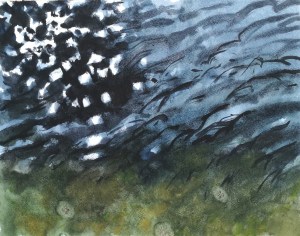
  Before moving off from my perch at the end of the pier, where I had now been for many hours, I tackled the solar reflections on the surface of the water. I wanted to show how the green seaweed, rocks and innumerable jellyfish below the surface of the water replaced the reflections of the sky towards the bottom of the visual plane, but failed.
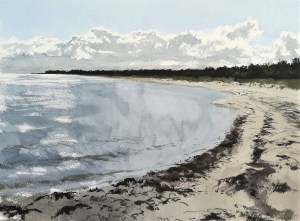
  I finally packed my things and started to walk on Balka beach towards Snogbæk, the day’s destination. I stopped again rather quickly, wanting to capture the sweep of the bay, with Snogbæk pier in the far distance.
  As I was painting, the first flocks of graylag geese flew overhead, returning to spend the day at Nexø Sydstrand, last week’s start point. I quickly drew the mutating shape of a large flock of several hundred geese, as it passed by.
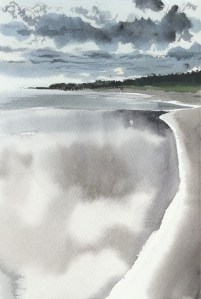
 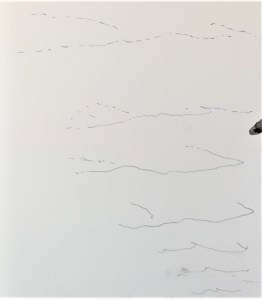 As I continued walking along the beach my eye was caught by the rills, folds and patterns in the sand caused by the action of the waves lapping at the shore, together with the tracery left by mica, crushed mussels and seaweed. A sandbank created a lagoon of completely still water that reflected the clouds scudding by in the dynamic skyscape. I made two studies (see also top)
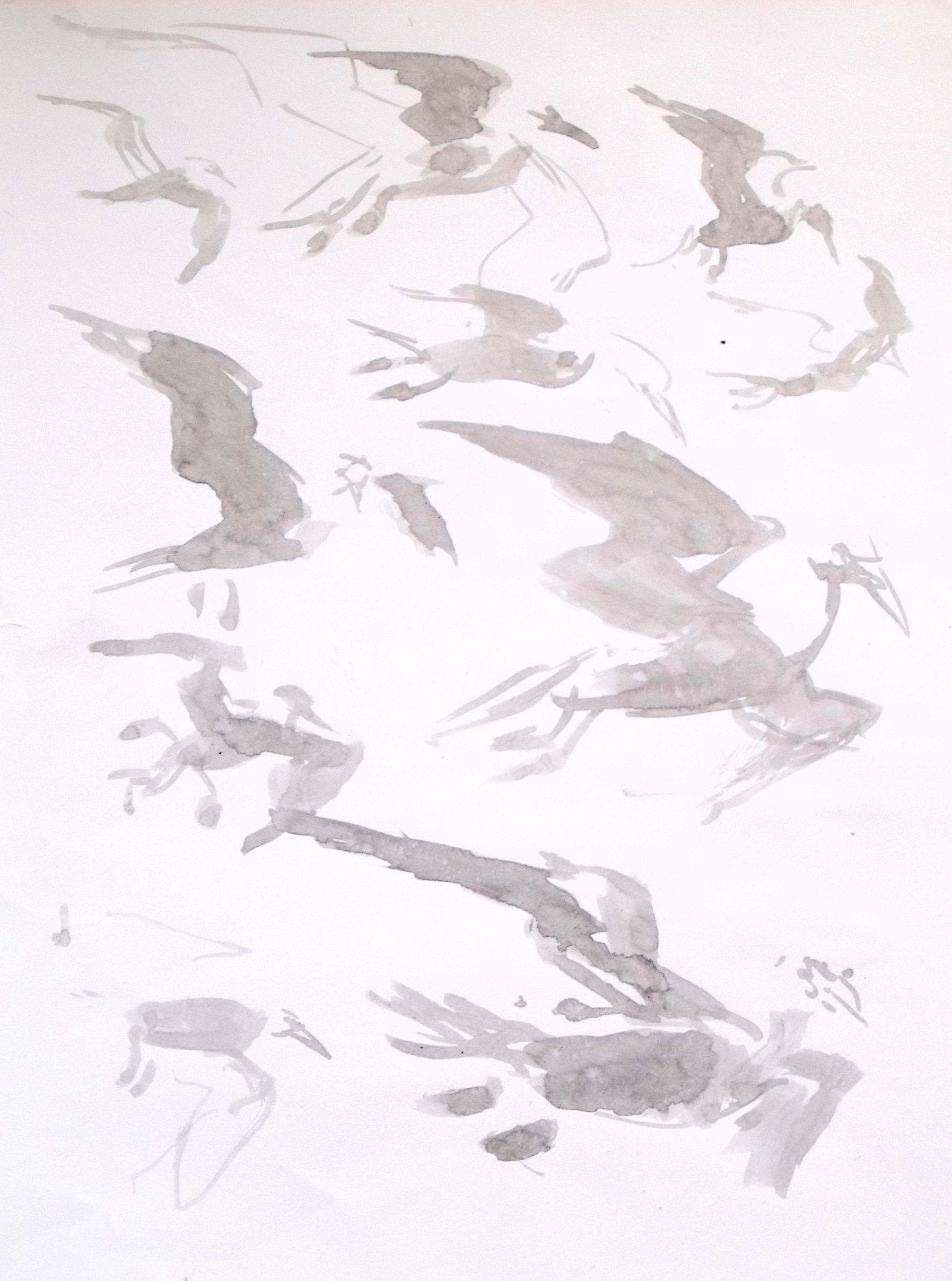
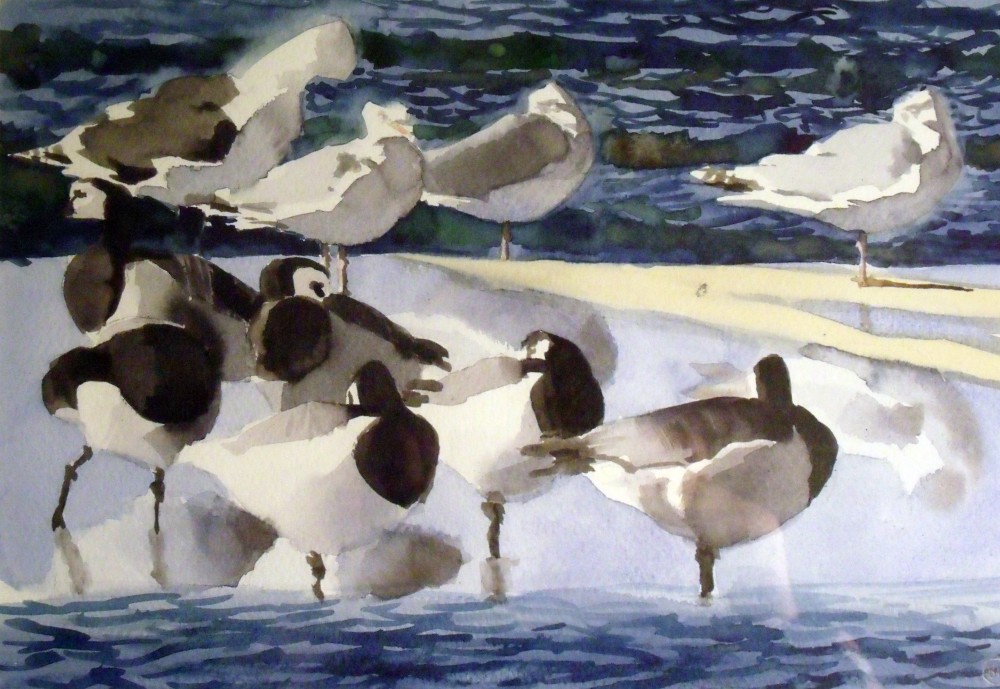
  I carried on along the beach all the way to the end of the bay at Snogbæk, where I set up the M60 and had lunch and a really good sleep. On waking I looked towards Salthammer Odde, the great shelf of grey balka sandstone that juts out from Snogbæk and continues under the sea, attracting a rich diversity of sealife and birds. All week with the students we had been concentrating on tonal values and working with ink, which I had bought along. I tried to capture the movement of the feeding frenzy on a bank of seaweed, where gulls, geese, crows, pigeons and starling all worked together feverishly, hoovering up sandflies and the like.
 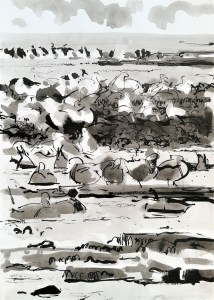 I worked again with the ink, trying to capture the dynamic shapes and silhouettes and making inky marks with sticks, feathers and seaweed.
  I packed my things and walked on to Snogbæk, taking time out to look and listen before continuing with painting again. I turned my back to the town, an eclectic and unpretentiousness mixture of tourist cafes, bars, summer houses and fishermen’s’ huts, and looked instead towards the sea. After a detour to the local supermarket I sat on the sandstone bedrock, hidden amongst the vegetation, and looked with my scope towards the multitude of gulls preening, sleeping and standing stoically in the early evening breeze.
  The day finished quickly and I had no time to draw the six curlew that arrived just as the sun was setting and my lift arrived.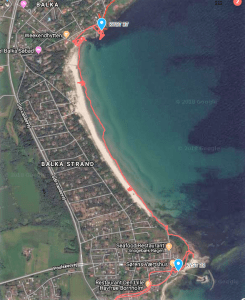

 I had the most amazing 10 days on
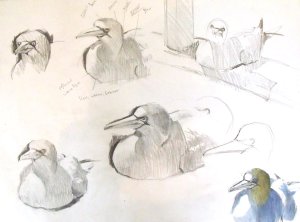
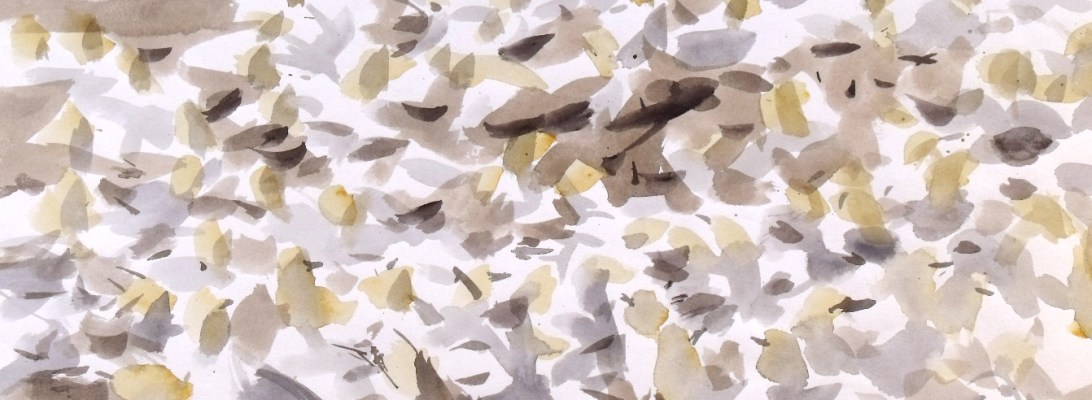
 Really the most amazing week in Aberlady, Scotland (the following is summary I sent to SWLA for their website)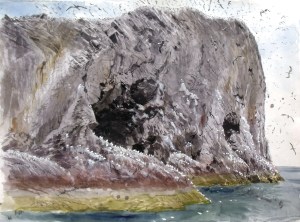
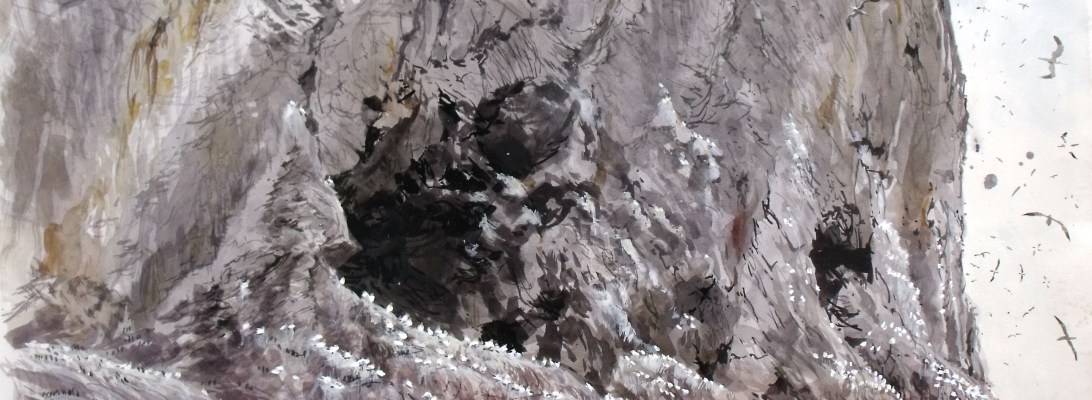
 A quick word on the places we visited. On the first day I couldn’t understand why everyone was getting so worried about the weather, and whether or not we would get to visit Bass Rock. Surely it couldn’t be that good? It was, and then some. I will never forget my two days on the Bass – deafening noise, an unholy stench, a stinging wind, and gannets as far as the eye could see – truly an other-worldly place. St Abbs head was almost its equal, an incredible collection of cliffs and rocks that, after a day or two of drawing, you couldn’t help taking home with you.
 www.benwoodhams.com

