For at læse denne KYST 38 blog på dansk, se her…
See here for an introduction to the KYST project
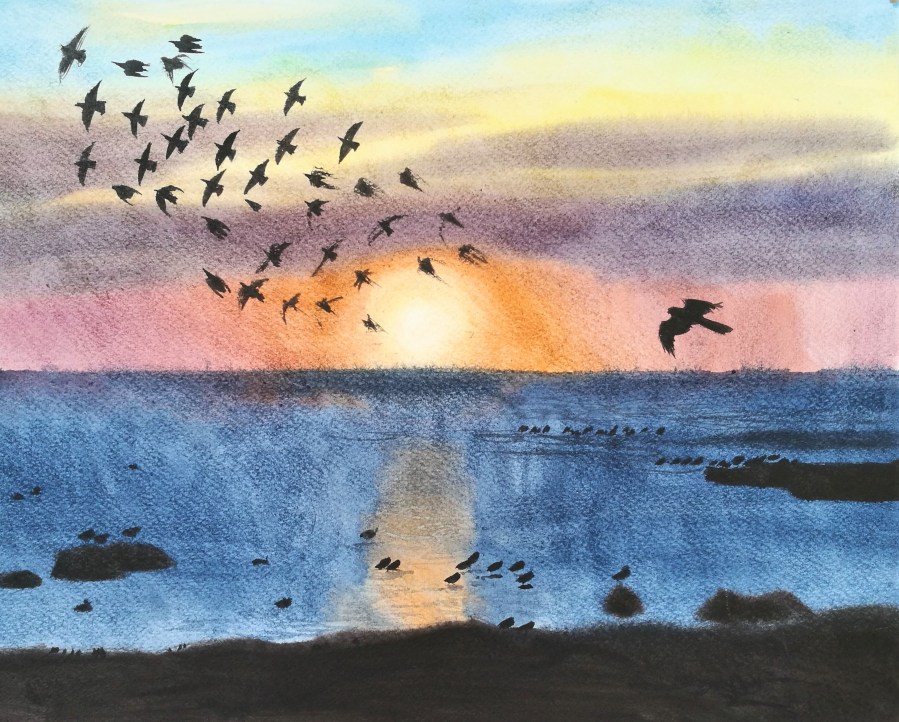
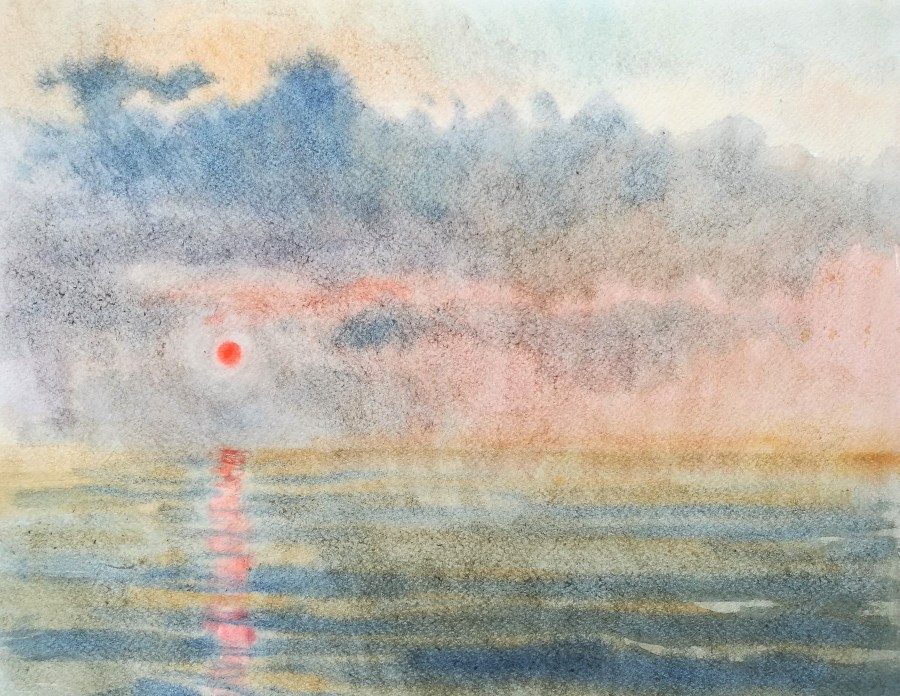
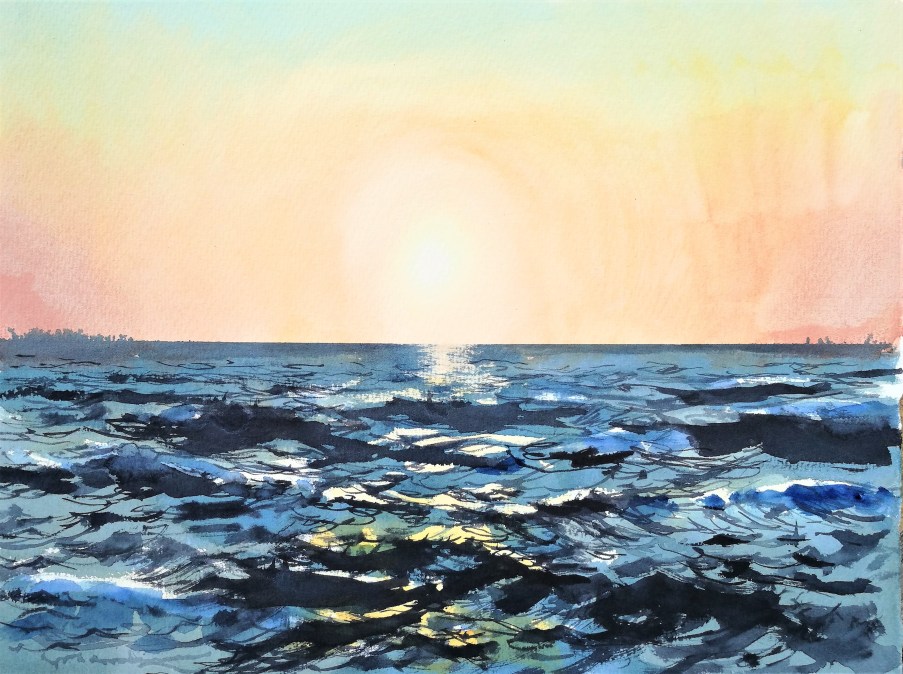
KYST 38 It was a warm, still morning and I arrived in good time for a change, in time to see the wonderful sunrise over the sandstone rocks at Salthammer. I unpacked and got to work, just as a sparrowhawk shot past in pursuit of some starlings.
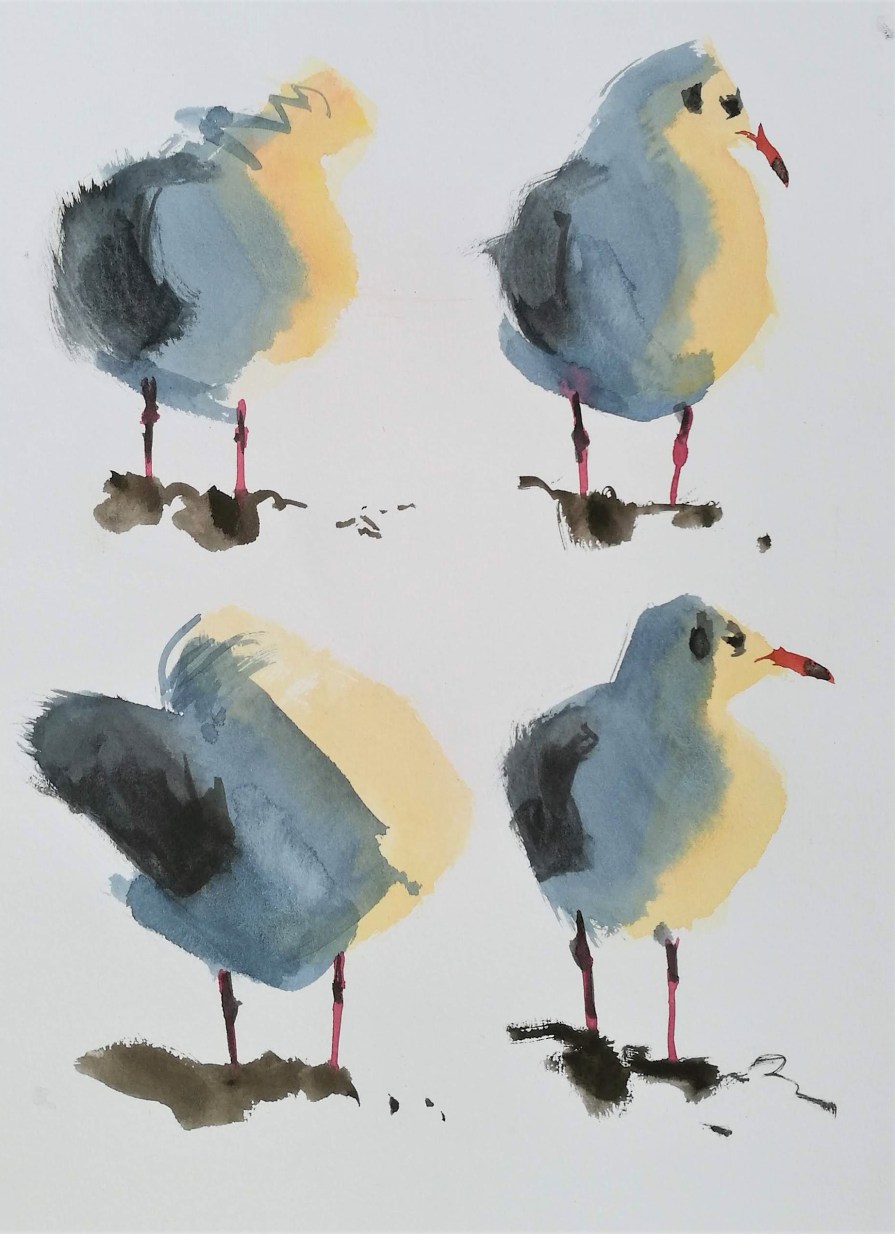
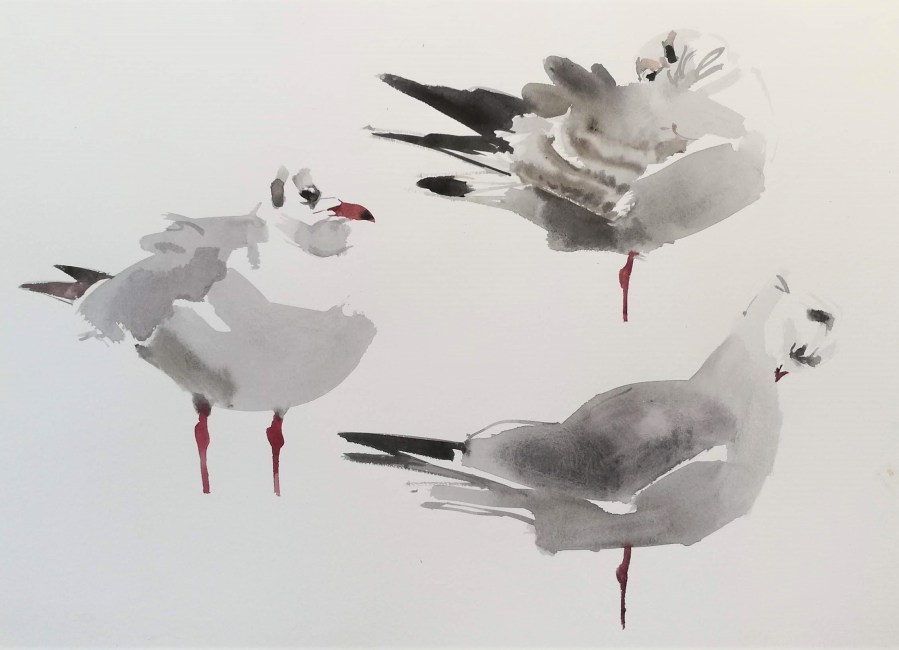
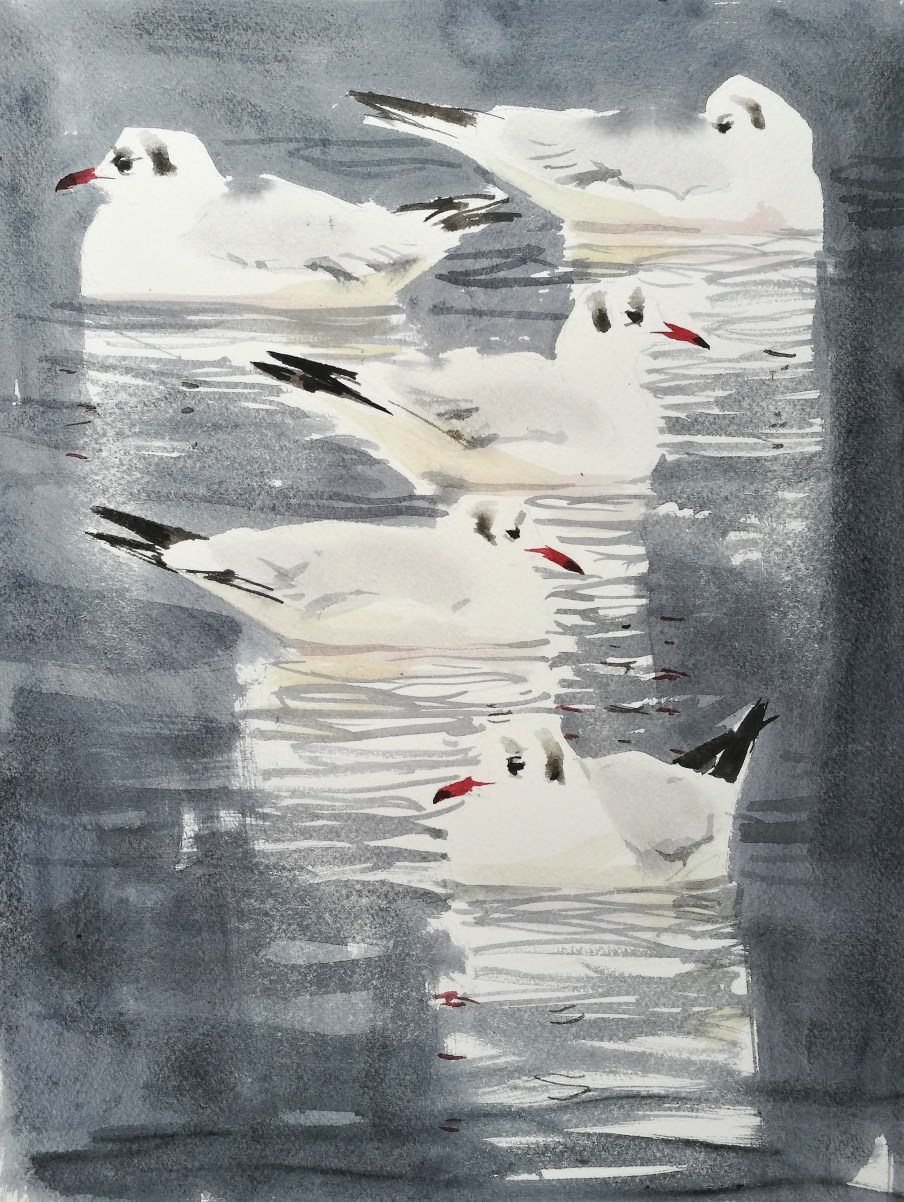
Deeply unsatisfied with the day’s first painting, I tried to loosen up a little, concentrating on the orange light hitting the side of the slumbering black-headed gulls.
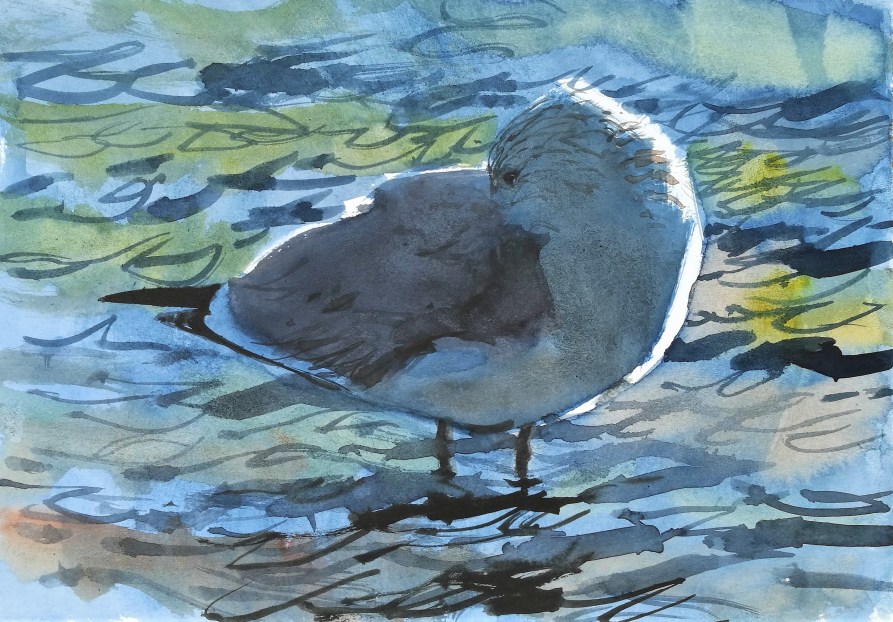
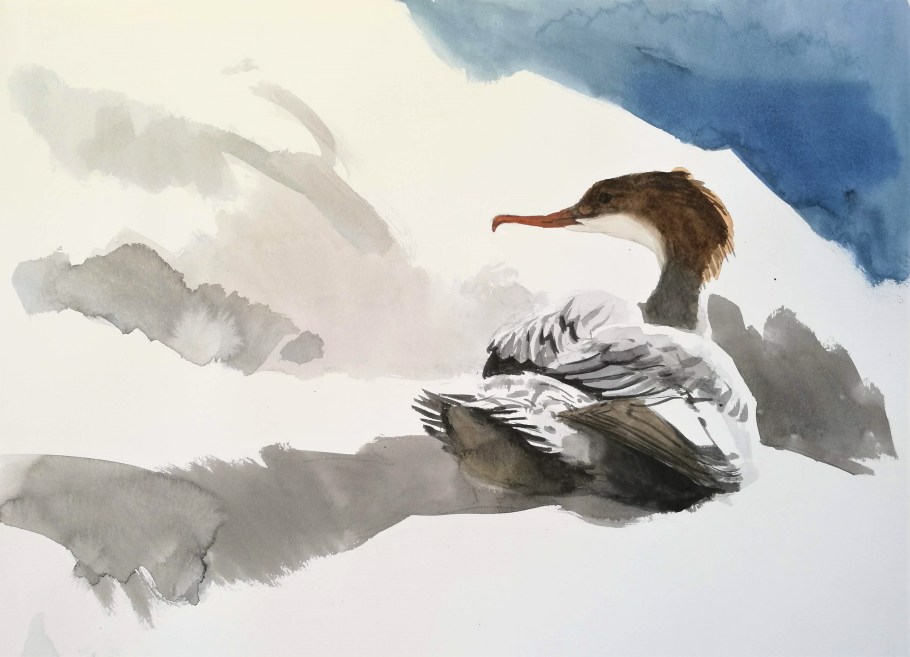
A backlit herring gull was deep blue, with a silver lining.
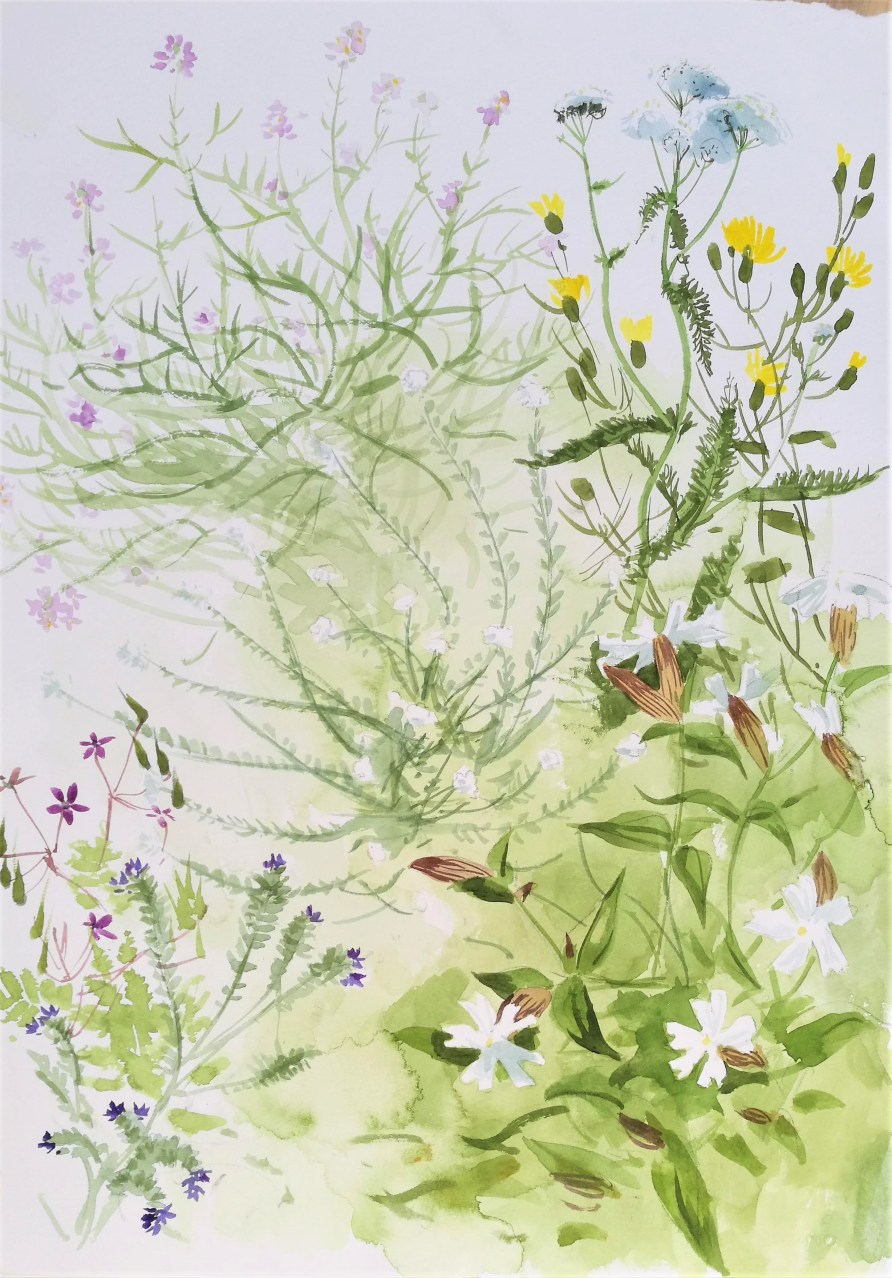
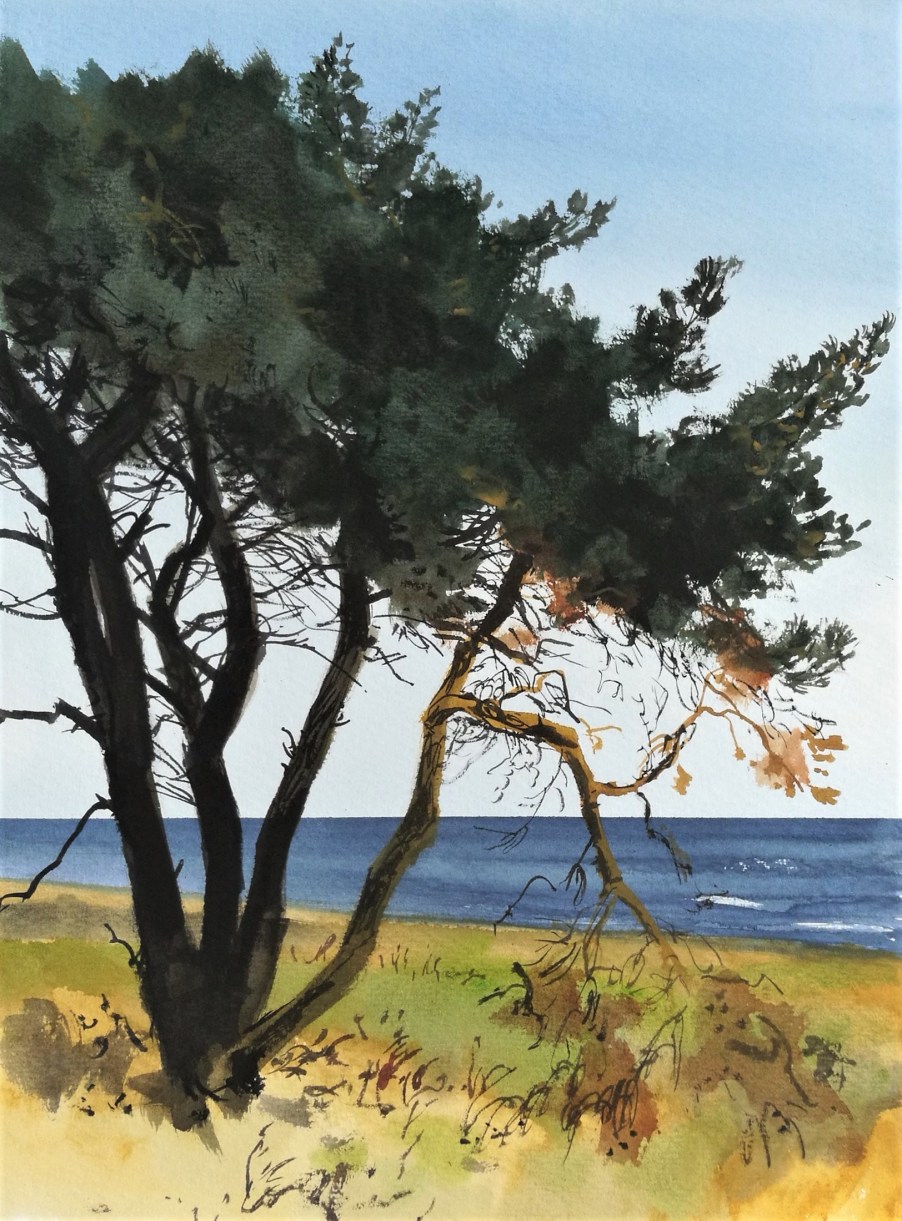
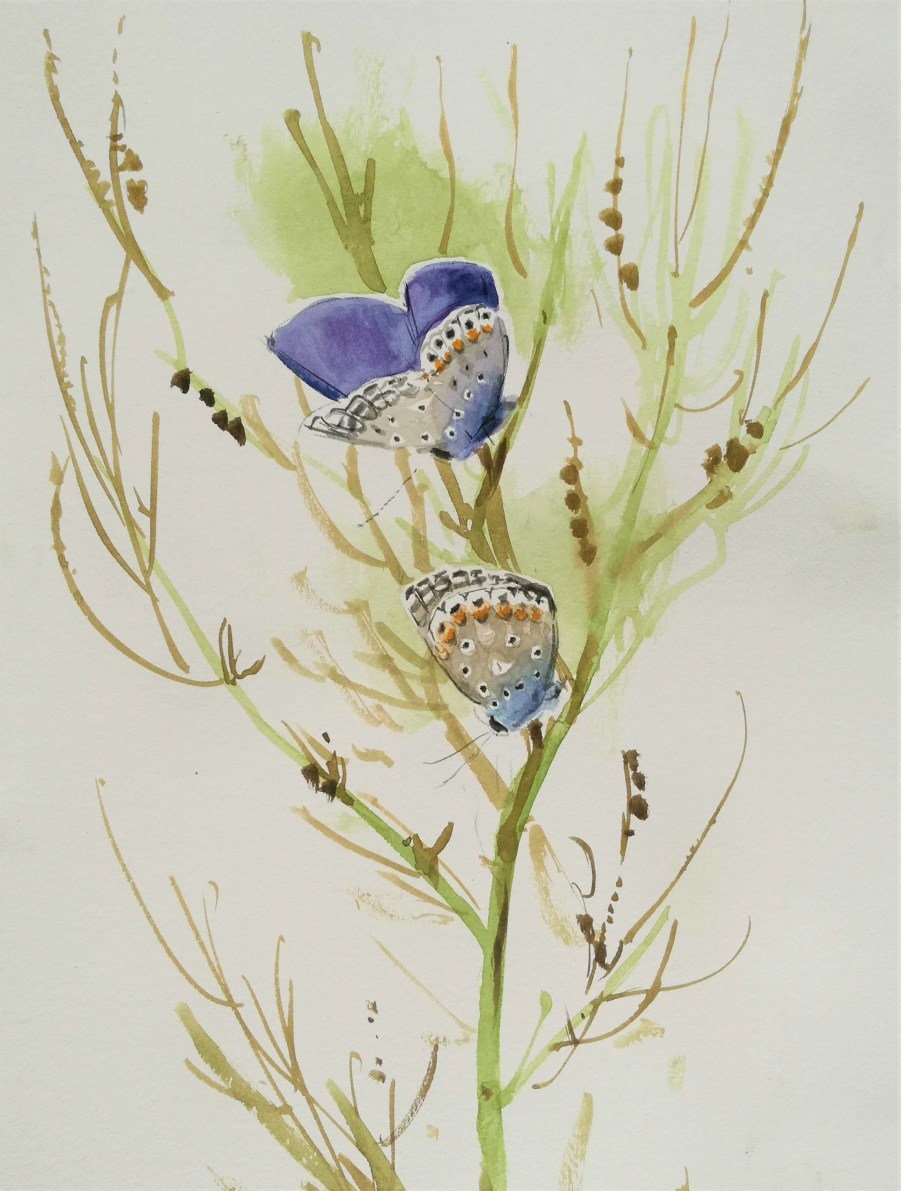
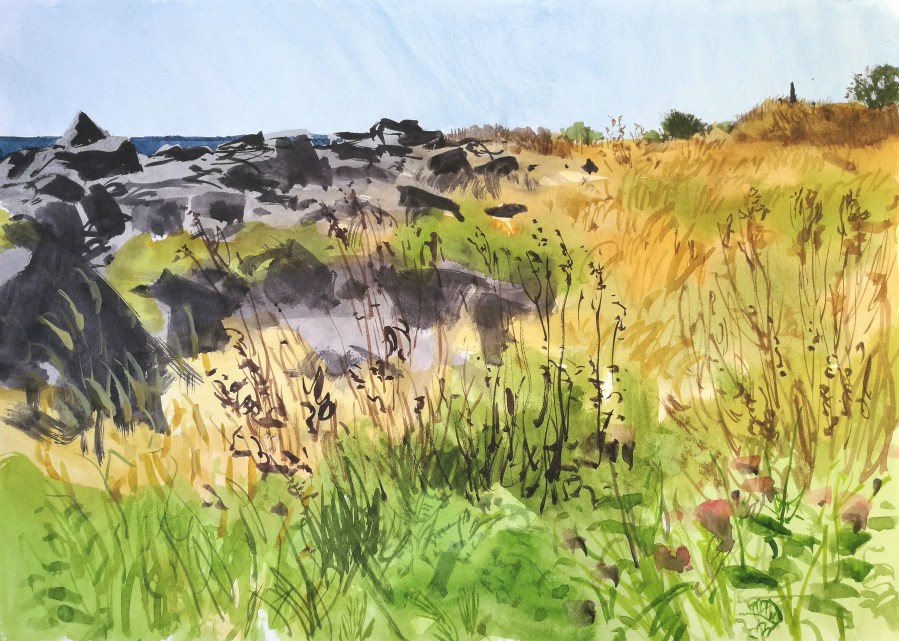
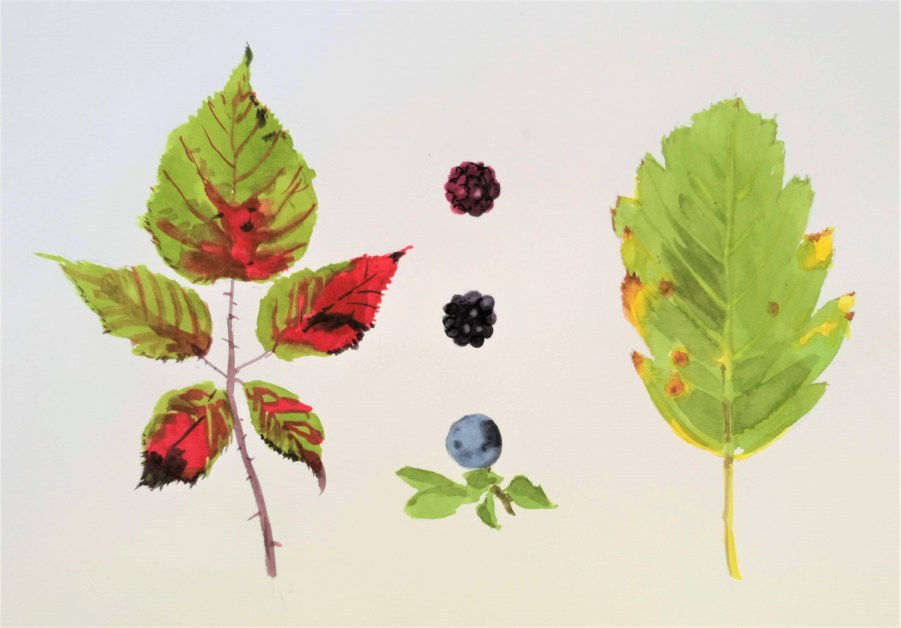
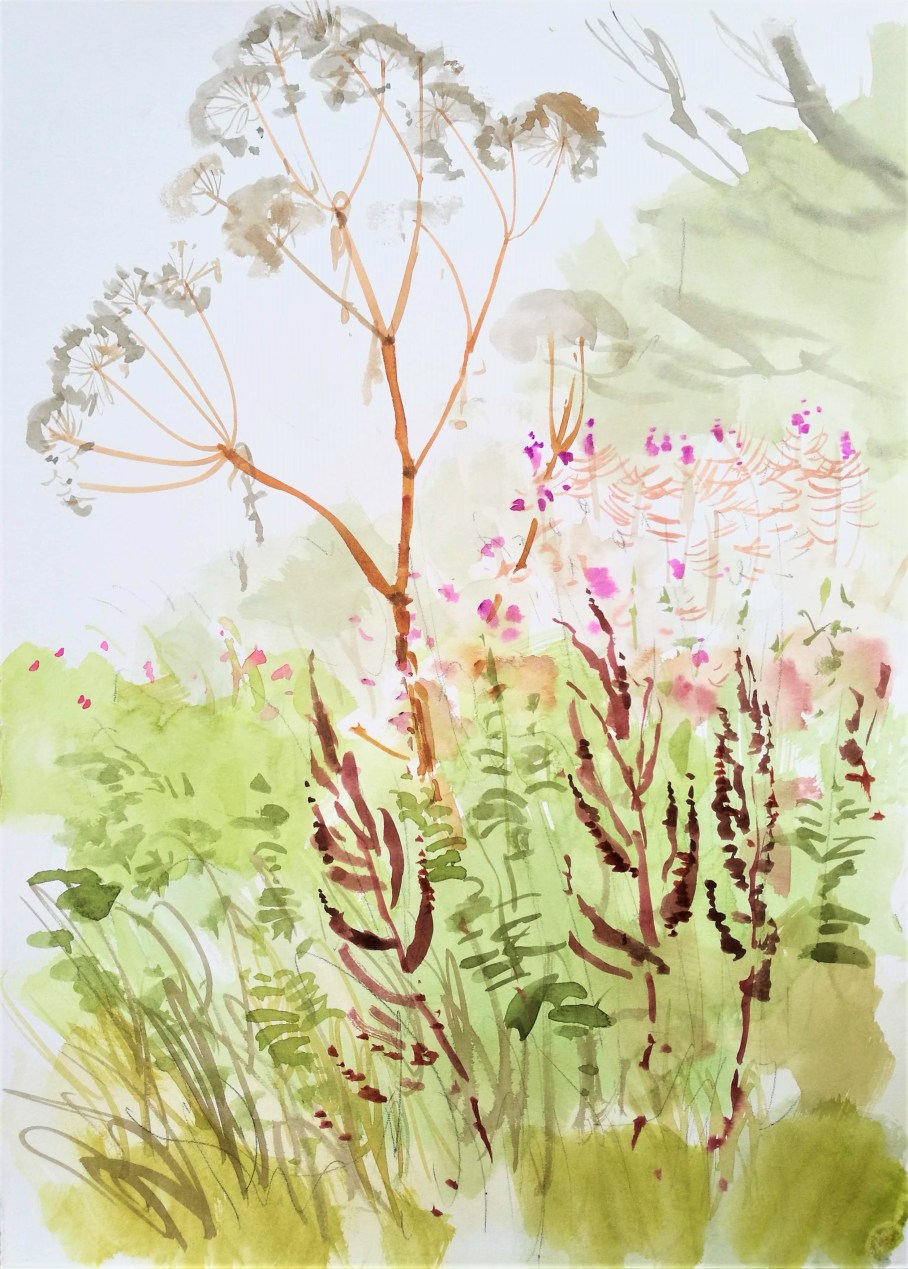
Once the magical first hour of dawn had turned into daylight, I turned my attention to the various plants and flowers growing in the sandy beach by the shore. These were mostly new to me and very different from the flora on the granite coast further north.
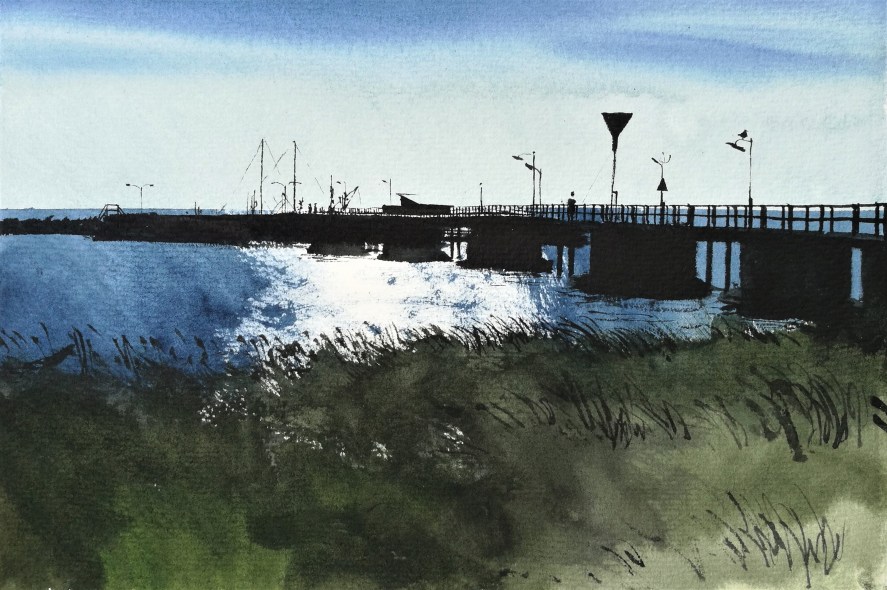
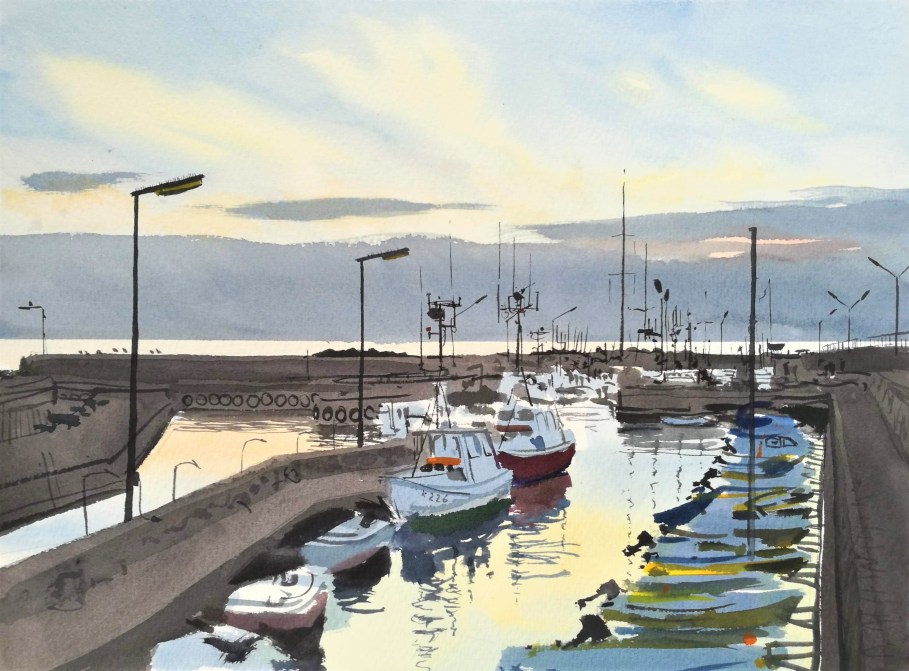
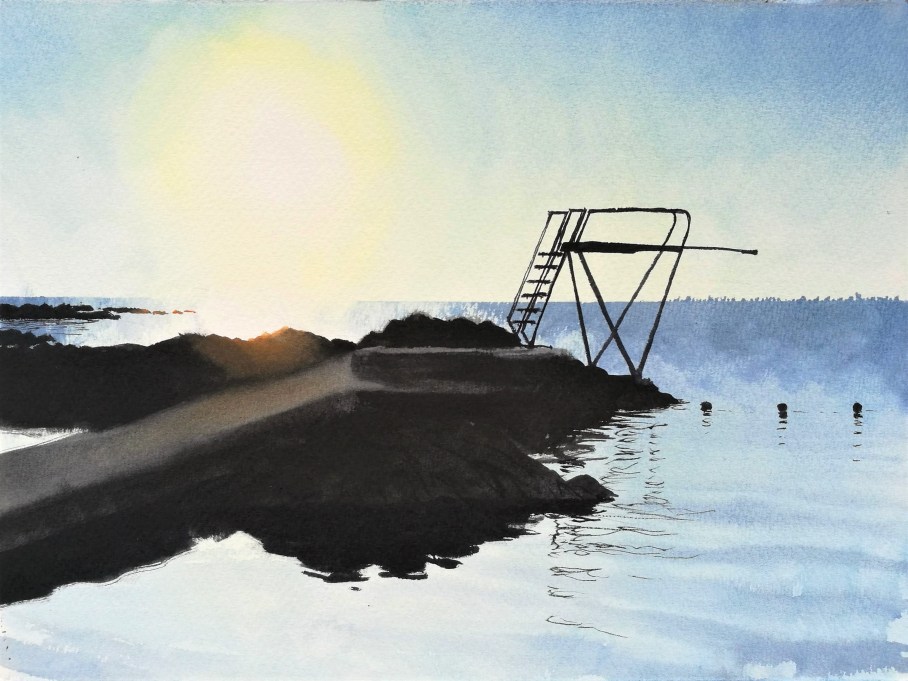
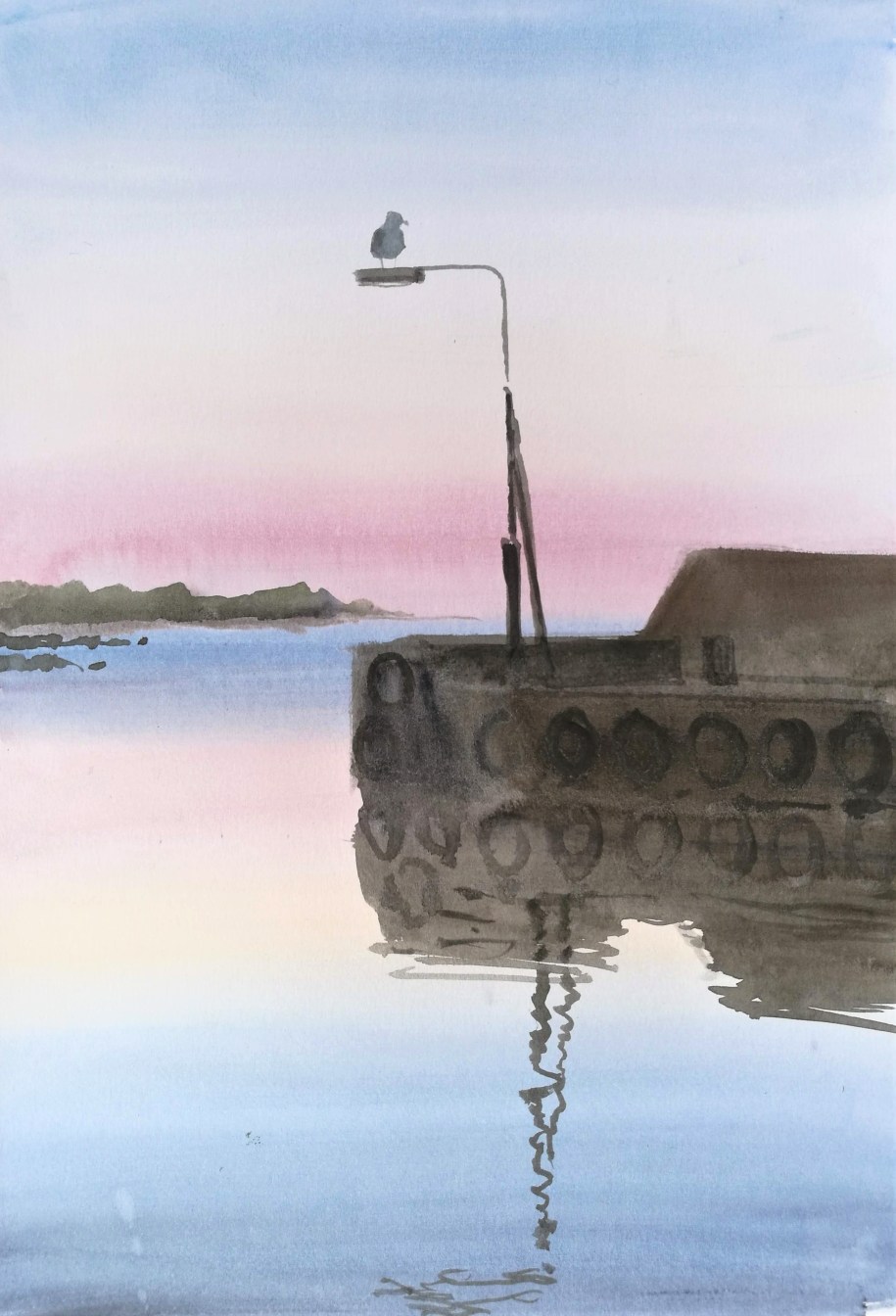
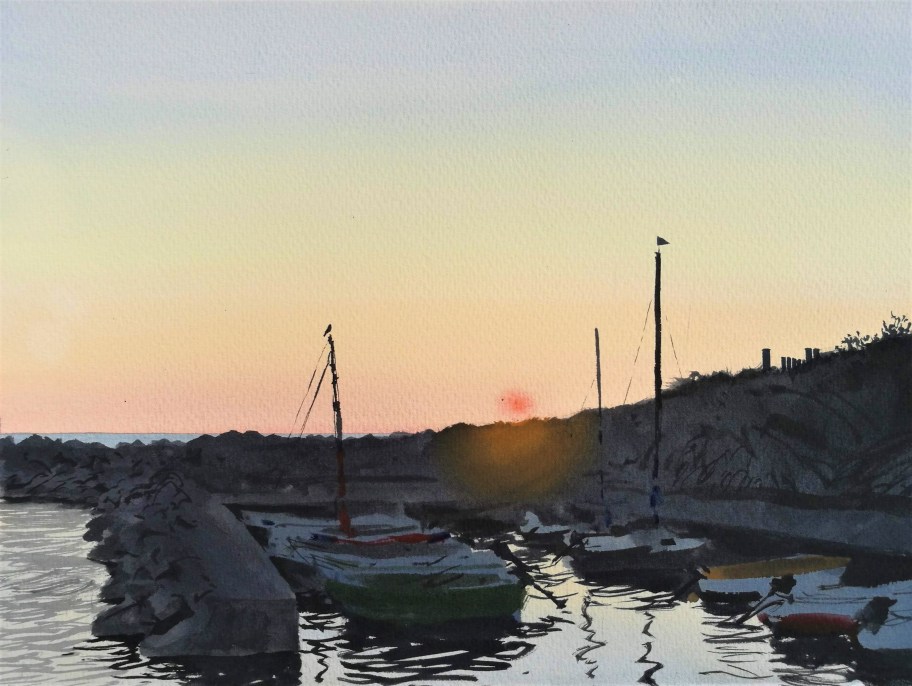
The jetty leading to Snogebæk harbour was silhouetted by the rising sun. A few tourists wandered aimlessly, the atmosphere subdued and soporific. Truly the calm before the storm, as I knew that the storm ‘Knud’ was due to arrive at Bornholm in the afternoon. A friend arrived with coffee and food. I remembered how I had been sitting on the exact same bench only a week previously with my students.
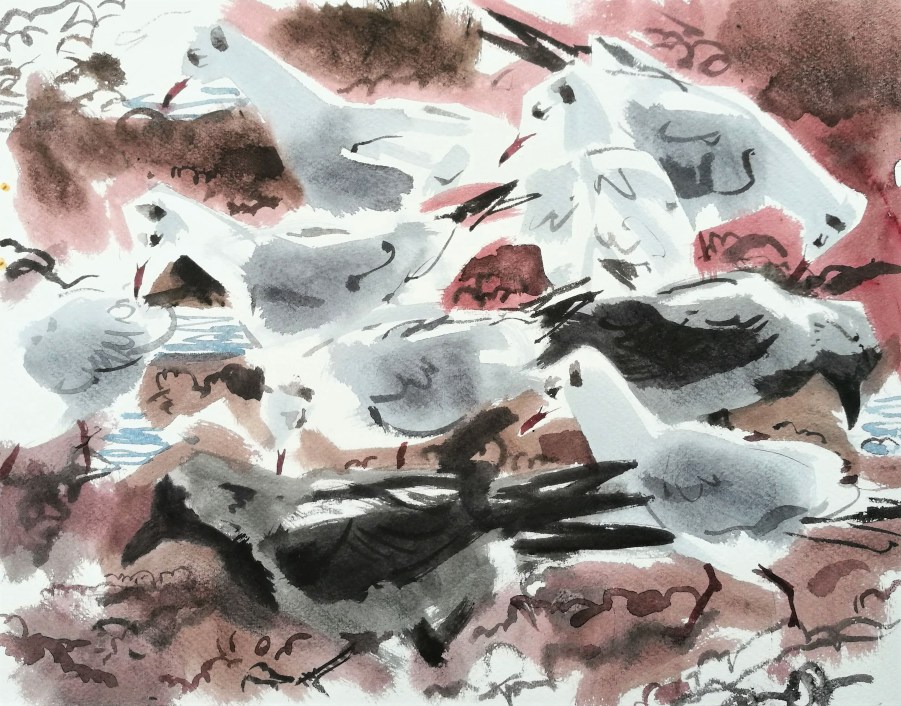
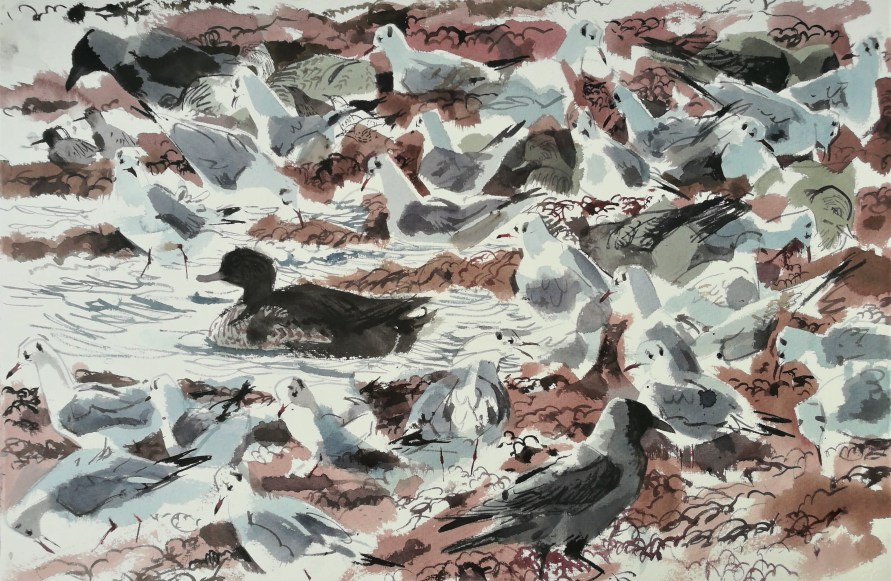
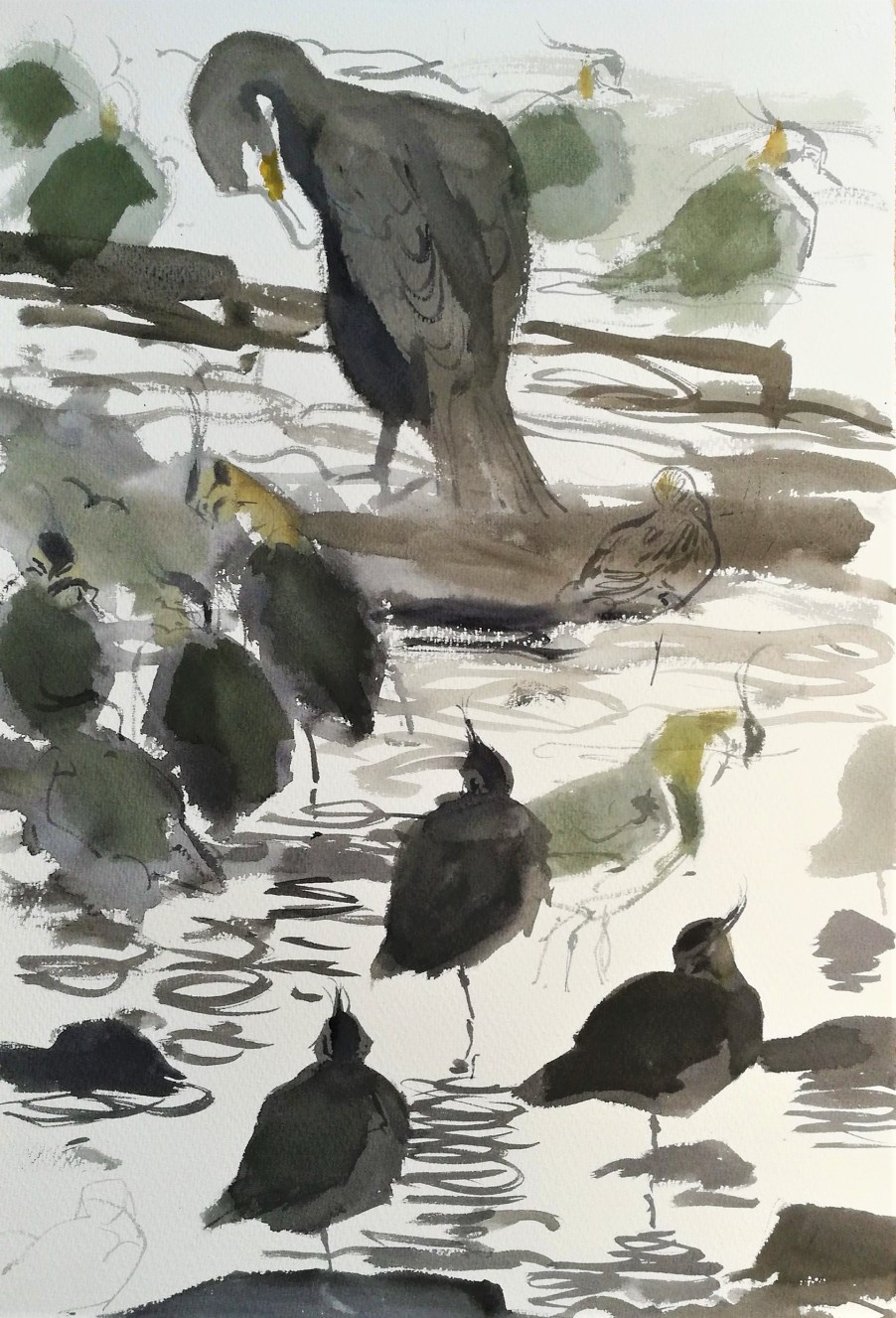
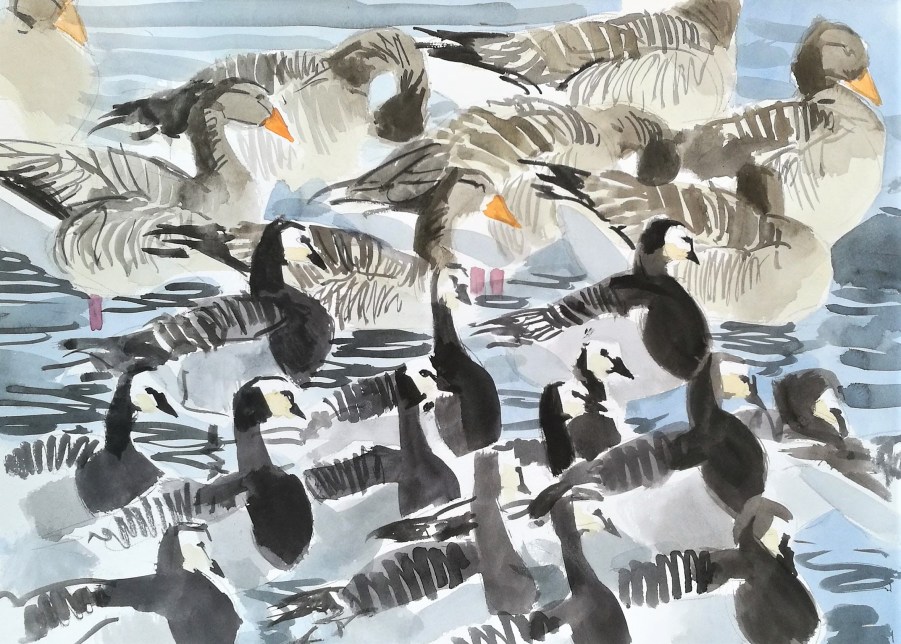
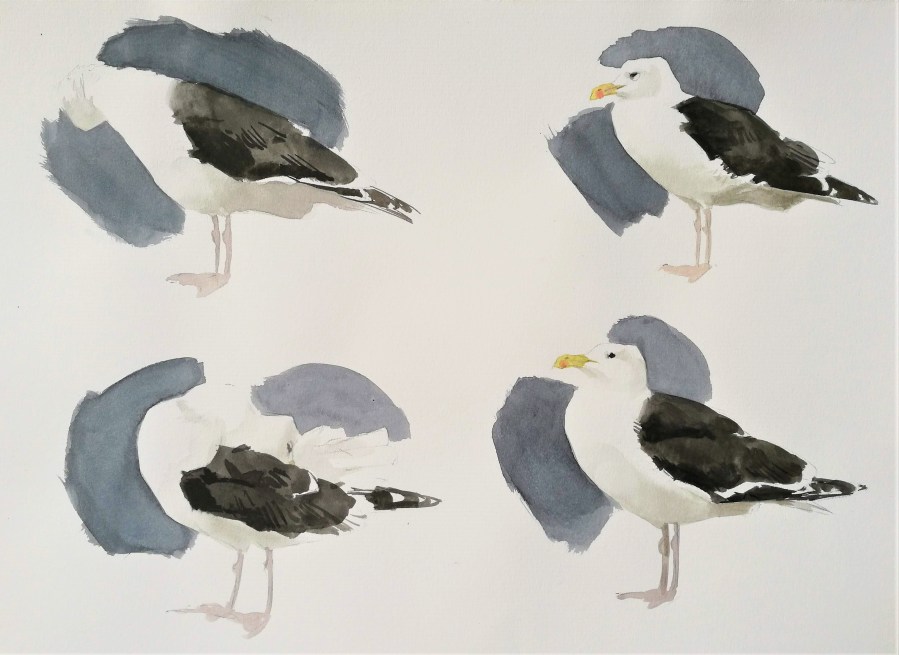
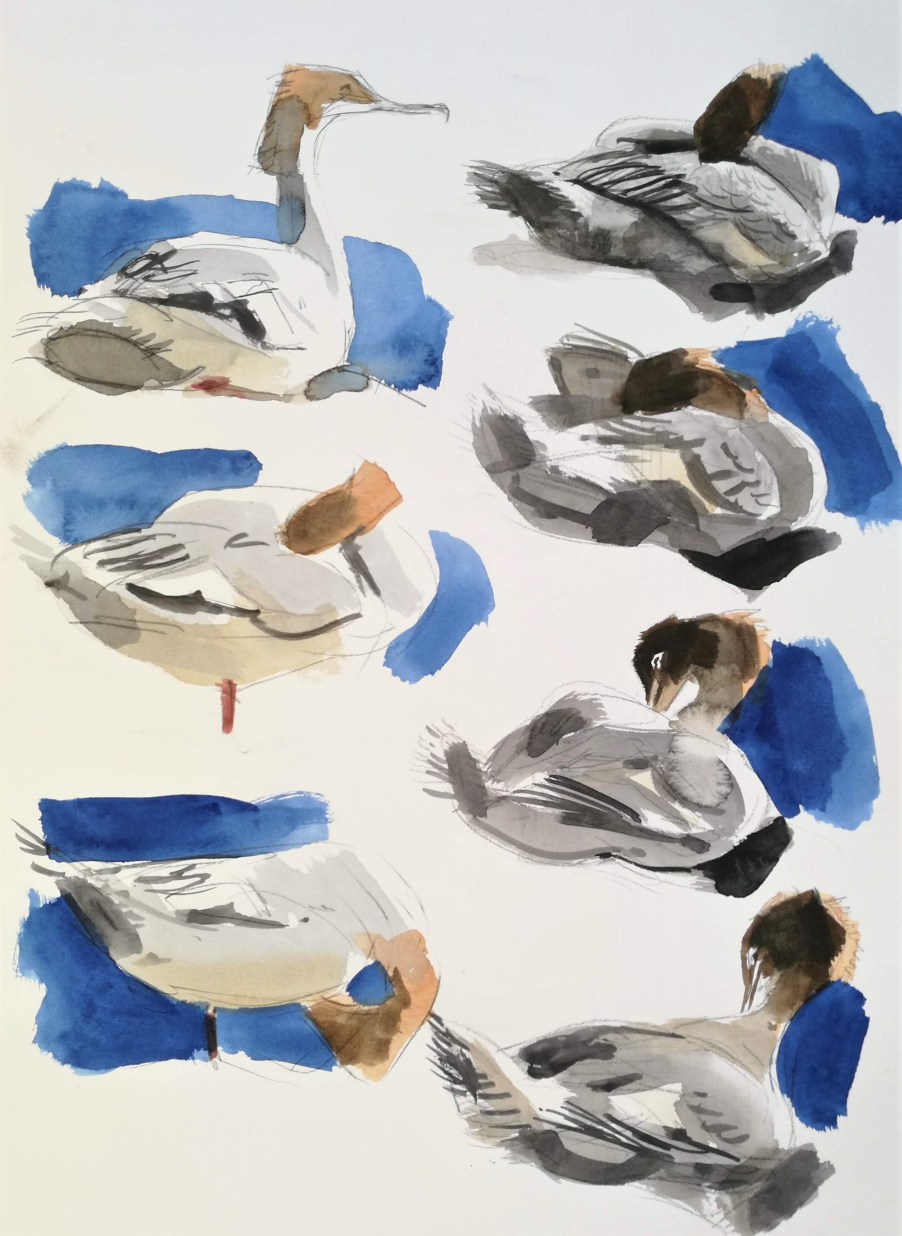
I finally packed my things and started to walk on the beach away from Snogebæk and south to the day’s destination at Bethesda. The southerly wind, now building, pushed waves into the bay and piled great banks of seaweed and algæ along the shore, which were covered in feeding gulls, corvids and ducks. I tried to capture the intensity of their frenzied and jerky movements with quick expressive brush strokes, but I struggled with the baking sun burning the watercolours dry.
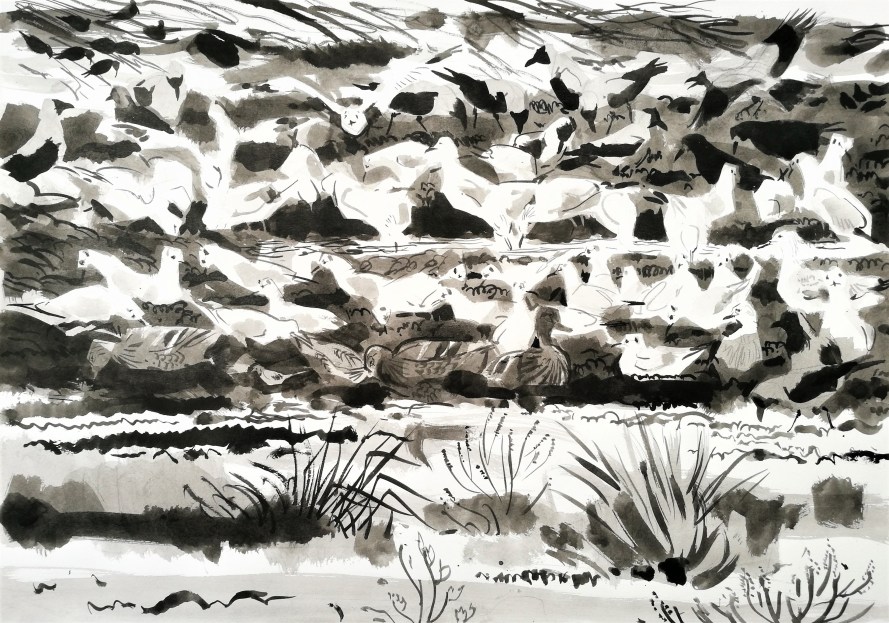
I carried on along the beach and looked back towards the same birds, this time trying to capture their movement with ink.
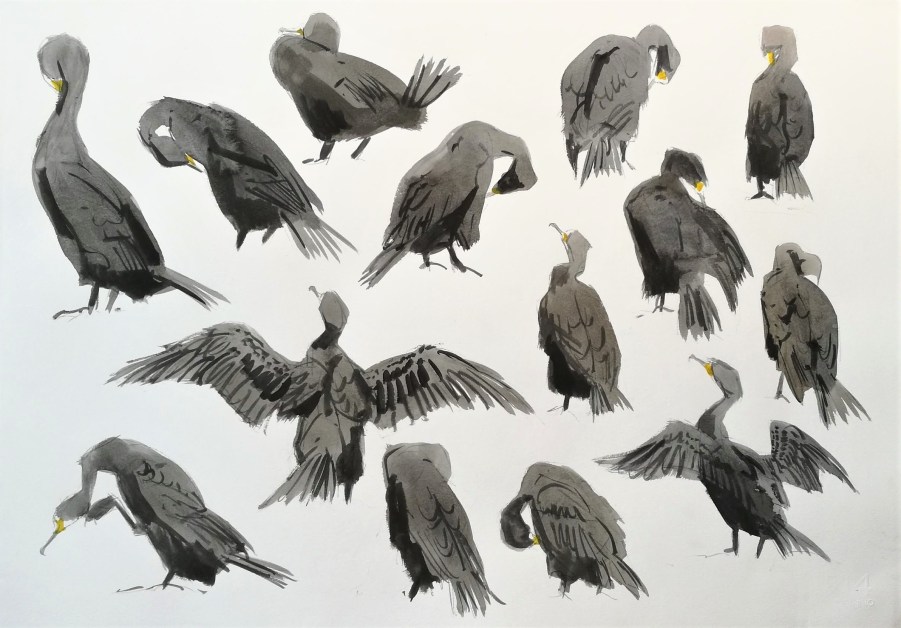
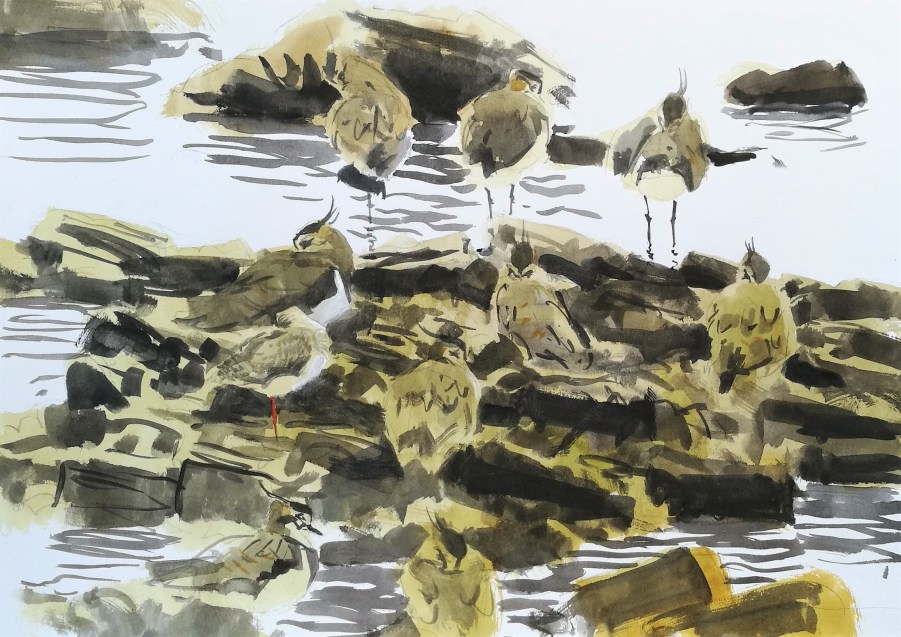
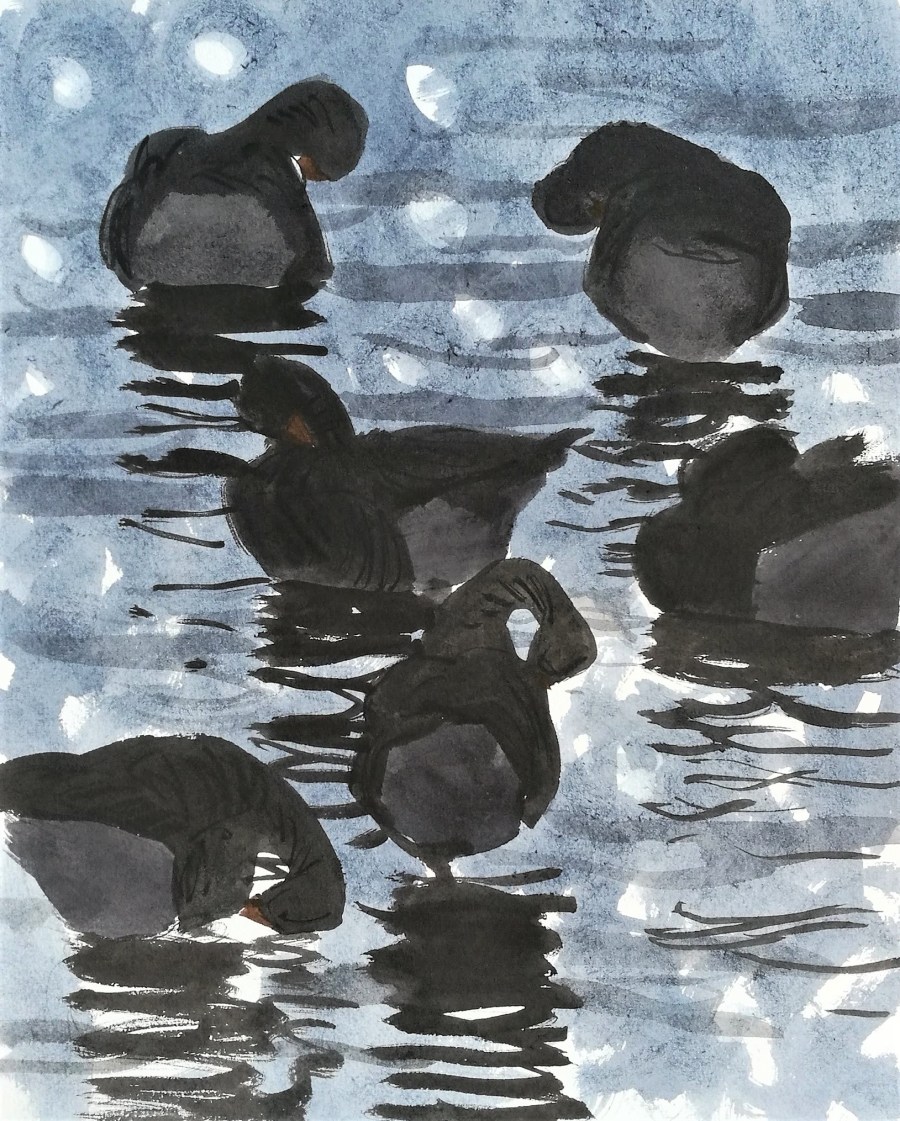
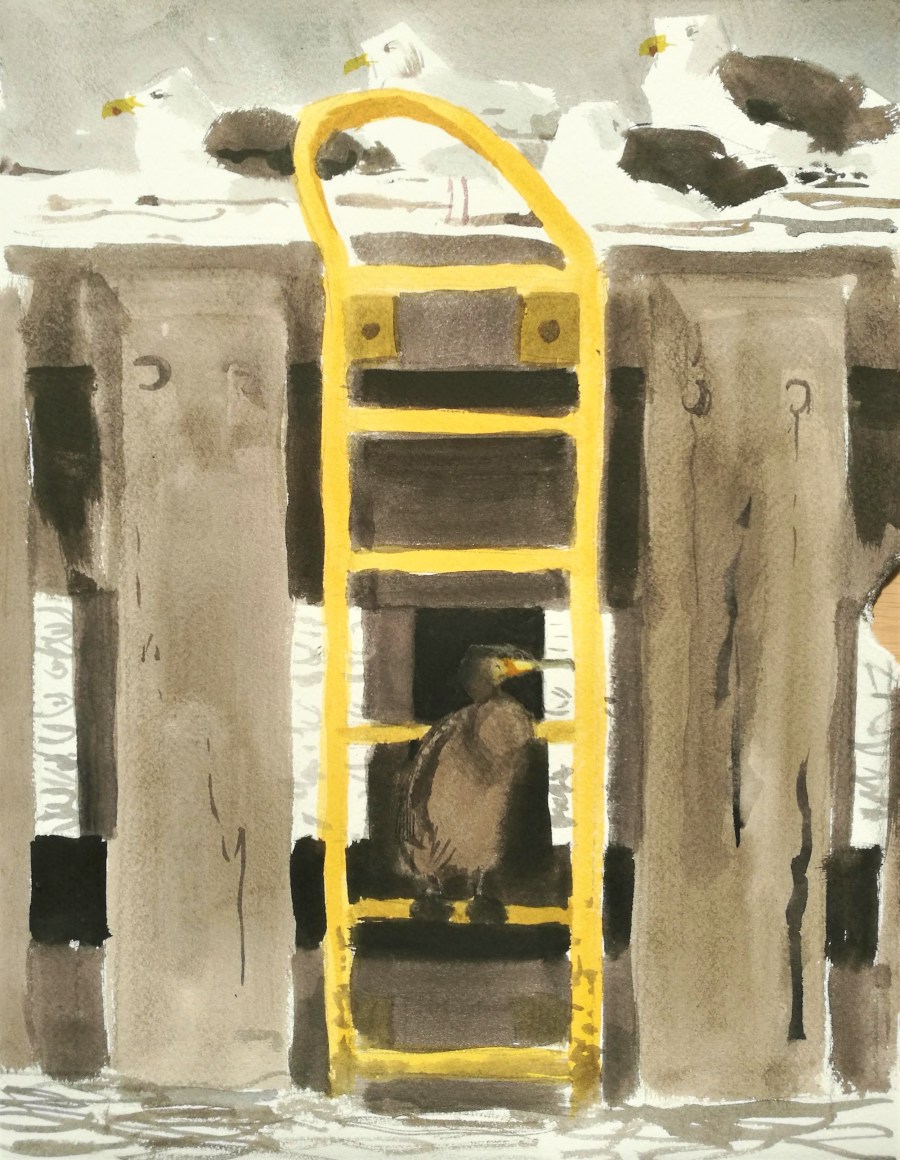
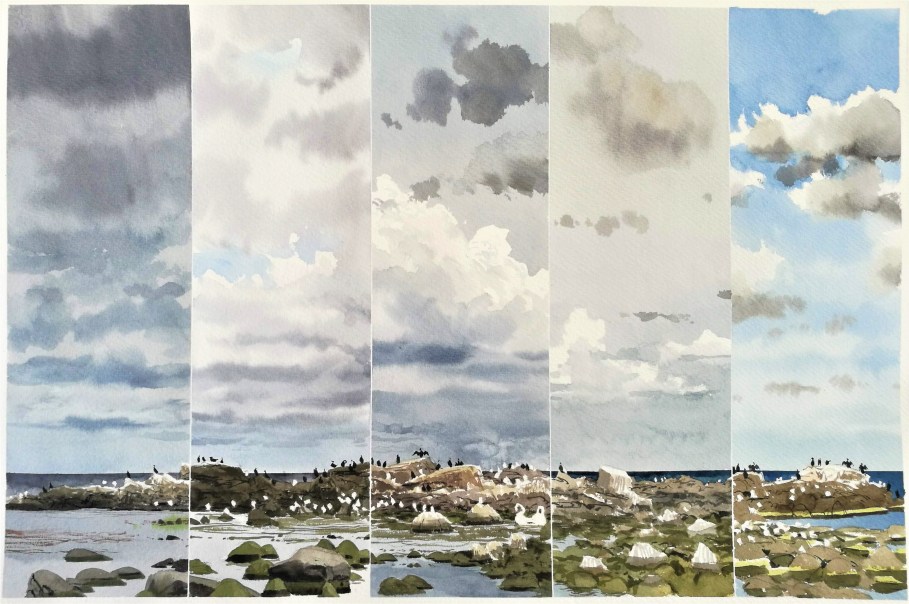
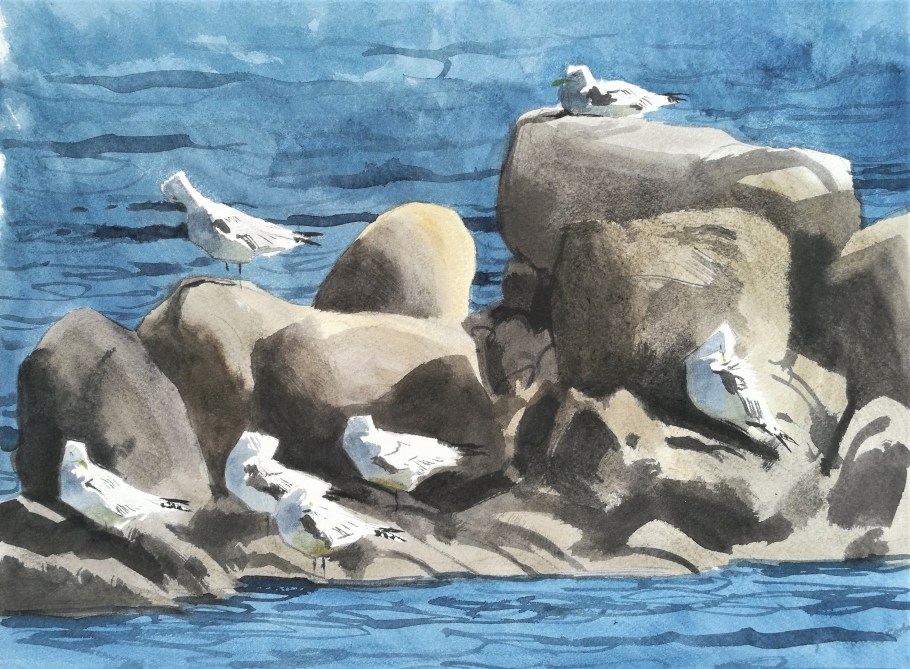
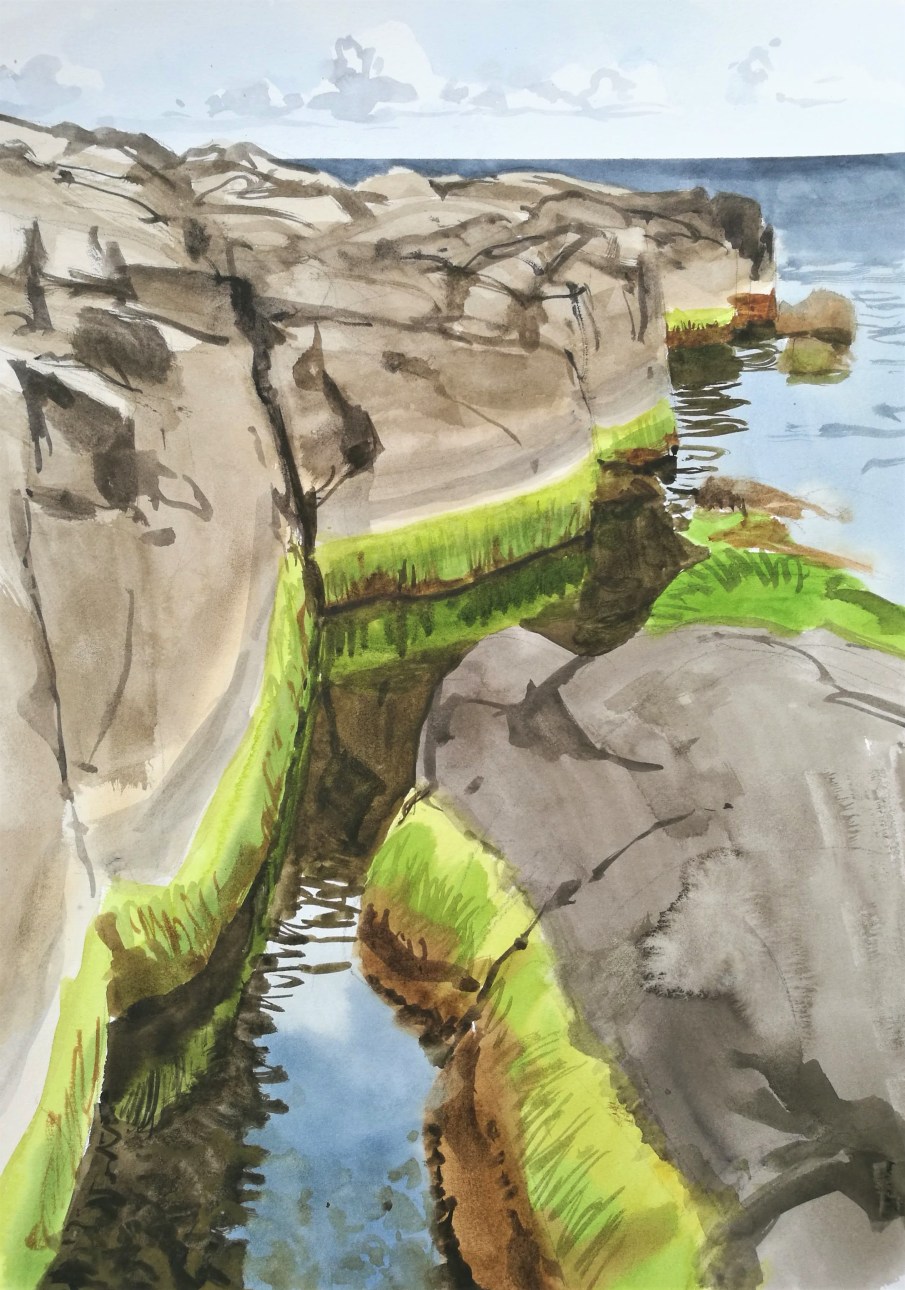
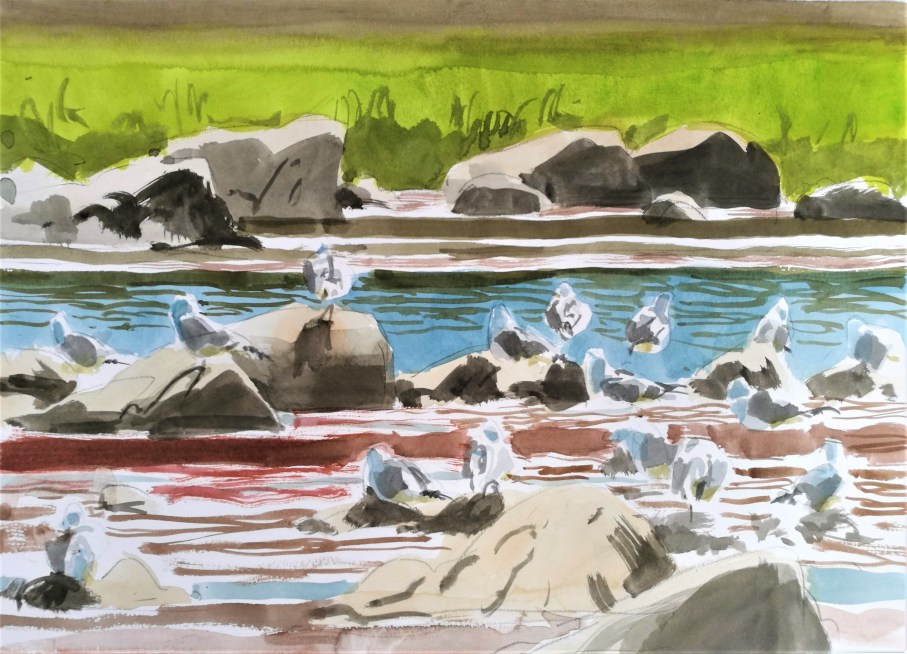
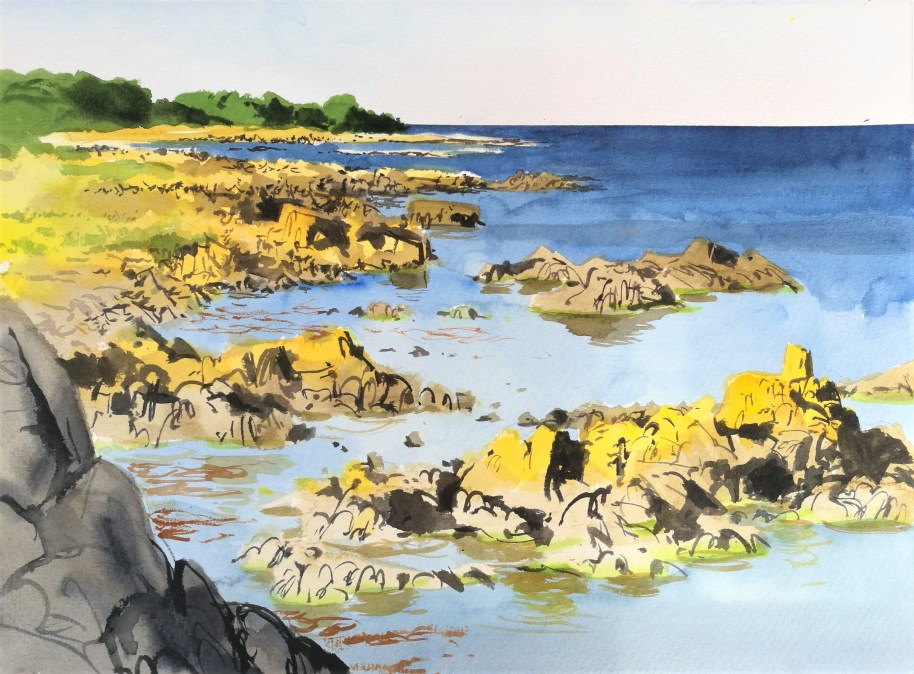
By the time I rounded the next headland at Broens Odde, the wind had really picked up and the sun was long gone. Groups of ducks, gulls and cormorants huddled on the strange greenish siltstone rocks and faced into the wind.

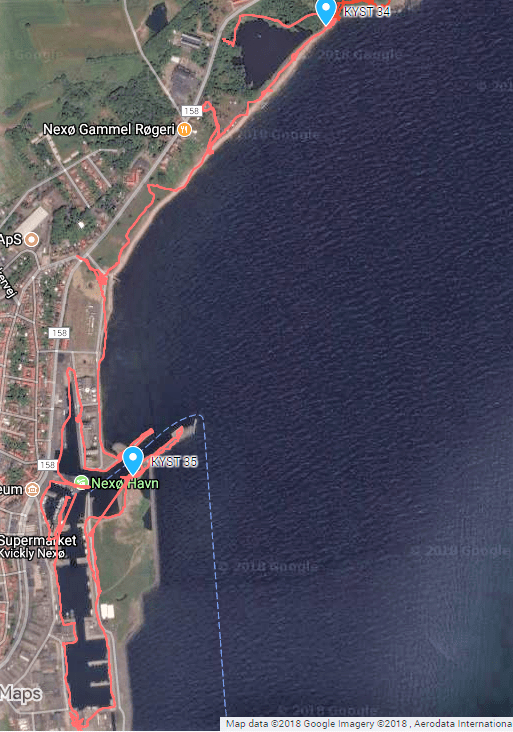
I suddenly realized the day had flown by. I had been going for nine hours without stopping for food or rest, and was only halfway to my destination. I continued around the cape, waving goodbye to Nexø and Bornholm’s eastern coastline, and walked into the wind, along a sandy shore. On the sea some kite surfers cavorted and leapt through the waves.
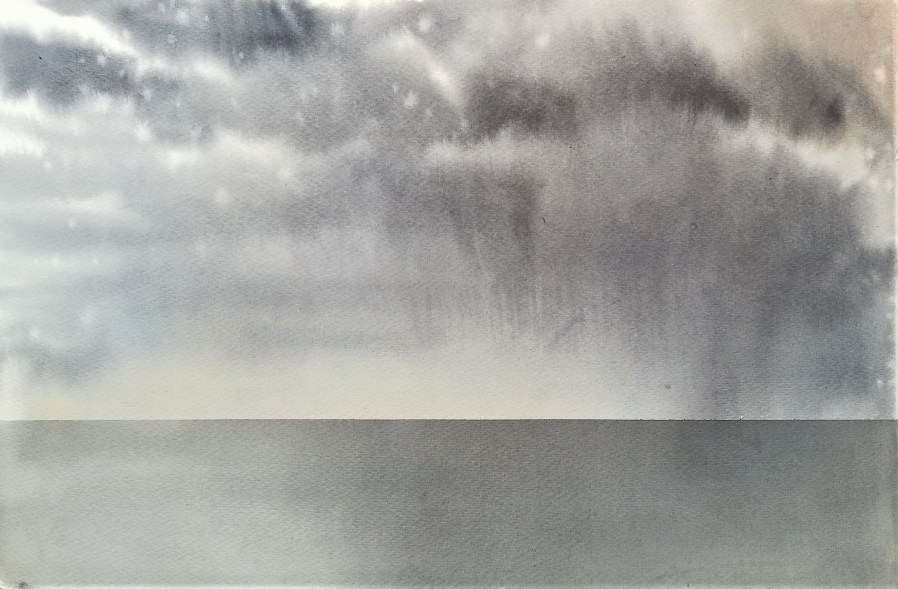
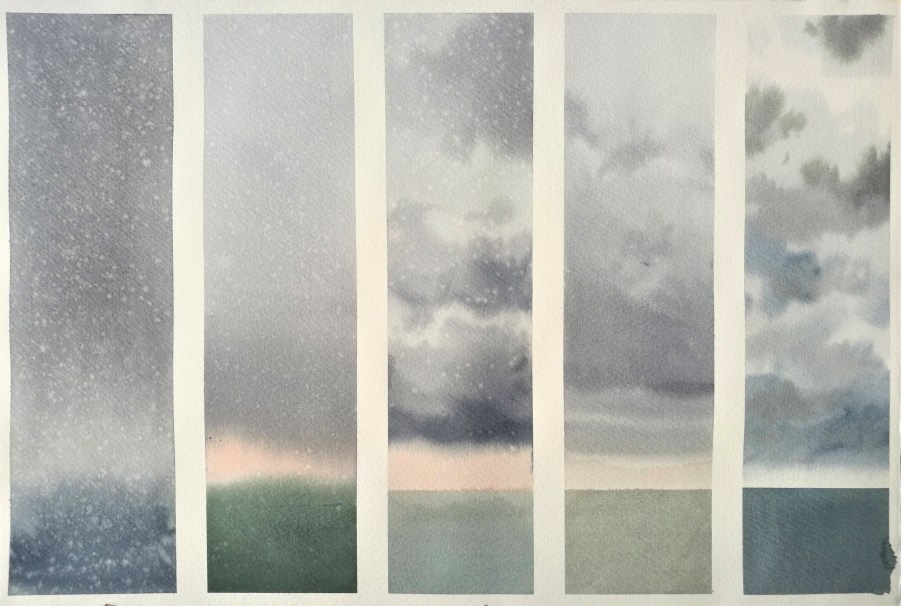
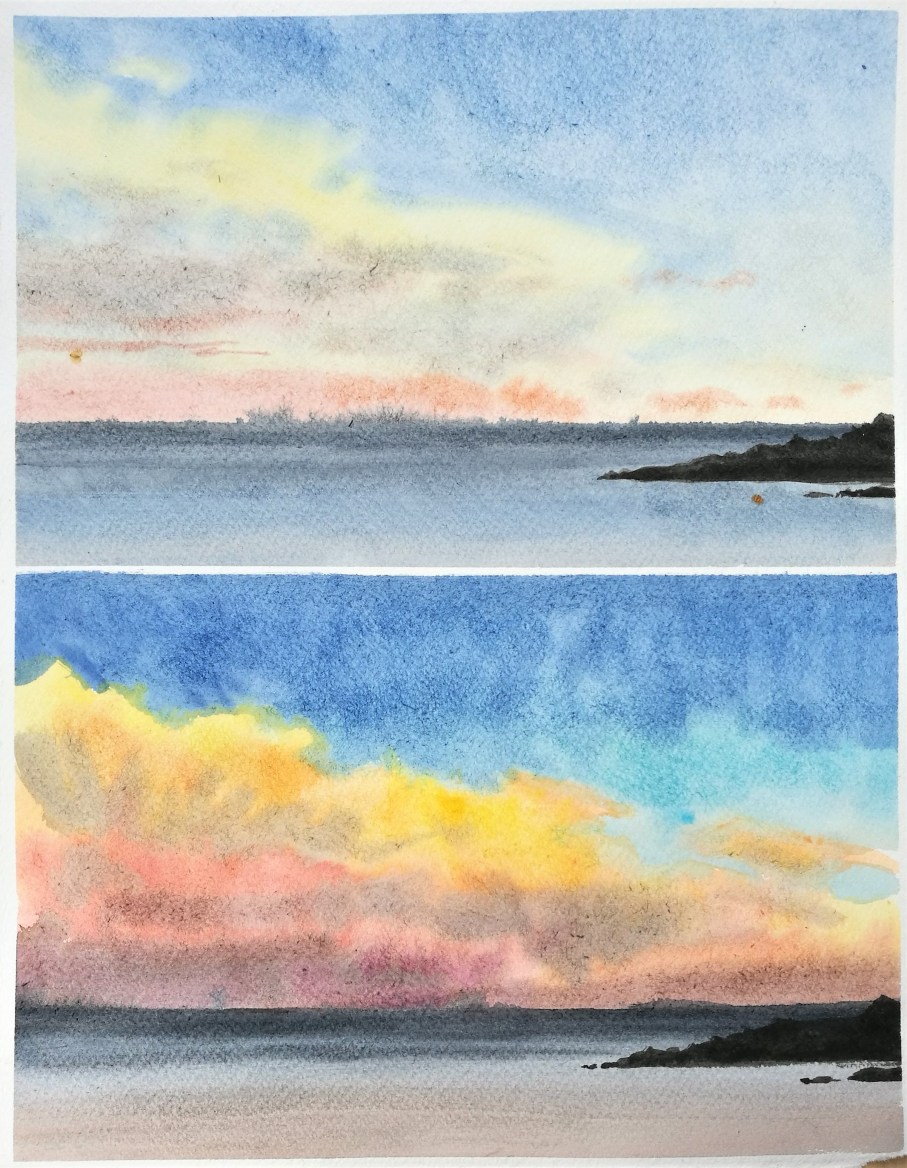
I arrived at Bethesda, put up the M60, and immediately got to work on a timed slice painting, knowing that the storm was imminent. The buildup of tension was palpable and by the time I finished the second section the kite surfers had fled and the rain had already started. A huge wall of deep blue and gunmetal grey clouds rolled in from the south west. As I began the third section I could see the wall of rain across the sea heading straight for me. The wind suddenly whipped up, changed direction and chaos ensured. Hundreds of swallows suddenly shot out of the forest where they must have been sheltering and flew into the storm in panic. Dogs barked, children screamed and I ran back to the shelter of the M60 just as the heavens opened.
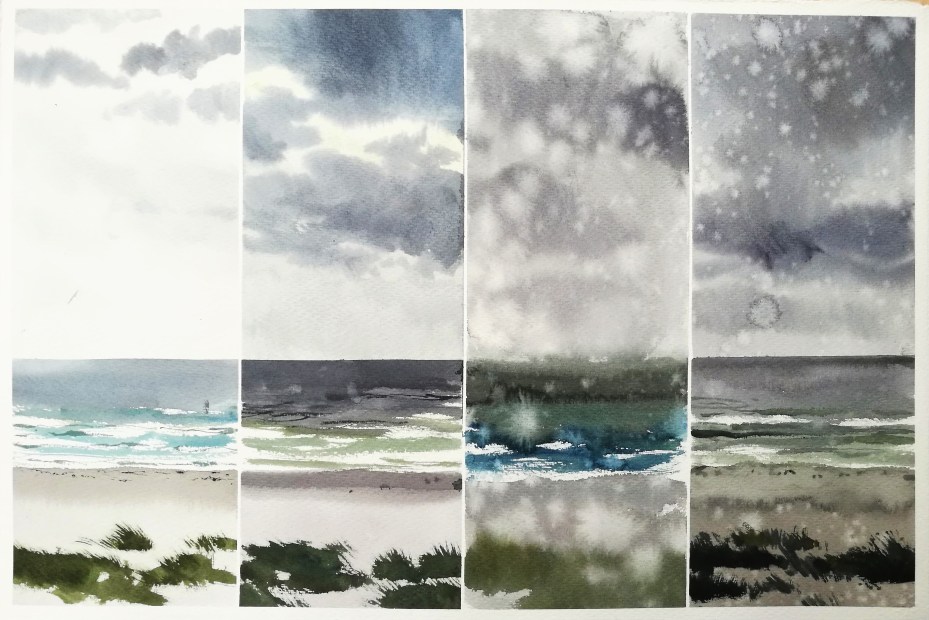
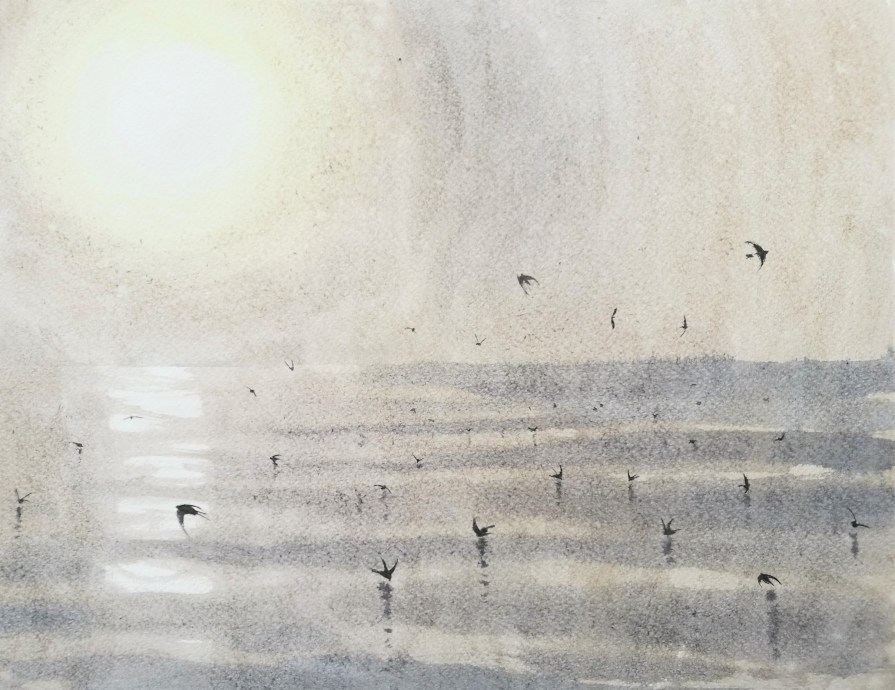
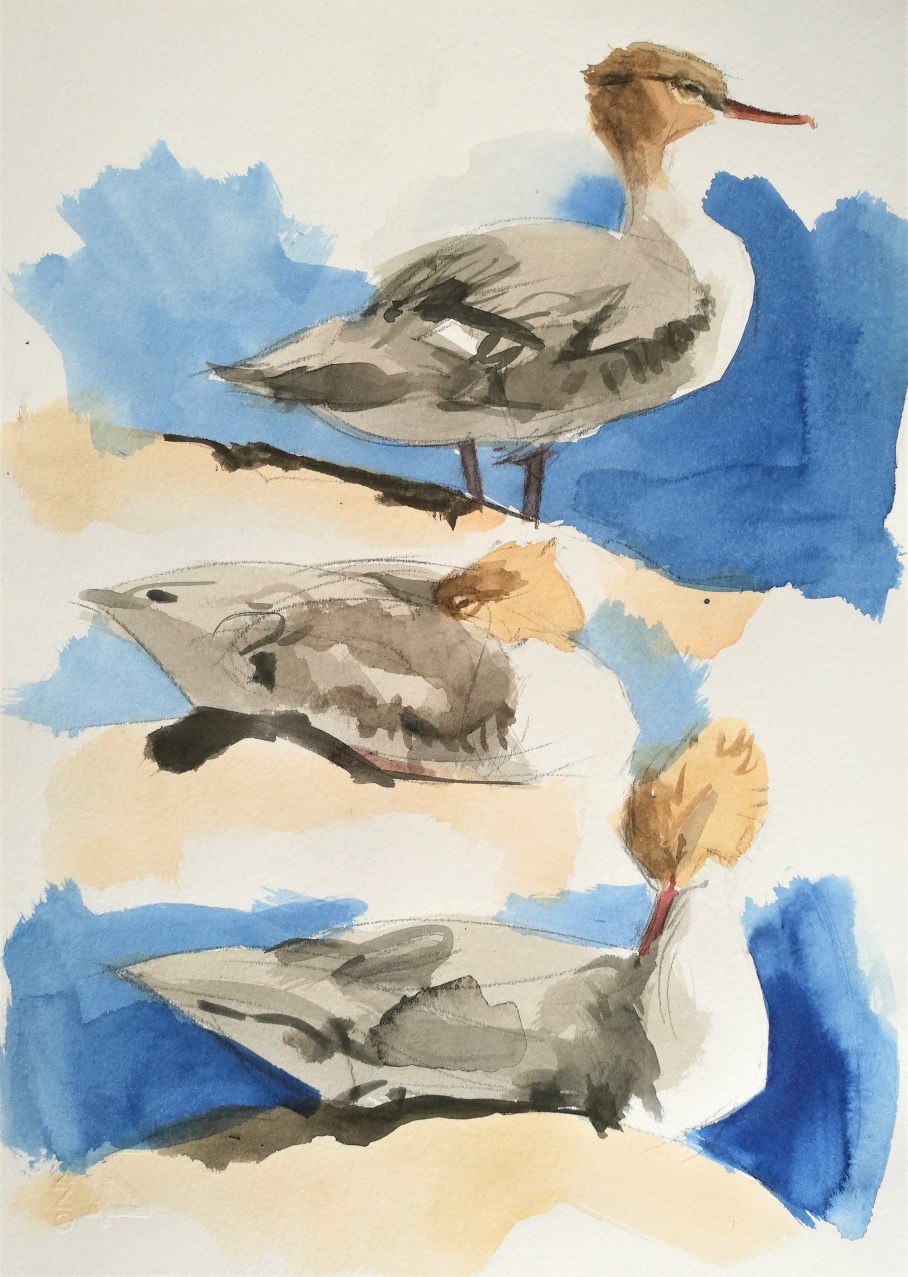
Once the rain had paused I rushed out again to complete the painting. Back under the umbrella I worked on a new painting of the feeding birds, looking at my painting from earlier and trying to recall the shapes, sounds and smells of the feeding birds (see top). Soon, dusk came and I walked back along the beach in the rain, all the way to Snogebæk where my car waited.
KYST 38
Weather report = A sunny start, clouding up then stormy.. Temperature between 18°C and 22°C, then down to 13 after the storm. Wind between 4 and 14 m/s from the south then west. Hours of sunshine: 5 hours.
Lessons learned – need to get new palette, new brushes, new waterproof walking boots and new stativ **
Stops with the M60 = 1
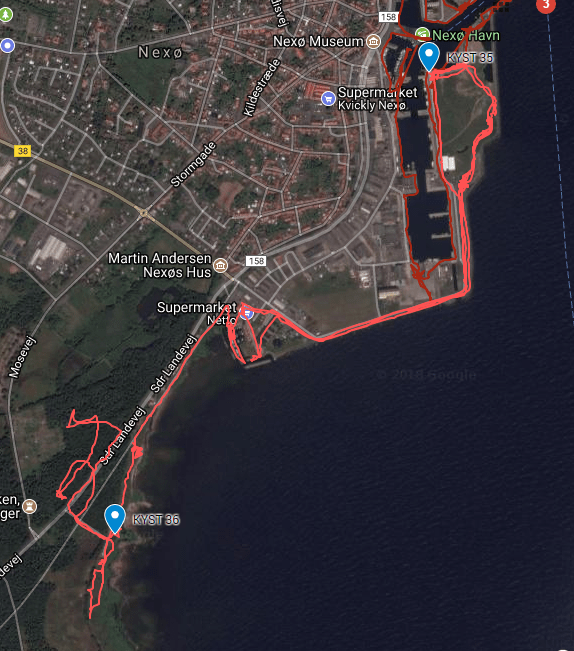
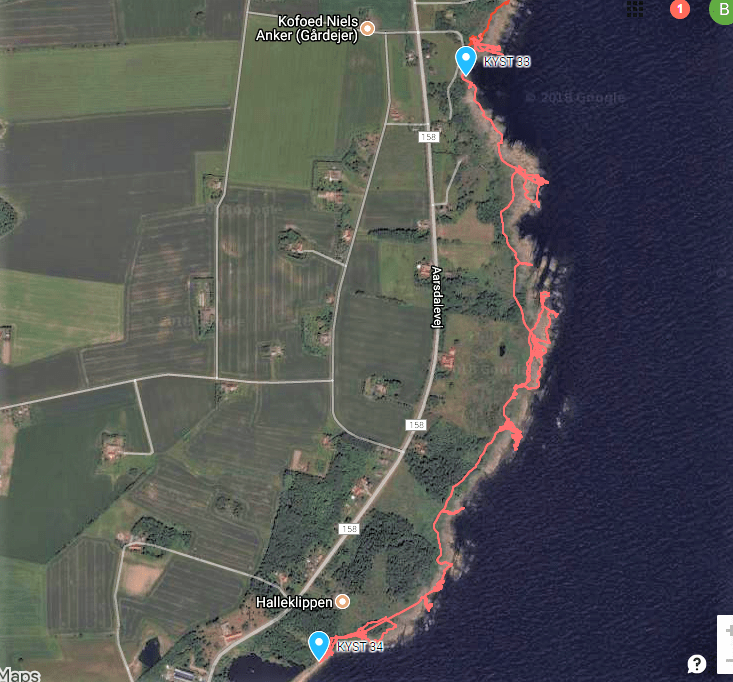
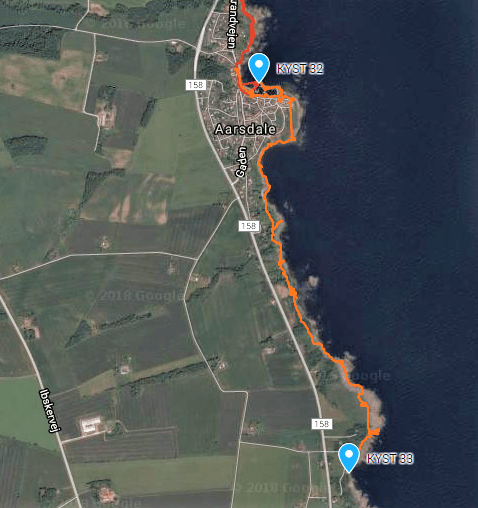
Kilometers walked = 6.40 km
Day lasted = 12 hours, 20 minutes
Birds seen and heard = 34 species (0 new ones: running total 123)
Other stuff = ‘Knud’ was our first storm of the autumn. As we’ve mostly had an Indian Summer on Bornholm, it really felt like my slice painting witnessed the end of the long summer and the start of the new season.
People talked to = 4 (1 + 1 + 2)
In my head – still last week’s course, and the talk I’m giving at Faber’s café on Sunday (2pm ;-))
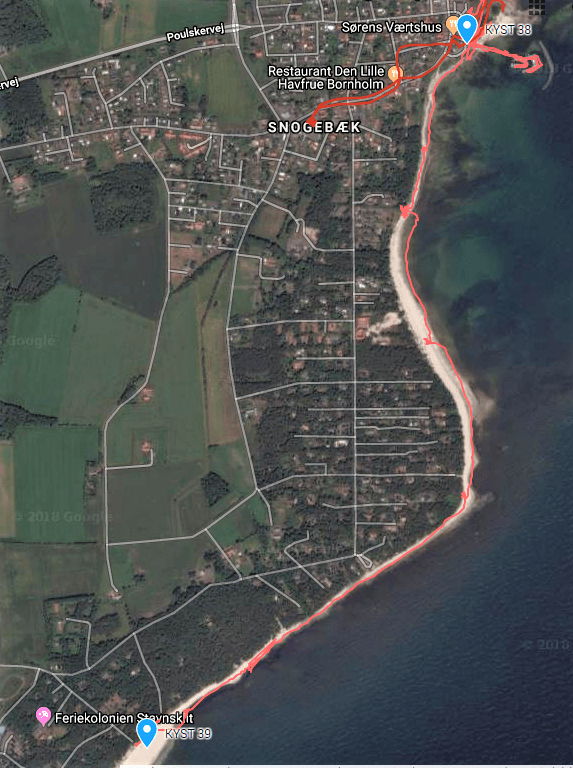
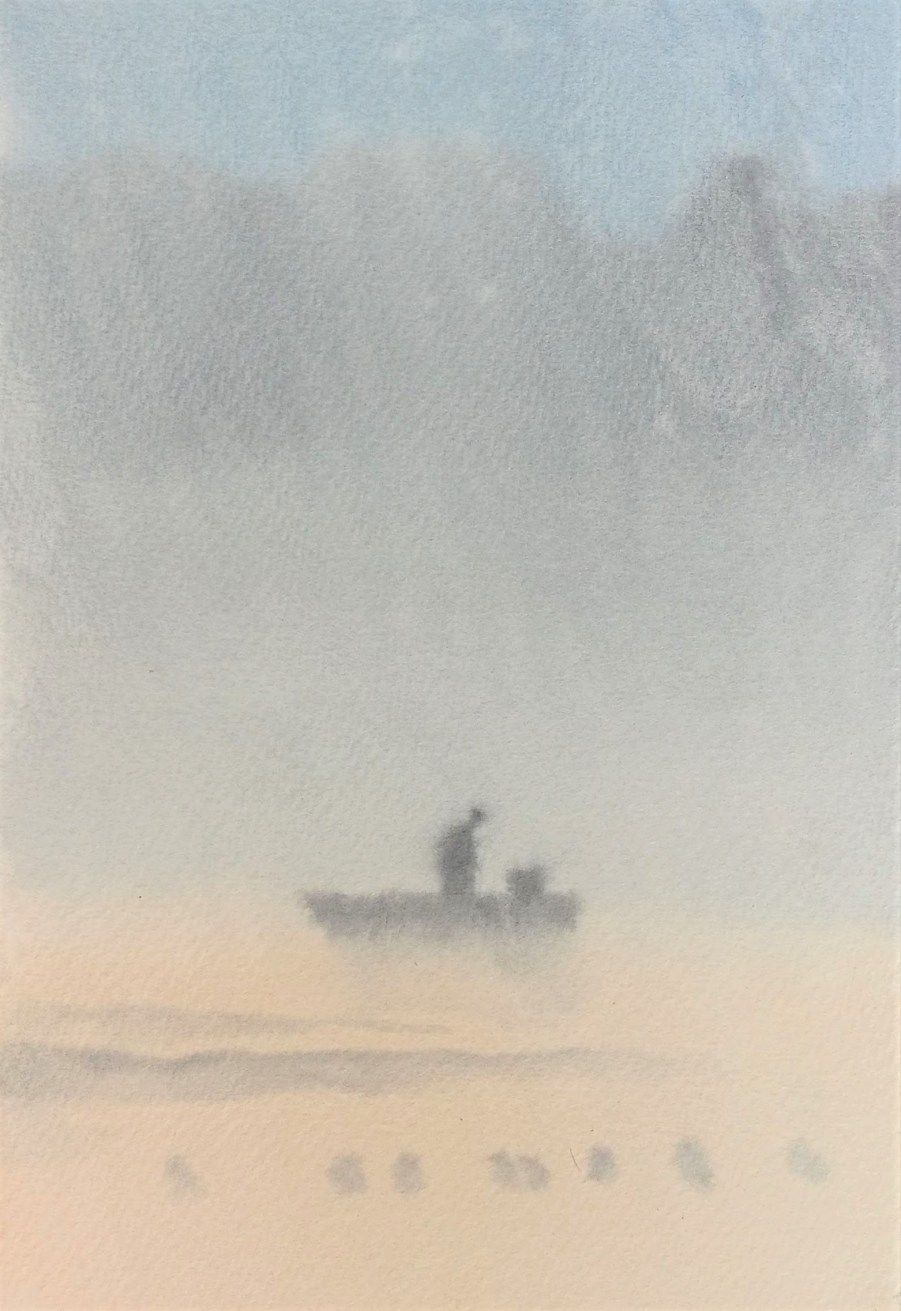 On the shore, two women on horseback thundered up and down the beach, laughing with an unbridled abandon. Just when I thought the morning couldn’t get any more spectacular, a lone kingfisher darted out and flew low, dart like, over the surface of the mirrored sea, and disappeared into the sea mist.
 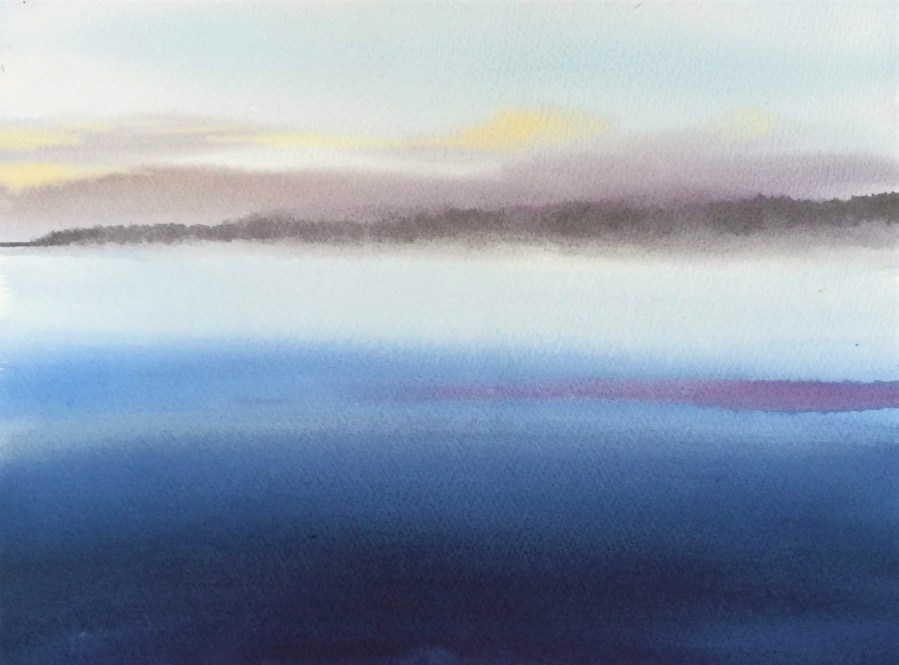 When the kingfisher returned and perched on a nearby rock I resolved to not paint and just soak in the atmosphere instead. I couldn’t though, and soon got overinvolved with a reflective gull.
 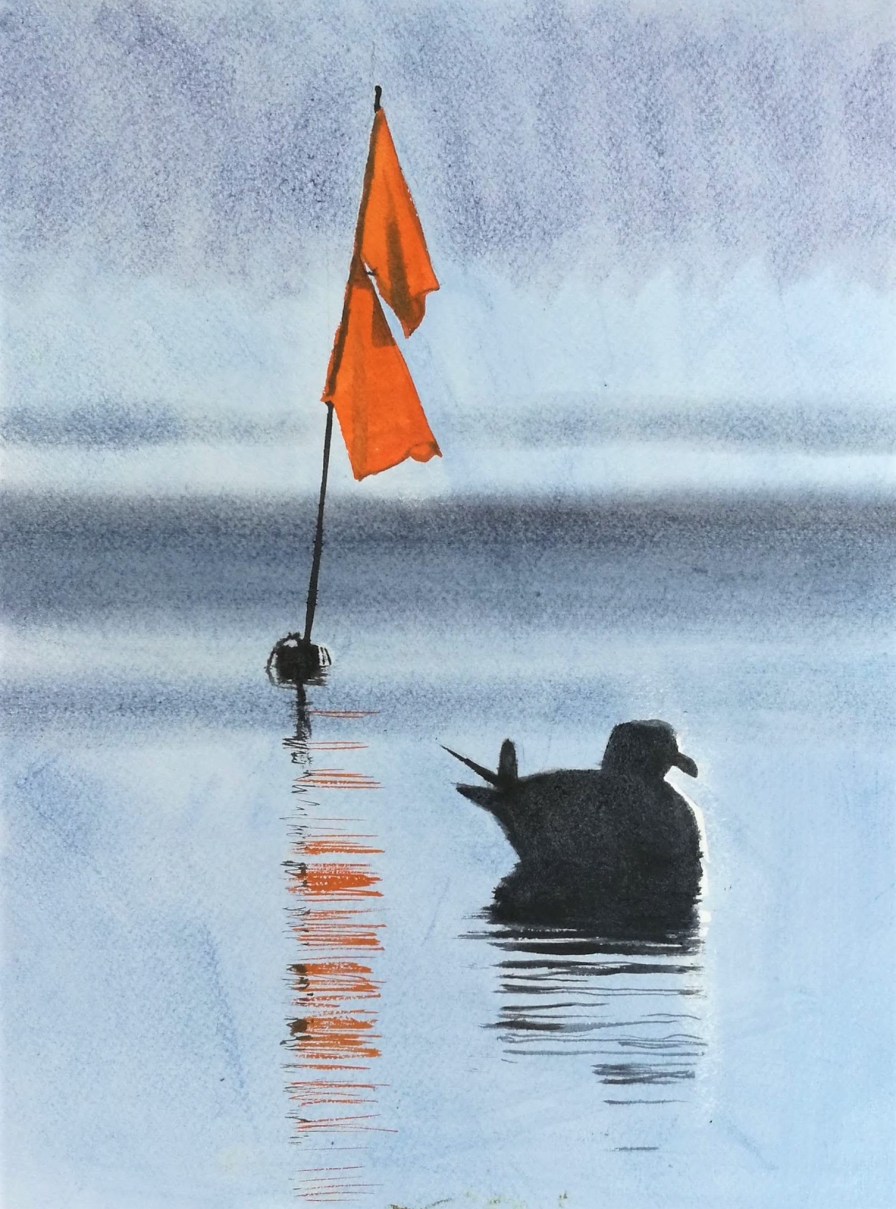 The previous week I had been teaching a field painting course at Bornholm’s Højskole, and the lessons of the week were still fresh in my memory. I tried to not get too upset with the reflective gull disaster, and just carry on (‘…don’t judge and keep working’). I lost myself in some herring gulls feeding in the bay, the sea mist long having been burned off by the rising sun.
  Before moving off from my perch at the end of the pier, where I had now been for many hours, I tackled the solar reflections on the surface of the water. I wanted to show how the green seaweed, rocks and innumerable jellyfish below the surface of the water replaced the reflections of the sky towards the bottom of the visual plane, but failed.
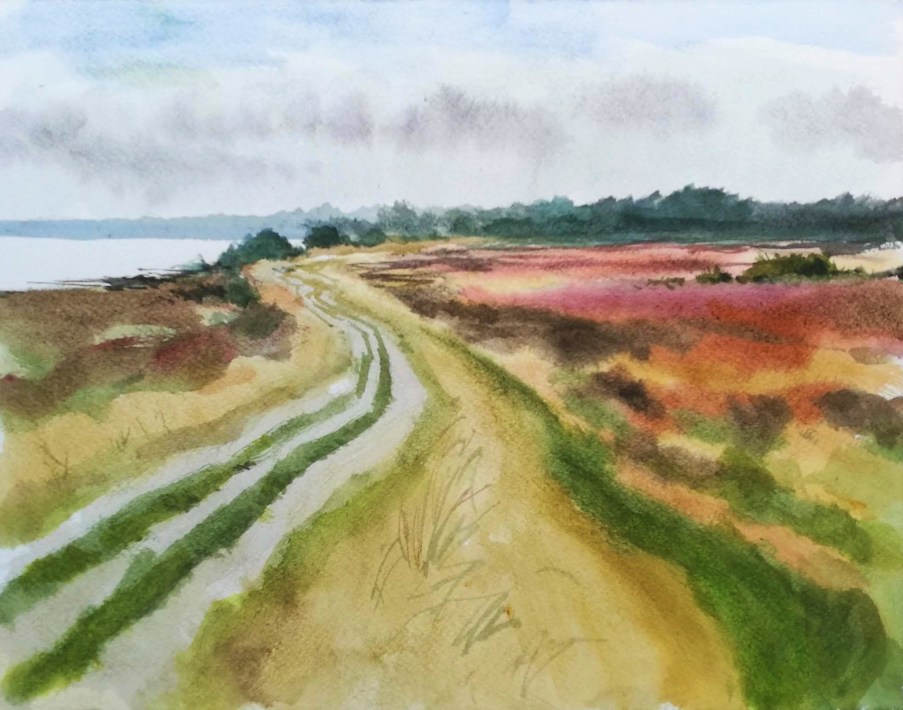
  I finally packed my things and started to walk on Balka beach towards Snogbæk, the day’s destination. I stopped again rather quickly, wanting to capture the sweep of the bay, with Snogbæk pier in the far distance.
 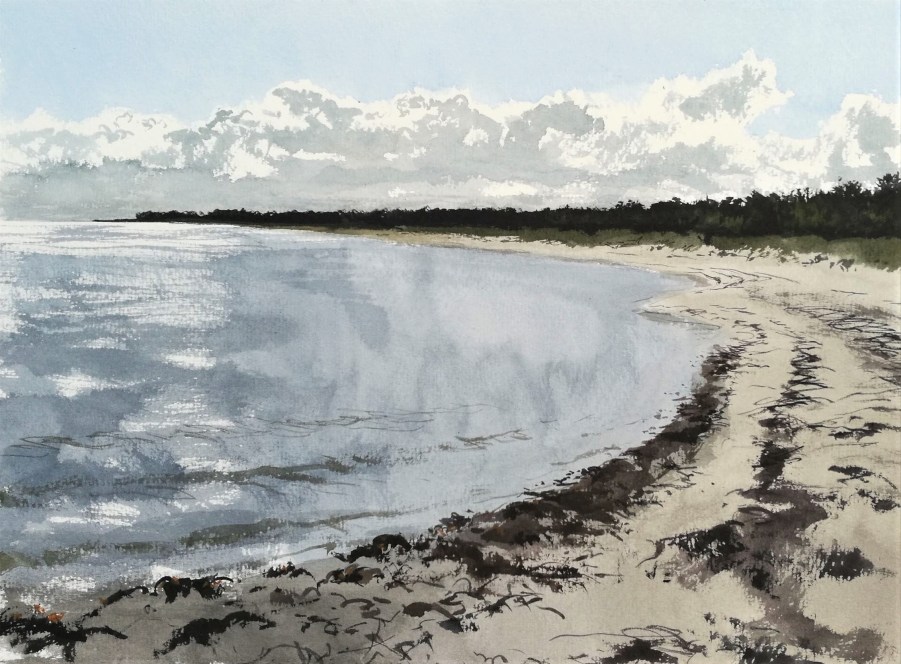 As I was painting, the first flocks of graylag geese flew overhead, returning to spend the day at Nexø Sydstrand, last week’s start point. I quickly drew the mutating shape of a large flock of several hundred geese, as it passed by.
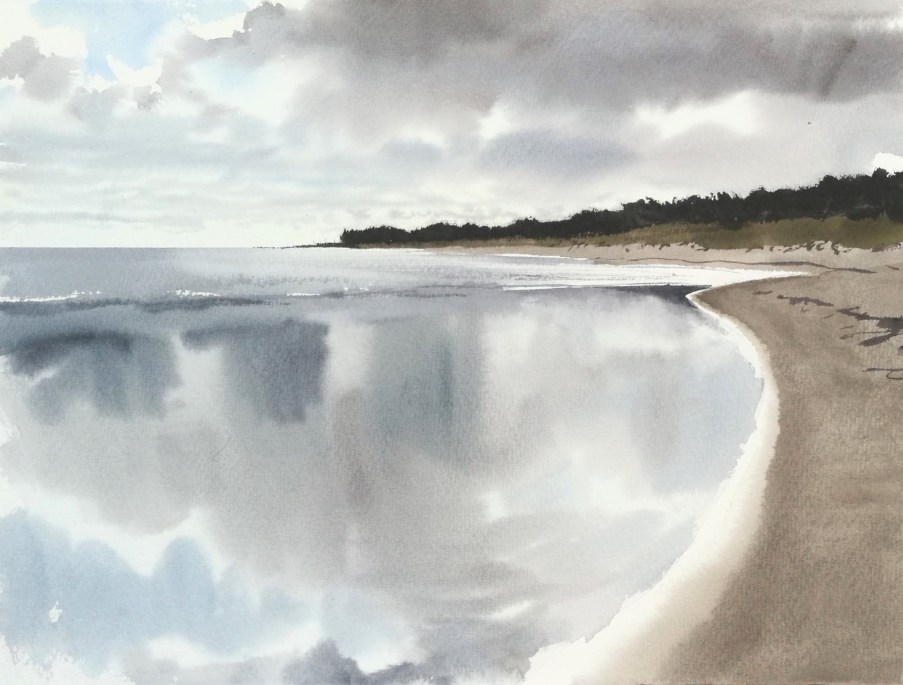
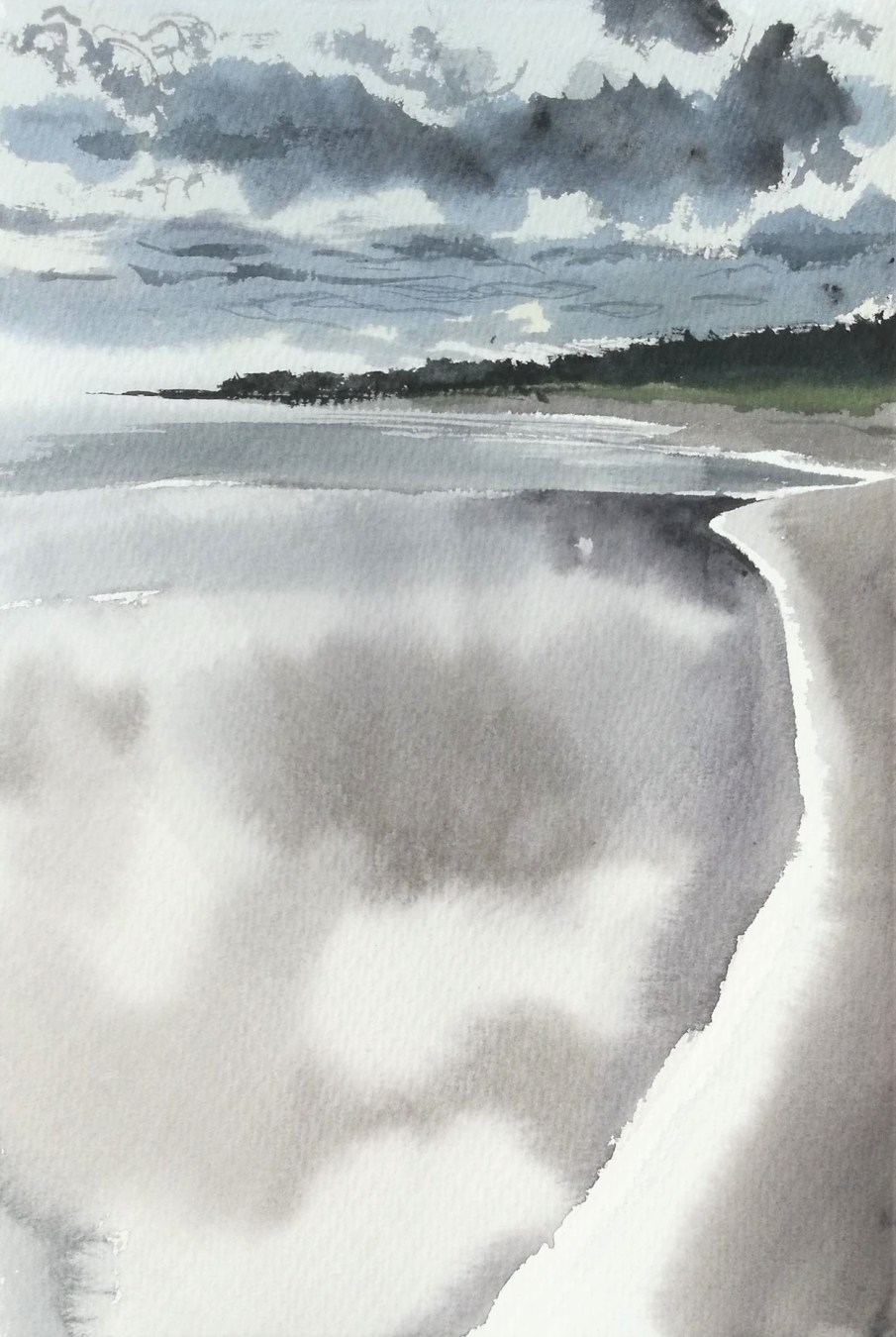
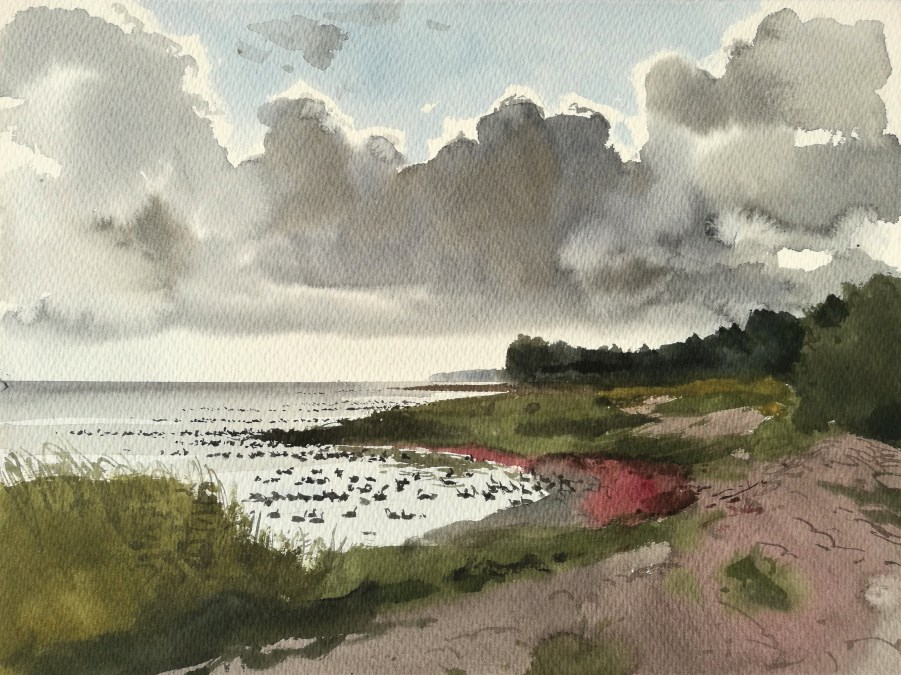
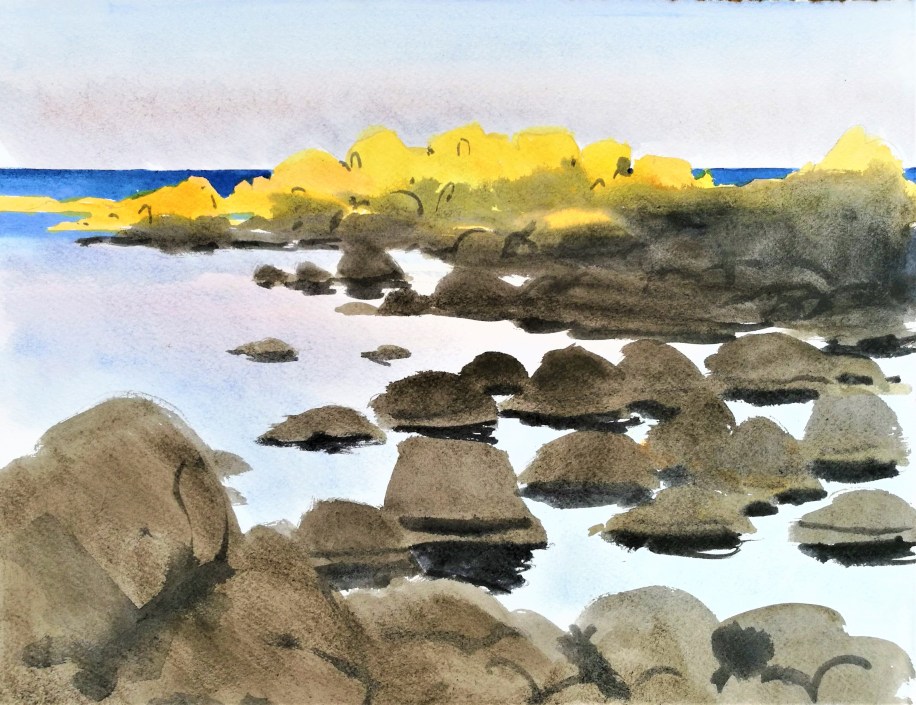
  As I continued walking along the beach my eye was caught by the rills, folds and patterns in the sand caused by the action of the waves lapping at the shore, together with the tracery left by mica, crushed mussels and seaweed. A sandbank created a lagoon of completely still water that reflected the clouds scudding by in the dynamic skyscape. I made two studies (see also top)
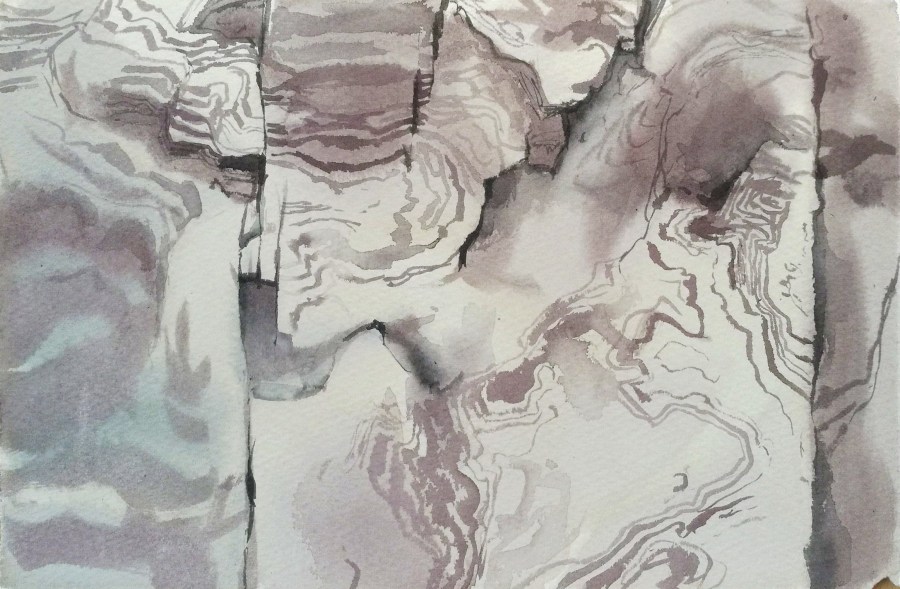
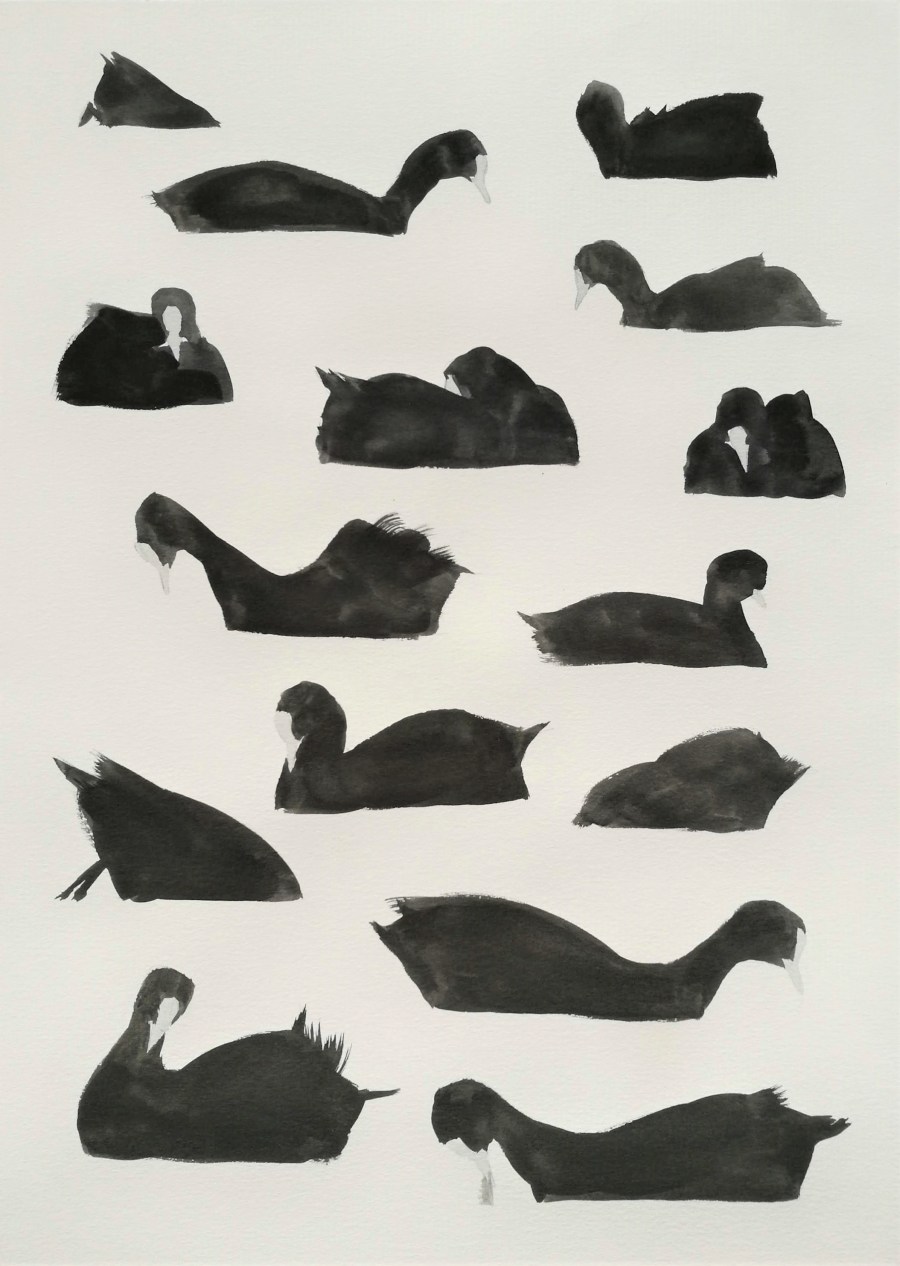
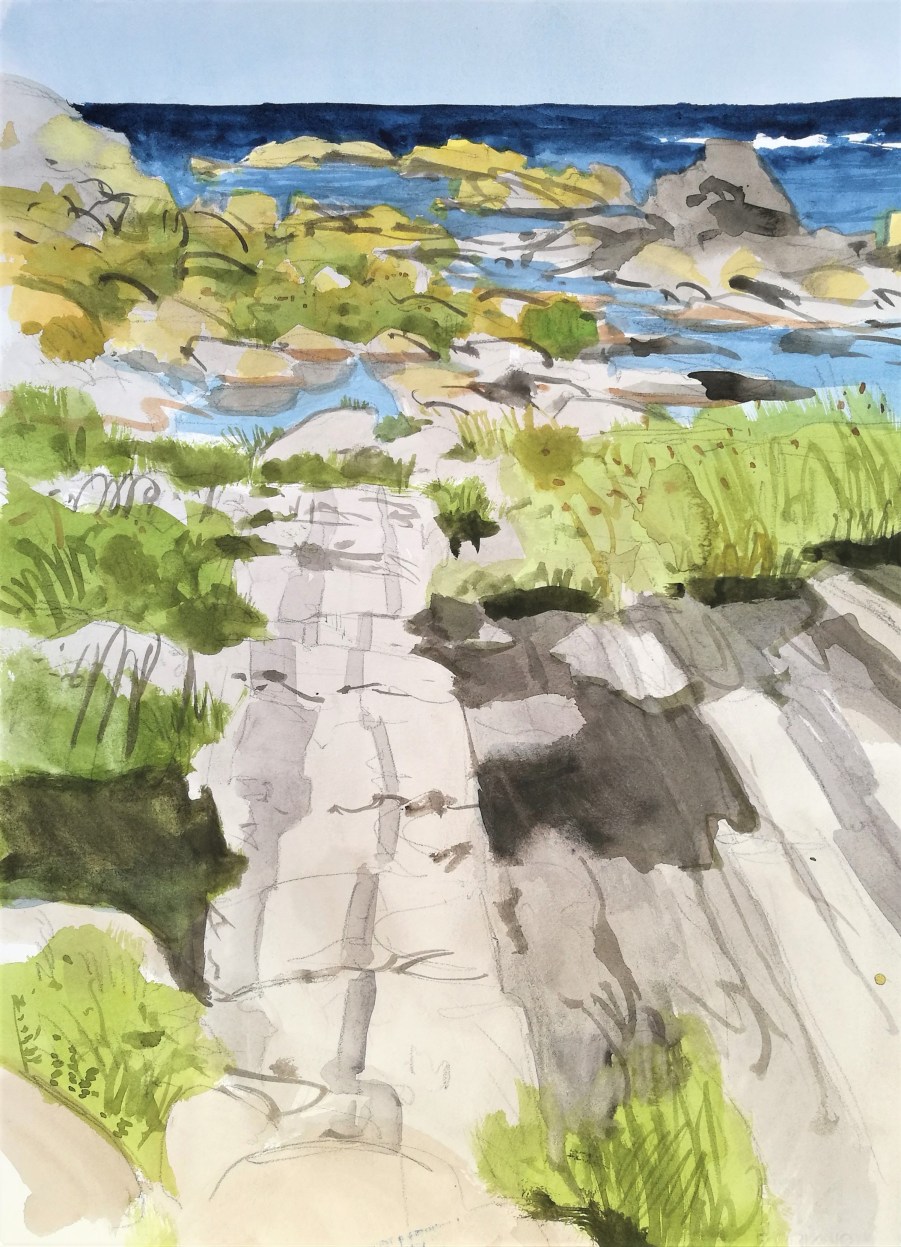
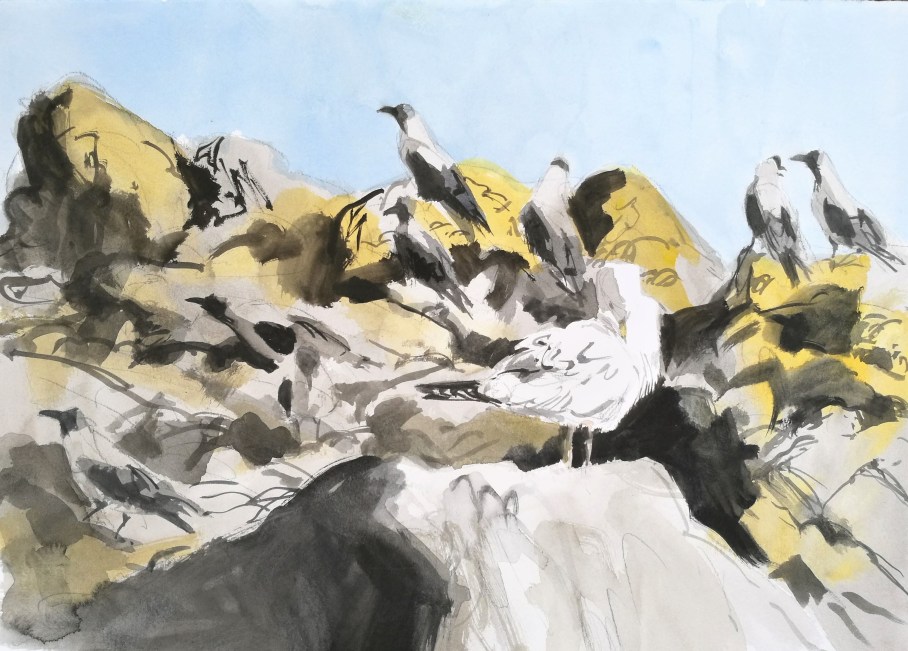
  I carried on along the beach all the way to the end of the bay at Snogbæk, where I set up the M60 and had lunch and a really good sleep. On waking I looked towards Salthammer Odde, the great shelf of grey balka sandstone that juts out from Snogbæk and continues under the sea, attracting a rich diversity of sealife and birds. All week with the students we had been concentrating on tonal values and working with ink, which I had bought along. I tried to capture the movement of the feeding frenzy on a bank of seaweed, where gulls, geese, crows, pigeons and starling all worked together feverishly, hoovering up sandflies and the like.
 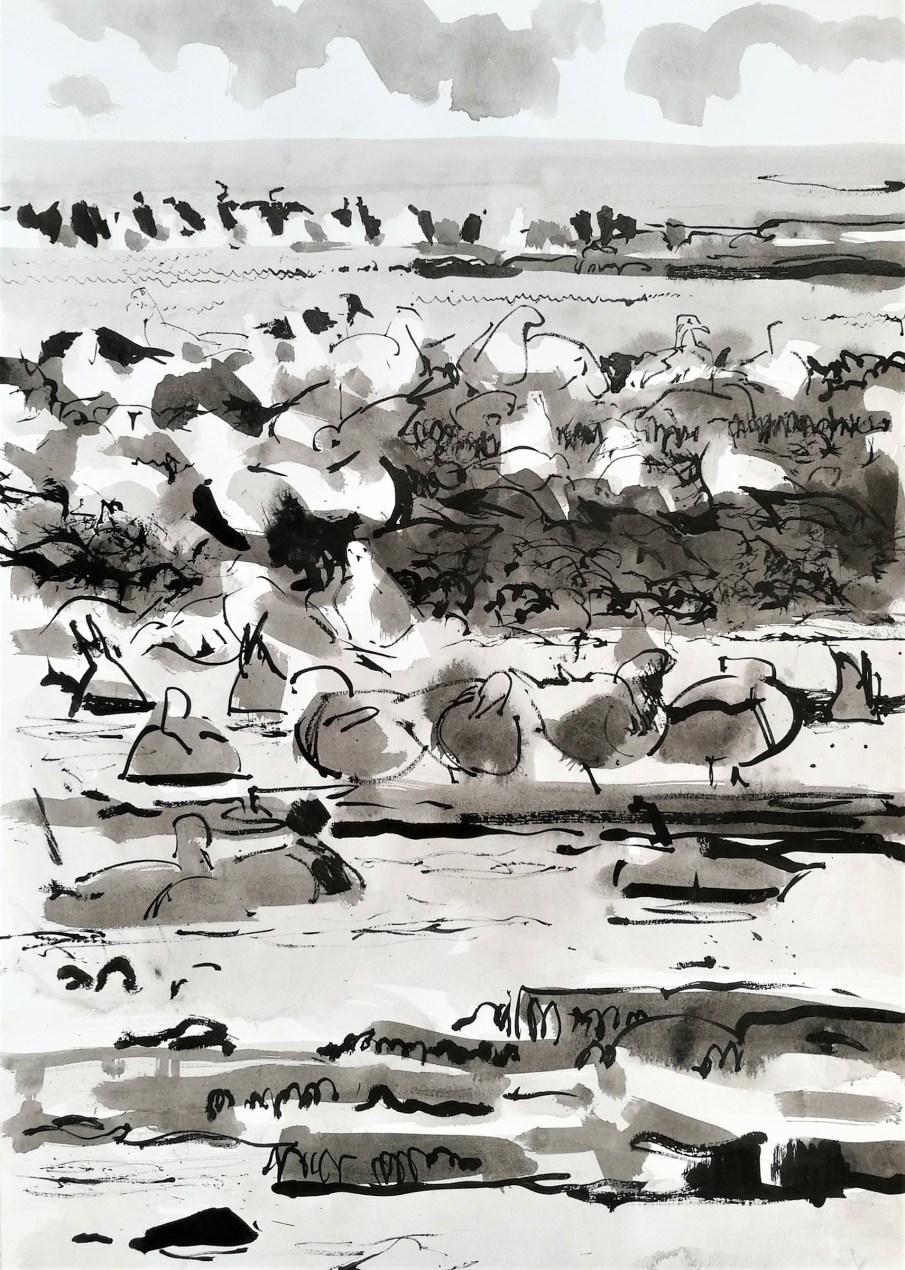 I worked again with the ink, trying to capture the dynamic shapes and silhouettes and making inky marks with sticks, feathers and seaweed.
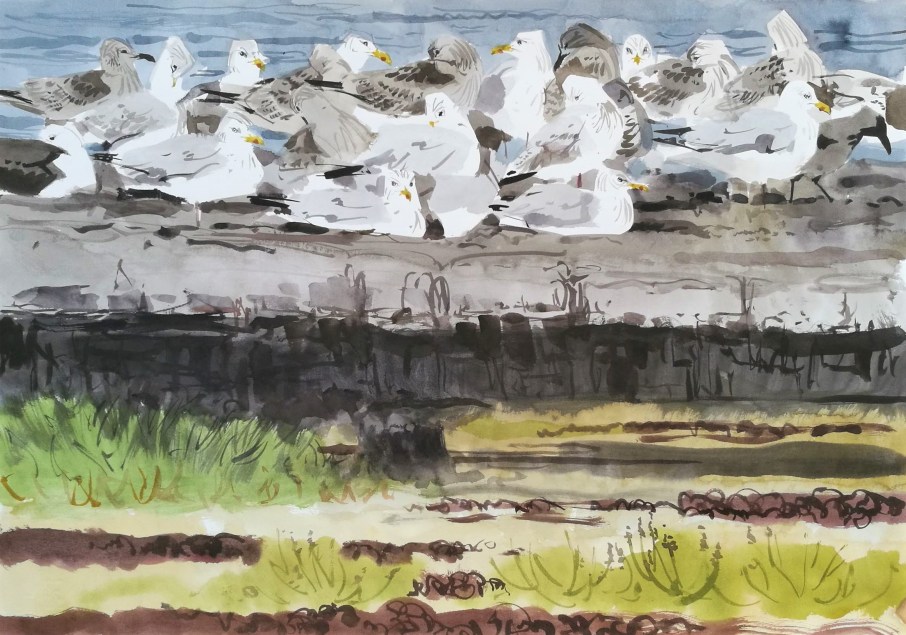
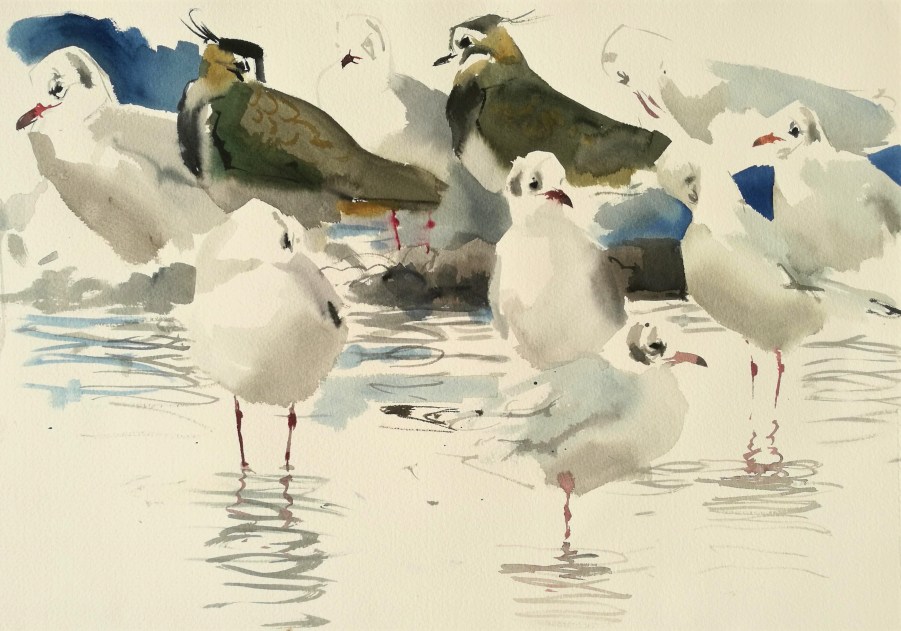
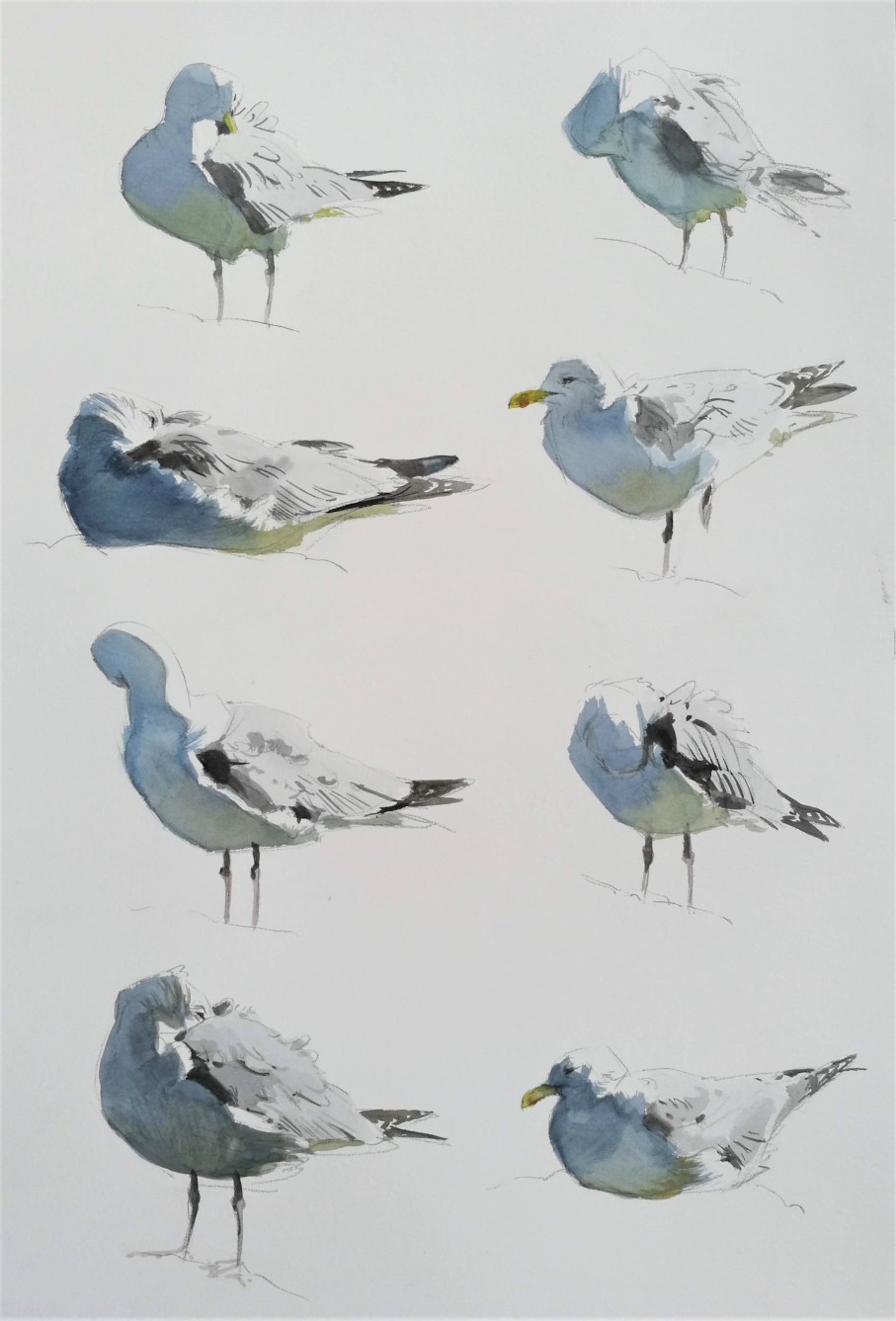
  I packed my things and walked on to Snogbæk, taking time out to look and listen before continuing with painting again. I turned my back to the town, an eclectic and unpretentiousness mixture of tourist cafes, bars, summer houses and fishermen’s’ huts, and looked instead towards the sea. After a detour to the local supermarket I sat on the sandstone bedrock, hidden amongst the vegetation, and looked with my scope towards the multitude of gulls preening, sleeping and standing stoically in the early evening breeze.
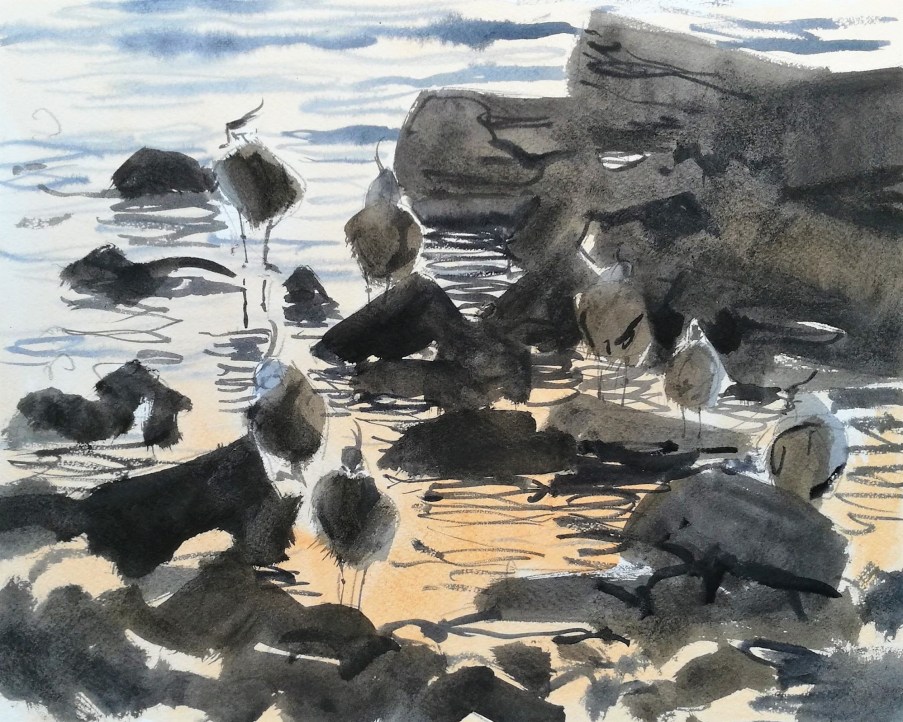
  The day finished quickly and I had no time to draw the six curlew that arrived just as the sun was setting and my lift arrived.


















 www.benwoodhams.com